By Bimal Khadka, Nepal, IPPNW International Student Representative
Young doctors and medical students from throughout Asia overcame vast geographical boundaries, cultural barriers and financial difficulties to bring their ideas and energy to the first Asian IPPNW Youth Congress in Patna, India in March. 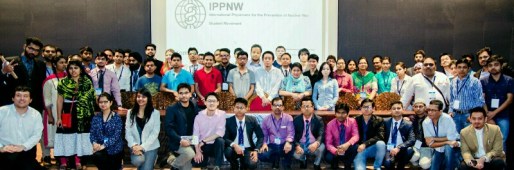
We came from Nepal, Bangladesh, Indonesia, Kazakhstan, Philippines, Mongolia, and Japan to join our Indian colleagues to discuss how we can use our medical expertise to advance heath through peace throughout the region. We were supported by observers from IPPNW Germany and many members of Indian doctors for Peace and Development (IDPD) who were involved in smooth and fruitful discussions on many IPPNW topics. Read more…
The trillion dollar question
Isn’t it rather odd that America’s largest single public expenditure scheduled for the coming decades has received no attention in the 2015-2016 presidential debates?
The expenditure is for a thirty-year program to “modernize” the US nuclear arsenal and production facilities. Although President Obama began his administration with a dramatic public commitment to build a nuclear weapons-free world, that commitment has long ago dwindled and died. It has been replaced by an administration plan to build a new generation of US nuclear weapons and nuclear production facilities to last the nation well into the second half of the twenty-first century. This plan, which has received almost no attention by the mass media, includes redesigned nuclear warheads, as well as new nuclear bombers, submarines, land-based missiles, weapons labs, and production plants. The estimated cost? $1,000,000,000,000.00—or, for those readers unfamiliar with such lofty figures, $1 trillion. Read more…
IPPNW’s Dr. Bob Mtonga participated in a February 29th “Extraordinary Meeting” of states parties and observers to the Arms Trade Treaty (ATT) that turned out to be quite ordinary.
The meeting was convened to discuss organizational issues including proposals for the administrative arrangements of the Secretariat, its structure, location, funding and confirmation of staffing positions, as well as cost estimates and location of the 2nd Conference of States Parties to the ATT (CSP2), to be held at the World Trade Centre in Geneva, Switzerland from 22–26 August 2016.
The Extra-ordinary Meeting however missed an opportunity to consider substantive items – such as possible violations of the Treaty by States Parties, including continued arms exports to Saudi Arabia. Read more…
Passion for peace drives IPPNW research in Liberia

Photo: Lucie Collinson
Results of hospital-based research in Liberia on armed violence spearheaded by members of IPPNW was published recently by the Small Arms Survey in Switzerland. A main finding of The Value of Hospital Data – Understanding and Preventing Intentional Injury in Liberia was that the Liberian Armed Violence Observatory (LAVO) is not receiving all the data it needs to most effectively inform intervention strategies on armed violence prevention. Read more…
Dutch medical appeal for nuclear disarmament
In September 2015, on the UN International Day for Total Elimination of Nuclear Weapons, a medical appeal for nuclear disarmament was presented in Amsterdam. This declaration, signed with remarkable enthusiasm by 100 leading Dutch healthcare executives, clinicians, and scientists, is meant to put the urgent need for nuclear disarmament back on the societal and political agenda—not from an ideological or political viewpoint, but from a medical humanitarian one. It is now circulating within the Dutch medical community, and will be officially presented to Parliament in the coming months.
That day the NVMP, the Dutch affiliate of the International Physicians for Prevention of Nuclear War, organised a symposium about nuclear weapons for physicians and other medical professionals. It covered the medical humanitarian consequences of nuclear weapon use, and the position and role of Dutch healthcare and its allies.
North Korea and the missile threat
North Korea has again launched a missile. Several of the previous launches have malfunctioned and whether any of the successful ones have achieved the intended distance and accuracy is unknown. But with enough missiles, reliable or not, and several sufficiently lightweight and sturdy nuclear charges, a bomb might, in the future, reach Okinawa or Alaska, or even further. Read more…
Honors to a former staffer
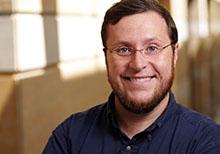 Congratulations to former staff member Garrett FitzGerald, who has been named the John and Judy Scully Fellow in Peace Studies at the University of Notre Dame’s Kroc Institute for International Peace Studies. Garrett served as IPPNW’s development officer from 2010 to 2015, blending a commitment to peace work with experience in nonviolence education and community organizing. He returned to academic life last year to study the relationships among religion, ethics, and politics, and has clearly made his mark. Garrett’s many friends at IPPNW wish him continued success.
IPPNW mourns a founder and leader, Herb Abrams
Dr. Herbert L. Abrams, one of the original founders and leaders of IPPNW, passed away peacefully at his home on January 20, 2016. He was 95 years old. In 1979, Dr. Abrams, then the chairman of the radiology department at Harvard Medical School, was among a small group of Harvard physicians who began discussing the urgent need for a Soviet-American dialogue on the threat of nuclear war. Encouraged by the response they received from their Soviet colleagues, Dr. Abrams, Dr. Bernard Lown, Dr. James Muller, and Dr. Eric Chivian formally organized IPPNW in 1980 as a non-profit educational organization. In the ensuing years, IPPNW’s founders demonstrated to the world that American and Soviet physicians could cooperate on the gravest threat to health and human survival, which led to the awarding of the Nobel Peace Prize to IPPNW only five years later. Dr. Abrams remained an active leader in both IPPNW and Physicians for Social Responsibility, the US affiliate of IPPNW, contributing to the intellectual and organizational growth of the physicians’ movement.
A moving tribute to this giant in medicine and peace work has been written by his son John Abrams, and is reprinted here.
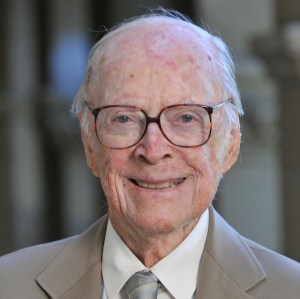
Herbert L. Abrams
1920-2016
by John Abrams
Hebert Leroy Abrams – physician, scholar, author, and activist – died peacefully at home in Palo Alto, California, on January 20, 2016, surrounded by family. He was 95.
His illustrious, multi-dimensional career embraced what he called the “four dimensions of bio-medicine” – patient care, research, teaching, and advocacy. Read more…
“Modernizing” the opportunities for nuclear war
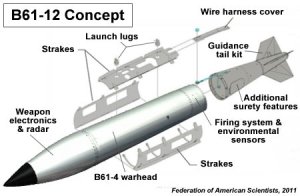
Federation of American Scientists illustration
A fight now underway over newly-designed US nuclear weapons highlights how far the Obama administration has strayed from its commitment to build a nuclear-free world.
The fight, as a recent New York Times article indicates, concerns a variety of nuclear weapons that the US military is currently in the process of developing or, as the administration likes to say, “modernizing.” Last year, the Pentagon flight-tested a mock version of the most advanced among them, the B61 Model 12. Read more…
States of hope and states of concern
 At the UN General assembly last fall there was an essential vote on the future of mankind. Resolution number A/RES/70/33 calling for the international society to take forward multilateral nuclear disarmament negotiations had been submitted by Austria, Brazil, Chile, Costa Rica, Ecuador, Georgia, Ghana, Guatemala, Ireland, Kenya, Lichtenstein, Malta, Marshall Islands, Mexico, Nigeria, Panama, Peru, Philippines, South Africa, Trinidad and Tobago, Uruguay and Venezuela. For that, these countries deserve our deep respect and gratitude. Read more…

 Bimal Khadka
 Bjorn Hilt
 Charles K. Johnson
 Dr. Ghassan Shahrour
 Gunnar Westberg
 IPPNW
IPPNW John Loretz
 Lawrence Wittner
 Maria Valenti
 mollymcgint
 Sue Wareham
 Tilman Ruff
 Tim Wright
 Xanthe Hall