[The International Committee of the Red Cross (ICRC) has published a special edition of its flagship publication, The International Review of the Red Cross (IRRC), on the human cost of nuclear weapons. The issue contains interviews with Hibakusha, including one with Dr. Masao Tomanaga, IPPNW’s regional vice president for North Asia, former director of the Japanese Red Cross Nagasaki Atomic Bomb Hospital, and a survivor of the US atomic bombing of Nagasaki. The following excerpts are reprinted with the permission of the IRRC. The full interview and the entire issue of the journal are available on the IRRC website.]
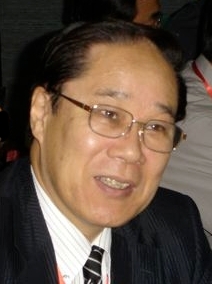
Masao Tomonaga
Dr Tomonaga, you were a small child at the time the atomic bomb was dropped on Nagasaki. What was your personal experience of the atomic bombing and its immediate aftermath?
I was born on 5 June 1943. At the time of the bombing, I was two years and two months old. That morning, I was sleeping on the second floor of our Japanese-style wooden house in a Japanese-style bed, when suddenly the blast from the atomic bomb crushed our house. Read more…
The human cost of nuclear weapons
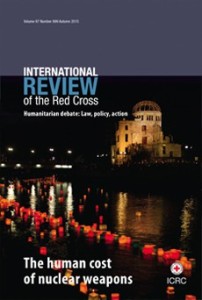 A comprehensive, carefully documented study of the humanitarian consequences of nuclear testing in the Pacific region, written by IPPNW co-president Tilman Ruff, is one of the highlights of an important new issue of the International Review of the Red Cross (IRRC) on the human cost of nuclear weapons. The 468-page thematic edition of the flagship journal of the International Committee of the Red Cross chronicles the ICRC’s long history of engagement with the nuclear weapons issue, from the first Red Cross report on the effects of the US atomic bombing of Hiroshima, through ICRC participation at the recent series of international conferences on the Humanitarian Impact of Nuclear Weapons. Read more…
Will the US increase military spending yet again?
At the present time, an increase in US military spending seems as superfluous as a third leg. The United States, armed with the latest in advanced weaponry, has more military might than any other nation in world history. Moreover, it has begun a $1 trillion program to refurbish its entire nuclear weapons complex. America’s major military rivals, China and Russia, spend only a small fraction of what the United States does on its armed forces―in China’s case about a third and in Russia’s case about a ninth. Read more…
A passionate abolitionist turns 100
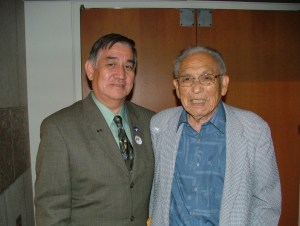
Dr. James Yamazaki (right) with PSR-LA board member Jimmy Hara
I got a phone call in the early spring of 1995 from a doctor in California who introduced himself as Jim Yamazaki. Dr. Yamazaki had just written a book about the US atomic bombings of Hiroshima and Nagasaki and wondered if I’d be interested in reviewing it in Medicine & Global Survival. Read more…
Gun Runners, Poaching and Armed Violence Prevention Featured at Nairobi Strategy Session on #ArmsFreeAfrica
By Dr. Peter Mburu, IPPNW-Kenya
On the 17th of June 2016, I had the privilege of representing IPPNW-Kenya at an #ArmsFreeAfrica NGO strategy meeting in Nairobi hosted by the Control Arms coalition. The working meeting was preceded by an evening premiere screening of the movie “Gun Runners” featuring former Kenyan cattle-rustler- turned-peace activist and elite professional runner Julius Arile.
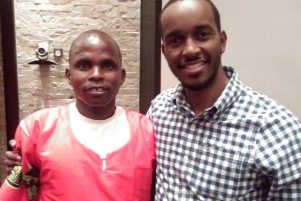
Gun Runners star Julius Arile (l) and Dr. Peter Mburu of IPPNW Kenya
More than 450 units of blood collected during “Don’t Shed Blood, Donate Blood” drives
IPPNW’s affiliate Indian Doctors for Peace and Development (IDPD) has launched a year-long series of creative activities in cooperation with student and state chapters under the banner of “Health through Peace.” They are engaging medical students, colleagues and communities in innovative initiatives to prevent violence and promote peace and sustainability. Read more…
Shadows of doom

Soviet MIG-21s at Rumbula airfield in Latvia, abandoned at the end of the Cold War
Peter Handberg, a writer and translator, has in the years since the end of the Cold War traveled many times in the Baltic states, Estonia, Latvia and Lithuania. He has visited many sites where nuclear weapons were kept, ready to destroy the world. Handberg has also spoken to military officers who once watched over these instruments of Armageddon. He has written an important book on the subject, Undergångens skuggor (Shadows of Doom). The book is not translated but a documentary film is planned.
Recently he led a group from Sweden to some of these bases, abandoned since 1987. Read more…
In wake of Orlando slaughter, medical calls to action to prevent more killing by gun violence
The IPPNW delegation to last week’s United Nations Programme of Action on Small Arms and Light Weapons 6th Biennial Meeting of States returned to our homes this past weekend to the horrifying news of the slaughter of 49 innocent people at a nightclub in Orlando, Florida, and the wounding of another 50 or more. The weapons used by a lone gunman to wreak this carnage against members of the LGBT community included a semi-automatic assault rifle designed to kill many people quickly and easily. It was purchased legally under current US firearm regulations, by a person with a known propensity for violence. Read more…
The theme connecting the dots between health, human security and sustainable development resonated throughout yesterday’s side event to the Sixth Biennial Meeting of States on the Programme of Action (PoA BMS6) on Small Arms co-organized by IPPNW. The panel, featuring doctors and parliamentarians, was hosted by the Swedish Mission to the United Nations and co-convened with the Stockholm-based Parliamentary Forum on Small Arms and Light Weapons (PFSALW). How health professionals and parliamentarians can work together to reduce armed violence and advance the PoA and the Sustainable Development Goals, specifically SDG 16 on reducing all forms of violence, was the starting point for the conversations. Read more…
IPPNW responds to Obama Hiroshima visit
[IPPNW’s co-presidents have sent the following letter to US President Barack Obama in response to his speech in Hiroshima on May 27.]
Dear President Obama:
We applaud your decision to bear witness to the ghastly horrors that befell the citizens of Hiroshima, and to meet with Hibakusha. However, we deeply regret that you made no commitments to ensure that nuclear weapons are never used again. Read more…

 Bimal Khadka
 Bjorn Hilt
 Charles K. Johnson
 Dr. Ghassan Shahrour
 Gunnar Westberg
 IPPNW
IPPNW John Loretz
 Lawrence Wittner
 Maria Valenti
 mollymcgint
 Sue Wareham
 Tilman Ruff
 Tim Wright
 Xanthe Hall