Laying down the law on nuclear disarmament
by Tim Wright
The tired old mantra of arms control and incremental steps is still dominating discussions at the NPT Review Conference, despite the growing push for a Nuclear Weapons Convention. All too many of the non-nuclear-weapon states seem content in seeking only the most modest action on disarmament. Their calls, for the most part, lack any sense of real urgency — even though it is clear that meaningful action for abolition is needed now, and cannot continue to be postponed.
We must delegitimize nuclear weapons
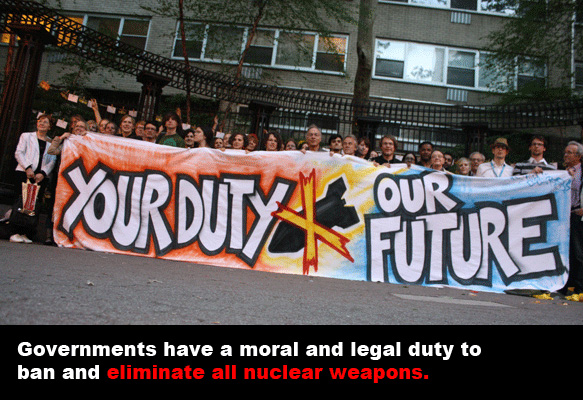 by Tim Wright
More than four decades have passed since the NPT entered into force. Yet today many governments, particularly those in the Western Group, continue to regard nuclear weapons as legitimate instruments of national security. The few “privileged” states that possess nuclear weapons still attach great prestige to them.
If we are to succeed in the campaign to abolish nuclear weapons through a binding convention, we must effectively break down the perception of these weapons as the ultimate expression of state power. They are, in reality, instruments of terror. The process of negotiating a convention would itself have a delegitimizing effect also.
If students can do it, why not the diplomats?
by Tim Wright
Negotiations began yesterday on a Nuclear Weapons Convention — but not among governments, unfortunately. Thirty university students from Hamburg, Germany, took part in the first day of a simulation exercise organized by the International Network of Engineers and Scientists Against Proliferation. The students have found it to be a valuable learning experience, but it might also teach disillusioned diplomats lessons on how it can be done.
“Not good enough”
As Norway pointed out yesterday, the current rate of progress towards a nuclear-weapon-free world is just not good enough. “After 65 years with nuclear weapons and 40 years with the NPT, we cannot claim that we are where we should be with nuclear disarmament … We must establish a new international nuclear agenda with an action plan for nuclear disarmament with clear benchmarks and deadlines holding us all accountable.”
Norway argued that, if governments are to succeed in implementing Article VI of the NPT and achieve the complete elimination of nuclear forces, they will need to negotiate an additional legal instrument. “This is a topic which is becoming increasingly relevant and important,” it said. “We are likely to see more discussions on this matter in the time to come.”
A legal obligation
Indeed, yesterday in Main Committee I, the need for negotiations on a Nuclear Weapons Convention once again featured prominently, with Egypt, Malaysia and Libya, among others, raising the call. New Zealand — which votes in favour of the annual UN General Assembly resolution on a convention — welcomed the UN Secretary-General’s “strong push in his five-point plan for progress towards a world free of nuclear weapons”.
Last year, 124 governments — roughly two-thirds of all UN member states — backed the General Assembly resolution, which is a follow-up to the International Court of Justice’s landmark advisory opinion on the legality of the threat or use of nuclear weapons. The court held, unanimously, that governments have a legal obligation to achieve nuclear disarmament in all its aspects under strict and effective international control.
In addition to the legal obligation, they also have a moral responsibility to present and future generations to succeed.
Tim Wright is the ICAN – NWC Project Coordinator
[The following statement was issued by JPPNW (Japanese Physicians for the Prevention of Nuclear War) upon the commencement of the 2010 NPT Review Conference.]
We urge for a stronger step towards the nuclear abolition!
Since founded in 1980, the IPPNW (International Physicians for the Prevention of Nuclear War) has continued to appeal that nuclear abolition is the absolute prerequisite for the protection of human health and the global environment. Ever since the US President Barack Obama said ”the United States will take concrete steps towards a world without nuclear weapons” in his Prague speech in April 2009, people’s concerns and hopes for the abolition of nuclear weapons have been growing around the globe. Mayors for Peace, which calls for the abolition of nuclear weapons by the year 2020 in their Hiroshima-Nagasaki Protocol, has as many as 4,000 city members throughout the world. Now is the opportunity for the world to progress to nuclear abolition. Read more…
[The IPPNW delegation to the 2010 NPT Review Conference has sent the following letter to UN Secretary-General Ban Ki-moon, who has made frequent appearances during the Conference to promote his five-point plan for nuclear disarmament, which includes work on a Nuclear Weapons Convention. SG Ban has said that the elimination of nuclear weapons is one of his highest priorities, and that he has taken it on as a personal mission.]
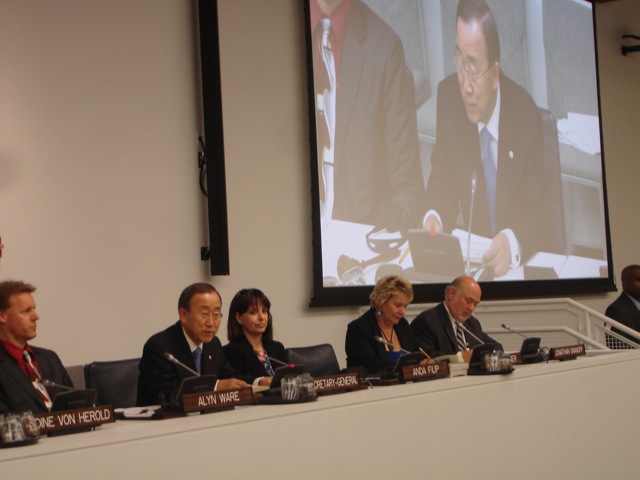
Secretary-General Ban Ki-moon explains his five-point nuclear disarmament plan to parliamentarians at the 2010 NPT Review
May 7, 2010
Secretary-General Ban Ki-moon United Nations New York, NY 10017Dear Mr. Secretary-General,
International Physicians for the Prevention of Nuclear War (IPPNW), which has a large delegation attending the NPT Review Conference, wishes to thank you for your vision and work in pursuit of a world without nuclear weapons.
As physicians the world over dedicated to the health and well being of our human family, we too are steadfast in our commitment to a world free of nuclear weapons.
We know only too well the devastating impact and absence of any adequate or meaningful medical response to a nuclear explosion. In that regard, we would like to present you with the enclosed copy of IPPNW’s new publication, Zero Is the Only Option: Four Medical and Environmental Cases for the Eradication of Nuclear Weapons, which we launched at this Review Conference this week.
We commit ourselves to your five-point proposal on nuclear disarmament and, in particular to promoting a Nuclear Weapons Convention as the most practical and effective framework for achieving that goal under international law. Your leadership in this regard is an inspiration to all of us. We are available to provide whatever medical and scientific information or assistance you need to further articulate the urgency of this work.
Yours sincerely,
Gunnar Westberg Former Co-President, on behalf of the IPPNW delegationBanning the most destructive weapons of all
 by Tim Wright
If there was a single message to come out of the NPT Review Conference on Friday, it was this: There are treaties outlawing anti-personnel landmines, cluster munitions, biological weapons and chemical weapons. Why should it not be possible to negotiate a treaty banning nuclear weapons, the most destructive weapons of all?
In Main Committee I, Brazil joined the growing call for a Nuclear Weapons Convention, arguing that a successful Review Conference outcome is predicated on the definition of clear objectives on a number of points, including a commitment to the goal of concluding a Nuclear Weapons Convention “outlawing this category of weapons entirely, with a well-defined time frame, in line with the Chemical and Biological Weapons Conventions”. Read more…
Highlights from NGO statements at the NPT Review
[The following excerpts are from the written versions of NGO statements to the 2010 NPT Review Conference that were delivered orally on May 7 during a special three-hour session. The presentations to the delegates were sometimes shortened to fit the available time. Nobel Laureate Jody Williams departed from her prepared text entirely to deliver a passionate, stirring appeal for the eradication of nuclear weapons. All of the papers are available at Reaching Critical Will.]
“We welcome and embrace the increased attention to and talk about nuclear weapons and a world free of these unconscionable weapons of mass destruction. After all, opinion polls conducted in 21 countries in 2008 found that an estimated 76% of people around the world–including majorities in the nuclear states–support the idea of a binding, verifiable nuclear weapons convention.
“If this does not demonstrate to governments that they have a clear popular mandate to begin serious negotiations now, what will it take? If the nuclear states ignore the will of the overwhelming majority of people around the world, I worry what that means for our collective future. Since Hiroshima and Nagasaki, the people of this planet have been in thrall to those few nations who all too literally hold our very existence in their nuclear hands. There have been moments of great hope–Reykjavik–and moments of horrific fear–the Cuban Missile Crisis. After the NPT Review Conference of 2005, the nuclear future looked dismal. Now, with new possibilities again palpable, we cannot and we must not let this moment pass.
“The states gathered here in New York can seize this opportunity and change our future forever. With brave vision and even bolder action, the Promise of Prague can be transformed into the reality of nuclear abolition.
“This will not happen with rousing rhetoric or nuclear legerdemain. This will happen with a clear and honest assessment of the progress made and the challenges remaining in the implementation of the Non-Proliferation Treaty….
“Civil society and non-governmental organizations suffer no illusion that the journey to nuclear abolition will be easy, but we do know that it must begin now. Those few who hold our collective fate in their hands must respond to the collective will of the billions they allege to protect with nuclear weapons we do not want. It is time for all governments to come together–with the support of civil society around the world–to chart our course to a nuclear free future by beginning the negotiation of a comprehensive treaty banning the use, production, transfer and stockpiling of nuclear weapons. Now. Not in years or decades. Now.”
— Jody Williams, Chair, Nobel Women’s Initiative; 1997 Nobel Peace Laureate
Both the expertise of non-governmental organizations and the commitment of abolition activists were on display Friday, as the first week of the month-long NPT Review Conference came to a close. Here are some photos from the day’s events. In a separate post, I’ll highlight some key quotes from the NGO papers. I’m heading back to the IPPNW office in Boston now, but will return to New York for the conclusion of the Conference. In the meantime, keep reading the posts by IPPNW’s other bloggers, who have been doing a great job all week. I’ll monitor the NPT remotely until I return and comment on any breaking news. You can also keep up on day-to-day developments by reading Rebecca Johnson’s blog.
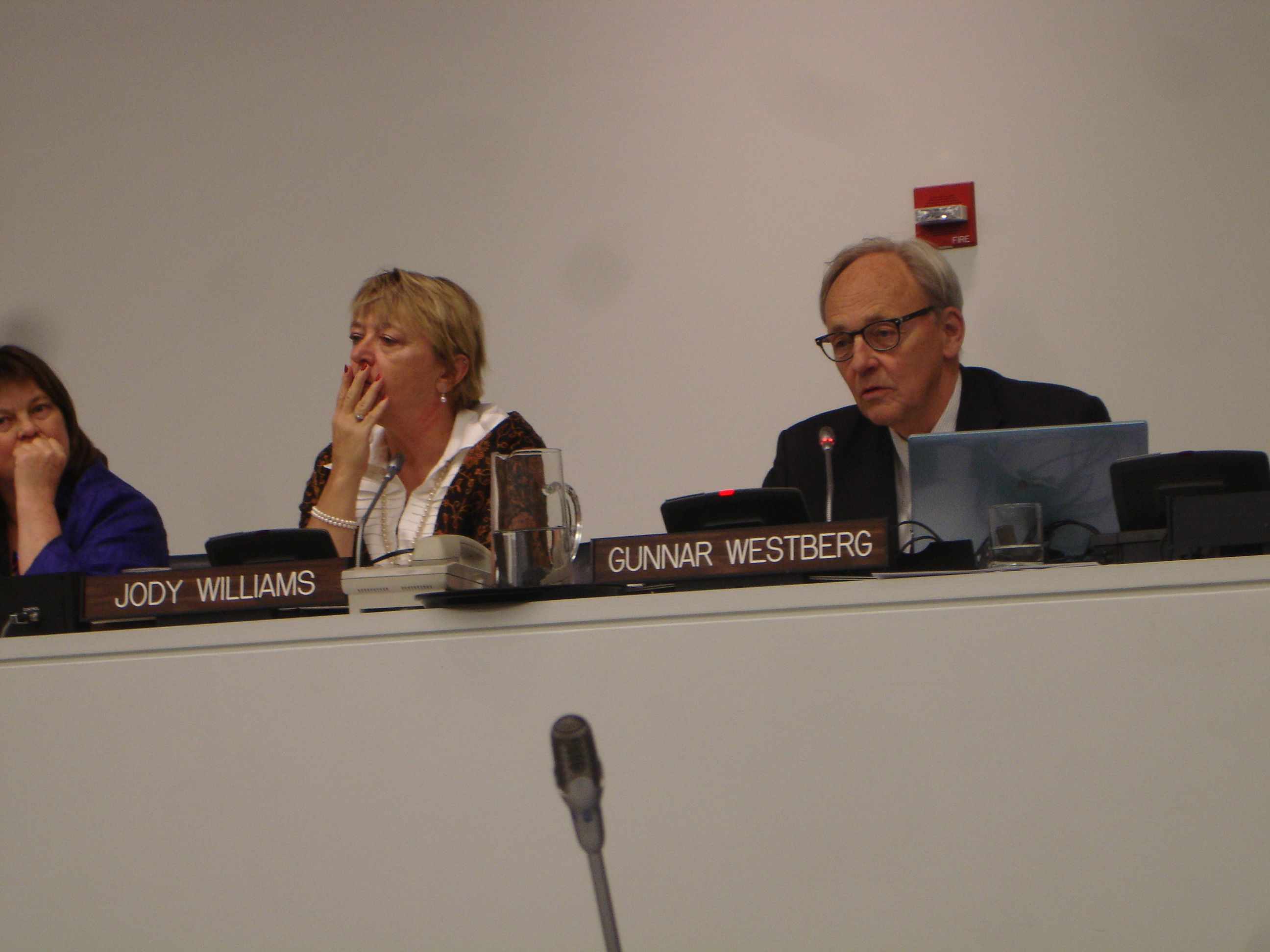
Former IPPNW co-president Gunnar Westberg of Sweden joined Nobel Laureate Jody Williams at an ICAN event urging NPT member states to make serious, concrete plans for ridding the world of nuclear weapons.
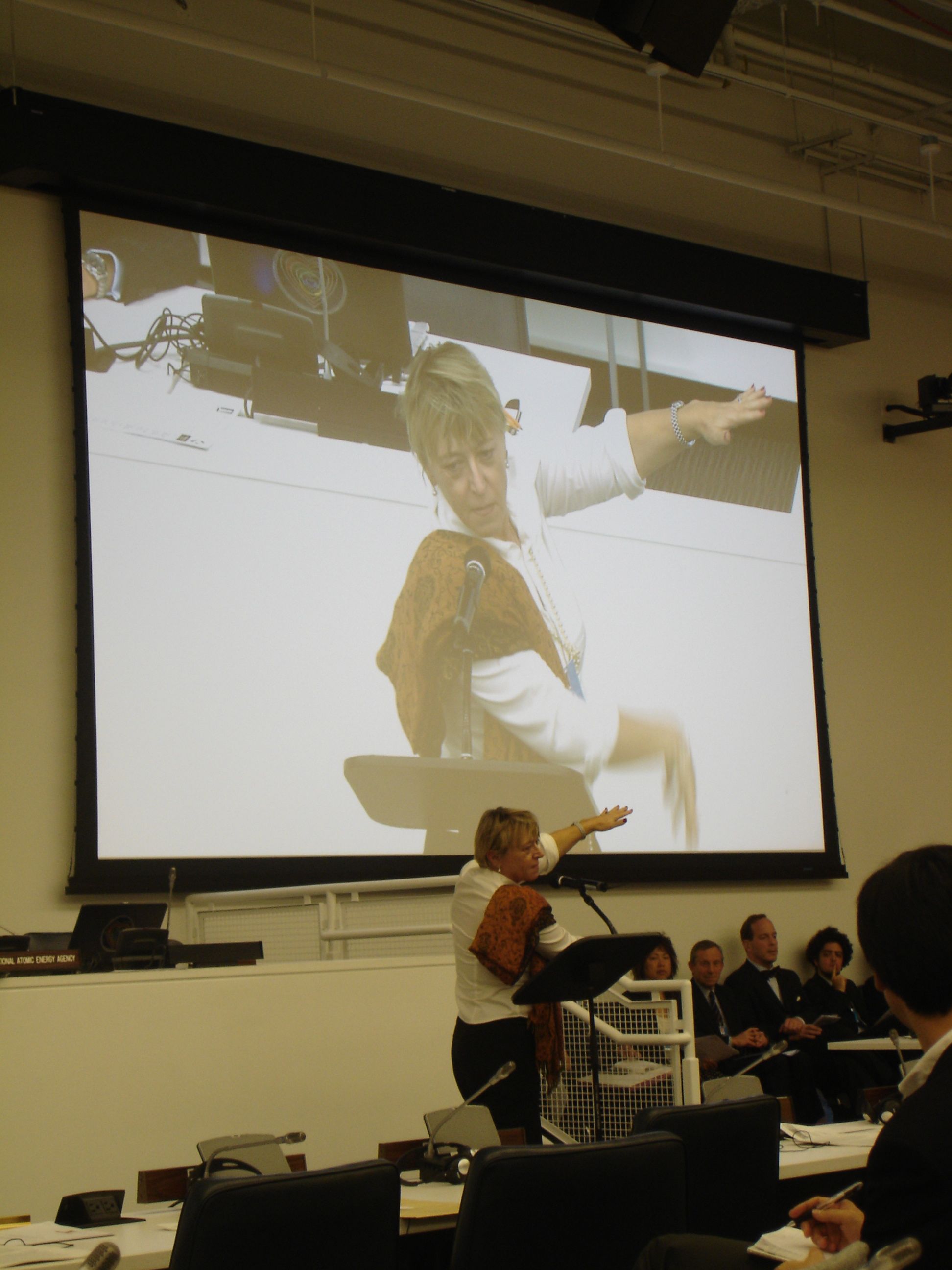
Nobel Laureate and mine ban campaigner Jody Williams tells the NPT member states at the 2010 Review Conference "You have a mandate to eliminate nuclear weapons NOW...." Earlier in the day Williams spoke at an ICAN event about the importance and urgency of a Nuclear Weapons Convention.
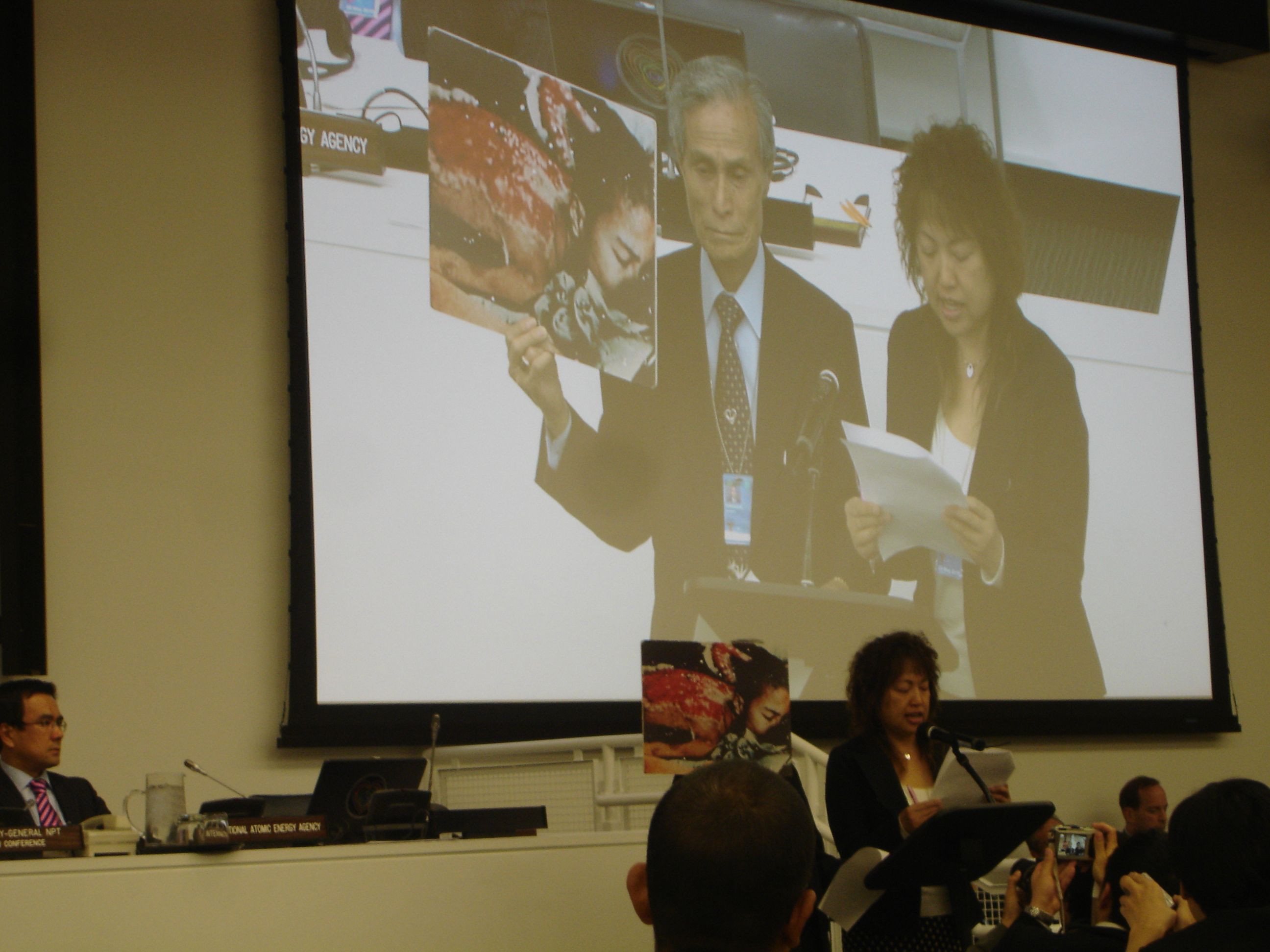
Nagasaki survivor Taniguchi Sumiteru shows the assembled diplomats a graphic photo of the injuries he sustained when he was 16 years old. "Please don't turn your eyes away from me...I cannot die in peace until I witness the last nuclear warhead eliminated from this world."

Rebecca Johnson of the Acronym Institute explains that the Nuclear Weapons Convention fulfills the NPT at a special Review Conference session for NGOs on May 7. 2010.
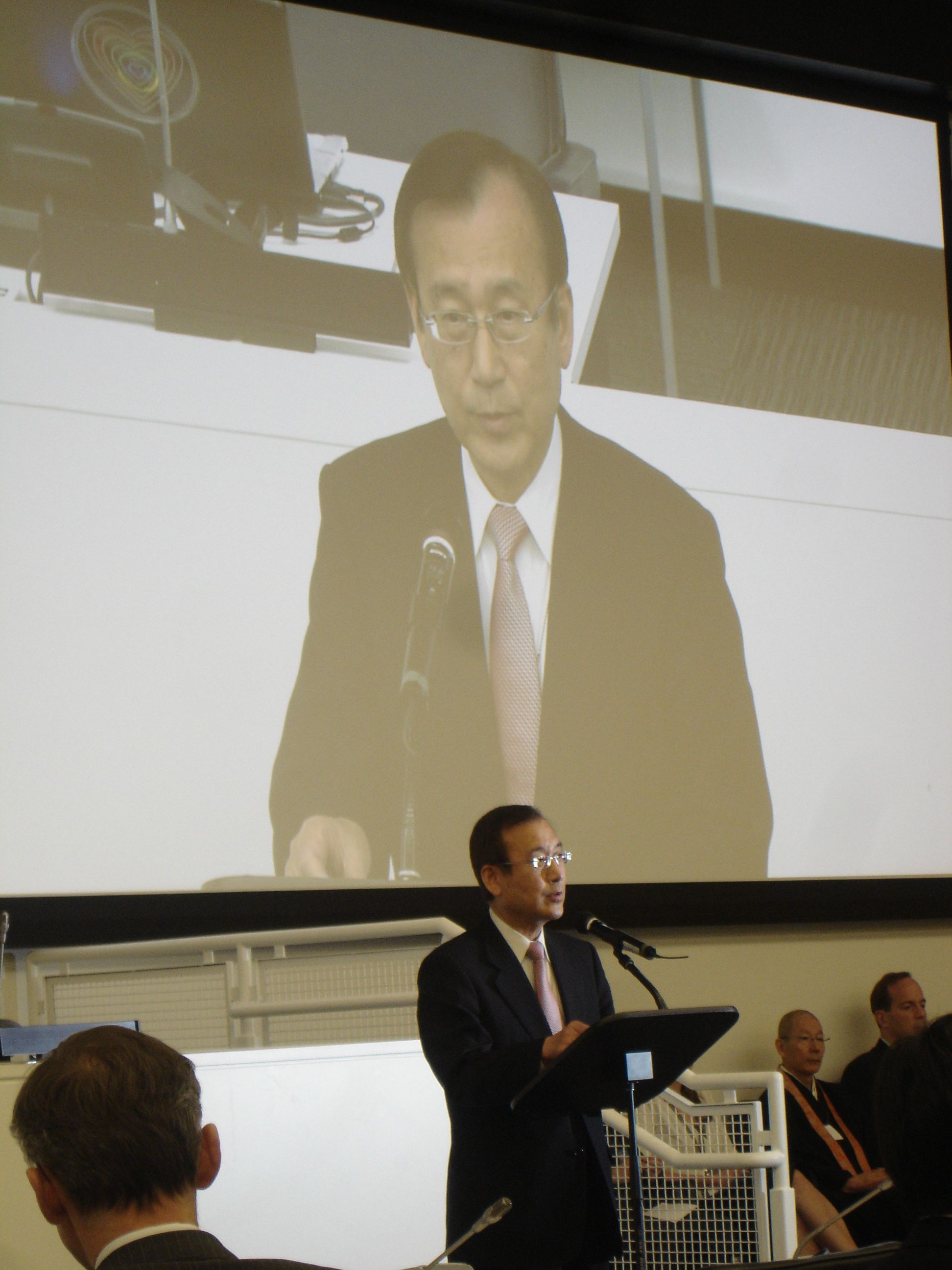
Mayor Tadatoshi Akiba of Hiroshima, President of Mayors for Peace, spoke for nearly 4,000 mayors in 143 countries "who stand with us demanding a nuclear-weapon-free world by the year 2020." Mayor Akiba was joined by Nagasaki Mayor Tomihisa Taue.
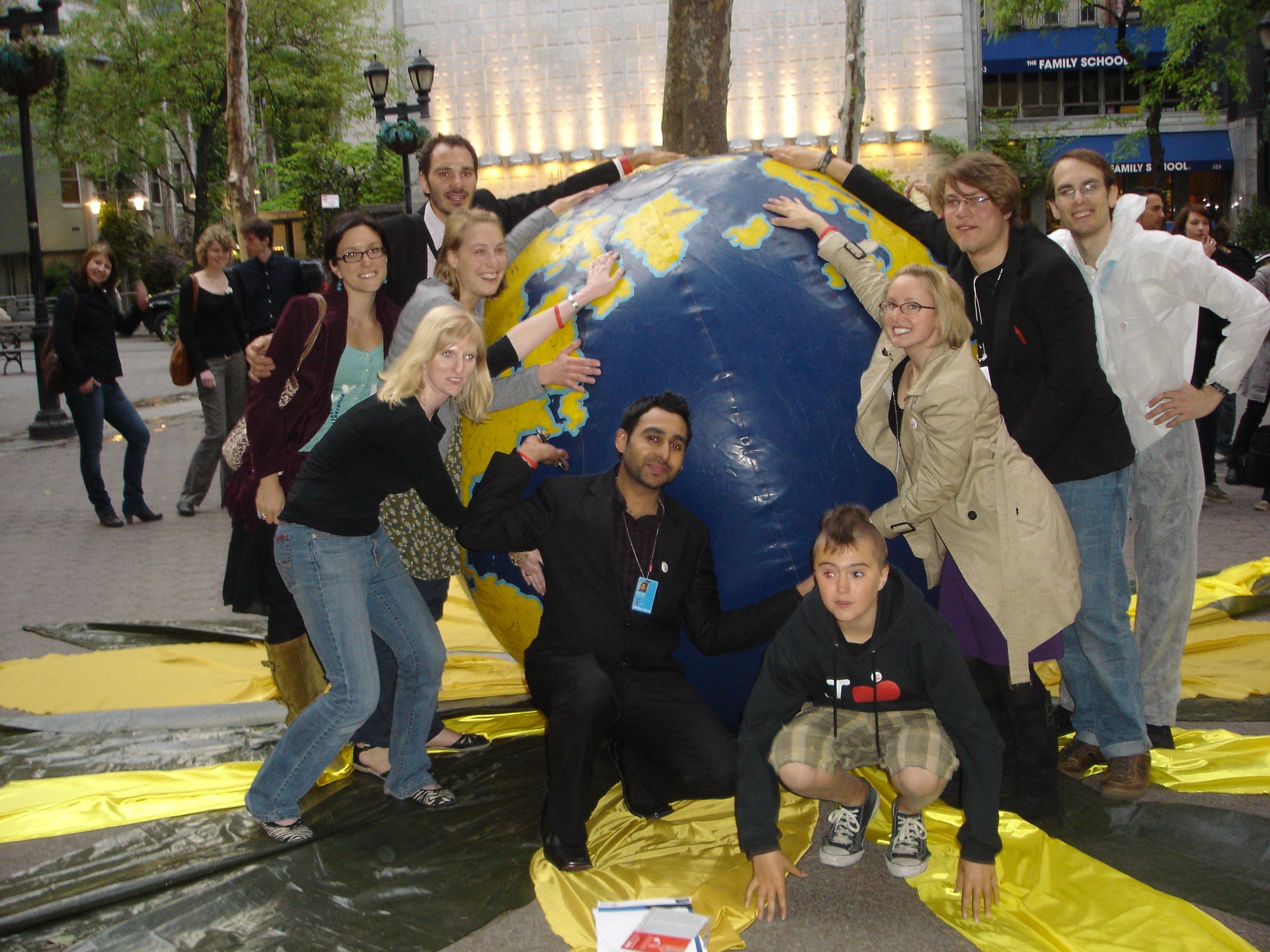
IPPNW students and members of other international youth groups at the NPT Review organized a street action in Dag Hammarskjöld Plaza at the end of the first week of the Conference.
[The following paper was delivered by Rebecca Johnson, Acronym Institute for Disarmament Diplomacy, on Friday, May 7 at the 2010 NPT Review Conference. It was drafted by Ms. Johnson and John Loretz of International Physicians for the Prevention of Nuclear War, with input from Juergen Scheffran and Peter Weiss, International Association of Lawyers Against Nuclear Arms; John Burroughs, Lawyers Committee on Nuclear Policy; Regina Hagen, International Network of Engineers and Scientists Against Proliferation; and Alice Slater, Nuclear Age Peace Foundation. A PDF version, including appended material is available at Reaching Critical Will.]
Rebecca Johnson of the Acronym Institute explains that the Nuclear Weapons Convention fulfills the NPT at a special Review Conference session for NGOs on May 7. 2010.
Mr President, Your Excellencies, Distinguished Delegates and Colleagues,
In their second Wall Street Journal article of January 2008, Henry Kissinger, George Shultz, Sam Nunn and William Perry liken the goal of a world free of nuclear weapons to “the top of a very tall mountain”. They see it as desirable and recognise the necessity of climbing to higher ground as there are too many dangers inherent in either staying where we are or, worse still, sliding back down into proliferation chaos. But to them, the goal and the route to get there are both out of sight. We agree that the dangers of clinging to the status quo are far greater than the challenges of climbing towards disarmament, but we think humanity is closer to achieving the summit than the cold warriors have realised.
In fact, we are so confident that the objective of a nuclear-weapons-free world is reachable in our lifetimes (and many of us are older than President Obama!) that we can envision ourselves at the summit, looking back at the path we took to get here, and realizing that the difficulties, while formidable, were overcome with persistence, creative problem solving, and flexibility to find different ways when paths we were following became obstructed. Read more…
The case against deterrence doctrine
[Today’s edition of the daily NGO newsletter for the NPT Review Conference — News in Review — contained the following article I wrote, which grew out of some online discussions about the NGO paper on deterrence that will be presented to the Conference this afternoon. IPPNW also co-authored the presentation on the Nuclear Weapons Convention, which I will post after it has been delivered.
All of the NGO presentations will be available on the Reaching Critical Will website, where you can also download each issue of News in Review.]
By some accounts, nuclear weapons are like the flu. As long as they exist, we will continue to need the most powerful flu vaccines we can get our hands on; in this case, “effective” nuclear arsenals to prevent an outbreak. According to this analogy, deterrence is a prophylactic against a threat we have no other means to address.
There are two big problems with this viewpoint, which appears to be held in common by all the nuclear-weapon states and by those who aspire to join the club. Nuclear weapons are not our inevitable lot in life; they don’t just happen to exist. And insistence that the nuclear threat can only be fended off by a nuclear deterrent is a tautological trap: “we will need nuclear weapons as long as they exist.”
On Friday May 7, NGOs will make the case to the NPT Member States that abandoning deterrence doctrine is the key to achieving a world in which nuclear weapons do not exist, a world that is safer and more secure than the one we currently inhabit. That case is straightforward and, we believe, irrefutable.
Nuclear weapons are uniquely and obscenely destructive. Threatening such destruction as a basis for security (the bottom line of nuclear deterrence) is morally reprehensible.
Unlike other forms of deterrence, failure of which can have tragic consequences, we cannot afford for nuclear deterrence to fail because the consequences are unthinkable. Therefore, we should not put ourselves in a position where it can fail. The truth deterrence theorists refuse to face is that nuclear deterrence sooner or later will fail; the history of war has taught us that sooner or later desperation trumps rationality.
There is a strong basis in international humanitarian law for the illegality of invoking nuclear deterrence in the first place.
Finally, continued adherence to deterrence doctrine fuels proliferation and undermines alternative pathways to security, including the pathway to a nuclear-weapons-free world, which is now the declared goal of the US government, echoed by a growing chorus of international leaders.
Despite that goal, the nuclear-weapon-states have continued to rationalize deterrence and to sell that rationalization to willing buyers. Some non-nuclear-weapon states are convincing themselves that they need nuclear weapons to deter others. The virus appears to be unresponsive to the vaccine.
If nuclear weapons were, in fact, as endemic as the flu or the common cold, our only resort might well be to keep reformulating the deterrence “vaccine” in an attempt to stay one step ahead of a devastating outbreak. But we actually have an alternative. We have the option and the means to rid the world of nuclear weapons and, in the process, to see nuclear deterrence in terms of a more appropriate medical analogy: snake oil.

 Bimal Khadka
 Bjorn Hilt
 Charles K. Johnson
 Dr. Ghassan Shahrour
 Gunnar Westberg
 IPPNW
IPPNW John Loretz
 Lawrence Wittner
 Maria Valenti
 mollymcgint
 Sue Wareham
 Tilman Ruff
 Tim Wright
 Xanthe Hall