You choose: $105 billion a year for health care or nuclear weapons?
In 2011 the nine nuclear-armed nations will spend an estimated US$105 billion maintaining and modernizing their nuclear weapons, despite the International Court of Justice having declared it illegal to use and threaten to use such weapons. This expenditure—up from $91 billion in 2010—casts serious doubt on the sincerity of leaders’ pledges to work for a world free from nuclear arms, suggesting instead a commitment to retain such weapons indefinitely. Beyond the pro-disarmament rhetoric of the nuclear-armed states is the disturbing reality of a massive effort to bolster the world’s nuclear forces, the consequences of which are potentially catastrophic. Read more…
Advocating for transparency in the global arms trade
by Hakeem Ayinde, MD
I attended, with Cathey Falvo of PSR, New York City, a recent special event at the United Nations that addressed Transparency in Global Arms Trade. Having attended the last Arms Trade Treaty (ATT) PrepCom meeting in July as an IPPNW delegate, I found the topic very pertinent and also enlightening. Particularly interesting was the speech by the keynote speaker, Michael Klare, who is a professor of peace and world security studies at the Hampshire College, Amherst, Massachusetts.
Professor Klare discussed the relationship between oil and other natural resources, and the international arms trade. He explained how the pursuit of natural resources leads to an increase in arms sales, pointing out that a country like Saudi Arabia, for example, is the largest oil exporter, and equally the largest arms importer. These resource-rich countries are usually courted for their oil or other resources in exchange for arms by the major arms exporting countries. These arms exporters would forge relationships with the oil-rich nations wherein they offer aid, diplomatic support, arms transfers etc, in order to gain more influence and access to the resources.
Conversely, the Professor also argued that the presence of natural resources also causes countries to move to acquire more arms. This would be useful as a deterrent to neighboring countries and to secure their borders or as a measure to control insurgent groups within the country. Countries like Libya and Syria readily come to mind for the latter reason. Additionally, the pursuit of arms by resource-rich countries also affects social and economic development in these countries, as funds may be diverted from development programs to the purchase of weapons.
The reasons aforementioned beg for increased transparency in transnational arms transfer, which would improve international peace and security and also help us better understand the dynamics between the pursuit of natural resources and arms trade.
Also interesting was Magda Coss, an investigative journalist with significant experience researching violence in Latin America. She brought attention to the effects of armed violence in Latin America, which accounts for an alarming 42% of the world’s firearm-related deaths, from between 40 and 65 million existing firearms in the region. A major obstacle to her work, she believes, is the difficulty in obtaining data on firearms traffic in these countries. This may sometimes be due to censorship by government, but more often, it is because the governments themselves do not have the information.
She urged a stronger role for the media in raising awareness on the consequences of firearms and also to expose the corruption and faults in institutions that promote proliferation of firearms.
Ms Coss also advocated for more transparency and responsibility on the part of arms exporters in arms transfers to developing countries, as the impact of this is palpable.
The failed operation of the Bureau of Alcohol, Tobacco and Firearms (ATF), nicknamed ‘Fast and Furious’, in which arms were introduced into Mexico in order to track them to their destination highlighted the irresponsibility of government and a lack of transparency. The firearms only showed up after they were used to kill people.
Mr Tobias Bock of Transparency International’s Defense and Security program got a cheer from the audience when he introduced the newly revamped UN Register of Global Reported Arms Trade which now includes small arms. The website has been made more user-friendly, and the information on arms trade more accessible. The site also conspicuously showed discrepancies in information reported by some arms exporters and importers. It is possible that the importing countries underreported the actual number of arms imported. This is problematic because defense budgets are usually shrouded in secrecy, and thus it would be difficult to verify the actual volume of arms transferred.
Other speakers at the event were Mark Bromley, senior researcher with the Stockholm International Peace Research Institute (SIPRI) Arms transfer program, and Jeff Abramson, former deputy director at the Arms Control Association and current coordinator of the Control Arms Coalition Secretariat. Jeff offered his opinion that transparency in reporting small arms trade is a great challenge due to the proliferation of such arms worldwide, but it must still be pursued.
Overall, the seminar was highly educative and it exposed certain challenges that may be further discussed while we push for the adoption of an effective Arms trade Treaty.
Eyewitness to the “Arab Spring”: Interview with Ahmed Saada
In early 2011 the world was riveted by massive demonstrations throughout the Middle East that came to be known as the Arab Spring. One of the most compelling was the occupation of Tahrir Square in Cairo by thousands of ordinary Egyptians seeking government reforms. Middle East Regional Vice President Dr. Ahmed Sa’ada of Egypt was one of those who held the vigil over many days and nights, and also helped treat wounded protesters who were attacked by government-led forces.
VS: You helped make history as part of the nonviolent revolution in Egypt. Were there any particular moments that stood out for you? How did it feel to be a participant in such dramatic events?

Dr. Ahmed Saada
AS: As an Egyptian young man, I felt that I am putting all my future life on the edge for the sake of my country freedom, to regain our dignity and to have a democracy in our New Egypt.
I stayed in Tahrir Square almost continuously for seven days, sleeping on the ground, walking all the day in protests and raising my voice amongst my Egyptian fellows calling for my country’s freedom. Read more…
by Robert Mtonga
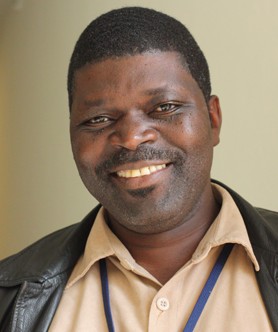
IPPNW Co-President Dr. Bob Mtonga. Photo by Aki Morizono
I represented IPPNW at the just-concluded 2nd Ministerial Review Conference of Armed Violence and Development (2MRC), which was co-convened by the Government of Switzerland and the United Nations Development Programme (UNDP). The conference was held in Geneva from 31 October to 2 November.
The 2MRC was convened to review progress made, by the signatories to the Geneva Declaration (GDAV) on Armed Violence, on taking the commitments therein enshrined forward.
A political declaration, the GDAV, is a tool that brings states, non-governmental organisations, United Nations agencies and academic institutions to a round table to discuss a broad international agenda that places armed violence at the core of business with a view to finding workable ways and means that will translate into a meaningful reduction of armed violence and its ramifications on the ground and in the lives of affected individuals, families and communities in real time. Read more…
A couple of times each year, I talk about nuclear issues with the host of a Sunday morning radio talk show in Boston, and the interview usually ends with this question: “So are you feeling optimistic or pessimistic about our chances of getting rid of nuclear weapons?”
Most recently, a few weeks ago, I said I was on the fence. That I was taking a lot of encouragement from the growing number of non-nuclear-weapon states and civil society groups who have embraced the idea of a global abolition treaty, but that I was disheartened by the relentless modernization of nuclear weapons systems in every single nuclear-weapon state.
This morning I read a sobering new report on nuclear weapons modernization from the Trident Commission of the British American Security Information Council (BASIC), and am finding it a little hard to reconstruct the case for optimism. I expect that feeling will pass, but for now, here’s the condensed version of how bad the facts on the ground really are.
The report is called “Beyond the United Kingdom: Trends in the Other Nuclear Armed States” (you can get a copy at BASIC’s website), and it covers all the nuclear-armed states except the UK, which will get separate treatment in a parallel phase of the Commission’s work. Part summary of current arsenal sizes and configurations in each of the other nuclear-weapon states and part projection of budgeted and scheduled new deployments, the report by BASIC consultant Ian Kearns also assesses the priorities and rationales that are driving the expansion of nuclear forces into the middle of this century and beyond. Read more…
Free the World from the Nuclear Chain
Nuclear Power and the Bomb – inextricably linked
We talk about abandoning nuclear energy or abolishing nuclear weapons. But this is not enough. They are only the visible products of a whole chain of production that binds us – the nuclear chain. This chain does much more damage than we are aware of.
At the front end of the chain is uranium mining – providing the same source for both nuclear energy and nuclear weapons.
Next comes enrichment. Centrifuge technology enriches uranium and it is only a question of the enrichment grade that defines whether the uranium can be used for producing electricity or weapons.
Regardless of what we believe or not, we can never be 100% sure of what it will be used for. Look at Iran, an example that shows what role mistrust and tension play in the use of such technology. The combination of enrichment and political conflict could lead to war. Read more…
Indian doctors describe dire consequences of violence against women
by Dr. Balkrishna Kurvey
“Women and children are easy prey to those with guns,” said the keynote speaker at the national conference of the Association of Medical Women in India (AWMI) on October 15-16, 2011 at Nagpur, India.
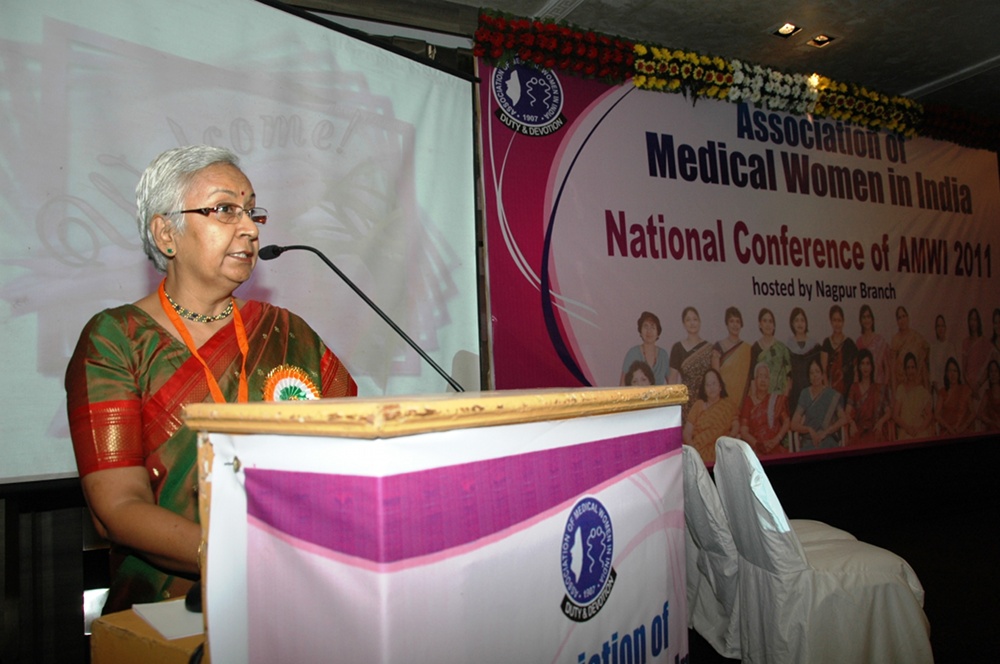
Dr. Nalini Kurvey addresses Indian conference on violence against women
My wife Nalini and I agree, which is why we have been working for more than 15 years on preventing armed violence in India, especially toward women and children, and why we helped to organize the session entitled “Tackling growing violence against women—issues & strategies: Aiming for Prevention” at the AWMI conference. We addressed more than 375 Indian women medical doctors on the health effects of small arms and light weapons. Read more…
Remembering Reykjavic
An American and a Russian president almost made good on a serious proposal to abolish nuclear weapons 25 years ago this month. The leaders were Ronald Reagan and Mikhail Gorbachev (who was actually the president of the now-defunct Soviet Union) and the occasion was the 1986 Reykjavic Summit.
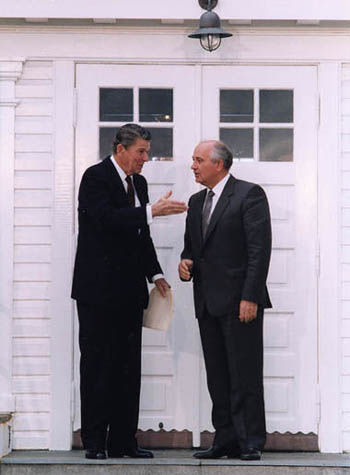 The story of how Reagan and Gorbachev sat across from each other in Hofdi House, talking themselves into the elimination of all their ballistic missiles in one grand bargain, with US Secretary of State George Shultz cheering them on, was told in heartbreaking detail by Richard Rhodes in his 2008 book Arsenals of Folly. The heartbreak, of course, was the collapse of the proposal over Reagan’s stubborn adherence to the wholly imaginary Strategic Defense Initiative and Gorbachev’s unwillingness to ignore SDI as scientific and technological nonsense. They got a lot of support in these positions from obstructionist advisers who saw the actual elimination of nuclear weapons as not in, shall we say, their best interests. Read more…
Is Mitt Romney ready for the world?
If current polls are correct, Mitt Romney seems likely to become the 2012 Republican presidential candidate and the next president of the United States. Therefore, we should carefully examine his first major foreign and military policy address—delivered on October 7 at the Citadel, in Charleston, South Carolina—and ponder the question: Is Mitt Romney ready for the world? Read more…
Hiroshima doctors leave for North Korea to examine A-bomb victims
The following news item appeared on October 11, 2011 in the Mainichi Daily News.
A team of six doctors from the Hiroshima Prefectural Medical Association departed for North Korea on Monday to conduct medical checkups for North Koreans who were in Hiroshima at the time of 1945 atomic attack on the city and exposed to radiation.
The team, led by Shizuteru Usui, the 74-year-old president of the association, is scheduled to arrive in Pyongyang on Tuesday via Beijing for a five-day stay in North Korea.
The six surgeons and internists and two aides are to visit Pyongyang and Sariwon where they will interview and diagnose the victims with the aid of local doctors, while exchanging views with North Korean groups of atomic-bomb victims.
The Japanese doctors also plan to invite members of the North Korean branch of International Physicians for the Prevention of Nuclear War to take part in an IPPNW world conference slated for next August in Hiroshima.
The prefectural association interviewed such victims in 2008 during a team visit to North Korea. But at that time, doctors could not examine the victims as they were not allowed by local authorities to practice medicine.

 Bimal Khadka
 Bjorn Hilt
 Charles K. Johnson
 Dr. Ghassan Shahrour
 Gunnar Westberg
 IPPNW
IPPNW John Loretz
 Lawrence Wittner
 Maria Valenti
 mollymcgint
 Sue Wareham
 Tilman Ruff
 Tim Wright
 Xanthe Hall


 IPPNW peace and health blog