Thomas B. Graboys — a life that balanced skill with compassion
by John Pastore
 Dr. Thomas Graboys succumbed on January 5th after a long struggle with Lewy body disease, an unrelenting and progressive neurologic illness.
Tom had been a stalwart leader in the Lown Cardiovascular Group, named for Bernard Lown, a founding co-president of the International Physicians for the Prevention of Nuclear War, recipient of the Nobel Prize for Peace in 1985. Especially in the years leading up to the Nobel, Tom was active in IPPNW and in our US affiliate, Physicians for Social Responsibility. Read more…
 People of all faiths and races have a reason to rejoice today as a new treaty that will regulate the $85 billion global trade in arms and ammunition enters into force this Christmas eve. After more than a decade of campaigning by thousands worldwide, the Arms Trade Treaty (ATT) will become international law at last. Read more…
Nobel Peace Laureates call for treaty banning nuclear weapons

IPPNW co-president Tilman Ruff (left) shares the stage with the Dalai Lama at the Nobel Peace Laureates Summit
The 14th World Summit of Nobel Peace Laureates was held in Rome this weekend. Co-presidents Ira Helfand and Tilman Ruff represented IPPNW. The Summit issued strong language condemning nuclear weapons and called for a treaty to ban them as part of a statement published at the conclusion of the meeting. Read more…
Helfand holds Nobel Peace Laureates summit “spellbound”
IPPNW co-president Ira Helfand spoke about the medical and environmental consequences of nuclear war at the Nobel Peace Laureates Summit, held in Rome this weekend.
“For the International Physicians for the Prevention of Nuclear War (IPPNW) Ira Helfand held the hall spell-bound as he described the horrific consequences should a major nuclear exchange take place today. They include the vaporisation of everything in an immediate 3kms radius of the explosion in 1000th of a second, complete destruction within a 6kms radius, the burning of everything flammable within a 25kms radius and the consumption of all oxygen within a 50kms radius. In Rome 3 million would die instantly. In New York it would be 12 million. Temperatures would plunge for several days. The world ecosystem would be disrupted to the extent that food production would be severely curtailed.
Helfand said:
“The continued existence of these weapons alone is a threat, but human beings built them, so human beings can also take them apart. We can all work on this; let’s all help to do it.”
His presentation was met with a long ovation.”
Firearms used in half of global homicides says new WHO report
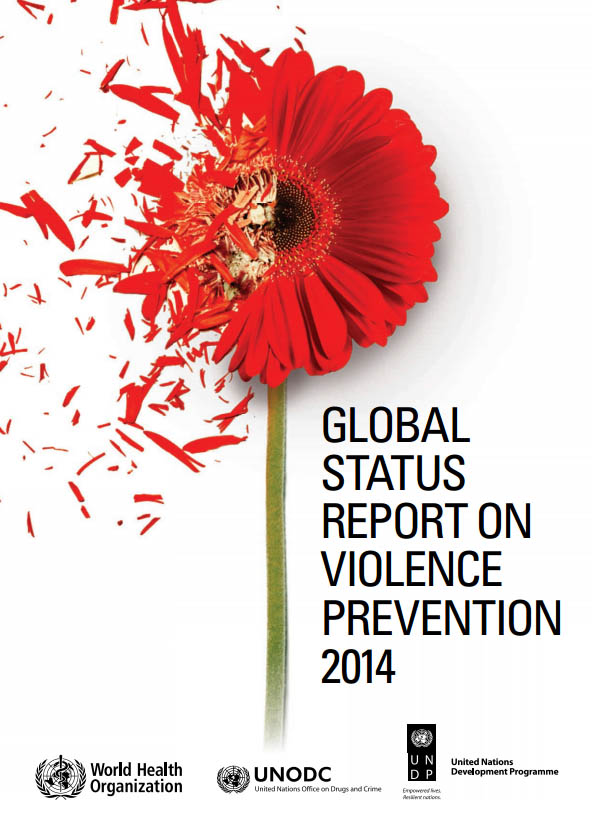 Reducing access to guns one of “best buys” for reducing violence
Firearms were used in about half of the 475,000 murders committed worldwide in 2012, according to the new Global status report on violence prevention 2014 released yesterday by the World Health Organization (WHO), the United Nations (U.N.) Development Programme (UNDP), and the U.N. Office of Crime and Drugs (UNODC). Sixty percent of those killed were males aged 15-44, “making homicide the third leading cause of death for males in this age group.” Rates of firearm use in homicides varied quite a bit between regions, ranging from a high of 75% of all homicides in the low-middle-income countries in the Americas, to 25% in the same income-level countries in Europe. Read more…
Austria pledges to work for a ban on nuclear weapons
 Humanitarian initiative on nuclear weapons must initiate treaty process in 2015
(9 December 2014, Vienna) After 44 states called for a prohibition on nuclear weapons at a conference in Vienna on the humanitarian impacts of nuclear weapons, Austria delivered the “Austrian pledge” in which it committed to work to “fill the legal gap for the prohibition and elimination of nuclear weapons” and pledged “to cooperate with all stakeholders to achieve this goal.” Read more…
Indiscriminate weapons get banned
ICAN statement to the Vienna Conference on the Humanitarian Impact of Nuclear Weapons
9 December 2014, Vienna
[Read by Nadja Schmidt, ICAN Austria]
 I am speaking on behalf of the International Campaign to Abolish Nuclear Weapons, a coalition of over 360 organizations in more than 90 countries. We are a global campaign determined to achieve the prohibition and elimination of nuclear weapons. We organized the weekend forum for over 600 people on the courage to ban nuclear weapons. Read more…
The Austrian Pledge
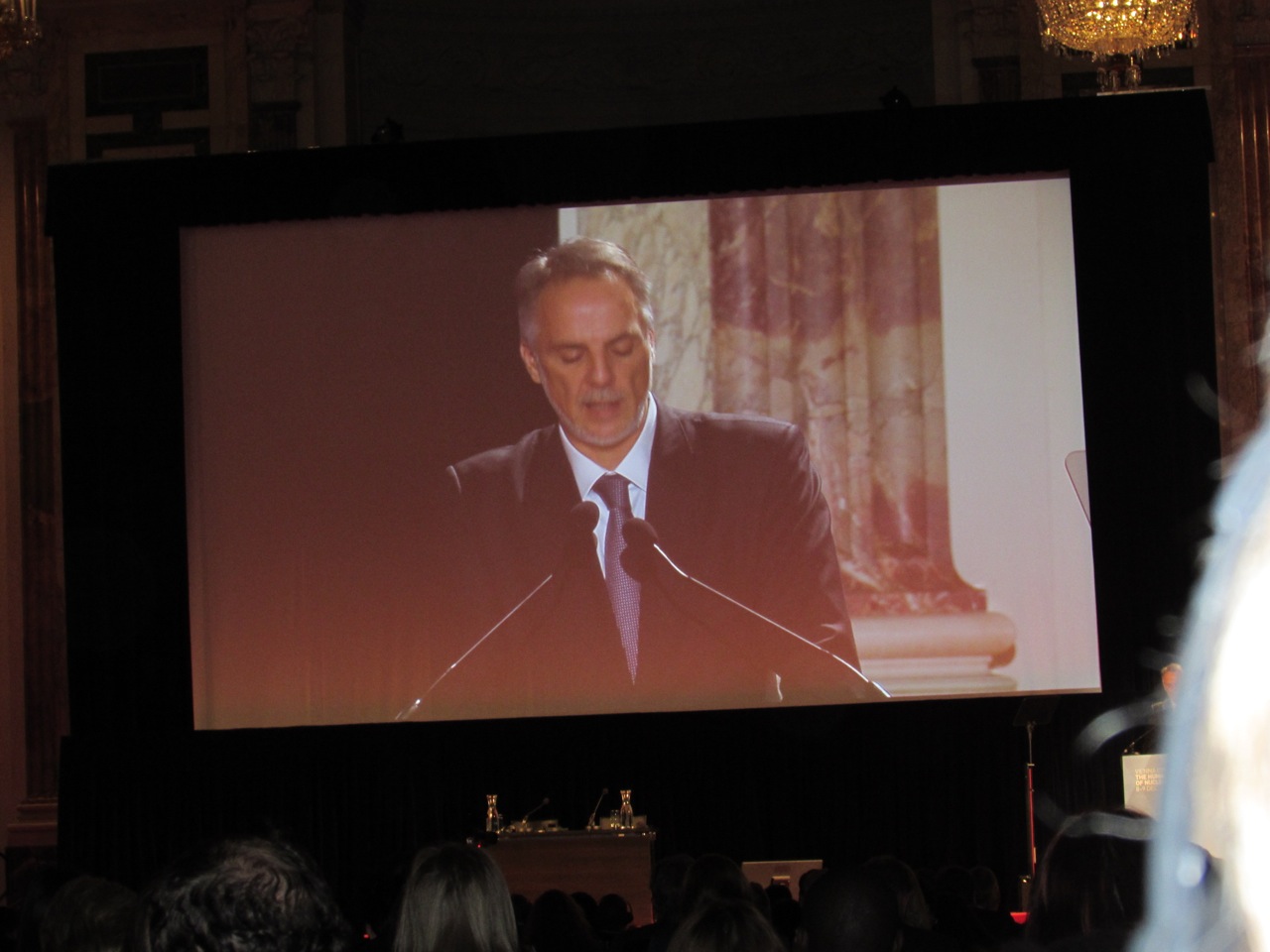
Alexander Kmentt, the Vienna Conference chair, reads the Chair’s Summary.
The Vienna Conference on the Humanitarian Impact of Nuclear Weapons concluded today with a major step forward for ICAN and all those States that are now ready to join in a political process to ban nuclear weapons. The Austrian government closed the Conference with an unexpected and extraordinary pledge: to cooperate with all stakeholders “to identify and pursue effective measures to fill the legal gap for the prohibition and elimination of nuclear weapons” (which can only mean one thing), and “to cooperate with all relevant stakeholders, States, International Organisations, the International Red Cross and Red Crescent Movements, parliamentarians and civil society, in efforts to stigmatise, prohibit and eliminate nuclear weapons in light of their unacceptable humanitarian consequences and associated risks” (which means exactly what it says).
“The Austrian Pledge” means that we can now begin the real work of bringing willing States together around a political process to ban and eliminate nuclear weapons. At least 42 States signaled their readiness to join such a process during the general debate today, and others are likely to do so once an actual process begins to take shape. Read more…
Vienna conference builds on foundation laid in Oslo and Nayarit

Alex Rosen with IPPNW’s Hibakusha Worldwide exhibition, which stands outside the conference hall.
The Vienna Conference on the Humanitarian Impact of Nuclear Weapons opened yesterday with more than 160 States in attendance (we’re still waiting for confirmation of the exact number), and with far more than 300 representatives of international organizations, civil society, and academia crowded into a beautiful ballroom in the Hofburg Palace.
Our Austrian hosts, UN Secretary-General Ban Ki-moon, and Pope Francis minced few words in asserting that the factual evidence about the overwhelmingly destructive nature of nuclear weapons has to provide the framework for their elimination, and that not nearly enough is being done to implement the nuclear disarmament obligations established by the NPT and international law. Read more…
More than 150 states gather in Vienna for global conference on nuclear weapons
In a demonstration of overwhelming support from the international community, representatives from more than 150 states are gathering in Vienna, Austria for the third international conference to examine the humanitarian consequences of nuclear weapons.
Prior to the government talks, more than 500 activists assembled in the biggest gathering of civil society on a treaty to ban nuclear weapons. Read more…

 Bimal Khadka
 Bjorn Hilt
 Charles K. Johnson
 Dr. Ghassan Shahrour
 Gunnar Westberg
 IPPNW
IPPNW John Loretz
 Lawrence Wittner
 Maria Valenti
 mollymcgint
 Sue Wareham
 Tilman Ruff
 Tim Wright
 Xanthe Hall