“[Transforming] discussions from abstract political debates into profound human realities” at the NPT
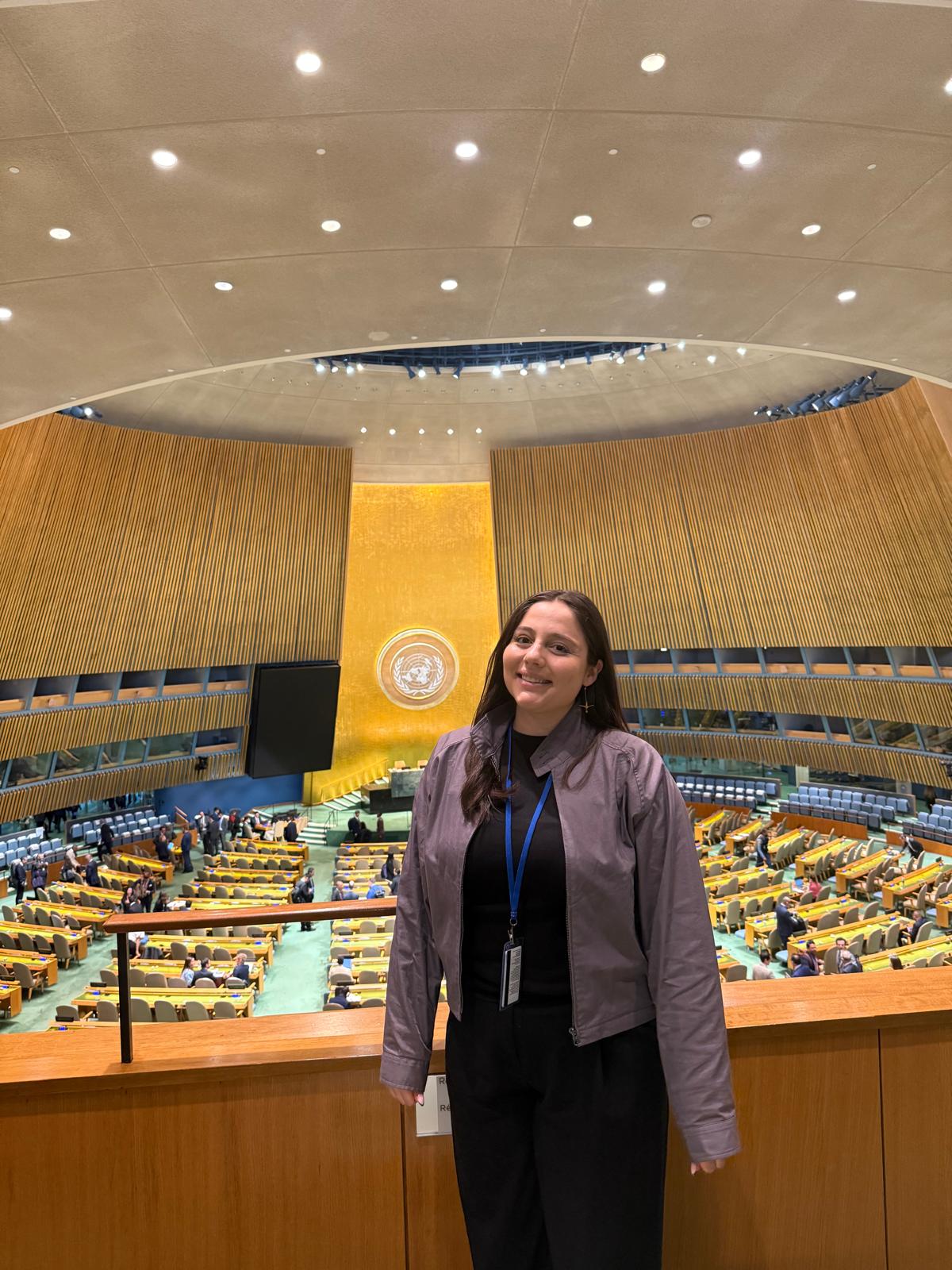
by Sofia Vitale, PSR Emerging Leader and IPPNW Student
My name is Sofia Vitale, and I am a student member of International Physicians for the Prevention of Nuclear War (IPPNW) and Physicians for Social Responsibility (PSR). I attended the 11th Review Conference to the Treaty on the Non-Proliferation of Nuclear Weapons (NPT) at the United Nations Headquarters earlier this month.
Walking into a room filled with diplomats, physicians, advocates, students, survivors, and peace leaders from around the world reminded me how deeply interconnected health, peace, education, and policy truly are. Throughout the conference, I witnessed conversations between representatives of nuclear and non-nuclear states while also listening to individuals and communities who have personally experienced the devastating consequences of nuclear weapons. Hearing those stories transformed these discussions from abstract political debates into profound human realities.
One of the most critical lessons I gained from the conference was the urgent importance of education and youth engagement in nuclear disarmament efforts. Young people must do more than simply learn about nuclear weapons and their humanitarian consequences. We must actively participate in shaping conversations about peace, security, and the future of our world. During many of the sessions, I often reflected on the ways education becomes most meaningful when it invites participation, dialogue, and empathy. Interactive initiatives such as crane-building activities, storytelling, art, and open discussions create opportunities for people to connect emotionally with these issues rather than feel intimidated or disconnected. Those moments of human connection often leave the deepest impact.
The conference also strengthened my understanding of the relationship between medicine and nuclear advocacy. As someone pursuing a career in healthcare, I often think about healing on an individual level. Importantly, this experience reminded me that healthcare also requires prevention, advocacy, and systems-level thinking. Physicians and healthcare professionals carry a responsibility not only to treat illness, but also to help prevent humanitarian catastrophe before it occurs. That realization reinforced why organizations like PSR and IPPNW matter so deeply. Since joining PSR as an Emerging Leader last year, I have gained invaluable knowledge through educational initiatives, advocacy work, and opportunities like this conference. Each experience continues to expand my understanding of global health, humanitarian medicine, and the lasting human consequences of nuclear weapons.
One session that deeply impacted me focused on the biological and health consequences of nuclear weapons. Professor Masao Tomonaga, a physician and hibakusha who survived the Nagasaki bombing at three years old, shared his research on the long-term medical effects of radiation exposure.
As someone who works in healthcare research and fertility care, I found this discussion especially meaningful. Professor Tomonaga explained how radiation targets organ stem cells and contributes to early-onset leukemia, breast cancer, myelodysplastic syndromes, and other cancers. He also discussed whole genome sequencing research that examines genetic impacts across generations. His presentation made me think deeply about reproductive health and the long-term humanitarian consequences of nuclear weapons.
What struck me most was how little science education addresses the biological effects of war and radiation exposure. Throughout my biology courses, I learned about cell damage, genetics, cancer pathways, and stem cells in isolated scientific contexts, yet no one connected these concepts to the real human consequences of nuclear weapons. This session helped me understand those biological mechanisms through a humanitarian lens. I left believing that if more physicians and healthcare students understood the cellular and genetic impacts of nuclear weapons, more medical professionals would feel compelled to advocate for nuclear disarmament and prevention.
More than anything, I left the conference feeling grateful. Few spaces allow students and young advocates to engage directly with diplomats, physicians, survivors, and international leaders working toward nuclear disarmament. I especially valued hearing perspectives different from my own and observing individuals speak, even when challenging the positions of their government, in pursuit of peace and humanitarian protection. These conversations reminded me that meaningful change does not happen through policy alone. Change grows through education, empathy, dialogue, and sustained international collaboration.
Attending the NPT Conference underscored the importance of health advocacy and leadership. It strengthened my belief that young people, medical professionals, educators, and advocates all have a role in building a safer and more compassionate world.

 Bimal Khadka
 Bjorn Hilt
 Charles K. Johnson
 Dr. Ghassan Shahrour
 Gunnar Westberg
 IPPNW
IPPNW John Loretz
 Lawrence Wittner
 Maria Valenti
 mollymcgint
 Sue Wareham
 Tilman Ruff
 Tim Wright
 Xanthe Hall