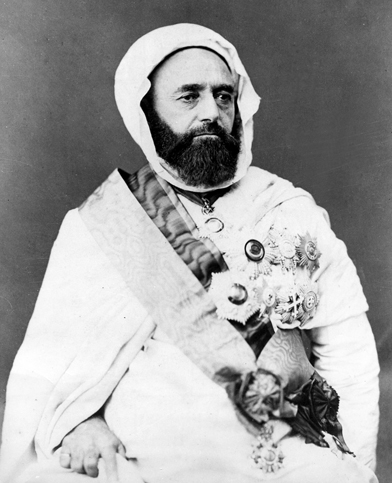
Humanity has long searched for ways to restrain violence and protect life even in the harshest moments of conflict. International Humanitarian Law, with its rules on protecting civilians, humane treatment of prisoners, and limits on the means and methods of warfare, represents the modern legal expression of this aspiration. Yet the ethical foundations of these rules were shaped long before treaties were drafted or conventions adopted. Across civilizations, individuals acted on conscience to defend human dignity when war threatened to erase it. Among these figures, Emir Abdelkader al-Jazairi and Henry Dunant stand out as two of the most compelling examples of moral courage preceding legal codification. Their lives remind humanitarian advocates today that the law was born from human choices, and that restraint in war is first a moral act before it becomes a legal obligation.
Read more…A dream deferred, but still alive

On March 1, 1945, only six weeks before his death, U.S. President Franklin D. Roosevelt delivered an address to Congress that pointed toward a sweeping transformation of international relations.
With the Axis powers tottering toward defeat in World War II, Roosevelt reported that the recently concluded Yalta conference of Allied leaders had agreed upon “a common ground for peace.” It would “spell the end of the system of unilateral action, the exclusive alliances, the spheres of influence, the balances of power, and all the other expedients that have been tried for centuries―and have always failed.” These approaches would be replaced by “a universal organization,” a “permanent structure of peace upon which we can begin to build . . . that better world in which our children and grandchildren . . . must live, and can live.”
Read more…
Revisiting Mark Twain’s writings, I experienced a familiar moral unease, the kind that arises when a truth becomes too clear to ignore. It comes from recognizing how easily humanity justifies forms of violence that contradict the dignity it claims to uphold. This unease deepened as I reread “The Damned Human Race,” where Twain exposes a pattern that still defines our age: harm becomes most dangerous not when it is committed, but when it is rationalized. Through the lens of human security, his satire raises an unresolved question: can any society call itself secure while accepting avoidable harm as a condition of order?
Read more…The ICJ Advisory Opinion—What did it give us?
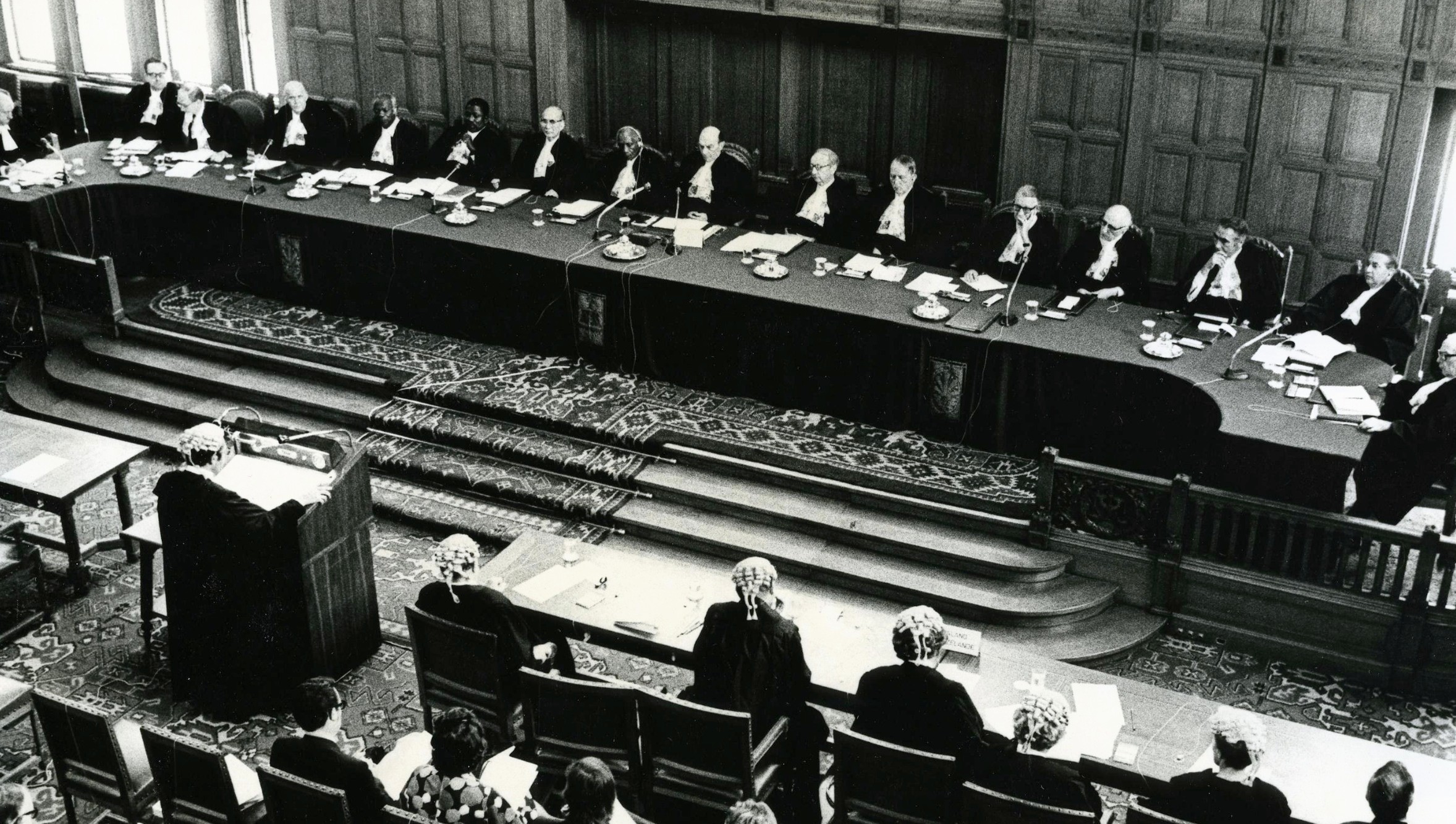
On this day, 30 years ago, the International Court of Justice published its historic document on the Legality of Use and Threat of Use of Nuclear Weapons. It was the result of a worldwide campaign by a network of over 500 organisations, led by IPPNW, IALANA and IPB. But did the nuclear disarmament community get the result it wanted? Opinion on the Opinion was divided. The third and final part of this anniversary series on the ICJ Opinion looks at what we achieved, and what is to be done next.
30 Years Later: The World Court Project
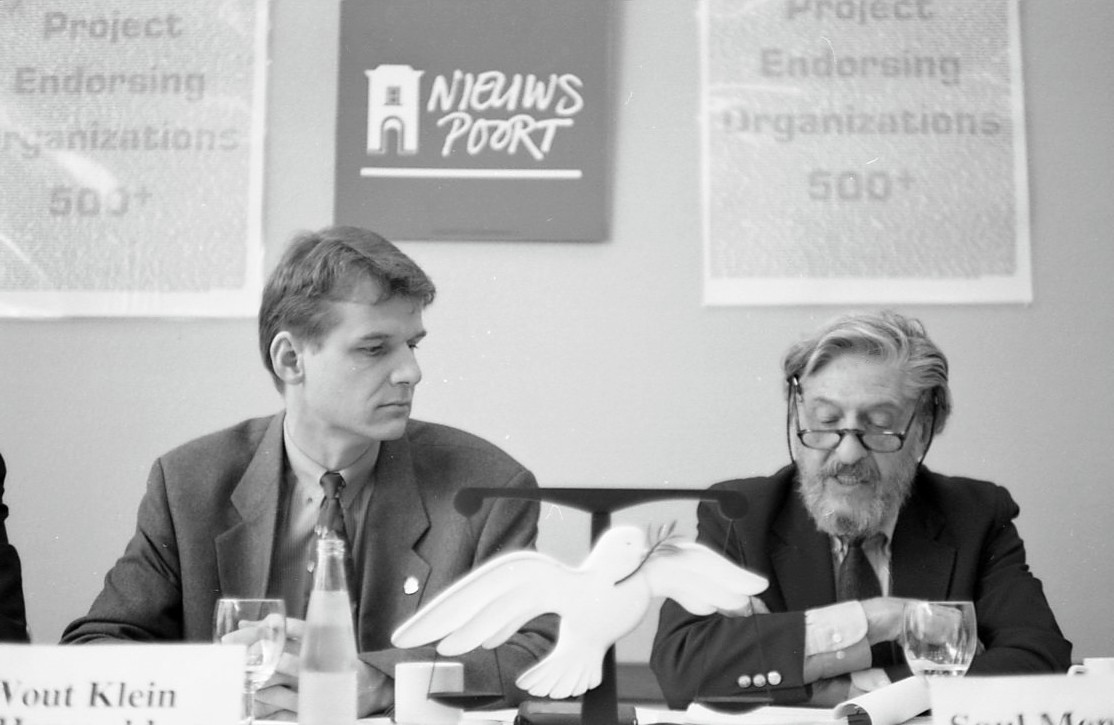
Tomorrow, on 8 July, the Advisory Opinion on the legality of nuclear weapons will be thirty years old. What did the World Court Project change? This is the second part of a three-part series looking at what led up to the Advisory Opinion of the International Court of Justice in The Hague in 1996, and what it meant for the process towards complete nuclear disarmament.

30 years ago, on 8 July 1996, a groundbreaking document was published: the Advisory Opinion of the International Court of Justice on the Legality of the Use and Threat of Use of Nuclear Weapons. It was the result of a civil society campaign, spearheaded by IPPNW, together with the International Lawyers Against Nuclear Arms (IALANA), and the International Peace Bureau (IPB). To mark the anniversary, I will—in three posts—give an overview of the Opinion, briefly cover the history and the process in which I was centrally involved, and share my conclusions about what it has changed in the past 30 years.
From independence to interdependence
As Americans and people of other former colonies recognize, there’s a great deal to be said for national independence.
But, at times, we might also wonder: is it sufficient?
Read more…‘Able’ nuclear test, 1 July 1946
Eighty years ago today, the first post-World War II nuclear test took place over the Bikini Atoll in the Marshall Islands.
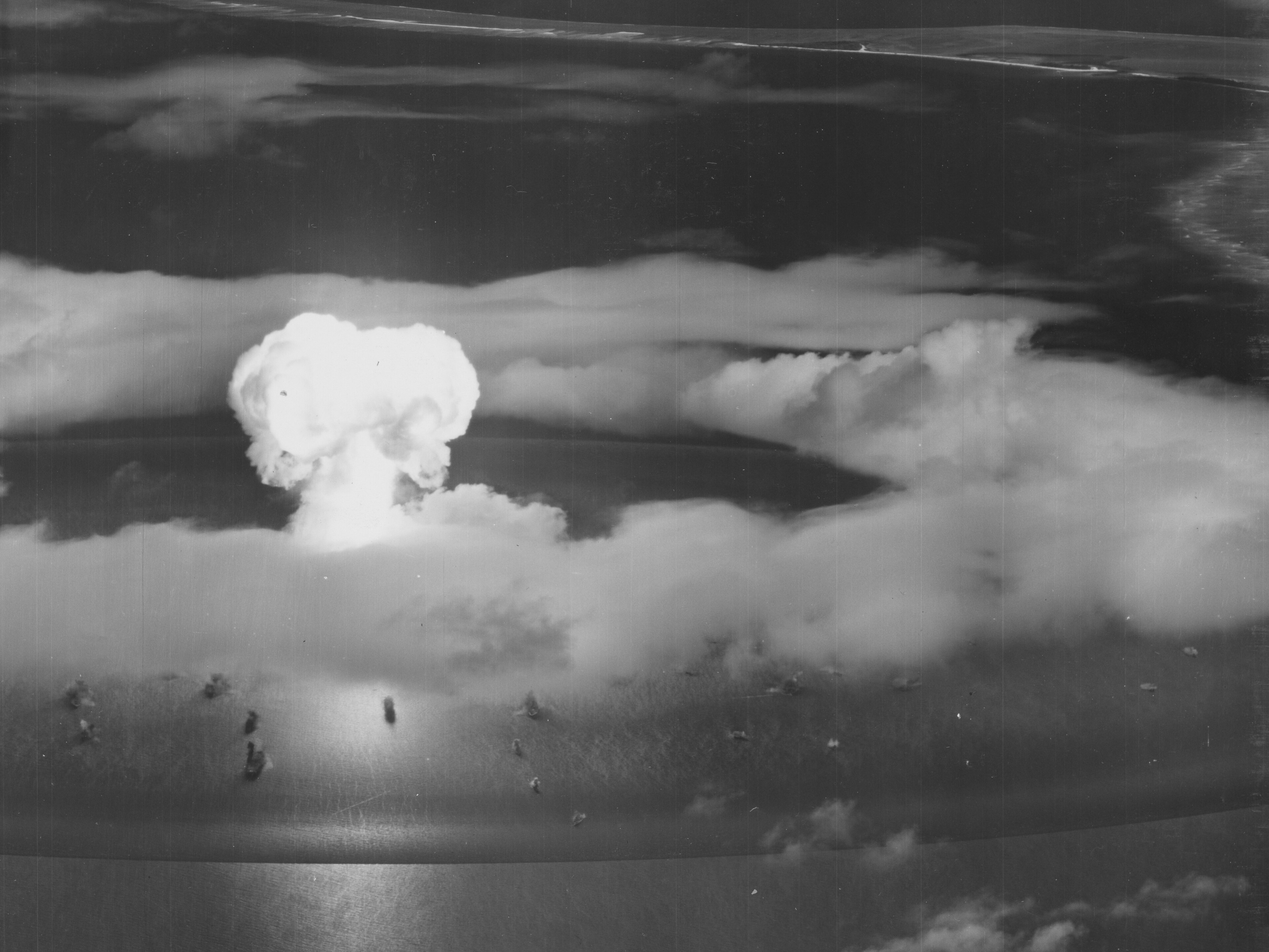
Image: Library of US Congress/ public domain
The ‘Able’ nuclear test was one of two tests conducted by the United States as part of ‘Operation Crossroads’. It took place on 1 July 1946 and was the first nuclear explosion to be carried out after the atomic bombings of Hiroshima and Nagasaki in August 1945. It was the first of 21 bombs that were detonated at Bikini Atoll, Marshall Islands, in the Pacific Ocean, over a period of twelve years, totalling about 75 megatons of TNT. Between 1946 and 1962 altogether 106 nuclear tests were carried out in the Marshall Islands.
Read more…Introduction to volunteer-based human security
The International Year of Volunteers 2026 comes at a time when communities worldwide face rising pressures from climate shocks to displacement, inequality, and social fragmentation. Across the world, volunteers are often the first to notice emerging problems and the first to respond. During heatwaves, volunteers check on isolated older persons. In conflict-affected areas, volunteers raise awareness about landmines and unexploded ordnance, helping families avoid life-threatening dangers. These everyday actions reveal a powerful reality: volunteers are not only helpers. They are essential actors in building safer, more resilient, and more dignified societies.
Read more…How Finland learned to love the bomb
by Kati Juva
When Finland’s defence minister Antti Häkkänen announced on 5 March that Finland will lift its ban on nuclear weapons, it was a total surprise to all opposition parties and also to most MPs from the government parties, not to mention the civil society. The proposal had been prepared in total secrecy and went against previous promises.
Read more…
 Bimal Khadka
 Bjorn Hilt
 Charles K. Johnson
 Dr. Ghassan Shahrour
 Gunnar Westberg
 IPPNW
IPPNW John Loretz
 Lawrence Wittner
 Maria Valenti
 mollymcgint
 Sue Wareham
 Tilman Ruff
 Tim Wright
 Xanthe Hall