Ronald McCoy: A physician in the service of peace and nuclear disarmament
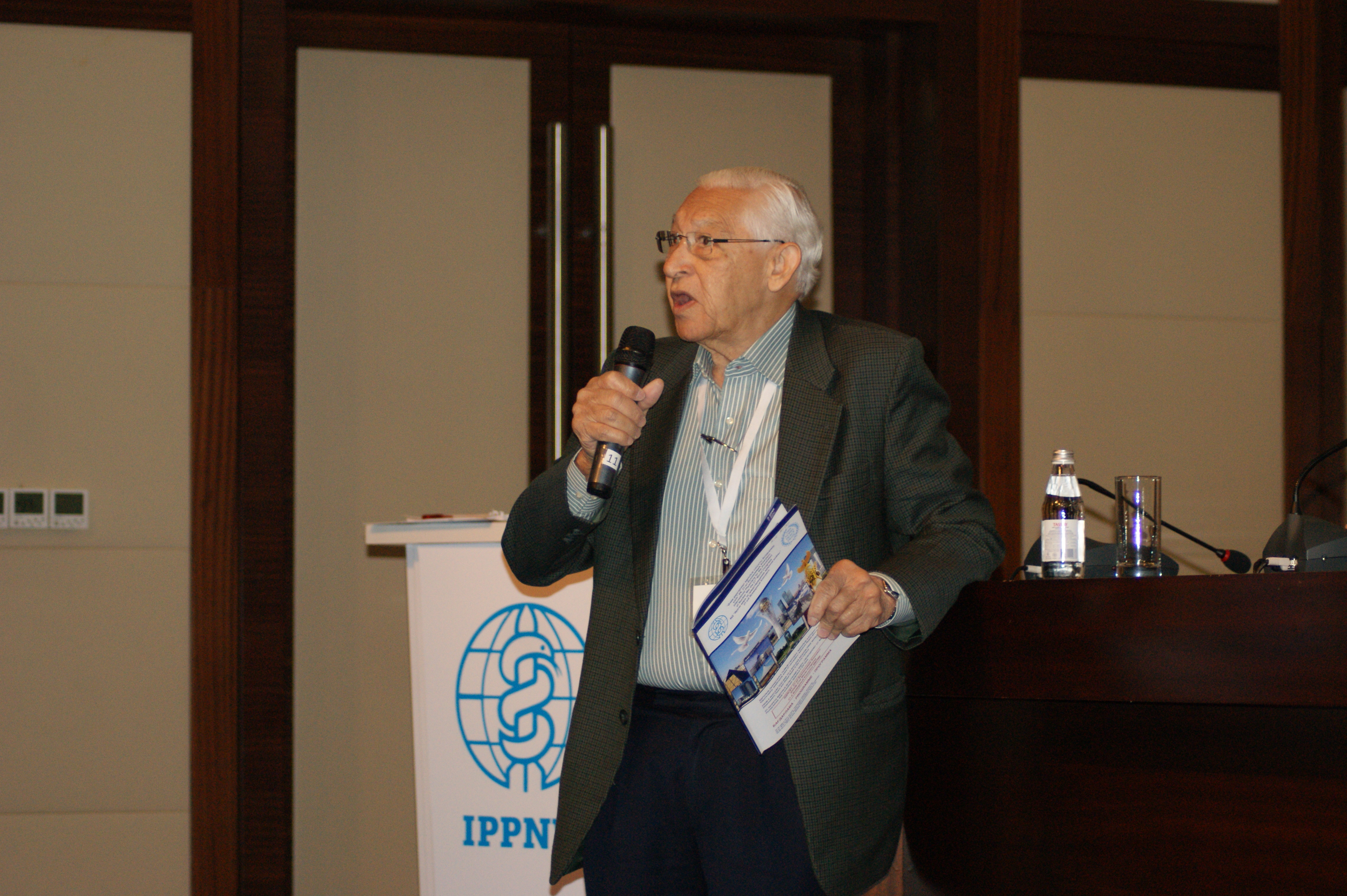
The passing of Malaysian physician Dr. Ronald Steven McCoy (1930-2026) leaves an enduring legacy in the global movement against nuclear weapons. A clinician and advocate who seamlessly integrated professional responsibility, moral courage, and strategic vision, Dr. McCoy played a pivotal role in launching one of the most consequential international initiatives aimed at ending the nuclear era. Notably, his country was also guided by another physician, Mahathir Mohamad, whose name remains inextricably linked to the building of modern Malaysia’s renaissance.
Years of leadership
Over more than four decades, Dr. McCoy assumed a leadership role within the International Physicians for the Prevention of Nuclear War (IPPNW), serving as its Co-President. His deep-seated conviction stemmed directly from his clinical practice: having supervised thousands of pregnancies and delivered nearly twenty thousand infants, he recognized the profound contradiction between safeguarding life at its inception and tolerating a world imperiled by weapons capable of total destruction. For him, preventing nuclear catastrophe was not a detached political endeavor, but a direct extension of a physician’s duty to protect human life and the health of future generations.
Following the failure of the 2005 Review Conference of the Treaty on the Non-Proliferation of Nuclear Weapons (NPT) to yield meaningful progress, Dr. McCoy proposed a bold initiative during the IPPNW leadership meeting in Helsinki in 2006: launching a new international campaign to abolish nuclear weapons. This proposal laid a foundational pillar for what became the International Campaign to Abolish Nuclear Weapons (ICAN), officially launched worldwide in 2007. Driven by ICAN’s relentless efforts and an expansive network of civil society organizations, the United Nations adopted the historic Treaty on the Prohibition of Nuclear Weapons (TPNW) in 2017 – the very year ICAN was awarded the Nobel Peace Prize.
Yet, Dr. McCoy’s leadership extended far beyond conceptualizing global initiatives. He was distinguished by humility, warmth, and perseverance, possessing a remarkable capacity to mentor younger generations, listen attentively, and foster collective action across borders and cultures. He steadfastly believed that what individuals cannot accomplish in isolation becomes attainable when collective resolve and shared purpose unite.
Asia’s physicians of conscience
In Malaysia, Dr. McCoy’s journey evokes the inspiring legacies of Asia’s “physicians of conscience,” whose contributions I have reflected upon on various occasions. From the immortal humanitarian sacrifices of Hiroshima’s physicians in Japan – such as Dr. Shuntaro Hida, who transformed the tragedy of the atomic bomb into a universal message of peace – to the historical struggle of the Philippine physician Jose Rizal, who utilized ophthalmology and the scalpel as instruments to uphold his people’s freedom and dignity, ultimately paying with his life. Remembering these physicians alongside Ronald McCoy illuminates a fundamental truth: the humanitarian legacy of medicine belongs to no single geography; rather, it is a universal language through which physicians from the heart of Asia have proven that the healing art is inseparable from defending human survival, dignity, and freedom.
Honoring the legacy of Ronald McCoy
Dr. McCoy‘s experience offers a profound lesson for the culture of humanitarian disarmament: security cannot be measured by the accumulation of destructive arsenals, but by a society’s capacity to protect life and preserve human dignity. While treaties and legal frameworks are essential, their enduring impact requires public awareness, moral commitment, and active engagement from professionals and civil society institutions.
Honoring the legacy of Ronald McCoy transcends merely commemorating a pioneer of disarmament; it demands the continuation of the cause he championed: building a world where human well-being takes precedence over weapons of mass destruction, and where genuine security is defined by human safety, rather than the threat of mutual annihilation.
Dr. Ghassan Shahrour is a physician, humanitarian disarmament advocate, and author on health and disability. has contributed to international discussions on human dignity, environmental accountability, and restraint in armed conflict. A campaigner with the ICBL, CMC, and ICAN, he supports global humanitarian efforts and also volunteers with the Greater Triangle Area Chapter of the American Red Cross.
This article was originally published by CounterCurrents.

 Bimal Khadka
 Bjorn Hilt
 Charles K. Johnson
 Dr. Ghassan Shahrour
 Gunnar Westberg
 IPPNW
 John Loretz
 Lawrence Wittner
 Maria Valenti
 mollymcgint
 Sue Wareham
 Tilman Ruff
 Tim Wright
 Xanthe Hall


Raymond G. Wilson, Ph.D. Emeritus Associate Professor of Physics Illinois Wesleyan University Bloomington, IL 61702-2900