UN votes to negotiate nuclear weapons ban
Following on from the recommendation of the Open-Ended Working Group in August 2016, a major breakthrough towards a nuclear weapons‘ ban took place in the First Committee of the United Nations, on 27 October 2016. Resolution L.41 (renumbered 258 in the General Assembly Vote) was passed by a resounding majority. The resolution mandated the UN to hold a negotiating conference in 2017 for a treaty prohibiting nuclear weapons.
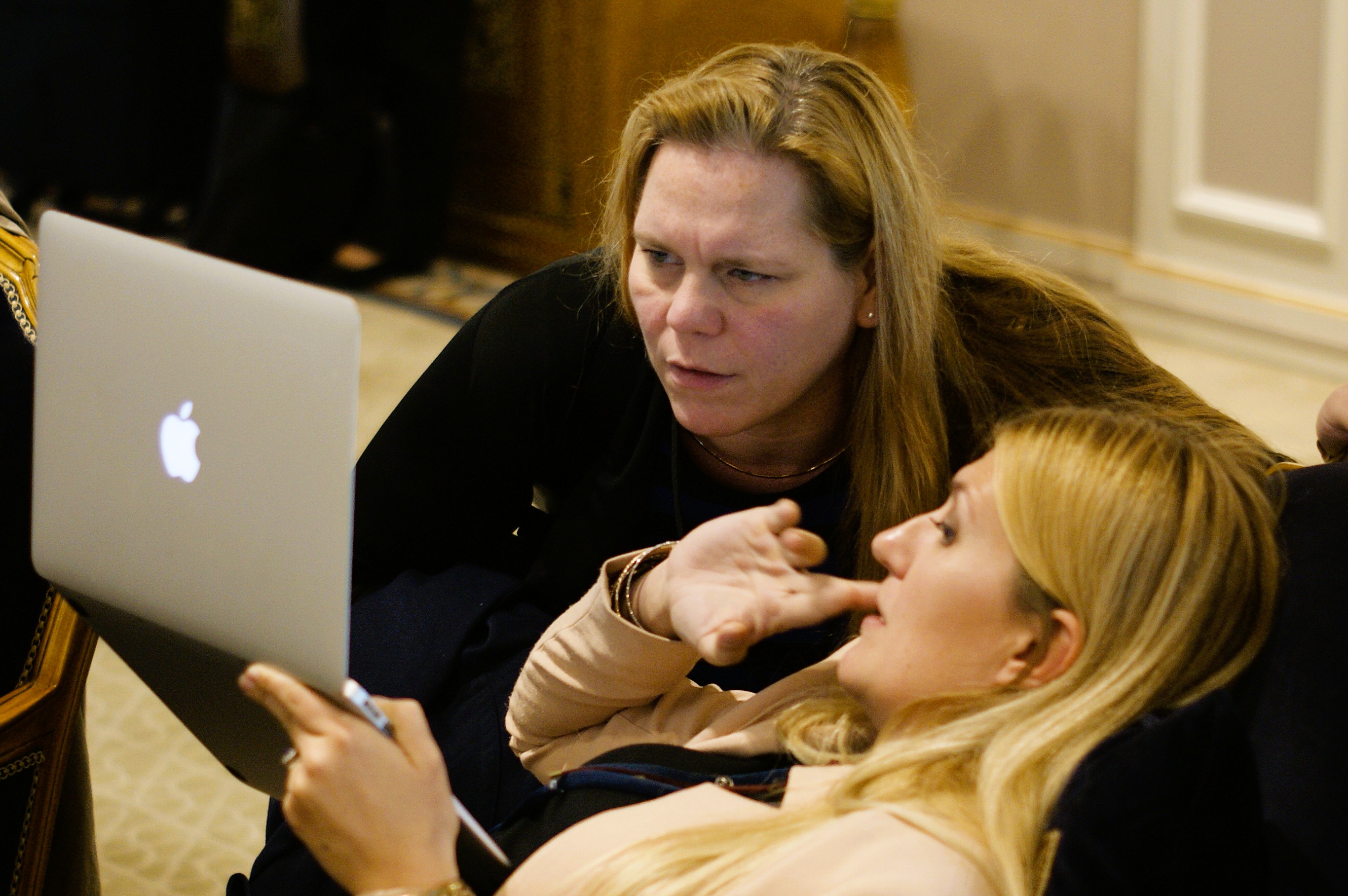
When I arrived in New York a couple of days before the vote, other ICAN activists were already gathered in the East lounge, glued to their laptops and strategising how best to get as many votes as possible for L.41. Countries had been divided into alphabetic groups and regions and were assigned to each of us. We were then tasked with approaching the relevant delegate to ask for a meeting. One way to do this, if a telephone call or email to the mission did not produce results, was to hang out in the lobby and catch the delegate as he or she came out, and request a meeting. Sometimes they agreed to talk in the lobby. This is why this kind of advocacy is called „lobbying“.
The information had already been collated and put into a spreadsheet on voting patterns, the name of the delegate, and the status of our lobbying. We even had their Twitter handles, so we could see if they were publicly favouring or speaking out against the resolution.
The main operative paragraph in the draft resolution read:
“Decides to convene in 2017 a United Nations conference to negotiate a legally binding instrument to prohibit nuclear weapons, leading towards their total elimination.”
I can‘t remember much about the individual meetings I managed to get, but I remember well that the delegate from Afghanistan did not return my calls or answer my emails. Nor did I succeed in catching him in the lobby. When the time came for the vote to take place in First Committee, however, the delegate stood up and left the room, only to return shortly afterwards. In that way I discovered the answer to my question: “Will your government support the resolution L.41?”
The delegate from Afghanistan was not the only one to decide he needed to visit the men‘s room, grab a cup of coffee, or ring his wife at exactly the moment that L.41 was tabled. Fourteen countries were not listed as having participated in the vote that day. Some of them were unable to send a delegate to the First Committee at all, possibly for financial reasons, or only had one delegate that maybe was participating in a parallel meeting.
On 17 October, ten days before the vote, the United States had sent a memo to all NATO states strongly urging them to vote against the draft resolution. The non-paper warned that such a treaty would undermine both nuclear deterrence and the Non-Proliferation Treaty and claimed that “a stance that delegitimises nuclear deterrence would be inconsistent with core concepts” of NATO membership. They also asked allies and partners to refrain from participating in the negotiation of a UN nuclear ban treaty. Although the US made it clear that NATO states should not even abstain, the Netherlands did so and also took part in the negotiations the following year — but that‘s another story.
The pressure was tangible during the days before the resolution, some states letting it be known privately that they had received clear messages from nuclear weapon states that any support for the nuclear ban could jeopardise relations or even project funding or aid. Looking at the list of those who left the room or didn‘t turn up gives us a clue about which countries tried to avoid repercussions. I myself was told by one East European delegate, whose country was applying for NATO membership, that he thought the nuclear ban was a good idea but he would be putting the application at risk if he voted for it. Shrugging his shoulders, he said “that‘s just the way it is: some things are more important to us than others”.
Voting in the United Nations is electronic. The chair announces that the system has been opened for voting. Each delegate has three buttons in front of them: red, green, and yellow. When the chair announces that voting has closed, a large board up on the wall shows the results in corresponding colours with the total at the bottom. When the numbers came up: “In favour 123, Against 38, Abstention 16”, showing that the resolution had been passed, all of the NGO delegates cheered and began to applaud. This is usually not countenanced in the UN, but the chair — Sabri Boukadoum of Algeria—- was obviously not displeased by the result himself and tolerated the applause with only a gentle and humorous reprimand.
Four of the five Nuclear Weapon States (recognised formally as nuclear weapon states in the Non-Proliferation Treaty, also called the P5 because of their permanent seats on the UN Security Council) were against the resolution. China, however, abstained. In a joint statement France, the United Kingdom, and the United States argued that banning nuclear weapons would render consensus at the next NPT Review Conference “impossible”. Russia warned of the “fatal, destructive repercussions” of adopting the resolution, and the heightened risk of “plunging the world into chaos and dangerous unpredictability.” The so-called de-facto nuclear weapon states were divided: Israel was against, India and Pakistan abstained, and North Korea voted in favour of a nuclear ban.
Not only the NGOs present in the room applauded the adoption of this groundbreaking resolution. The European Union passed a resolution welcoming the UN decision and encouraging member states to take part in the negotiations.
After the vote and some dinner, ICAN gathered at a nearby pub to celebrate with some of the co-sponsors. The euphoria was palpable. The road had been long and sometimes hard, but the strategy of getting a nuclear ban through the United Nations had paid off. As one delegate had told me a few years earlier: You have to check all the boxes: Conference on Disarmament, Non-Proliferation Treaty, Open-Ended Working Group, to get to the First Committee and succeed.
Throughout, the cohesion of the nuclear-free states had strengthened. With every attempt at repression by the nuclear weapon states, the will to achieve a nuclear ban became greater. Some supporters of the ban began to equate the process with bringing democracy to the UN. The nuclear-free countries were fed up with their existence being threatened by a small group of countries with colonial histories. The term nuclear justice was coined, originally about the destruction of indigenous health and environment by nuclear testing, it now took on a wider meaning: freeing the world from the nuclear yoke, even changing the world order in favour of the majority. The concept in the UN of one country, one vote, redressed the power balance to allow even Pacific Island states to be heard.
Epilogue:
First Committee resolutions are always voted on a second time in the General Assembly at the end of the year. Traditionally, the vote remains the same. It would be very bad form to change it between October and December. However, it can happen that some countries are no longer at the UN, or others are. In this case, the vote on L.41 (now 258) was deferred until 23rd December in New York — because of different time zones that is Christmas Eve in some parts of the world and delegates are travelling home. So all of the numbers were down and the voting result was 113-35-15. 32 delegates were absent on the role call.
Further Reading:
European Parliament Think Tank: Briefing A Nuclear Ban Treaty: Taking forward multilateral nuclear disarmament negotiations, 13 Jan 2017
Hall X: Under Pressure, IPPNW Peace and Health Blog, 3 Nov 2016 United States Non-paper: Defense Impacts of Potential United Nations General Assembly Nuclear Weapons Ban Treaty
Taking forward multilateral nuclear disarmament negotiations, UN Resolution A/C.1/71/L.41
United States Non-paper: Defense Impacts of Potential United Nations General Assembly Nuclear Weapons Ban Treaty, 17 Oct 2016
Voting on UN Resolution L.41 in First Committee, 27 Oct 2016

 Bimal Khadka
 Bjorn Hilt
 Charles K. Johnson
 Dr. Ghassan Shahrour
 Gunnar Westberg
 IPPNW
 John Loretz
 Lawrence Wittner
 Maria Valenti
 mollymcgint
 Sue Wareham
 Tilman Ruff
 Tim Wright
 Xanthe Hall