Bridging Geopolitical Divides: IPPNW Revitalizes Dialogue in Russia and China
by Michael Christ, IPPNW Executive Director. September 29, 2026. Originally published in Vital Signs.
This month marks the 40th anniversary of the 1986 Reykjavík Summit, the historic meeting where Ronald Reagan and Mikhail Gorbachev came astonishingly close to completely abolishing the nuclear arsenals of the two superpowers. While the meeting concluded without an official accord due to US insistence on pursuing the Strategic Defense Initiative (“Star Wars”), it nevertheless laid the critical diplomatic foundation for future landmark nuclear disarmament treaties. It also proved that even bitter adversaries can sit at the negotiating table to tackle head-on the greatest immediate threat to human survival.
Tragically, these hard-fought gains have been lost to a steady breakdown in international diplomacy, a dangerous arms race in nuclear weapons and artificial intelligence, and a resort to threats and war to prosecute disputes. This has made the risk of catastrophic miscalculation higher than at any point since the Cold War.
As we did throughout the 1980s, IPPNW is bridging geopolitical divides by engaging our network of physicians and health partners around the world on the growing threat of nuclear war—especially with colleagues in Russia and China—not as an abstract political calculation, but as the final, untreatable global health epidemic.
Monthly Russian-American Exchanges
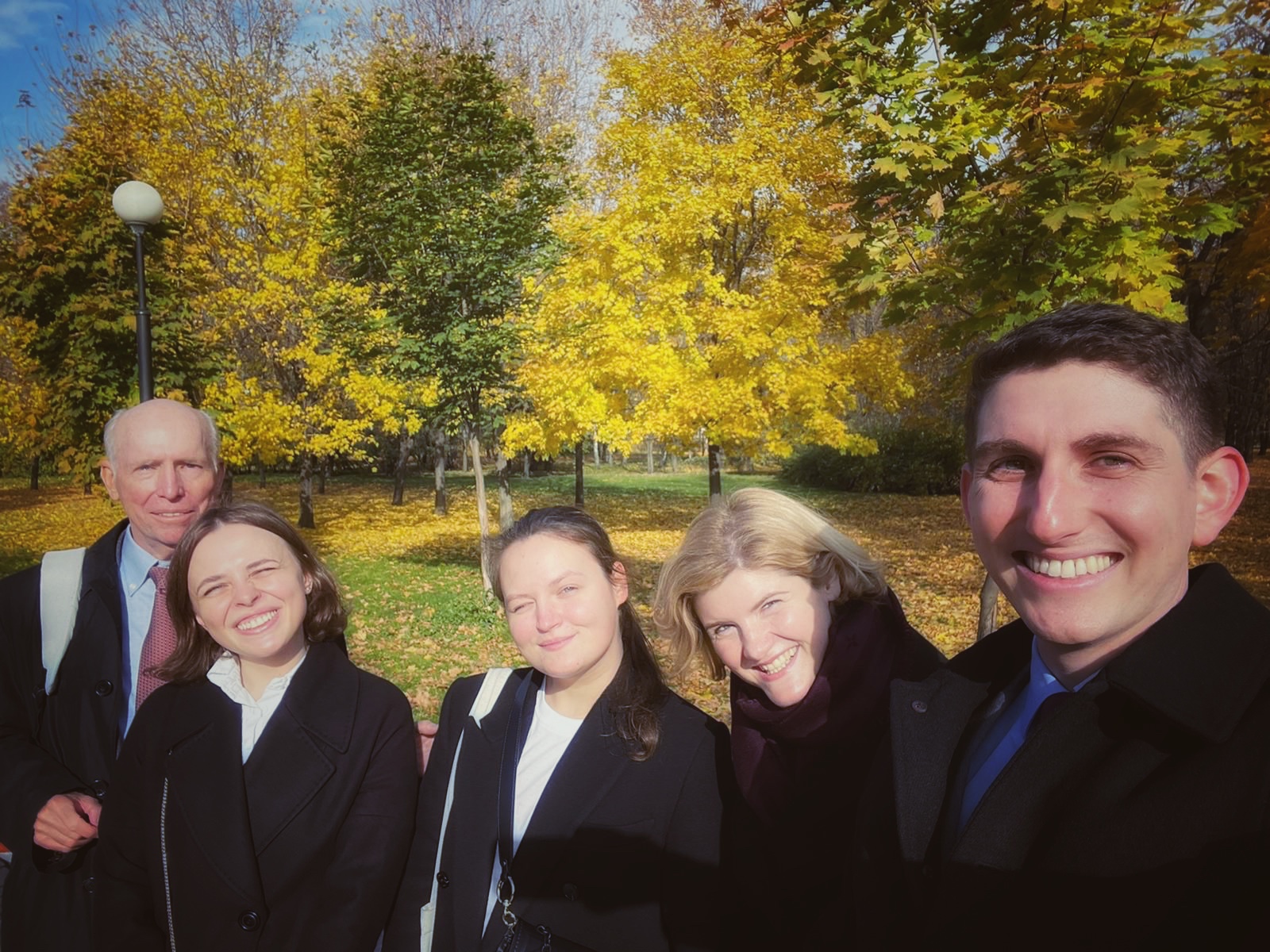
IPPNW is one of very few professional associations that has not abandoned dialogue with Russian colleagues. Since the summer of 2021, a new, energized cohort of Russian and American medical students and young doctors has hosted informal monthly Zoom calls to build relationships and trust.
The effort was the brainchild of Dr. Joe Hodgkin, an attending hospitalist at Massachusetts General Hospital, and Dr. Olga Trushina, a cardiologist at the Russian Cardiology Research and Production Complex (which was founded by her grandfather, IPPNW co-founder Eugene Chazov). Dr. Hodgkin serves on the Board of Directors of IPPNW’s US affiliate, Physicians for Social Responsibility, and Dr. Trushina is a Co-President of IPPNW. Together, they have renewed and re-imagined IPPNW’s founding mission using modern technologies that are integral to their social and professional lives.
Participants in these discussions have gone on to publish relevant articles in medical literature, attended key nuclear disarmament meetings at the UN, and become active in local and national campaigns opposing the threat of nuclear war.
Russian Nonproliferation Conference
At the invitation of the Russian Center for Energy and Security Studies (CENESS), IPPNW’s Chuck Johnson traveled to Moscow to participate in high-level discussions on nuclear weapons. CENESS is a think-tank that fosters dialogue and cooperation on nuclear policy, nonproliferation, and nuclear energy issues. Chuck previously served as the founding director of the IPPNW Geneva Liaison Office before transitioning to his role as policy director.
The 2026 Moscow Nonproliferation Conference took place on March 12–14, 2026, bringing together 289 experts—including diplomats, researchers, academics, and advocates—from 49 countries. Roughly half of the participants were Russian. The event also drew high-level officials from key UN agencies and international organizations, such as Russian Deputy Foreign Minister Sergey Ryabkov, UN High Representative for Disarmament Affairs Izumi Nakamitsu, and IAEA Director General Rafael Grossi.
During closed-door sessions, participants tackled the major global security challenges in nuclear nonproliferation and disarmament. A special “New Generation Experts Segment” also gathered approximately 40 young professionals from 20 countries to explore the associated risks and opportunities.
This marked the first time IPPNW was invited to this flagship biennial event. The conference provided a rare, high-value opportunity for IPPNW to engage directly with top Russian and international officials and experts—both during the formal panels and in private meetings on the margins.
Renewed Outreach to China
Chuck Johnson has also been at the leading edge of IPPNW’s efforts to strengthen cooperation and dialogue with health professionals, academics, and professional associations in China.
His consistent outreach to Chinese colleagues during international health partner and UN disarmament meetings in Geneva led to an invitation to lecture at the China Foreign Affairs University in Beijing in the fall of 2025.
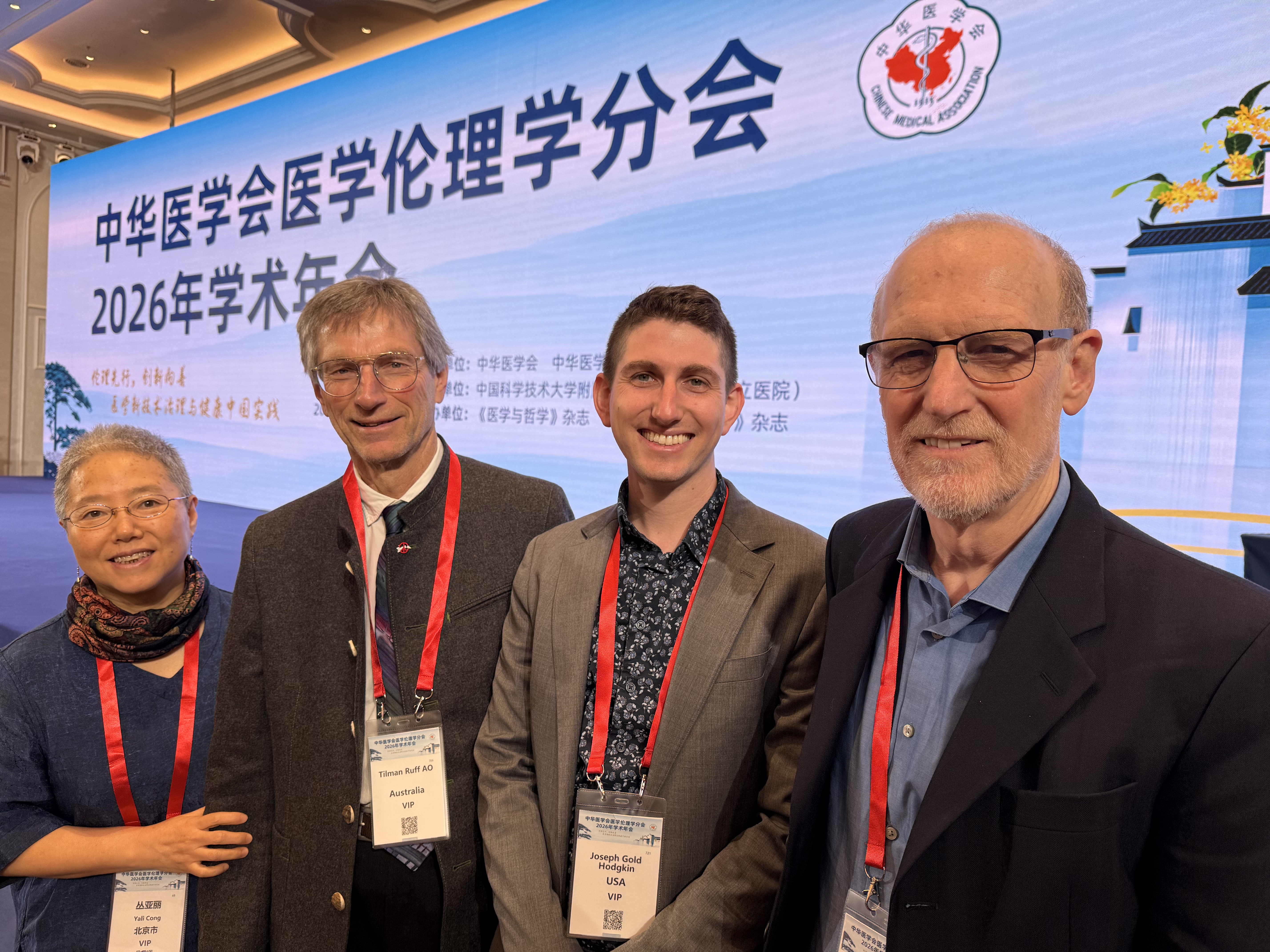
While in Beijing, he also met with members of the Chinese Medical Association at their headquarters, securing a commitment from them to invite IPPNW doctors to present to medical professionals in China in the coming year. As a result, an IPPNW delegation attending the annual meeting of the Chinese Medical Association’s Medical Ethics Branch in Hefei, the capital of Anhui province, in July 2026. Chuck was joined by Dr. Joe Hodgkin (PSR-USA) and Dr. Tilman Ruff (MAPW-IPPNW Australia).
This visit was our most significant engagement with China since the 2004 IPPNW World Congress in Beijing. The delegation delivered three plenary lectures at the national medical conference, highlighting the critical role of medical and public health professionals in addressing the growing threat of nuclear war.
Following the conference, the team held multiple high-level meetings with dozens of senior academics, health officials, and organizational leaders in both Hefei and Beijing. These discussions were aided significantly by Dr. Hodgkin’s deep cultural knowledge and fluency in Mandarin, as well as Dr. Ruff’s extensive history and leadership within IPPNW.
The delegation discussed several concrete follow-on activities, including planning additional meetings and co-authoring joint publications in prominent Chinese health and science journals focused on the prevention of nuclear war.
By reviving these critical channels of communication, IPPNW ensures that even in times of intense global friction, the medical community remains a vital bridge toward peace. The US, Russia, and China would do well to revive the “spirit of Reykjavík”, returning to the negotiating table to complete what Reagan and Gorbachev came so close to achieving—saving humankind from the growing threat of nuclear war.

 Bimal Khadka
 Bjorn Hilt
 Charles K. Johnson
 Dr. Ghassan Shahrour
 Gunnar Westberg
 IPPNW
IPPNW John Loretz
 Lawrence Wittner
 Maria Valenti
 mollymcgint
 Sue Wareham
 Tilman Ruff
 Tim Wright
 Xanthe Hall