Goethe and the moral roots of peace and humanitarian disarmament
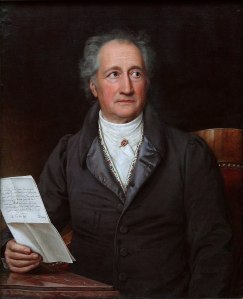
Johann Wolfgang von Goethe remains one of the most expansive minds in modern intellectual history. His legacy crosses poetry, literature, science, philosophy, and cultural thought, yet beneath this diversity lies a sustained concern with the development of the human being. He lived through revolution, political upheaval, nationalism, and war, but his intellectual response rarely confined itself to the political events of his time. He returned again and again to questions of human development, responsibility, culture, education, and the conditions necessary for a more just and humane society.
For those engaged today in humanitarian disarmament, Goethe offers an important intellectual resource. He did not establish a disarmament movement, formulate modern humanitarian law, or advocate the treaties that define contemporary humanitarian disarmament. His relevance lies elsewhere: in the human and cultural foundations upon which efforts to prevent unacceptable harm must ultimately depend.
As someone who has spent decades promoting humanitarian norms, coordinating volunteer-driven initiatives, I see Goethe’s insights as essential to our ongoing effort to deepen the culture of humanitarian disarmament and protect future generations.
The human being as the first frontier of peace
For Goethe, human development was not a peripheral cultural concern. It was central to the health of society. Education, intellectual growth, moral responsibility, and the cultivation of judgment were essential elements of a mature human life.
This provides a useful starting point for thinking about humanitarian disarmament and peace. A prohibition written on paper is important, but its long-term strength also depends on the values that sustain it. Treaties require institutions, implementation, political commitment, public awareness, and a culture that recognizes certain forms of harm as unacceptable.
The human being is therefore the first frontier of peace.
A society that cultivates empathy, critical thought, responsibility, and respect for the dignity of others creates stronger foundations for resisting violence. Education cannot eliminate conflict by itself, but it can influence how individuals understand difference, authority, responsibility, and the consequences of violence.
This is particularly important for humanitarian disarmament, which seeks to transform not only policy but also the understanding of what societies should consider unacceptable.
War as a failure of human development
Goethe lived through the upheavals of the French Revolutionary and Napoleonic eras and encountered the realities of war directly. His reflections on war did not reduce it to military strategy. They revealed concern with its human and moral consequences.
Goethe’s famous characterization of war as a “hereditary disease of humanity” captures a recurring theme in his thought: violence can become embedded in human behavior and political systems when societies fail to develop adequate moral restraints.
The precise historical context of individual Goethe quotations matters, and his views cannot simply be converted into a modern doctrine of pacifism. Goethe was not Tolstoy. He did not formulate a comprehensive philosophy of nonviolence.
His contribution is different.
He encourages us to examine the human conditions that permit violence to become normalized. Why do societies accept destruction as inevitable? Why do individuals surrender judgment to authority? Why does nationalism so easily become hostility toward others? And what forms of education and culture might strengthen the capacity to resist these tendencies?
These questions remain highly relevant to humanitarian disarmament.
They also echo the concerns that shaped my own advocacy: preventing harm by strengthening moral responsibility before violence occurs.
Education as a foundation of peace
Goethe’s intellectual relationship with Friedrich Schiller is particularly important here. Their engagement with aesthetics and human development reflected a broader conviction that political transformation cannot be separated from the formation of human character.
The lesson for humanitarian disarmament is not that education alone can prevent war. Rather, education should be understood as one component of a wider system of prevention.
Children and young people can learn that weapons are not abstract instruments but objects capable of producing lifelong disability, displacement, psychological trauma, environmental destruction, and death. They can learn about survivors, international humanitarian law, human rights, and the responsibilities of citizens and leaders.
Such education can help create what might be called a culture of humanitarian disarmament: a culture in which human suffering is not treated as an acceptable collateral consequence of political or military objectives.
The goal is therefore not simply to teach young people about weapons. It is to teach them why certain forms of violence should never become morally ordinary.
Weltliteratur and the possibility of human solidarity
Perhaps Goethe’s most powerful contribution to a culture of peace is his concept of Weltliteratur, or world literature.
Goethe recognized that cultures could learn from one another without surrendering their distinct identities. Literature and intellectual exchange could create encounters across national and cultural boundaries. Such encounters could challenge stereotypes and replace isolation with curiosity.
This idea has contemporary relevance far beyond literature.
Humanitarian disarmament has always depended on international cooperation. The movements that produced the Mine Ban Treaty and the Convention on Cluster Munitions brought together states, survivors, civil society organizations, humanitarian actors, medical professionals, researchers, and campaigners across borders.
Their work demonstrates that humanitarian norms can emerge from a form of international solidarity that is not limited to governments.
Goethe’s Weltliteratur offers a cultural counterpart to this principle. Dialogue can reduce fear. Cultural exchange can challenge dehumanization. Knowledge of other societies can weaken the assumption that difference is a threat.
In this sense, culture is not decoration added to peace after political agreements are reached. Culture can help create the human relationships and understanding upon which cooperation depends.
From moral insight to humanitarian norms
Modern humanitarian disarmament is grounded in international law and political practice. The Mine Ban Treaty, the Convention on Cluster Munitions, and the Arms Trade Treaty emerged from specific historical processes and cannot be attributed to Goethe’s philosophy.
Yet the moral principles behind humanitarian disarmament resonate with questions that Goethe’s work helps us explore: What is the value of human life? What responsibilities do individuals and institutions have toward others? When does military utility become morally unacceptable? How can societies develop stronger restraints on destructive power?
The humanitarian disarmament approach places the protection of people at the center. It recognizes the suffering of civilians and survivors, seeks to prevent future harm, and treats international norms as instruments for protecting human beings rather than merely regulating military capabilities.
Goethe helps us approach these questions from the cultural side.
Law can prohibit a weapon. Institutions can monitor compliance. Campaigns can mobilize public opinion. But a durable humanitarian norm also requires a social culture that understands why the prohibition matters.
That is where moral education, literature, historical memory, and cultural exchange become relevant.
It is also where volunteer-driven initiatives, play a role in strengthening public conscience.
Beyond the weapon: building a culture of prevention
Humanitarian disarmament should therefore not be understood only as a technical effort to remove particular weapons. It is also an effort to redefine the relationship between power and human responsibility.
The history of humanitarian disarmament demonstrates that civil society can challenge assumptions once considered politically impossible to change. Survivors can become advocates. Medical professionals can document harm. Researchers can expose consequences. Campaigners can transform public attitudes. States can eventually translate these changes into international law.
Goethe’s contribution to this broader vision is the insistence that human development matters.
A culture of peace requires more than the absence of weapons. It requires the presence of judgment, empathy, responsibility, dialogue, and respect for human dignity.
This is why the cultural dimension of humanitarian disarmament deserves greater attention. Disarmament is ultimately about what human beings decide they will no longer accept.
This principle guided my own humanitarian work: building cultures that refuse harm, not only laws that prohibit it.
Goethe’s relevance today
Goethe does not offer a ready-made humanitarian disarmament program. Nor should his eighteenth- and nineteenth-century ideas be presented as if they anticipated every principle of contemporary international law.
His value is more fundamental.
He reminds us that peace begins with the formation of the human being; that cultural isolation can feed hostility; that education can strengthen moral judgment; and that encounters among cultures can widen the boundaries of human solidarity.
These insights complement, rather than replace, the legal and political architecture of humanitarian disarmament.
They also raise an important question for our own time: Can humanity develop increasingly powerful means of destruction without developing an equally powerful culture of responsibility?
The answer cannot come from technology alone. It requires education, ethical reflection, international law, public conscience, and a persistent commitment to human dignity.
Conclusion
Goethe’s contribution to the moral roots of peace and humanitarian disarmament is therefore not found in a specific treaty or disarmament campaign. It lies in his enduring attention to the formation of the human being.
Humanitarian disarmament seeks to protect people from unacceptable harm. Goethe helps us consider the cultural and moral conditions that make such protection possible.
If Tolstoy gives us the conscience of peace, Goethe gives us part of its human foundation. One speaks more directly to the moral rejection of violence; the other helps us understand the education, culture, intellectual development, and human solidarity through which societies may become less willing to accept violence as inevitable.
The challenge before us is not only to remove weapons from the battlefield. It is to remove the ideas, habits, prejudices, and moral indifference that allow human beings to accept the suffering caused by them.
The deepest culture of humanitarian disarmament begins there: with the decision to place human dignity above the logic of destruction, and with the conviction that peace must be cultivated in the human mind before it can be secured in law.
Dr. Ghassan Shahrour is a physician, humanitarian disarmament advocate, and author on health and disability. has contributed to international discussions on human dignity, environmental accountability, and restraint in armed conflict. A campaigner with the ICBL, CMC, and ICAN, he supports global humanitarian efforts and also volunteers with the Greater Triangle Area Chapter of the American Red Cross. He also writes a recurring cultural editorial, “Yesterday through today’s eyes,” in Arabic.

 Bimal Khadka
 Bjorn Hilt
 Charles K. Johnson
 Dr. Ghassan Shahrour
 Gunnar Westberg
 IPPNW
IPPNW John Loretz
 Lawrence Wittner
 Maria Valenti
 mollymcgint
 Sue Wareham
 Tilman Ruff
 Tim Wright
 Xanthe Hall