Jonathan Schell and the moral urgency of our time
In revisiting my tribute to Jonathan Schell, written in March 2014, more than a decade after his passing, I find that his voice carries an even sharper moral resonance today. What once felt like a reflection on a towering figure in humanitarian thought has become a call to confront a world where civilian suffering is rising, international norms are eroding, and destructive technologies are expanding without restraint. Schell wrote with clarity about the human cost of war and the responsibilities of societies to prevent it. Today, his warnings feel less like history and more like a mirror held up to our present moment. His life and writings lead me back to questions that remain urgent today: the human cost of war, the moral responsibility to prevent it, and the continuing struggle for humanitarian disarmament and peace.
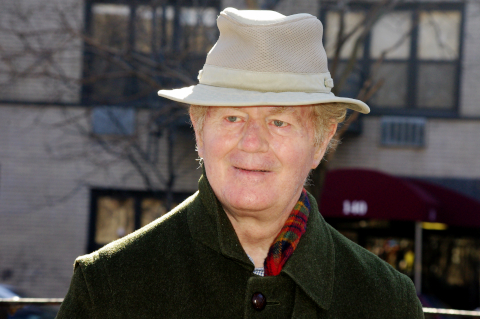
Jonathan Schell was one of the most influential moral voices of his generation. Born in Manhattan, he became widely known as an author, journalist, and anti war advocate who condemned wars from Vietnam to Iraq. His best selling book, The Fate of the Earth, published in 1982, remains one of the most powerful works ever written on the catastrophic consequences of nuclear weapons. It helped shape global thinking on nuclear disarmament and inspired generations of activists, scholars, and policymakers.
Schell began his career as a staff writer at The New Yorker magazine from 1967 to 1987. At the age of 24, he traveled to Vietnam and produced one of the most important testimonies of the war: “The Village of Ben Suc.” In this work, he documented the suffering of innocent civilians during Operation Cedar Falls. His account was not simply journalism; it was a moral witness. It forced readers to confront the human reality behind military operations and to question the logic of war itself. For many people around the world, the story of Ben Suc became a symbol of the human cost of conflict.
Schell’s moral witness did not remain confined to Vietnam. It entered the collective memory of societies that refuse to forget the suffering of civilians. That collective memory nourished the public conscience, reminding people that war is not an abstraction but a human tragedy. A strong public conscience creates responsibility, both individual and institutional, to prevent violence and protect life. And responsibility, when practiced across generations, becomes a culture of humanitarian disarmament and peace. This chain of meaning helps explain the enduring power of Schell’s contribution, and it is precisely what the world needs today.
His other books, including The Military Half, The Time of Illusion, The Abolition, The Real War, Observing the Nixon Years, The Unfinished Twentieth Century, The Unconquerable World, and A Hole in the World, expanded his moral and political analysis. They explored the limits of military power, the possibilities of nonviolence, and the responsibilities of societies in preventing war.
I never met Jonathan Schell, but through his writings I felt close to a visionary thinker who believed deeply in the dignity of human life. His work offered frameworks for disarmament and gave peace loving people strength, clarity, and courage. He understood that preventing war was not only a political challenge, but a moral one. He believed that societies must cultivate conscience, empathy, and responsibility if they are to avoid repeating the tragedies of the past.
Today, as I revisit my earlier tribute, I do so because the world is once again facing profound moral tests. We see children and women in Gaza suffering under bombardment and siege. We see the tragic killing of children in the Minab school in Iran. We see civilians caught in cycles of violence in Sudan. We see families displaced and cities destroyed in Ukraine. These events are not isolated. They reflect a global environment where fear, polarization, and militarization overshadow dialogue, justice, and human dignity.
If Jonathan Schell were to witness these scenes, he would not be surprised. His writings warned that when societies abandon humanitarian principles, violence becomes normalized. When the law is ignored, civilians pay the price. When military power is seen as the primary tool of politics, the world becomes less safe for everyone. His testimony in Ben Suc was not only a record of the past; it was a warning for the future. Today, that warning feels painfully relevant.
In this context, Schell’s legacy becomes a reminder of what is at stake. His writings urge us to confront the human consequences of violence and to defend the principles that protect life. They call on us to resist the normalization of war and to challenge the belief that military power can solve political or moral problems. They remind us that disarmament is not only a technical process, but a human and ethical commitment.
Revisiting Jonathan Schell’s legacy today is not an act of memory but an act of moral duty. His work reminds us that the protection of human life is the first responsibility of any society, and that silence in the face of suffering is itself a form of harm. In a world where violence is becoming normalized and humanitarian principles are under strain, Schell’s voice calls us to stand firm, to defend conscience, and to uphold the values that make peace possible. The world needs this clarity now. And it needs readers, writers, and advocates who are willing to carry forward the moral call for humanitarian disarmament and peace with courage, persistence, and hope.
Dr. Ghassan Shahrour is a physician, humanitarian disarmament advocate, and author on health and disability. has contributed to international discussions on human dignity, environmental accountability, and restraint in armed conflict. A campaigner with the ICBL, CMC, and ICAN, he supports global humanitarian efforts and also volunteers with the Greater Triangle Area Chapter of the American Red Cross. He also writes a recurring cultural editorial, “Yesterday through today’s eyes,” in Arabic.

 Bimal Khadka
 Bjorn Hilt
 Charles K. Johnson
 Dr. Ghassan Shahrour
 Gunnar Westberg
 IPPNW
IPPNW John Loretz
 Lawrence Wittner
 Maria Valenti
 mollymcgint
 Sue Wareham
 Tilman Ruff
 Tim Wright
 Xanthe Hall


“The Fate of the Earth” by Jonathan Schell is one of those far-too-rare books which you never forget after reading…