“These trees are not only silent witnesses, but also beacons of hope”
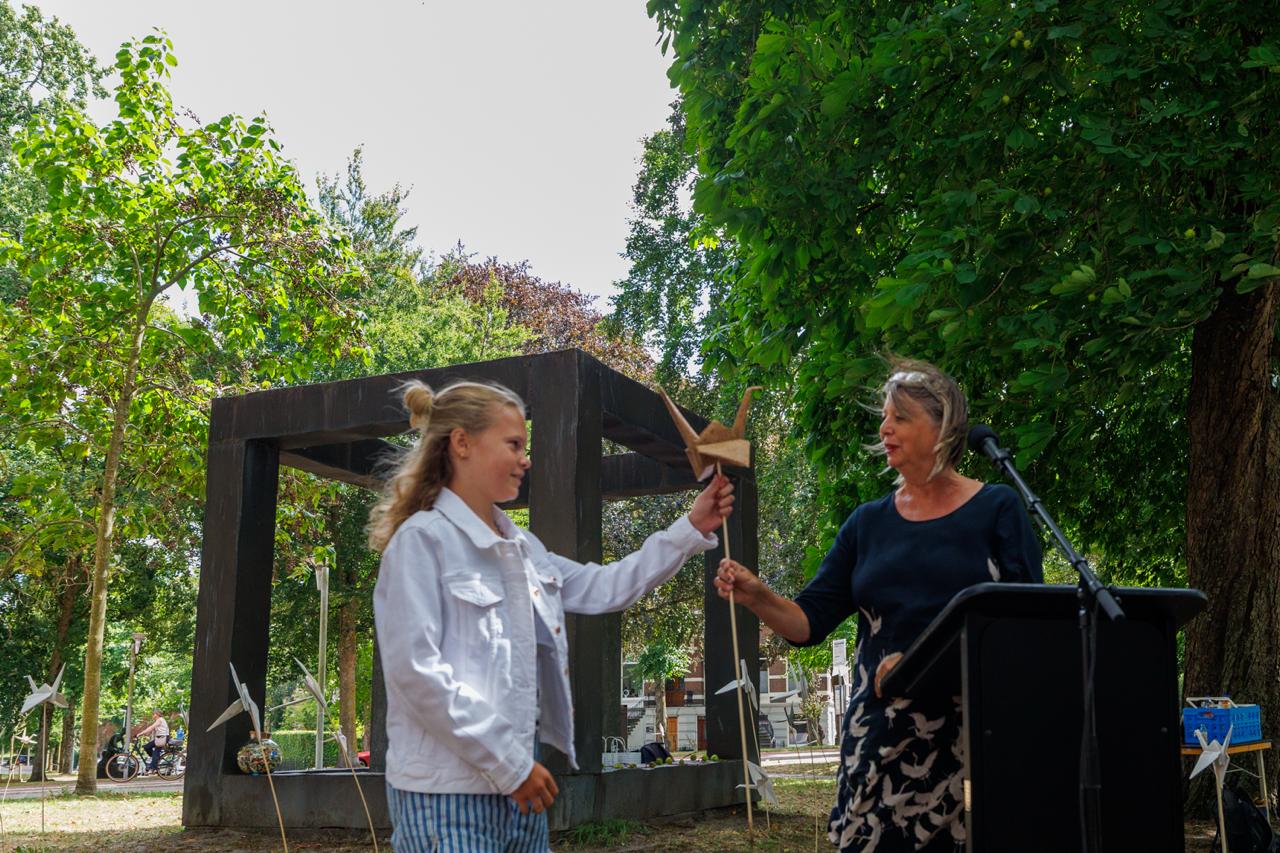
The following remarks were delivered by Dr. Dirk Hoogenkamp at the Hiroshima Monument in Groningen, Netherlands on August 6, 2026.
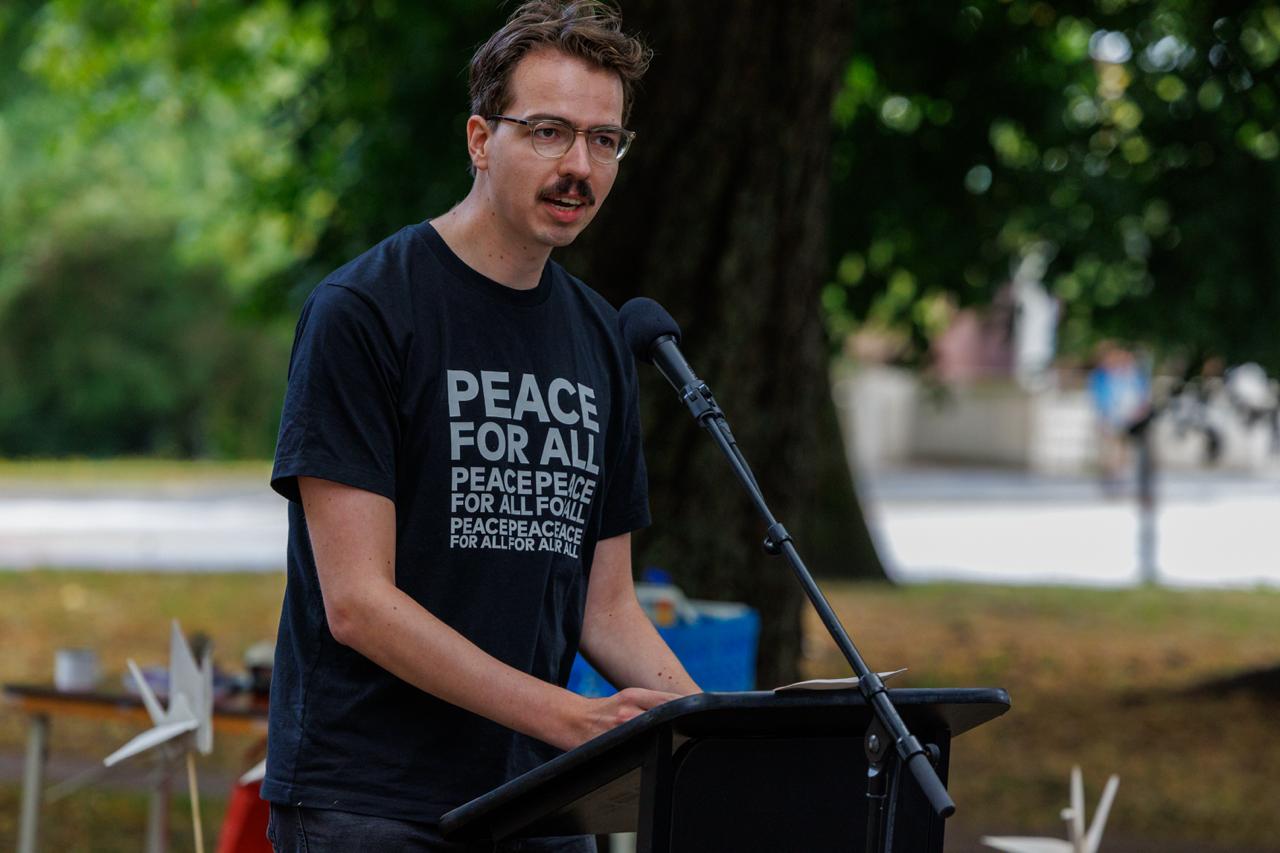
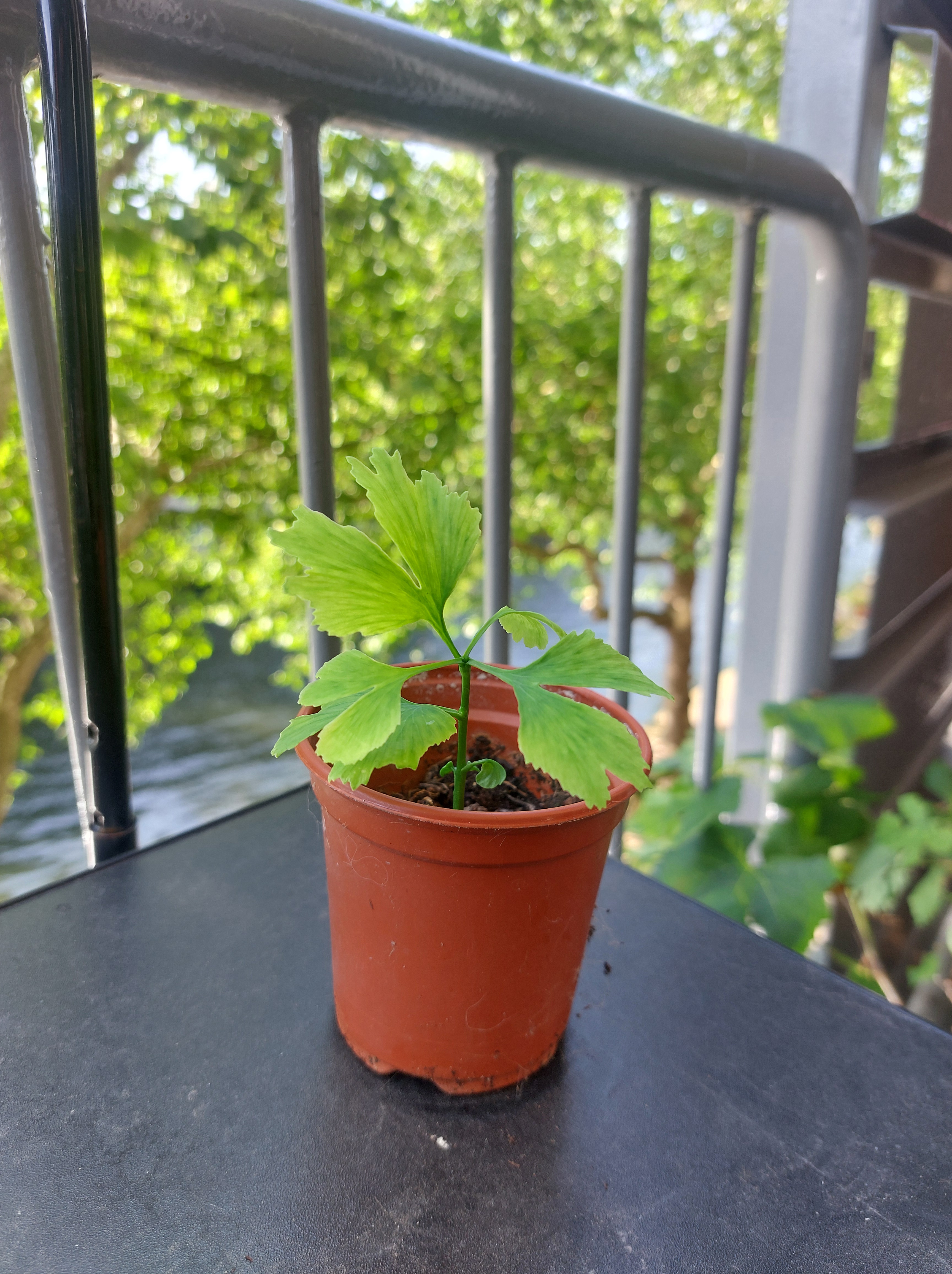
I am Dirk Hoogenkamp, a physician and a board member of the NVMP-Doctors for Peace, the Dutch affiliate of IPPNW. And today I would like to talk to you about a small tree on my balcony.
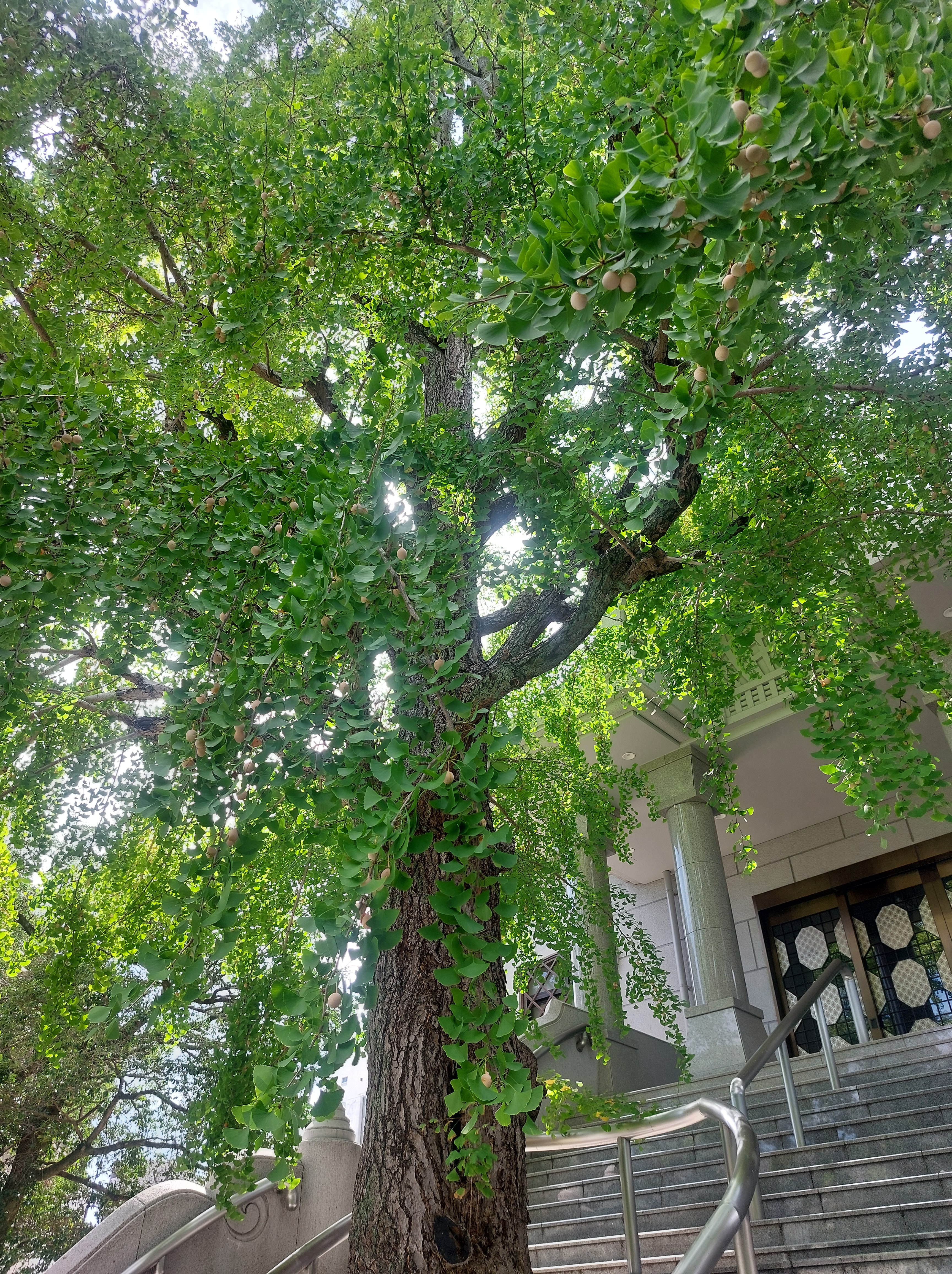
That might sound strange, but there is a reason for it. It is currently still a very small seedling, too fragile to take with me today, but it is a special tree. It is a Ginkgo biloba, a giant that can live for centuries. I picked up the tree’s seed from the sidewalk when I was in Hiroshima last September. I was standing just 1,130 meters from the hypocenter, the place where the atomic bomb was detonated at 8:15, today 81 years ago. The tree burned to the ground, the temple behind it collapsed, and the priest and his family perished. The temple would not be rebuilt for fifty years. But after a few years, the scorched tree suddenly grew green leaves again.
Just like people who survived the atomic bomb in Japan are called Hibakusha, the trees that have survived have an honorary title as well. They are called Hibaku-Jumoku. Within a radius of 2 km from the hypocenter, there are 48 such trees in Hiroshima.
In modern Hiroshima, these trees are inconspicuous witnesses. About 1,400 meters from the hypocenter stands another ginkgo, in the beautiful Shukkei-en, a traditional garden of Chinese design, with a large pond containing koi carp and turtles. The traffic of the busy city cannot be heard there; it is like a piece of paradise on earth. But on August 6, 1945, things looked very different here. The garden had previously been designated as an evacuation center, in case after Tokyo more incendiary bombings would follow. Thousands of people sought safety in the garden, trying to quench their thirst and the pain of their burns in the pond’s water. They were already severely wounded and exposed to radiation. Ten thousand people lost their lives in the garden. The only witness to this today is that one tree, the only one in the garden that survived. The blast wave blew off all the leaves and branches in one swift movement, and the trunk became tilted. After the enormous pressure wave, a suction wind arose in the opposite direction, which pulled the tree back the other way. As with so many Hibaku-Jumoku, the tree points to the spot where the atomic bomb exploded.
In Nagasaki, two centuries-old camphor trees stand at the entrance to the Sanno Shrine. They are located 800 meters from the hypocenter, the spot where the atomic bomb detonated on August 9. The trees snapped due to the blast wave. The trees are now a witness to the power of the blast wave: due to age, the trunks have become hollow, revealing glass, crockery, and other debris that was hurled into the tree with that enormous force, only to come to a stop halfway up the trunk.
The trees stand close to the University Medical Center of Nagasaki, founded in 1857 by Dutch doctors.
On August 9, 1945, just after 11 a.m., radiologist Dr. Takashi Nagai was hurled across the room and lost consciousness. When he came to, he did not recognize his surroundings. When he looked out the window, all the buildings were gone, all the summer’s green was gone, and the hills were bare, red rocks. The trees were uprooted and lay on their sides like matchsticks, with many naked bodies in between. Inside, in the waiting room, patients grabbed his ankles and begged for water or an injection. Their clothes had been ripped off, their skin was peeling off in strips, and they were gray with dust. Dr. Nagai and his team began to help the people. He could only use one hand, for if he took his right hand away from his head, his arterial bleeding spurted blood onto the walls. He felt his pulse and realized that he had to be able to keep this work up for three hours before he would collapse.
However, as the wounded kept pouring in, a fire had broken out in the hospital. Dr. Nagai could not stay in the hospital; he was one of the 50 who left the hospital alive. All the medical students in the city perished that day.
Dr. Nagai died of leukemia in 1951. 250,000 people died in the first year after the atomic bombings.
But the camphor trees grew new branches and green leaves again, and the trees are still blooming today.
These trees are not only silent witnesses, but also beacons of hope. Suzuoka Numata lost a leg to the atomic bomb and lost many family members, including her fiancé. When she saw the tree turn green again in the courtyard of the office where she worked when the bomb went off, she was able to find the will to live on. She passed away in 2011 at the age of 87.
Of the Hibakusha, the survivors, fewer and fewer remain. The Hibakusha I met in Japan had all been children when the bomb went off. Seiichiro Mise was 11 when he had to cremate bodies in the black rain of fallout in his schoolyard. He is now 92. Masao Tomonaga was a few months old when the house where he slept collapsed. Terumi Tanaka was 13 when the blast wave threw him through multiple windows; he is now 94.
It won’t be long before we can only ask the trees: you were there, what did you experience?
But we must never forget Hiroshima and Nagasaki. The danger of nuclear weapons has not yet passed. There are still more than 12,000 nuclear weapons in the world, and all states with nuclear weapons are modernizing or expanding their arsenals. We cannot coexist with nuclear weapons; eventually, things will go wrong: through an accident or an escalation in war. Emergency relief after a nuclear bomb explosion is an illusion; that is clear to you. But a nuclear war will also cause major climatic changes. So much ash will rise high into the atmosphere that sunlight will be blocked for decades, a nuclear winter in which ice ages arise and crop failures occur worldwide. Humanity will likely not survive this. How many trees will be able to tell the tale?
A world free of nuclear weapons is our only alternative. The Netherlands is not too small to play a role in this. The Netherlands must accede to the UN Treaty on the Prohibition of Nuclear Weapons and remove the American nuclear weapons from Volkel.
That will require a lot of effort from us, but we will succeed. I am certain of that. A beacon of hope is growing on my balcony, and it is already this big.

 Bimal Khadka
 Bjorn Hilt
 Charles K. Johnson
 Dr. Ghassan Shahrour
 Gunnar Westberg
 IPPNW
IPPNW John Loretz
 Lawrence Wittner
 Maria Valenti
 mollymcgint
 Sue Wareham
 Tilman Ruff
 Tim Wright
 Xanthe Hall