Prof. Ulrich Gottstein, a leader of IPPNW-Germany and an elder statesman of the international physicians movement to prevent war and to abolish nuclear weapons, was awarded the Paracelsus Medal—the highest honor given by the German medical profession—on May 31, 2011. The first recipient of the medal was Albert Schweitzer, in 1952.
His friends and colleagues throughout the IPPNW federation congratulate Dr. Gottstein and thank him for his dedication and leadership. Following are his remarks upon receiving the award.
—
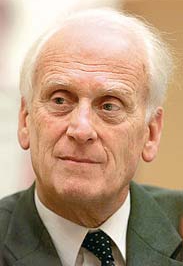 Honourable President Prof. Hoppe, respected members of the board of the German Medical Association, colleagues, ladies and gentlemen,
After having been honoured by being awarded the Paracelsus medal, I would like to express my particular thanks and also sorrows on this day, which is so important for all of us.. What is it that moves me especially and probably many of you too?: There are wars and terrorism every day, the climate crisis endangers our planet, the man made destruction of our environment is to be observed year by year, and there are the increasing risks through nuclear weapons and nuclear power plants. Read more…
Day two in Tehran
Second day.
I woke up with PressTV, and the first thing I saw was my own face in an interview. In response to the question “can nuclear weapons really be abolished” I answered the usual things such as “We must abolish them before they abolish us” etc. They must have liked it as they asked me for a second interview today, and so did a couple of other TV companies. So hopefully I gave some arguments to those in the country who do not want nuclear weapons – at this time probably a great majority. I have not been able to record this video. Read more…
Taking an opportunity to speak in Tehran
Second International Conference on Disarmament and Non-Proliferation
Tehran June 12-13
Arranged by the Institute for International and Policy Studies
Participation: Representatives of a number (20?) Islamic states and Non-aligned states, Russia, Venezuela a s o. Not China, no EU country.
NGOs: Pugwash, BASIC, Danish Institute for International Studies a s o.
In all maybe 100 persons plus journalists in the morning, somewhat decreasing during the day
First Day
The format was smaller than last year., and less prestigious. Last year the President and the Supreme Leader spoke, this year the Minister of Foreign Affairs was highest ranking. Still there were at least 20 TV-cameras and even more reporters. These gradually left during the morning. I was interviewed by three TV-channels and a number of radio stations and a couple of news agencies, fewer than last year. Many questions were about Iran’s right to nuclear energy and the injustice that Israel was not criticized for having nuclear weapons or for bombing Syria, US not censored for not reporting to IAEA about the alleged Syrian reactor a s o. Read more…
I know. Wind me up and I go on for way, way too long. I sat down yesterday to quote a few paragraphs from Ed Markey’s Fukushima report that I thought everyone should see, and look what happened. At least I’m in good company on this blog (I won’t name names; you know who you are). Hopelessly Twitter-challenged, to say the least.
So here’s an attempt at something short (okay…short-ish) and to the point. One simple fact above all others joins nuclear energy and nuclear weapons at the hip: the consequences of the failure of either technology are so horrible that neither can be allowed to fail. Which, of course, is impossible. Hiroshima and Nagasaki taught us that nuclear weapons can’t be used—that using them is failure. All of the arguments for having (and keeping) nuclear weapons boil down to one breathtakingly stupid claim: having them prevents everyone from using them. Until someone does. Read more…
The staff of Representative Edward J. Markey, a member of the US Congress from Massachusetts, have produced an important and disturbing evaluation of the failed nuclear safety systems that led to the Fukushima nuclear reactor crisis in March. While Fukushima Fallout: Regulatory loopholes at U.S. nuclear plants is primarily an indictment of the US Nuclear Regulatory Commission, which has protected the economic interests of the nuclear industry at the expense of the health and safety of the American public, the report is essential reading if you live in a country (hello, India) that is still being seduced by industry giants such as General Electric and Westinghouse into signing up for a “nuclear renaissance” that would more accurately be called a descent into a new nuclear dark age.
The report documents the ways in which nuclear safety regulations—inadequate to begin with—have been based on flawed assumptions, outdated seismic data, and underestimated risks. To make matters worse, already lax regulations have been made even weaker as a result of decades of industry lobbying and NRC duplicity. Here, in a nutshell, is what Rep. Markey’s staff found out: Read more…
by Inga Blum
Two weeks ago I had the chance to attend a meeting of NATO representatives and civil disarmament experts in Brussels. The meeting was jointly organized by four institutes for peace and security research. Its intention was to create an exchange on the role of tactical nuclear weapons (TNW) in NATO’s Defense and Deterrence Posture review (DDPR). The DDPR is currently developed in NATO and shall be released by May 2012. Its task is to flesh out NATO’s new strategic concept which was agreed on in Lisbon in November 2010.
The core principles of the new strategic concept are:
- Defense against all kinds of threats
- Solidarity among the allies
- Prevention of all kinds of crisis
And last but not least the intention to:
- Create the conditions for a world without Nuclear Weapons.
The strategic concept remains very vague on how these principles concretely shall be implemented. This is understandable because it is the lowest common denominator between 28 nations who had to find consensus. It remains to be seen how they will come together on the more concrete questions of the DDPR, like what type of and how much weapons they want. Read more…
The Indypendent, an online newspaper affiliated with the New York City Independent Media Center, has published an in-depth article on the public health consequences of the Fukushima nuclear reactor disaster in comparison with those following Chernobyl, extensively citing studies published by IPPNW-Germany and by Peter Karamoskos, a nuclear radiologist, public representative on the Radiation Health Committee of the Australian Radiation Protection and Nuclear Safety Agency, and member of the board of IPPNW’s Australian affiliate, MAPW.
The article by Mark Selden and Matthew Penney concludes that:
As the nature of the Fukushima crisis relative to Chernobyl continues to be contested, the important issue of radiation exposure of Fukushima school children remains at the center of public debate. To date, the Japanese government has failed to respond effectively to critics of policies that pose long-term risks to the nation’s children.”
What Price the Fukushima Meltdown? Comparing Chernobyl and Fukushima
New data published today by the Stockholm Peace Research Institute (SIPRI) shows that eight states—the United States, Russia, the United Kingdom, France, China, India, Pakistan and Israel—possess more than 20,500 nuclear weapons, a drop of more than 2,000 since 2009. More than 5,000 of these nuclear weapons are deployed and ready for use, including nearly 2,000 that are kept in a state of high operational alert.
Modest cuts in US and Russian strategic nuclear forces were agreed in April 2010 under the New START treaty, but both countries currently are either deploying new nuclear weapon delivery systems or have announced programs to do so, and appear determined to retain their nuclear arsenals for the indefinite future. Meanwhile, India and Pakistan continue to develop new ballistic and cruise missile systems capable of delivering nuclear weapons. They are also expanding their capacities to produce fissile material for military purposes.
“It’s a stretch to say that the New START cuts agreed by the USA and Russia are a genuine step towards nuclear disarmament when their planning for nuclear forces is done on a time scale that encompasses decades and when nuclear modernization is a major priority of their defence policies,” said SIPRI Senior Researcher Shannon Kile.
The SIPRI Yearbook 2011, which also reports on global military spending, arms transfers, armed conflicts, peacekeeping operations, and other topics is available from SIPRI.
By Alex Rosen, Germany
Dear all,
 It is true, there is now an official decision to phase out of nuclear power in Germany. But we must not forget that this decision has already been agreed on in 2004 and was toppled again by the same government which is now trying to show that it has “learned” from the horrible disaster in Fukushima. Still, their new “compromise” (which was unilaterally agreed upon by the two formerly pro-nuclear parties in government) excludes the more rational approaches offered by the green party or the social democrats, by environmental groups like Greenpeace and organizations like IPPNW Germany. In fact, it is seen by many in Germany as a foul compromise with a lot of back doors. So we are not happy with it and will attempt to have it changed until it hopefully becomes law – through parliamentary debates, broad public discussion and yet more demonstrations. We do not want to wait until 2022 for the last nuclear plant to shut its doors and we do not want to see another 180° turnaround once the political climate permits it. Read more…
IPPNW Aiming for Prevention leaders brought their expertise on health effects of armed violence to a recent series of strategic meetings on arms control held in cities from New York to Geneva. On May 12th Dr. Nidia Rodriguez of Ecuador spoke at the UN Programme of Action on Small Arms Meeting of Government Experts (see “Survivors of Gun Violence” post from May 12th) A few days later on May 17th Dr. Donald Mellman participated in a strategy session on “The Arms Trade Treaty (ATT): Crossing the Finish Line,” organized by the Arms Control Association and held at the Stimson Center in Washington, DC. It was attended by a wide range of groups including many from the faith community.
Across the Atlantic, Dr. Michael Schober of IPPNW Austria addressed the UN NGO Committee for Peace in Vienna, on the topic “The role of NGOs in the process of negotiating an effective Arms Trade Treaty (ATT).” He shared the dais with Mag. Christian Brunmayr, Head of Arms Exports Control, Austrian Federal Ministry for European and International Affairs. The meeting was chaired by Dr. Klaus Renolder also of IPPNW-Austria. At the same time in neighboring Geneva, IPPNW co-president Dr. Bob Mtonga participated in a key meeting organized by Saferworld and attended by dozens of government officials in preparation for the July 3rd PrepCom for the ATT to which IPPNW plans to send a delegation and actively participate and speak.
Read Dr. Schober’s presentation (PPT/flyer)
Read more about the Arms Trade Treaty here.

 Bimal Khadka
 Bjorn Hilt
 Charles K. Johnson
 Dr. Ghassan Shahrour
 Gunnar Westberg
 IPPNW
IPPNW John Loretz
 Lawrence Wittner
 Maria Valenti
 mollymcgint
 Sue Wareham
 Tilman Ruff
 Tim Wright
 Xanthe Hall