Clinical research helps victims of interpersonal violence
IPPNW-Austria/Zambia and local partners agree to forge links to improve clinical and social outcomes of victims of interpersonal violence in Lusaka, Zambia
by Robert Mtonga
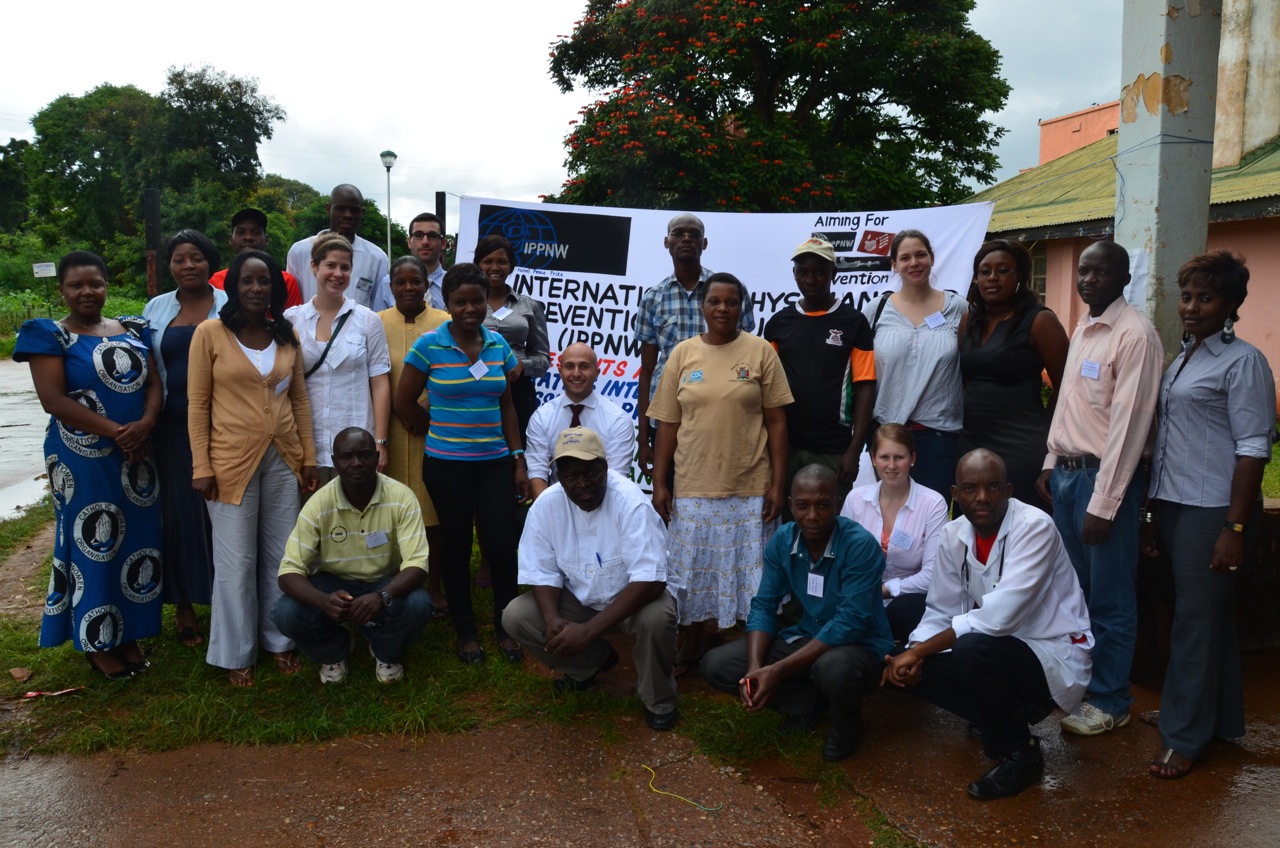
A meeting of partners in the Zambia-Austria Victim Assistance Pilot Project, in Lusaka
Nearly 30 invitees representing seven of nine local partner organisations currently participating in the International Physicians for the Prevention of Nuclear War joint Zambia-Austrian Victim Assistance and Violence Prevention and Mitigation Clinic Project (VCP) converged on Lusaka’s University Teaching Hospital In-Service Training Centre to discuss results of a 5-month Phase I stage of the VCP.
The aim of the VCP is to study the problem of interpersonal violence (IVP) in Lusaka and assess whether improvements should or can be made in linking medical and social services that impact and influence the outcome of prevention and mitigation measures, including primary and secondary prevention. Read more…
Deconstructing deterrence from the humanitarian perspective
 [In my previous post, I outlined how a focus on the consequences of nuclear weapons at the upcoming conference on this subject in Oslo could reframe the discussion about nuclear abolition. I said I’d next take up a critique of deterrence from the humanitarian perspective. Here’s part two.]
As early as the 1970s, as we now know from historical documents recently declassified and published by the US Department of State [1,2], civilian and military war planners in both the US and Europe were unable to describe a use for tactical nuclear weapons that would not result in catastrophic retaliation and escalation to a strategic nuclear war.
Over the course of several high-level briefings, the minutes of which are among these documents, Henry Kissinger, the author of the Cold War “flexible response” (i.e., nuclear war step-by-step) doctrine, shows his frustration as he is told that “There is no scenario for going to nuclear weapons that makes any sense or that has any realism whatsoever,” and that “All the studies have concluded that there would be no favorable outcome.” Read more…
Looking for the tipping point
What strategy or strategies will lead us to a nuclear weapon-free world?
 On Wednesday of this week, IPPNW and its partner organisations in Germany will be hosting a public event on “Paths to a Nuclear Weapon-Free World”, on the eve of an important closed-door conference with government representatives and experts on “Building the Framework and Creating the Conditions for a Nuclear Weapon-Free World”. The international member organisations of Middle Powers Initiative (MPI) are, for the most part, the same organisations that – on a grassroots level – actively participate in the International Campaign to Abolish Nuclear weapons (ICAN). About ten days later, ICAN is hosting a large Civil Society Forum just prior to an important states conference on the humanitarian effects of nuclear weapons. Read more…
A consciousness-raising exercise in Oslo
In about two weeks, the Norwegian Ministry of Foreign Affairs will convene an international, two-day conference in Oslo on the humanitarian consequences of nuclear weapons. The idea for the conference emerged from the desire of a growing number of States to focus attention on what nuclear weapons do when used.
The horrifying nature of nuclear weapons and the consequences of their use has slipped out of public consciousness since the end of the Cold War, allowing calls for nuclear abolition to be deflected by policy euphemisms such as deterrence, and by disingenuous claims, reminiscent of those made by the NRA, that nuclear weapons in the hands of “good guys” are somehow different from nuclear weapons in the hands of “bad guys,” and are even necessary on that account. Read more…
IPPNW statement on DPRK nuclear test
The IPPNW Executive Committee has issued the following statement in response to the nuclear test conducted by the Democratic Republic of Korea (North Korea) and announced on February 12, 2013.
February 12, 2013
The Democratic People’s Republic of Korea (DPRK) confirmed today that it conducted a nuclear test with an estimated yield of six to seven kilotons. This was the DPRK’s third nuclear test since 2006, when the country declared itself a nuclear-weapon state, having withdrawn from the Non-Proliferation Treaty (NPT) in 2003. Read more…
In a major address in Prague on April 5, 2009, the newly-elected U.S. President, Barack Obama, proclaimed “clearly and with conviction America’s commitment to seek the peace and security of a world without nuclear weapons.” On January 24, 2013, however, Senator John Kerry, speaking at Senate confirmation hearings on his nomination to become U.S. secretary of state, declared that a nuclear weapons-free world was no more than “an aspiration,” adding that “we’ll be lucky if we get there in however many centuries.” Has there been a change in Obama administration policy over the past four years?
There are certainly indications that this might be the case. Read more…
Last week, I made fun of an advisory that appeared in the Greater Kashmir newspaper, describing steps people could take to protect themselves during a nuclear attack. I noted the similarities with the fallout shelter schemes and “duck and cover” drills promoted in the US in the 1950s. With the Oslo conference on the humanitarian consequences of nuclear weapons only a few weeks away, with an entire panel given over to a critical examination of preparedness and response, I got to wondering what, if anything, the US had done to update its own nuclear civil defense plans in recent times.
What I found was a 40-page interagency document called “Nuclear Detonation Preparedness: Communicating in the Immediate Aftermath,” which was approved for “interim use” in September 2010. The document draws upon the combined resources of 13 federal agencies and the American Red Cross to provide a set of messages that can be delivered by local, state, and national authorities in the event of a nuclear explosion. Read more…
“Duck and cover” Indian style
India now has its own T. K. Jones, although we may never know the name of the actual person in the Jammu and Kashmir Civil Defence and State Disaster Response Force who wrote an advisory on what to do in the event of a nuclear attack that was published in the Greater Kashmir newspaper this week.
Jones, for those who didn’t get as far as the Cold War in high school history, was a Deputy Under Secretary of Defense in the Reagan administration, who preached that nuclear war would not be as bad as people thought. (He was right. Most people, then as now, had no idea how bad it would really be.) His infamous line — “If there are enough shovels to go around, everybody’s going to make it” — was adapted by journalist Robert Scheer for the title of a book debunking nuclear civil defense. [1] Read more…
IPPNW to President Obama: Stop subcritical nuclear tests!
[The United States conducted a subcritical nuclear test on December 5. Subcritical tests do not involve a chain reaction leading to an actual nuclear explosion and are legal because of a loophole in the Comprehensive Test Ban Treaty, which the US has signed but not ratified. Nevertheless, they undermine one of the purposes of the CTBT, which is to prevent the development of new new warhead designs. IPPNW has sent the following letter to President Obama, protesting this most recent test and calling for a cessation of subcritical testing in the future.]
December 18, 2012
President Barack Obama
The White House
1600 Pennsylvania Ave.
Washington, DC 20001
Dear President Obama:
As fellow Nobel Peace Laureates who share your desire to rid the world of nuclear weapons and the danger they pose to our common survival, we would like to congratulate you on your election to a second term as President. We encourage you to use the next four years to make rapid and significant progress toward the global elimination of the only weapons capable of extinguishing life on Earth.
With that goal in mind, we want to express serious concern with the continued program of subcritical nuclear tests that have been conducted by the US since it signed the Comprehensive Test Ban Treaty in 1996. We understand that you have received letters from the mayors of Hiroshima and Nagasaki and from groups of atomic bomb survivors protesting the most recent subcritical test on December 5—the fourth such test since you took office—and we join them in urging you to cancel this unnecessary and provocative practice.
While subcritical tests are permitted under compromise language that was meant to facilitate ratification of the CTBT by the Senate— but failed to do so—they go against the intent of the Treaty, which is to ensure that no new nuclear weapons will be designed and that no new capabilities will be developed for weapons that already exist. The nuclear-weapon states—and the US in particular—have a significant technological edge with regard to computer simulation of nuclear tests, derived from decades of actual test explosions. This advantage is not lost upon the rest of the world, which sees any such tests, with or without a nuclear chain reaction, as a means to extend and perpetuate the role of nuclear weapons in security policy, and not as a step toward disarmament.
The message subcritical testing sends to other States is that nuclear weapons are here for the long term and that their designs can be modified and enhanced simply by making use of a loophole in a treaty to which the US says it is otherwise committed. At the very least, this is a demoralizing message for the large majority of States who have made nuclear disarmament an urgent priority. For at least a few who may be questioning the wisdom of remaining non-nuclear in the future, subcritical tests are seen as a hypocritical practice that undermines the arguments for non-proliferation.
While nuclear disarmament will require complex and careful negotiation among many States, you can end future US subcritical tests with the stroke of a pen. We urge you to take this step without delay.
Pushing the States to the Negotiating Table
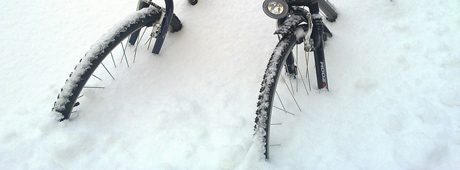
In Helsinki at this time of year, the sun rises just after 9am and sets again at 3pm. Our Finnish hosts told us that we were lucky that the snow had come already, to lighten up the all-pervading darkness by reflecting what little light there is. Already, after only a short time, the snow was very deep, much of it shovelled up by bulldozers to form piles shoulder high by the side of the road. There was something magic about it, like we were somehow closer to Christmas by being there. Indeed, Christmas filled all the restaurants and bars with office parties, people drunkenly swaying arm in arm on the street, or singing to the stars.
Snowy Helsinki should have been the setting for an historic conference to discuss the establishment of a zone free of weapons of mass destruction in the Middle East. The date was set for today, December 17th, to begin perhaps one of the most important negotiations for peace and security in the Middle East. But the conference rooms remain empty, because the governments did not come. Read more…

 Bimal Khadka
 Bjorn Hilt
 Charles K. Johnson
 Gunnar Westberg
 IPPNW
IPPNW John Loretz
 Lawrence Wittner
 Maria Valenti
 mollymcgint
 Sue Wareham
 Tilman Ruff
 Tim Wright
 Xanthe Hall


 IPPNW peace and health blog