Ukraine conflict risks nuclear war
[IPPNW co-presidents Ira Helfand and Vladimir Garkavenko have sent the following letter to Presidents Barack Obama of the United States and Vladimir Putin of Russia, expressing the Federation’s concern over the continuing conflict in Ukraine between two heavily armed nuclear States. Dr. Helfand is a member of the board of IPPNW’s US affiliate, Physicians for Social Responsibility. Dr. Garkavenko is a member of the board of IPPNW’s Russian affiliate, Russian Physicians for the Prevention of Nuclear War.]
 Dear Presidents Obama and Putin:
We write this letter to you in our capacity as co-presidents of International Physicians for the Prevention of Nuclear War (IPPNW) because we are deeply concerned about the conflict in Ukraine and the risk that nuclear weapons will be used in this conflict. Read more…
What can happen while you change trains
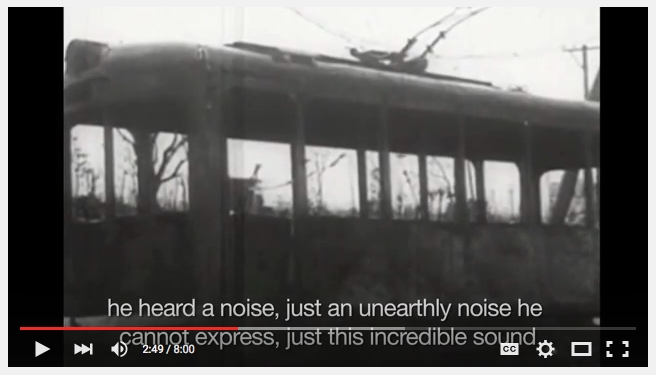 Earlier today I watched a short video about the US atomic bombing of Hiroshima—one of many that have found their way online to mark the 70th anniversary of the defining moment in human history: the moment when humankind acquired weaponry that could bring history itself to an end. Read more…
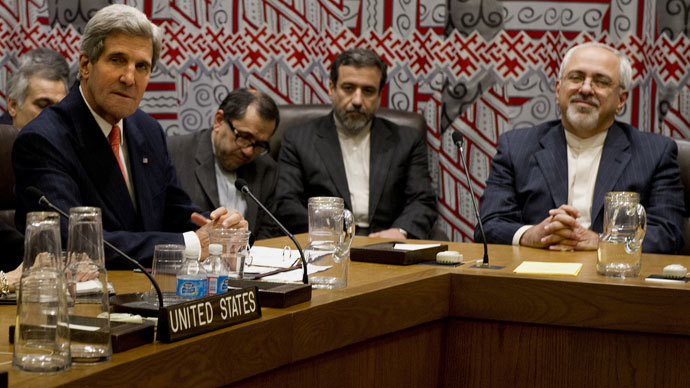 The recent announcement of a nuclear deal between the governments of Iran and other major nations, including the United States, naturally draws our attention to the history of international nuclear arms control and disarmament agreements. What accounts for their advent on the world scene and what have they accomplished? Read more…
[The following statement was issued today by the IPPNW Executive Committee.]
The agreement on Iran’s nuclear programs announced today by Iran and the United States is welcome news for a number of reasons. The terms of the deal, negotiated over a 20-month period by diplomats from Iran and six other States, should assure the international community that Iran will continue to abide by its obligations under the Non-Proliferation Treaty (NPT). There are no nuclear weapons in Iran today, and compliance with the agreement will make it far less likely that Iran can acquire nuclear weapons in the future. The US Senate, which has insisted upon its right to ratify the agreement, must now act responsibly and do so without delay or partisan bickering. Read more…

Dr. Omolade Oladejo addresses delegates at the UN PoA MGE2
IPPNW doctors are playing a key role in integrating public health information into the dialogue of the United Nations Programme of Action on Small Arms Second Meeting of Governmental Experts underway in New York this week.
“You cannot have development without health, and you cannot have health in the midst of armed violence,” said Dr. Omolade Oladejo of the Society of Nigerian Doctors for the Welfare of Mankind during the NGO presentations to delegates. Read more…
The tail wagged the dog! Who cares?
The Review conference of the Non-proliferation Treaty ended Friday, May 22, without a final document being accepted. Up until the very end it seemed that the conference would end with a non-committal document. The outcome that a majority of the states desired—a plan for a total ban on nuclear weapons, as there is for chemical and bacteriological weapons—was unacceptable to the nuclear-weapon states. Read more…
Outcome? What outcome?
After the NPT Review Conference was over, we couldn’t get out of the building. The place was deserted. All those grim security men who had barred any shortcuts had gone home. Eventually we found a last door open at the other side of the building. It was Friday evening of Memorial Weekend in New York. The subway was full of young faces, singing along to a boombox, on their way to parties. Life goes on and nothing had changed just because a few hundred people had spent the last four weeks in air-conditioned rooms, talking about nuclear weapons till they were blue in the face.
In the end there was no agreement. Read more…
[Guest editorial reprinted with permission from Reaching Critical Will’s NPT News in Review]
Ray Acheson, Reaching Critical Will of WILPF
The final document of the NPT Review Conference was prevented from being adopted by Israel—a non-state party. The US, UK, and Canada issued statements refusing to accept the proposal on convening a meeting about potentially developing a Middle East weapon of mass destruction free zone, thus preventing the adoption of what would have been the weakest disarmament outcome in the Treaty’s recent history. Instead, the outcome from this Conference is the Humanitarian Pledge, representing a commitment of more than 100 states to work for the prohibition and elimination of nuclear weapons. Read more…
[ICAN released the following the following statement at the conclusion of the 2015 NPT Review Conference, where an already weak outcome document was blocked by the US, the UK, and Canada.]
 As the 2015 Nuclear Non-Proliferation Treaty (NPT) Review Conference ended, over 100 governments have committed to work for the prohibition and elimination of nuclear weapons by endorsing the “Humanitarian Pledge.” [Editor’s note: Alexander Kmentt of Austria confirmed that 107 States had joined the Pledge in his closing remarks Friday.]
While the United States and the United Kingdom declared failure over the Middle East, the draft outcome document was deeply flawed on disarmament. Read more…
¡Ya Basta! It’s all about the ban
[Guest editorial reprinted with permission from Reaching Critical Will’s NPT News in Review]
Ray Acheson, Reaching Critical Will of WILPF
The [NPT] President’s new draft text for Main Committee I issued Thursday morning is a nuclear-armed state text. It sells out nuclear disarmament and serves those who seek to preserve and embolden the false perception of legitimacy of nuclear weapons asserted by nuclear-armed and their nuclear allied states. It is a text that reflects the view of a radical, recalcitrant minority and it should not be accepted by the majority. Refusing to accept this text would not be an act of obstruction. It would be an act of courageous leadership by governments that believe that nuclear weapons are unjust, indefensible, horrific, catastrophic, unacceptable weapons of terror. It would signal to those militarily powerful, often violent countries that want to impose their vision of the world on the rest of us, that enough is enough. Read more…

 Bimal Khadka
 Bjorn Hilt
 Charles K. Johnson
 Dr. Ghassan Shahrour
 Gunnar Westberg
 IPPNW
IPPNW John Loretz
 Lawrence Wittner
 Maria Valenti
 mollymcgint
 Sue Wareham
 Tilman Ruff
 Tim Wright
 Xanthe Hall