Emir Abdelkader and Henry Dunant: conscience before convention
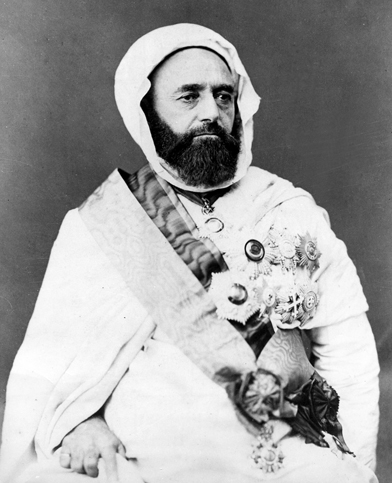
Humanity has long searched for ways to restrain violence and protect life even in the harshest moments of conflict. International Humanitarian Law, with its rules on protecting civilians, humane treatment of prisoners, and limits on the means and methods of warfare, represents the modern legal expression of this aspiration. Yet the ethical foundations of these rules were shaped long before treaties were drafted or conventions adopted. Across civilizations, individuals acted on conscience to defend human dignity when war threatened to erase it. Among these figures, Emir Abdelkader al-Jazairi and Henry Dunant stand out as two of the most compelling examples of moral courage preceding legal codification. Their lives remind humanitarian advocates today that the law was born from human choices, and that restraint in war is first a moral act before it becomes a legal obligation.
The rise of Abdelkader: Ethics in the midst of resistance
Emir Abdelkader emerged as a leader during the French invasion of Algeria beginning in 1830. Confronted with a powerful colonial army, he organized resistance while insisting that ethical principles must guide the conduct of his fighters. He issued regulations governing the treatment of prisoners, the protection of civilians, and the limits of retaliation. Captured enemy soldiers were to be treated humanely and protected from abuse. Unarmed detainees were not to be harmed, and commanders were responsible for ensuring that these rules were respected.
These measures were not symbolic gestures. They were operational principles implemented during active conflict. Abdelkader understood that military necessity could not erase human dignity. His approach reflected the conviction that legitimate political struggle required moral boundaries. Scholars increasingly recognize that his wartime conduct anticipated principles later reflected in the Geneva Conventions and the broader development of International Humanitarian Law, including humane treatment of prisoners, protection of civilians, and restrictions on unnecessary suffering. The International Committee of the Red Cross honors him as a pioneer of humanitarian principles, symbolized by the presence of his bust alongside Henry Dunant at the ICRC headquarters in Geneva.
Dunant and the European humanitarian turn
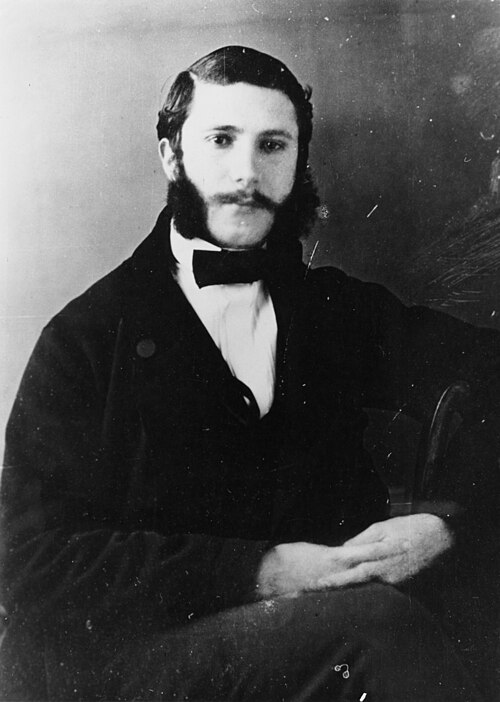
Abdelkader’s contribution belongs to a broader nineteenth-century transformation in humanity’s understanding of war. In Europe, Henry Dunant witnessed the suffering of wounded soldiers at the Battle of Solferino in 1859. His response inspired the creation of the International Committee of the Red Cross and the first Geneva Convention of 1864, which evolved into the four Geneva Conventions of 1949 that remain the cornerstone of modern International Humanitarian Law. Dunant’s vision emphasized that wounded soldiers deserved protection regardless of nationality. Abdelkader’s earlier actions reflected a parallel insight: even enemies remain human beings whose dignity must be respected.
The significance of Abdelkader and Dunant is not that one tradition replaced another. Rather, different societies arrived at similar humanitarian principles through their own historical experiences. Their examples demonstrate that humanitarian law does not belong to any single civilization, religion, or state. It is a shared human response to the suffering caused by organized violence.
Converging traditions of humanitarian restraint
Together, Abdelkader and Dunant illustrate how diverse cultural and historical traditions converged on remarkably similar humanitarian principles. Their lives demonstrate that restraint in war is not a modern invention. It is a moral inheritance found across civilizations, later formalized into legal obligations through International Humanitarian Law.
Abdelkader in Damascus: Protection beyond division
Abdelkader’s most widely recognized humanitarian intervention occurred in Damascus in 1860. During violent attacks against some Christian communities, he sheltered thousands of civilians, organized protection for those threatened in the streets, and personally confronted armed groups to prevent further killings. His actions were acknowledged by observers from France, the Ottoman Empire, and European diplomatic circles. They revealed an unwavering commitment to protecting human life beyond religious, ethnic, or political divisions.
This episode remains deeply relevant today. It reflects a principle central to modern human security: protecting civilians is a responsibility that transcends political interests. Abdelkader did not wait for international institutions or legal mechanisms. His response was rooted in the conviction that vulnerable people must be protected even during periods of instability and social conflict.
A foundation for humanitarian disarmament
Abdelkader’s legacy resonates strongly with contemporary humanitarian disarmament efforts. The humanitarian disarmament movement rests on the same principle that guided Abdelkader’s actions: when a weapon predictably causes indiscriminate or unacceptable human suffering, humanity has a responsibility to limit or eliminate it. This ethical reasoning underpins campaigns against antipersonnel mines, cluster munitions, nuclear weapons, and increasingly autonomous weapon systems. Like Abdelkader’s refusal to dehumanize opponents and his commitment to protecting prisoners and civilians, these initiatives place human dignity and the prevention of suffering above military advantage.
Ethical traditions before legal institutions
The relevance of Abdelkader’s example extends beyond humanitarian law. It challenges the assumption that restraint is a modern invention created only through international treaties. Before humanitarian principles became legal obligations, they existed as moral commitments expressed by individuals and communities. Abdelkader’s life demonstrates that law often emerges from ethical traditions that precede formal institutions.
Arab intellectual heritage and responsible power
Arab intellectual history contains rich reflections on justice, responsible power, and human dignity. Ibn Khaldun examined justice as the foundation of political stability. Abdulrahman al-Kawakibi identified tyranny as a source of social decline and conflict. Taha Hussein defended human dignity and intellectual freedom. Together, these voices demonstrate that ethical reflection on power and human welfare has long formed part of Arab intellectual heritage and contributes to the global moral imagination that continues to shape humanitarian principles.
A shared human inheritance
Remembering Emir Abdelkader is not an attempt to elevate one civilization above another. It is an acknowledgment of a shared human inheritance. His life demonstrates that even amid war, individuals and societies can choose restraint over cruelty, protection over indifference, and conscience over unchecked power.
Modern technology and the urgency of moral restraint
As modern technologies expand humanity’s capacity to destroy, the need for moral restraint becomes more urgent. Artificial intelligence, autonomous weapons, and increasingly sophisticated military technologies require not only technical innovation but ethical wisdom. Abdelkader’s legacy reminds us that the ultimate measure of civilization is not the power it can command, but the humanity it preserves.
Moral imagination before legal codification
International Humanitarian Law is often described as one of humanity’s greatest legal achievements. Yet every legal advance begins with an earlier act of moral courage. Long before treaties codified restraint, individuals such as Emir Abdelkader demonstrated that even in war, humanity remains a choice. His legacy, alongside that of Henry Dunant, reminds us that law is strongest when rooted in conscience, and that the protection of human dignity remains the enduring foundation of humanitarian action.
Ghassan Shahrour, Coordinator of the Arab Human Security Network, is a medical doctor, prolific author, and human rights advocate specializing in health, disability, humanitarian disarmament, and human security. He has contributed to global campaigns for peace, disarmament, and the rights of persons with disabilities.

 Bimal Khadka
 Bjorn Hilt
 Charles K. Johnson
 Dr. Ghassan Shahrour
 Gunnar Westberg
 IPPNW
IPPNW John Loretz
 Lawrence Wittner
 Maria Valenti
 mollymcgint
 Sue Wareham
 Tilman Ruff
 Tim Wright
 Xanthe Hall