Bridging Health and Peace at the 79th World Health Assembly
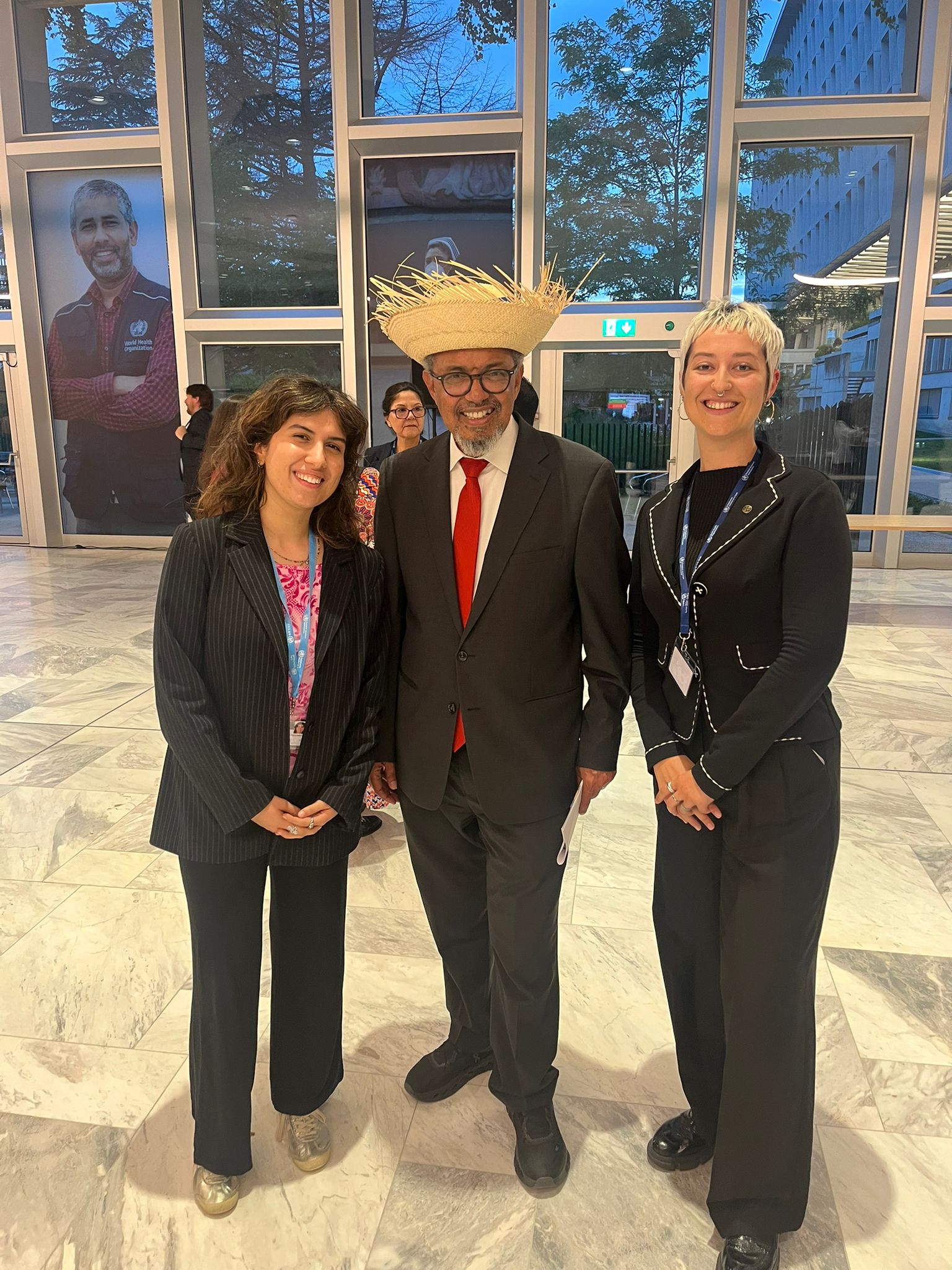
by Anna Khouri, IPPNW International Student Representative
This was the guiding mandate for the International Physicians for the Prevention of Nuclear War (IPPNW) delegation at the 79th World Health Assembly (WHA). At its core, the WHA is a massive, high-energy engine of global diplomacy, where the scale of international health policy becomes tangible. While official delegates from 194 member states fill the halls of the Palais des Nations to debate resolutions, an entire parallel universe of over 200 side events unfolds across Geneva. For a civil society organization like IPPNW, this is where the real work happens. It provides a vital arena to challenge the traditional boundaries of healthcare and advocate for peace itself as an important social determinant of health.
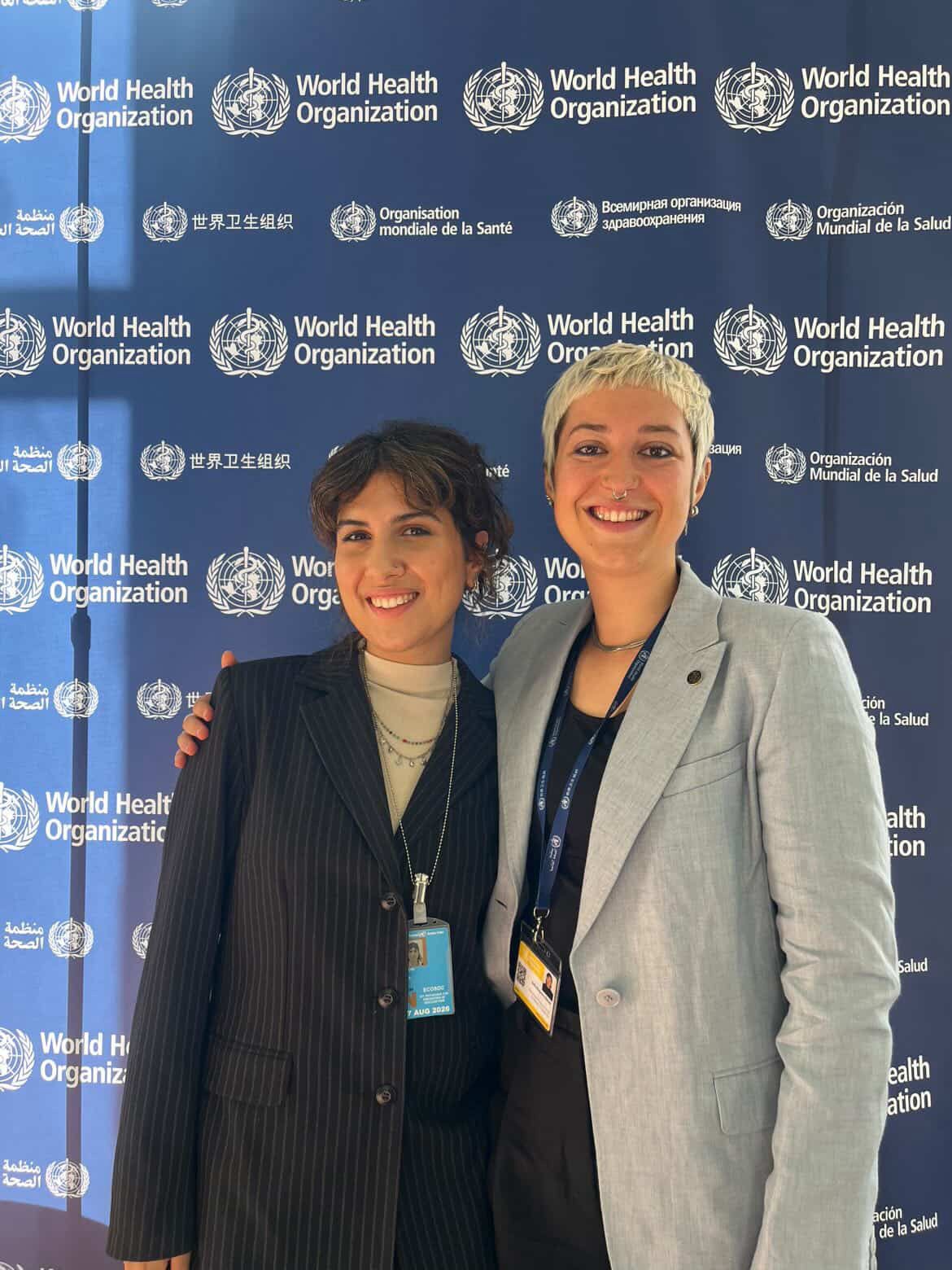
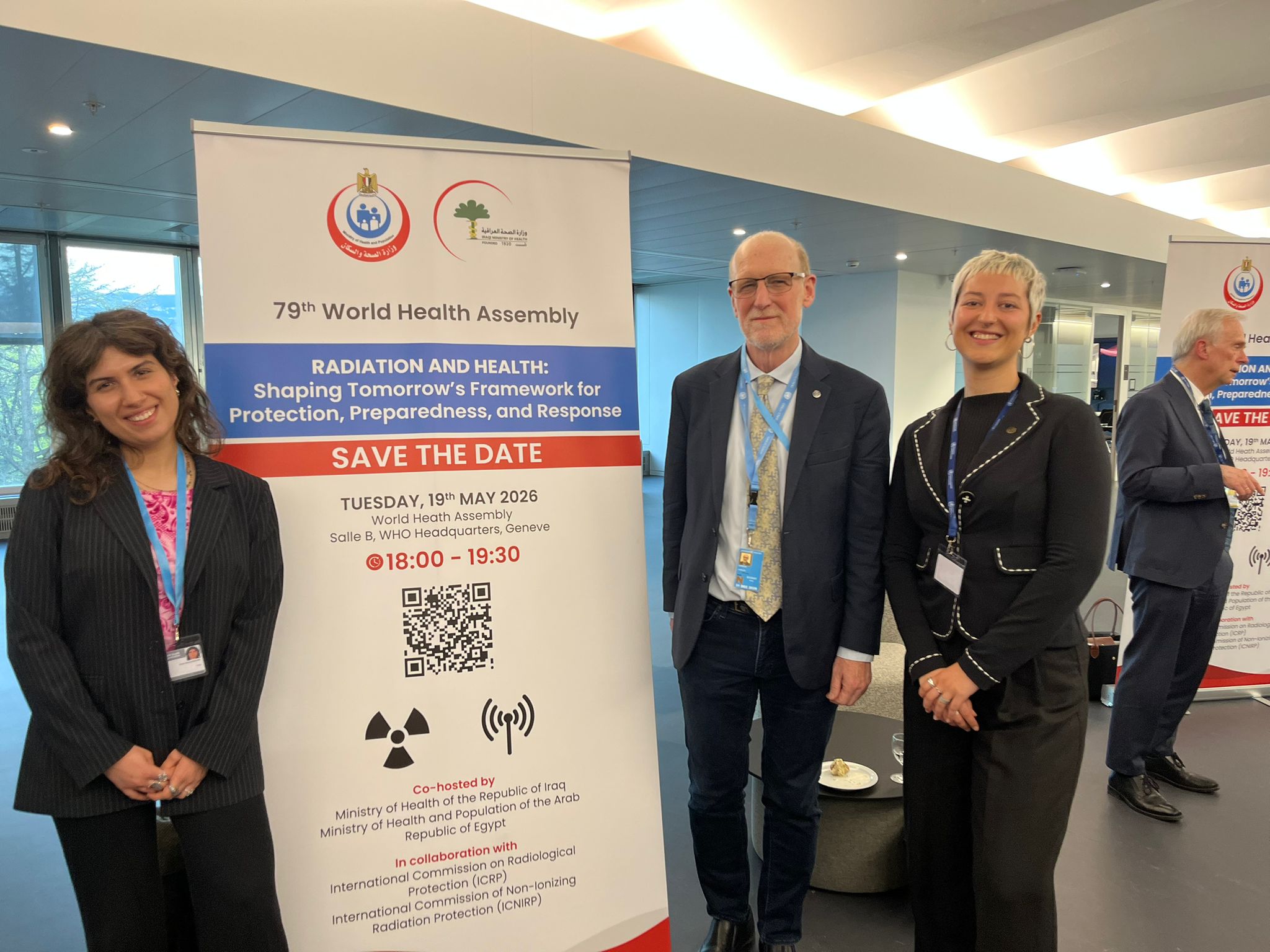
As one of the International Student Representatives, I had the honor of representing youth voices and the student movement within our delegation. Because the assembly is so vast, no single person can witness the entirety of the WHA. This report reflects our delegation’s collective impact and my own personal journey through the week focused on elevating medical peace work, addressing intersecting crises, and building strategic alliances with global health peers.
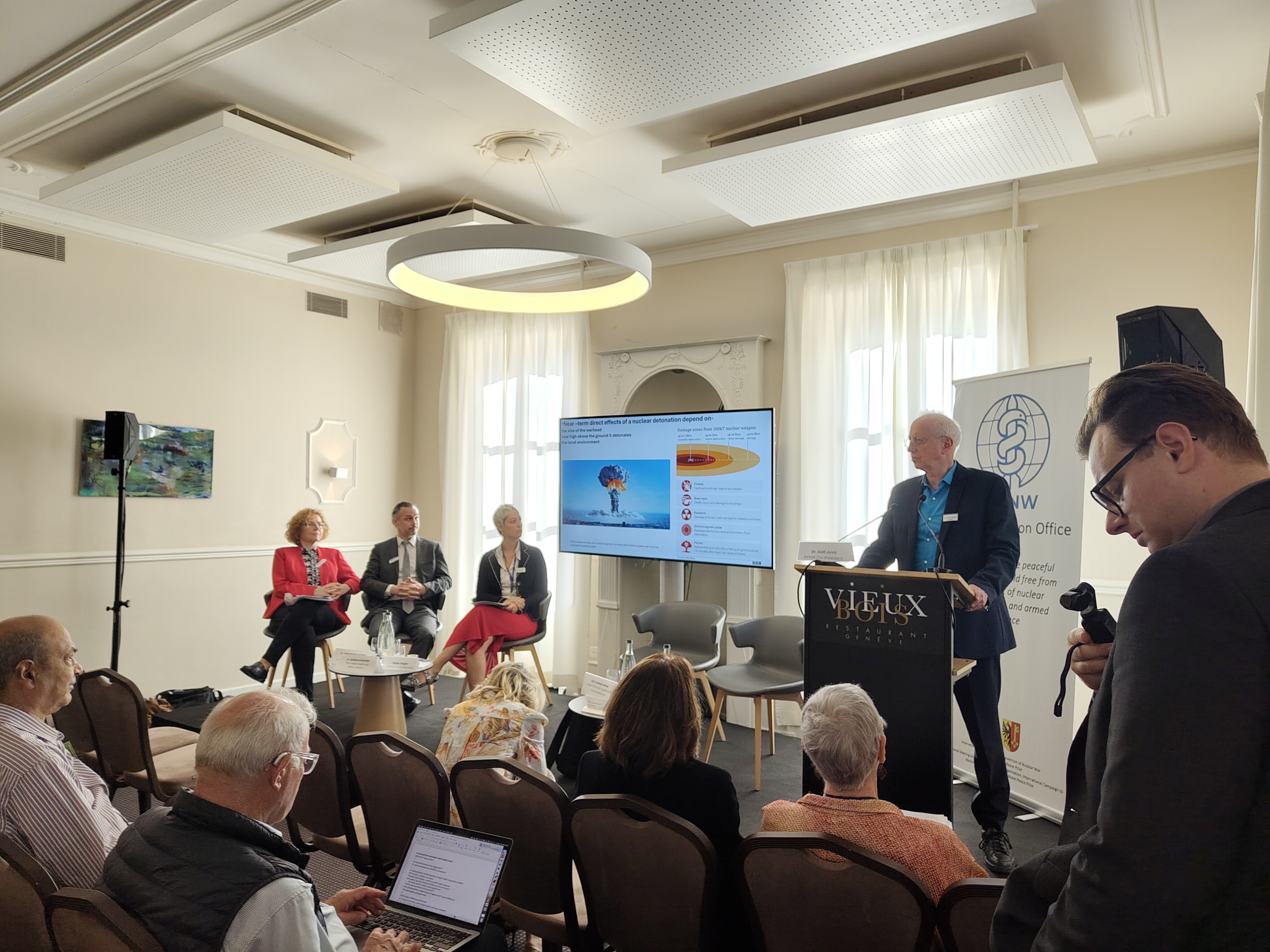
Our delegation maintained a robust presence this year, actively contributing to major panels. One official WHA side event hosted at the World Health Organization (WHO) Headquarters focused on the WHO’s Global Health and Peace Initiative (GHPI), led by Dr. Guillaume Simonian, and featured crucial insights from Prof. Sir Andrew Haines (London School of Hygiene and Tropical Medicine) and Prof. Bettina Borisch (World Federation of Public Health Associations – WFPHA), alongside representatives from member states and the World Organization of Family Doctors (WONCA).
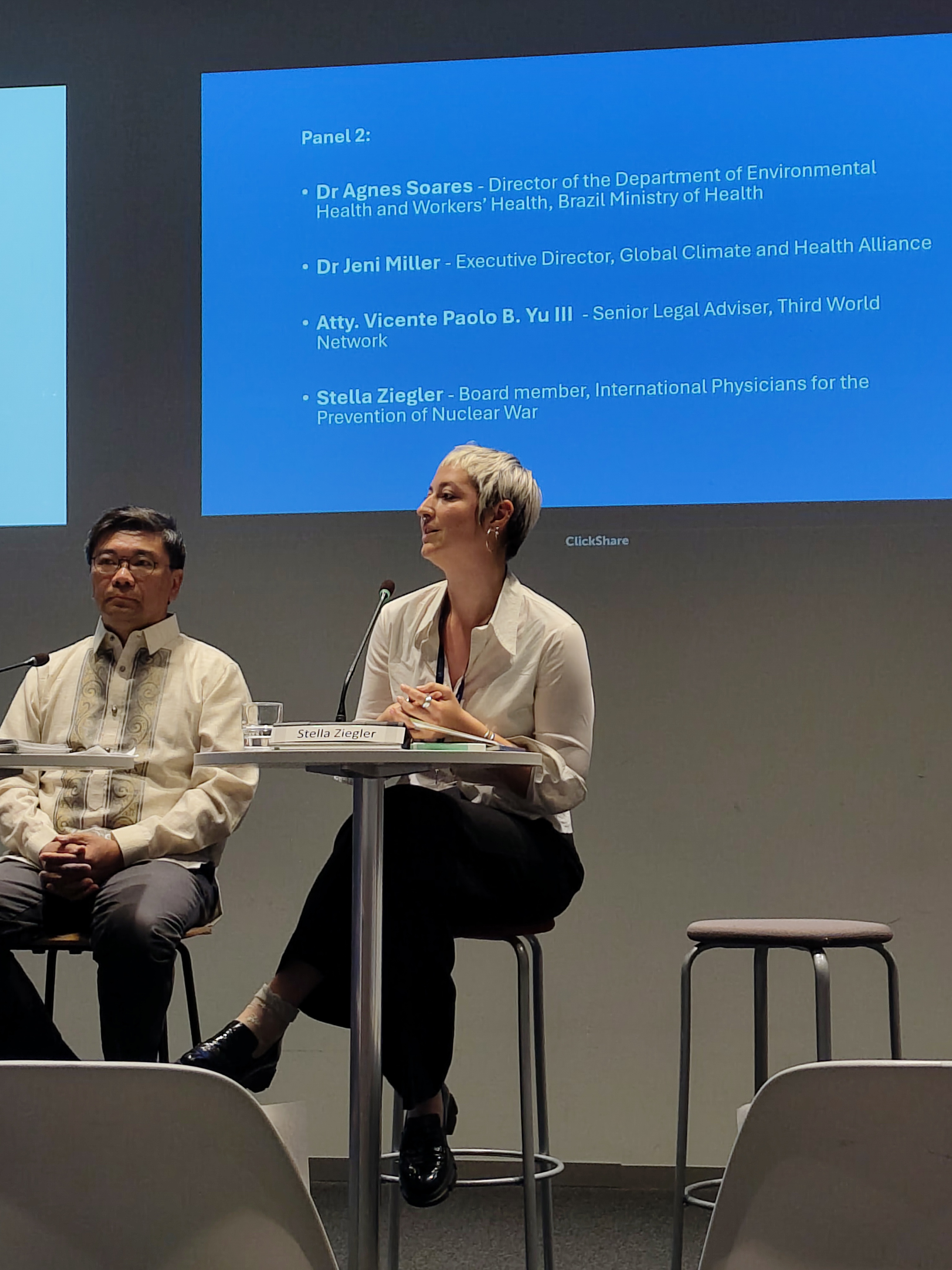
Building on this momentum, IPPNW, the WFPHA, and representatives of Switzerland co-organized a highly successful concluding side event on Promoting Peace and Health: Public Health’s Role. Professors Haines and Borisch were joined by IPPNW’s Stella Ziegler, who delivered compelling remarks on the critical role of medical peace education with further input from Dr. Guillaume Simonian and Dr. Heide Richter-Airijoki. The discussion underscored the existential threat of nuclear war as a public health concern, highlighted the role of women in health diplomacy, and framed peace work as a core medical responsibility. Stella also expanded our cross-sectoral advocacy at a side event hosted at the Médecins Sans Frontières (MSF) International Office, speaking alongside public health experts on the impacts of the climate crisis, conflict, and the right to a healthy environment.
Beyond panels, networking was at the very heart of our WHA experience. Through dedicated sessions, I was able to connect with peers from the WHO Youth Council, the WMA’s Junior Doctors Network (JDN), and the International Federation of Medical Students’ Associations (IFMSA).
Among the most impactful contributions of the week was the launch of The Lancet‘s joint commission with the Johns Hopkins Center for Humanitarian Health on Health, Conflict, and Forced Displacement: Health in a World of Crises and Impunity.
While the official member states continued their intense negotiations late into the night to pass global resolutions, our time in Geneva proved that the soul of global health diplomacy often thrives within these civil society connections. For the youth movement within IPPNW, the 79th WHA was a powerful reminder that our collaborative advocacy is essential in shaping a healthier, more peaceful world.

 Bimal Khadka
 Bjorn Hilt
 Charles K. Johnson
 Dr. Ghassan Shahrour
 Gunnar Westberg
 IPPNW
IPPNW John Loretz
 Lawrence Wittner
 Maria Valenti
 mollymcgint
 Sue Wareham
 Tilman Ruff
 Tim Wright
 Xanthe Hall


This is a truly inspiring recap of the WHA panels and the vital discussions around global health, peace, and climate crises. It is amazing to see how civil society and youth movements are driving such important advocacy on the ground. When tackling massive systemic issues like conflict and displacement, supporting psychological well-being is just as crucial as addressing physical health. Innovative approaches like a virtual psychiatrist can help expand mental health access and resilience for frontline advocates and vulnerable populations alike. Keep up the phenomenal work in Geneva!