Breaking free from the hoax of nuclear deterrence
Commander Robert Green, Royal Navy (Retired)
[Former British nuclear weapons officer Rob Green is the author of Security Without Nuclear Deterrence. He made the following presentation at Tufts University on February 27, as a panelist at the symposium “Our Nuclear Age: Peril and Promise,” sponsored by the university’s Institute for Global Leadership.]
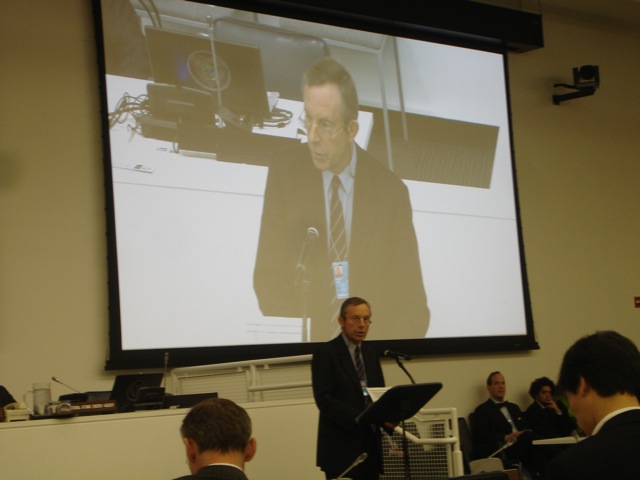
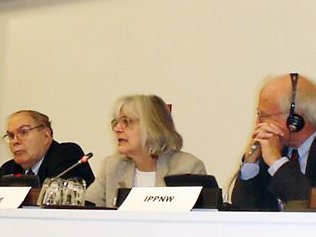
"Nuclear deterrence is irrational and unacceptable." Rob Green addresses the 2010 NPT Review Conference during a special plenary session devoted to NGO perspectives.
People often ask why I am the only former British Navy Commander with experience of nuclear weapons to have come out against them. Others in the peace movement ask why it took me so long. My short answer is that I now realize my lack of military pedigree meant I had a truly open mind; but military indoctrination, peer pressure and top security clearances overrode this, especially when combined with reminders not to damage my career prospects.
I was five days past my first birthday when 24-year-old Theodore Van Kirk, navigator of the Enola Gay, flew on the first tactical nuclear strike, against Hiroshima. In 1968, I too was a 24-year-old bombardier-navigator when told that my Buccaneer strike jet pilot and I had been chosen as a nuclear crew in our squadron aboard the aircraft-carrier HMS Eagle, and we were given a target near Leningrad. Read more…
On March 7, George Shultz, Henry Kissinger, William Perry, and Sam Nunn penned a new installment in a series of Wall Street Journal articles they launched in January 2007. The first was called “A world free of nuclear weapons,” and signaled a conversion experience that had transformed these old cold warriors into abolitionists. Subsequent articles — at the rate of about one a year — relegated the achievement of a nuclear-weapons-free world to some indeterminate future, while focusing on short term steps and what some have called “creating the conditions” for nuclear disarmament.
Last year, the US Gang of Four thought out loud about “how to protect our nuclear deterrent,” and now they have returned to the subject of deterrence and the need to reconceptualize “a safer and more comprehensive form of deterrence and prevention in a world where the roles and risks of nuclear weapons are reduced and ultimately eliminated” (“Deterrence in the Age of Nuclear Proliferation”).
Are the Four Horsemen visionaries or are they stuck in old ways of thinking? If, as they say, they are truly committed to eliminating nuclear weapons, are they offering a clear path to that goal, or just throwing up frustrating roadblocks?
Former IPPNW co-president Gunnar Westberg of IPPNW’s Swedish affiliate, SLMK, and Ira Helfand, North American regional vice president and a member of the board of Physicians for Social Responsibility (IPPNW-USA), had different perspectives on this latest editorial, which we share with you here.
Readers of the Peace and Health blog are welcomed and encouraged to add their own comments. What will it take to rid the world of nuclear weapons? How fast can that be accomplished? Are the Horsemen helping or hindering the effort?
_____
 Ira Helfand: I think this piece is fairly important. While written, predictably, from a US security point of view, it seems the beginning of a real effort on the part of these guys to undermine “deterrence” as a rationale for holding on to nuclear weapons.
While the rhetoric is not very inspiring, it seems a very serious, and potentially game changing effort to destroy the arguments of [US Senator John] Kyl and his allies in the nuclear weapons camp who say that nuclear weapons play a positive role in maintaining US security.
We would prefer a clearer rejection of nuclear weapons altogether, and, of course, that should be our message, but we are not the intended audience for this piece, and I think this piece advances the argument that we need to make.
Any time Kissinger says we should further reduce nuclear arsenals it is positive….
_____
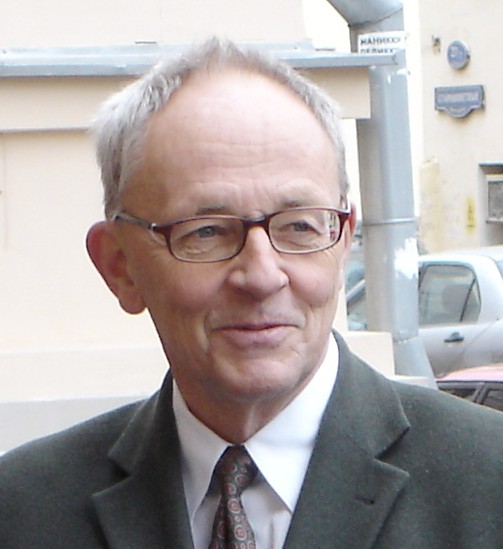 Gunnar Westberg: My impression is that this latest paper, compared to the three previous, represents a persisting, maybe increasing, understanding that nuclear proliferation cannot be stopped if the nuclear weapon states do not clearly dedicate themselves to nuclear disarmament. At the same time they have become even more timid about Going for Zero. Through this indecisiveness (and opportunism?) they risk losing their objective. How can the goal of nuclear abolition be seen as credible when they claim:
“Fourth, as long as nuclear weapons exist, America must retain a safe, secure and reliable nuclear stockpile primarily to deter a nuclear attack and to reassure our allies through extended deterrence. There is an inherent limit to U.S. and Russian nuclear reductions if other nuclear weapon states build up their inventories or if new nuclear powers emerge.”
The first sentence says that US will be the last to abolish nukes. But the second sentence says that the problem is a build up in other nuclear weapon states. The authors seem not to dare to discuss the road to Zero which they understand is necessary. In their first paper they said that without a clear dedication to abolition by the nuclear weapon states they will not be credible.
I do not understand their vacillation.
In the first paper they also stressed the importance of decreasing the readiness for firing of strategic nuclear arms. That, so very important step, is not mentioned now.
But I remember an interview with Kissinger in the French Le Figaro half a year after the first WSJ paper, where he says that “of course nuclear abolition will take several generations.”
Does anyone in the general media criticize or at least critically analyze their papers from this viewpoint? It is amazing to see that four statesmen of this stature are almost neglected by the media.
But we shall celebrate that these elder statesmen understand that the time of deterrence is gone, and the time for nuclear weapons will soon be over. The problem is that these men seem to believe that there is no urgency, that we must finish the nuclear era before the nukes finish the human era.
Old men are often in a hurry. I wish these were.
Nuclear weapons cause war
Colonel Muammar Gaddafi tried for many years to obtain nuclear weapons. The reason was, he said, that Israel had nukes. The desire for nuclear weapons is contagious. In the 1980s a rumor circulated that Gaddafi had made an offer on the international nuclear bazaar of one billion US dollars for a nuclear bomb. No bomb was available, it seems, but Gaddafi persevered. From Pakistan and Abdul Khadeer Khan, the star salesman for nuclear weapons technology, he bought equipment and competence, blueprints and scientists.
Early after the year 2000, the Libyan dictator wanted to change his image, to become an internationally respected, or at least accepted, leader. Maybe he cared primarily for his son Saif al-Islam, the intended successor. Saif is reported to have participated in the negotiations with Great Britain. He is educated at the London School of Economics.
In 2003 an agreement on the nuclear program was reached. The equipment was transferred to Tennessee and was inspected by President Bush. Four thousand centrifuges, assembled or in parts, blueprints from China for a bomb and many other useful tools were found. As late as 2009 the last shipment of uranium took place. There is nothing left in Libya of the nuclear program. We are grateful.
The Colonel achieved his own goal, to a considerable degree. He was received, embraced and kissed on the cheeks by Western leaders.
If Gaddafi had not converted but instead, with resolve and with petro-dollars, continued the nuclear program, he could very well have had some useable nuclear weapons today. In that case we would now worry that Gaddafi, who by some is seen as a madman, could use or threaten to use nuclear weapons against his own people. The likely consequence of that would have been attacks or threats on the nuclear facilities by NATO and the USA. Gaddafi could have escalated by threatening to bomb cities around the Mediterranean. The government of Israel would have demanded a military invasion to stop the lunatic in Tripoli.
Had Gaddafi obtained nuclear weapons, an attack by NATO on Libya would have been likely. The situation could be compared with that in 2002 when the US government said there were nukes in Iraq. If the Bush administration had not managed to make the US population believe this, the American public would probably not have accepted an attack on Iraq. “We don’t want the smoking gun to be a mushroom cloud” said Condoleezza Rice on American TV.
A land that acquires nuclear weapons, or make others believe they plan to acquire them, risks a “preventive attack.” This applies today to Iran and North Korea. Many leaders and citizens in these countries believe that nuclear weapons deter an attacker. It is the other way around:
Nuclear weapons cause war.
by Ogebe Onazi, Nigeria
It is an honor to speak on behalf of IPPNW and the IANSA network today at the United Nations Arms Trade Treaty second Preparatory Committee Meeting.
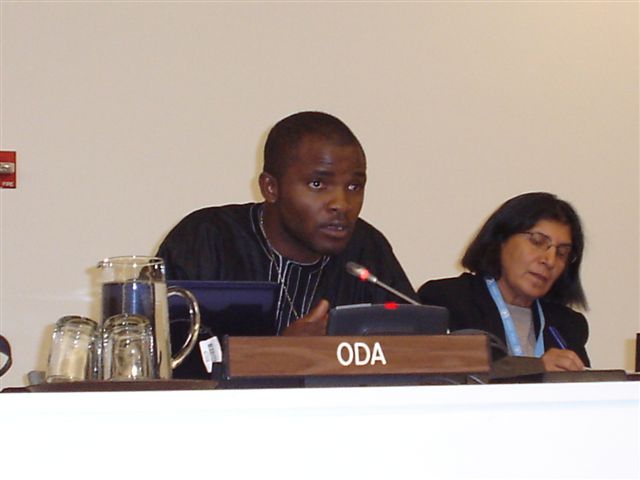
Dr. Ogebe Onazi of Nigeria addresses the Arms Trade Treaty PrepCom at the UN
I am convinced that if an ATT is to make a meaningful impact on the ground it has to address the health and humanitarian impact of illicit and irresponsible arms transfers. I am one of the people who have to treat victims of gun violence, and heal the physical and mental wounds left by these weapons. When someone arrives in my emergency room, I don’t know if the gun or bullet is legal or illegal; all I know is that the person is bleeding and I try to save a life.
I am a Physician from Nigeria, a country situated in the global South. According to the World Health organization there is 1 doctor for every 2500 people in Nigeria and this compares to one doctor for every 370 people in the United States. This disparity demonstrates the severe lack of human resources to meet the health demands of the people in my country. Despite the heavy burden of disease including malaria, HIV and tuberculosis, resources for health care are chronically scarce; and every time resources are used to treat gun injuries, they are diverted from preventing communicable disease and malnutrition, maternal & child health care, and other critical public health services. Read more…
by Donald L. Mellman, MD
As a recent IPPNW member, I have had the honor to join the mission to the Arms Trade Treaty meeting at the UN.
IPPNW is the only physician-driven NGO at this UN Arms Trade Treaty meeting. Therefore, its representatives bring into perspective the unstated goal of the treaty: to improve the lives and health of all peoples of the world. Certainly there is the need for the presence and passion of the other representatives of the many other NGOs who meet in a variety of ways to bring some sanity to the insane situation of armed violence and its millions of victims. Yes, IPPNW is caught up in the politics among the NGOs, the politics between the NGOs and the many state delegates, and is an observer of the (often acrimonious) politics among the state delegates. But, it is the only NGO that, by definition, speaks the language of patient care and the publics’ health.
Our co-president, Bob Mtonga, alluded to the famous Virchow quote, “Medicine is a social science, and politics is nothing but medicine on a large scale,” when he prepared remarks for the general NGO session. Interestingly, Bob is both a Zambian delegate to these proceedings and an IPPNW representative, the only NGO person so placed. He has the respect of all (> 50) the NGO members in attendance. Read more…
ATT chair’s draft foreshadows treaty elements
by Michael Schober, IPPNW-Austria
Thursday morning at the ATT PrepCom: The plenary, with delegates of all UN member states, is now discussing the newest version of the PrepCom chairman’s paper which was discussed for the past three days and which we hope will lead to an arms trade treaty in the future.
Just prior to the release of the paper, there was much anticipation. Would the statement and needs of their own country have been taken into consideration? What would be the further direction be in the negotiations? Would the ATT be strong and really contribute to more security, development and therefore health? In addition, the NGOs were anticipating the result of the efforts they made and lobbying they did in the last days.
After a short time studying the revised paper finally released, we could find the following:
The controversial issue of ammunition in the treaty was maintained;
The immediate statement of the US delegation ( which is against including ammunition due to difficulties in implementing it) was, that an ATT should regulate international arm transfers and can not and should not legislate on death and murder.
For us, a strong ATT would mean exactly this: Reducing death and murder!;
Further, the responsibility to execute the treaty was made stronger: “Should take into account” was replaced by “shall.” A success for IPPNW, which pushed with other NGOs for that language as well as such considerations as victim assistance.
The challenge in the further discussion will be how the positions of the states, which are aiming for a less universal and strong ATT — referring to the right of self defense and difficulties of implementation — will be taken into account.
Further plenaries will cast more light on this.
Onazi to ATT: “Violence is a preventable health problem”
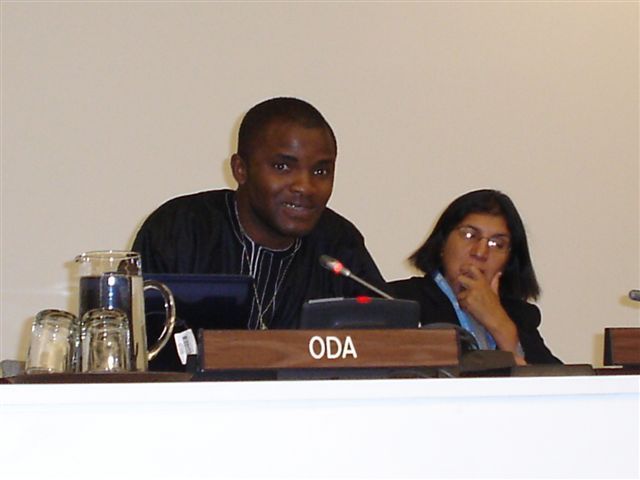
Ogebe Onazi speaks at ATT PrepCom
Dr. Ogebe Onazi from IPPNW-Nigeria provided a riveting presentation on a doctor’s perspective on armed violence during the Arms Trade Treaty (ATT) side event panel, “How an ATT Can Help Prevent Armed Violence,” on Wednesday, the third day of the second Preparatory Committee session.
A report of the same name, produced by IANSA and Amnesty International, was released at the event, which was attended by 120 state delegates and NGOs. The panel included experts in international human rights and other related issues. Dr. Onazi discussed the health impacts of gun violence as well as the public health approaches that can be used to tackle the demand side of violence. He emphasized that violence is a leading killer of those aged 15-44 worldwide, and that the World Health Organization has declared “Violence is …. an important health problem — and one that is largely preventable.”
Dr. Onazi addressed the economic repercussions of the arms trade and the diversion of resources from health care — resources that are needed to treat and rehabilitate victims of gun violence.
Despite the heavy burden of disease including malaria, HIV and tuberculosis, resources for health care are chronically scarce; and every time resources are used to treat gun injuries, they are diverted from preventing communicable disease and malnutrition, maternal & child health care, and other critical public health services. “The expertise of the medical community is an important resource to join with expert from other fields including experts in criminal justice, security and defense on the issue of gun violence.”
He closed with a call to action to States to “work with the medical community as a partner in your efforts to prevent death and injuries from gun violence.” For more information, go to www.controlarms.org.
Day two at the ATT: Dialogue with the US

IPPNW's Dr. Cathey Falvo (right) and PSR's Elina van Schaik meet Ambassador Mahley and other members of the US delegation.
March 1, 2011 — On day two of the second session of the Preparatory Committee for the Arms Trade Treaty, IPPNW members met with members of the US delegation, including Ambassador Donald Mahley, to discuss health issues related to the ATT and public health approaches to preventing violence.
We listened to their views on a range of complex subjects including import, export, and human rights considerations. We offered to be a resource on health issues and in educating on and documenting the human costs of arms violence, which the Ambassador endorsed as very important to helping countries make informed spending decisions.
The IPPNW delegation was joined today by Dr. Omolade Oladejo from Nigeria who arrived to add her voice to our activities. IPPNW members participated in a range of other meetings with NGOs and state delegates to the ATT PrepCom. Tomorrow Dr. Ogebe Onazi from Nigeria will provide a physician’s perspective on armed violence and development as part of a panel sponsored by IANSA, Amnesty International, and the Permanent Mission of Norway .
Vic Sidel, Cathey Falvo, and Don Mellman at ATT panel
IPPNW presented a side panel at the second session of the Preparatory Committee for the Arms Trade Treaty on February 28, entitled Control the Arms Trade: Improve Human and Environmental Health. The panel was co-sponsored by Zambia, and included physicians from that country, the United States, and Austria who spoke about the human health and environmental dimensions of the full cycle of the arms trade. The panelists addressed how a robust Arms Trade Treaty can help promote health and reduce environmental contamination.
The week-long ATT PrepCom convened on February 28 at the United Nations Headquarters in New York City. The PrepCom is expected to recommend essential elements of a legally binding international agreement to regulate transfers of conventional arms, to be negotiated in July 2012. Read more…
Australian senator questions uranium policies; cites IPPNW resolution
Senator Scott Ludlam, a member of the Australian Parliament from the Green party, has been asking the government some pointed questions about the health and environmental effects of uranium mining.

Greens MP Sen. Scott Ludlam says the Australian government ignores the warnings of IPPNW about the health, human rights, and environmental impacts of uranium mining and processing at its peril.
Last November, after IPPNW’s Australian affiliate, MAPW, provided him with a copy of a resolution on uranium mining and processing adopted by the federation’s International Council at the IPPNW World Congress in September, Sen. Ludlam went to work. Citing assertions made by IPPNW that “‘uranium ore mining and the production of uranium oxide (yellowcake) are irresponsible and represent a grave threat to health and to the environment” and that “both processes involve an elementary violation of human rights and their use lead to an incalculable risk for world peace and an obstacle to nuclear disarmament,” he asked Nicola Roxon, the Minister for Health and Ageing whether the Australian Radiation Protection and Nuclear Safety Agency (ARPANSA) had looked into these hazards with regard to Australian uranium mining. Read more…

 Bimal Khadka
 Bjorn Hilt
 Charles K. Johnson
 Gunnar Westberg
 IPPNW
IPPNW John Loretz
 Lawrence Wittner
 Maria Valenti
 mollymcgint
 Sue Wareham
 Tilman Ruff
 Tim Wright
 Xanthe Hall


 IPPNW peace and health blog