A horrific reminder that guns are bad for health
Today on World Health Day, we must remember that the World Health Organization defines health as a “state of complete physical, mental and social well-being and not merely the absence of disease or infirmity.”
—Preamble to the Constitution of the World Health Organization (adopted 7 April, 1948)
The fact that hundreds of thousands of people die each year from small arms and millions more survive their injuries but are left with permanent physical and mental disabilities is unconscionable and seriously undermines health. Poor people bear a disproportionate burden of death and injuries from violence, with over 90% of deaths from injuries occurring in low-middle income countries. The most lethal weapons used in armed violence – firearms – have been called “violence multipliers. They can wreak havoc with lives and livelihoods.
The shootings today at a primary school in Rio where 11 children have been killed and 18 seriously wounded are a horrific reminder of the human consequences of the public health crisis of firearm violence and its impact on individuals, families, communities and society, and an urgent call to action to address it.
As a medical organization devoted to saving lives and promoting health, IPPNW calls on governments and policy makers to rededicate themselves to preventing armed violence, promoting peace through health, and securing the well-being of millions worldwide. This is not only critical to health but also to development. Guns are bad for health.
Nuclear famine: Interview with Ira Helfand
Ira Helfand, an emergency physician from Northampton, Massachusetts, has been writing and speaking about the medical consequences of nuclear war on behalf of IPPNW and its US affiliate, Physicians for Social Responsibility, since the 1980s. For the past three years, he has been working with climate scientists Alan Robock, O. B. Toon, and others to help document the health and environmental disaster that would ensue from a range of possible nuclear wars.
We asked Ira to describe the work on which he is now engaged and to reflect on his career of nuclear abolition activism.
 What is climate science telling us about the nature of nuclear weapons that we didn’t already know, and why is it important for people to understand what these findings reveal about the consequences of regional nuclear war?
The recent investigations into the climate effects of nuclear explosions provide two extremely important lessons. First, we’ve always known at some level that a nuclear war between the US and Russia would be a catastrophe. But Professors Robock and Toon and their colleagues but have shown that a war with those massive arsenals would be a civilization-ending disaster. Their recent work has vindicated the “nuclear winter” studies of the 1980s, and has shown that the effects would be even worse than predicted and would last longer. Read more…
Anger is renewable energy
by Ursula Völker
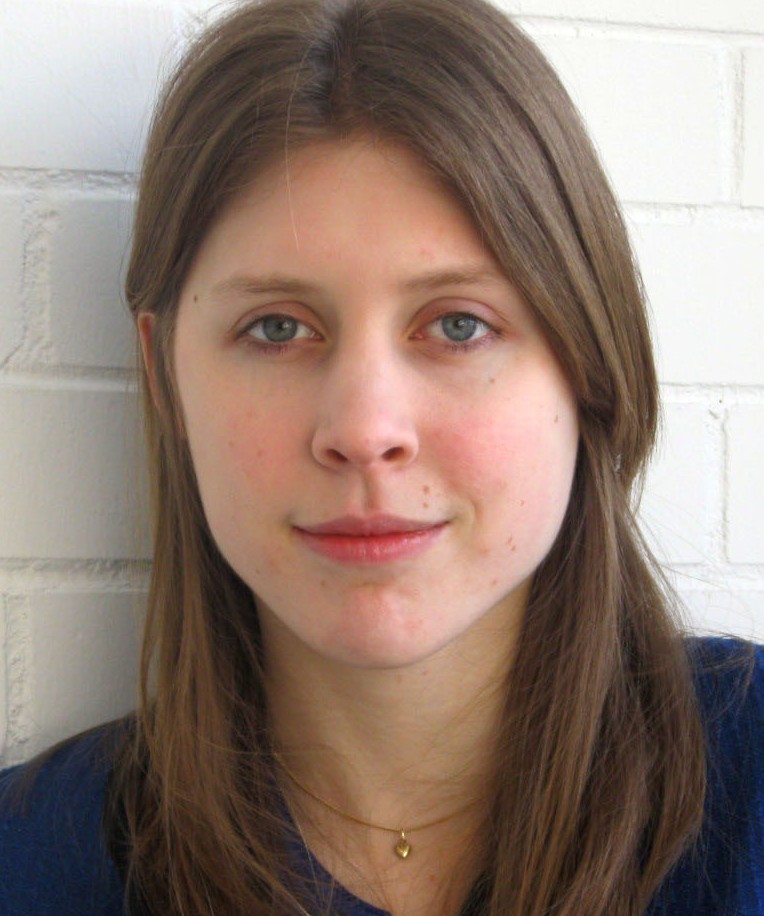 Some weeks ago, I had a 9 year old patient who was suffering from enormous temper tantrums. Whenever he felt overwhelmed and helpless, when it was clear to him that no one would listen to his voice, he didn’t know of any better way to deal with his feelings than to hurt himself and everyone around. Kicking, beating, biting and scratching, he tried to gain control of the situation and forced helplessness onto the adults who had been so ignorant before.
When I read about what is going on in Japan now, I somehow feel like this little boy. I feel overwhelmed with anger, but there’s no one to address, no one listening to people’s questions and concerns. I feel helpless to the point of being paralyzed. Haven’t we warned our governments of the hazards of using nuclear power again and again? Aren’t there already thousands and thousands of innocent people suffering from the consequences of a man-made disaster, in vast areas around Chernobyl? Read more…
Germans turn out en masse against nuclear energy
Alex Rosen of IPPNW-Germany reflects on the latest news from Fukushima and reports on a weekend of antinuclear protests throughout Germany:
The pictures coming to us from Fukushima do not look good. Our experts here in Germany agree that the nuclear meltdown is currently taking place. The sea is already highly contaminated, the radiation levels 50 km away from the plant are the same as in the irradiated regions around Chernobyl (400.000-900.000 Bq/m2), radiation is seeping into the drinking water of Northeast Japan and Tokyo, the first victims of acute radiation sickness are being treated in hospitals already. This is indeed a nuclear catastrophe comparable to Cherobyl and we’re witnessing a similar cover-up by IAEA and the nuclear industry.
Here in Germany, the debate around our own nuclear energy program has flared up again. Seven of our oldest nuclear plants were shut down last week in order to soothe public outrage. Still, today [March 26] we had demonstrations of 250,000 people in Berlin, Cologne, Hamburg und Munich. I’ve attached a link to photos of our demonstration here in Cologne, which was quite large with about 50,000 people. Read more…
A report from the Peace Boat
Andi Nidecker of PSR/IPPNW-Switzerland, who participated on a Peace Boat cruise this month with Maria Sotiropoulu of IPPNW-Greece sends us the following “personal report”:
The “peaceboat” is a magnificent oceanliner, cruising 2-3 times around the world. It is basically a ship rented by the Japanese “peaceboat” NGO. It sells ordinary tickets to mostly Japanese citizen interested in making a cruise, but allows also students to make the same experience. It furthermore facilitates group sessions and learning experiences, or as in our case the Horizon 2012 strategy meeting to the topic “Nuclear weapon free zone Middle East” (“NWFZ ME”). Read more…
Nuclear catastrophe in Fukushima: extend the evacuation zone
IPPNW-Germany and the Society for Radiation Protection, Germany released the following statement to the press on March 24, 2011.
The physician’s organisation IPPNW Germany and the President of the German Society for Radiation Protection (GfS), Sebastian Pflugbeil, believe that an extension of the evacuation zone around the damaged Fukushima nuclear plant is urgently needed. They call on the Japanese government to evacuate the population promptly from a much wider area, in particular to ensure the protection of children and pregnant women.
The recommendation of the US Nuclear Regulatory Commission (NRC) and the Australian Radiation Protection and Nuclear Safety Agency that the evacuation zone be extended to 80 kilometres could be a helpful first step, say the two organisations. Evacuation zones, however, are only a method of helping to roughly mark out a possible area of contamination and in reality the radioactive exposure depends on wind direction, strength and precipitation. Twenty-five years ago, when the Chernobyl disaster occurred, there was an irregular distribution of contamination and “hot spots” emerged, where the Soviet authorities found contamination of more than 555.000 becquerel per m2.
Reinhold Thiel, member of the German Board of IPPNW, is especially worried about the danger posed by unit 3: “This unit is run on MOX fuel which contains plutonium and black smoke is billowing out of it. I am concerned that large amoungts of plutonium are now being released into the air.” IPPNW calls on the German government to press for an immediate publication of all existing measurements of plutonium levels . “It could be, however, that Chancellor Merkel already has that information“ said Thiel.
Plutonium is a highly toxic emitter of alpha radiation which does approx. 20 times more biological damage than the same dose of gamma emitting radionuclides such as Cesium 137. Breathing in plutonium easily leads to bronchial and lung cancer. If plutonium is taken into the body via food and drink, it concentrates in the liver and bones and has a biological half-life of 40 years in the liver, 100 years in bones.
According to IAEA, high levels of beta-gamma radiation were found at distances between 15 and 58 km away from the nuclear power plant. The measured levels were between 200,000 und 900,000 becquerel per m2. This means, according to Prof. Edmund Lengfelder of the Otto Hug Institute on Radiation, that the Fukushima disaster has evidently reached the same dimensions seen in Chernobyl. After the Chernobyl disaster, contamination reached more than 555,000 bq/m2 (Cesium 137) in Ukraine, Russia und Belarus.
Japanese authorities have found up to 55,000 bq/kg iodine 131 in spinach from the Ibaraki prefecture. These levels are way above the acceptable levels for Japan for consumption (2,000 bq/kg).
IPPNW and GfS call on foreign minister Guido Westerwelle to actively pursue the publishing of the radiation measurement data that the Comprehensive Test Ban Treaty Organisation (CTBTO) has collated through its global network of monitoring stations. The CTBTO shares this information with the WHO and IAEA but has not yet made this data public.
by Tilman Ruff
 The March 11 earthquake and tsunami in Japan and complicating nuclear crisis throw into sharp focus concerns about exposure to ionising radiation. What is it, how is it harmful, how much is too much? Inside a nuclear reactor, the radioactivity is increased about a million times as some of the uranium or plutonium is converted to a cocktail of hundreds of different radioactive elements.
There are many different pathways through which people can be exposed to radiation: inhalation of gases or particles in the air, deposits in soil or water, ingestion of food, water or dust. Some radioisotopes mimic normal chemical elements in living systems and therefore make their way up the food chain and onto our plates. Read more…
Stop the killing in Libya
The following statement has been issued by the IPPNW Executive Committee on behalf of the 1985 Nobel Peace Laureate organization.
International Physicians for the Prevention of Nuclear War (IPPNW) calls on all parties for an immediate cease fire in Libya. Having established a no fly zone, we call on the governments responsible for the international forces for an immediate halt in all military actions, and on the Libyan government and the Libyan rebels to end the fighting and to seek a peaceful conflict solution, if necessary facilitated by UN negotiators.
With continued hostilities and foreign military intervention, a humanitarian crisis is emerging in Libya. IPPNW demands that health care and medical facilities at all times must be accessible for all parties and that health care workers must be allowed to perform their duties according to humanitarian and ethical principles.
IPPNW, the recipient of the 1985 Nobel Peace Prize, is a non-partisan federation of national medical organizations in 63 countries, representing tens of thousands of doctors, medical students, other health workers, and concerned citizens who share the common goal of creating a more peaceful and secure world freed from the threat of nuclear annihilation.

 Bimal Khadka
 Bjorn Hilt
 Charles K. Johnson
 Gunnar Westberg
 IPPNW
IPPNW John Loretz
 Lawrence Wittner
 Maria Valenti
 mollymcgint
 Sue Wareham
 Tilman Ruff
 Tim Wright
 Xanthe Hall


 IPPNW peace and health blog