by Robert Mtonga
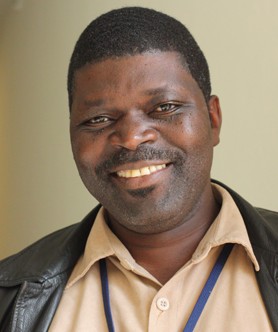
IPPNW Co-President Dr. Bob Mtonga. Photo by Aki Morizono
I represented IPPNW at the just-concluded 2nd Ministerial Review Conference of Armed Violence and Development (2MRC), which was co-convened by the Government of Switzerland and the United Nations Development Programme (UNDP). The conference was held in Geneva from 31 October to 2 November.
The 2MRC was convened to review progress made, by the signatories to the Geneva Declaration (GDAV) on Armed Violence, on taking the commitments therein enshrined forward.
A political declaration, the GDAV, is a tool that brings states, non-governmental organisations, United Nations agencies and academic institutions to a round table to discuss a broad international agenda that places armed violence at the core of business with a view to finding workable ways and means that will translate into a meaningful reduction of armed violence and its ramifications on the ground and in the lives of affected individuals, families and communities in real time. Read more…
A couple of times each year, I talk about nuclear issues with the host of a Sunday morning radio talk show in Boston, and the interview usually ends with this question: “So are you feeling optimistic or pessimistic about our chances of getting rid of nuclear weapons?”
Most recently, a few weeks ago, I said I was on the fence. That I was taking a lot of encouragement from the growing number of non-nuclear-weapon states and civil society groups who have embraced the idea of a global abolition treaty, but that I was disheartened by the relentless modernization of nuclear weapons systems in every single nuclear-weapon state.
This morning I read a sobering new report on nuclear weapons modernization from the Trident Commission of the British American Security Information Council (BASIC), and am finding it a little hard to reconstruct the case for optimism. I expect that feeling will pass, but for now, here’s the condensed version of how bad the facts on the ground really are.
The report is called “Beyond the United Kingdom: Trends in the Other Nuclear Armed States” (you can get a copy at BASIC’s website), and it covers all the nuclear-armed states except the UK, which will get separate treatment in a parallel phase of the Commission’s work. Part summary of current arsenal sizes and configurations in each of the other nuclear-weapon states and part projection of budgeted and scheduled new deployments, the report by BASIC consultant Ian Kearns also assesses the priorities and rationales that are driving the expansion of nuclear forces into the middle of this century and beyond. Read more…
Free the World from the Nuclear Chain
Nuclear Power and the Bomb – inextricably linked
We talk about abandoning nuclear energy or abolishing nuclear weapons. But this is not enough. They are only the visible products of a whole chain of production that binds us – the nuclear chain. This chain does much more damage than we are aware of.
At the front end of the chain is uranium mining – providing the same source for both nuclear energy and nuclear weapons.
Next comes enrichment. Centrifuge technology enriches uranium and it is only a question of the enrichment grade that defines whether the uranium can be used for producing electricity or weapons.
Regardless of what we believe or not, we can never be 100% sure of what it will be used for. Look at Iran, an example that shows what role mistrust and tension play in the use of such technology. The combination of enrichment and political conflict could lead to war. Read more…
Indian doctors describe dire consequences of violence against women
by Dr. Balkrishna Kurvey
“Women and children are easy prey to those with guns,” said the keynote speaker at the national conference of the Association of Medical Women in India (AWMI) on October 15-16, 2011 at Nagpur, India.
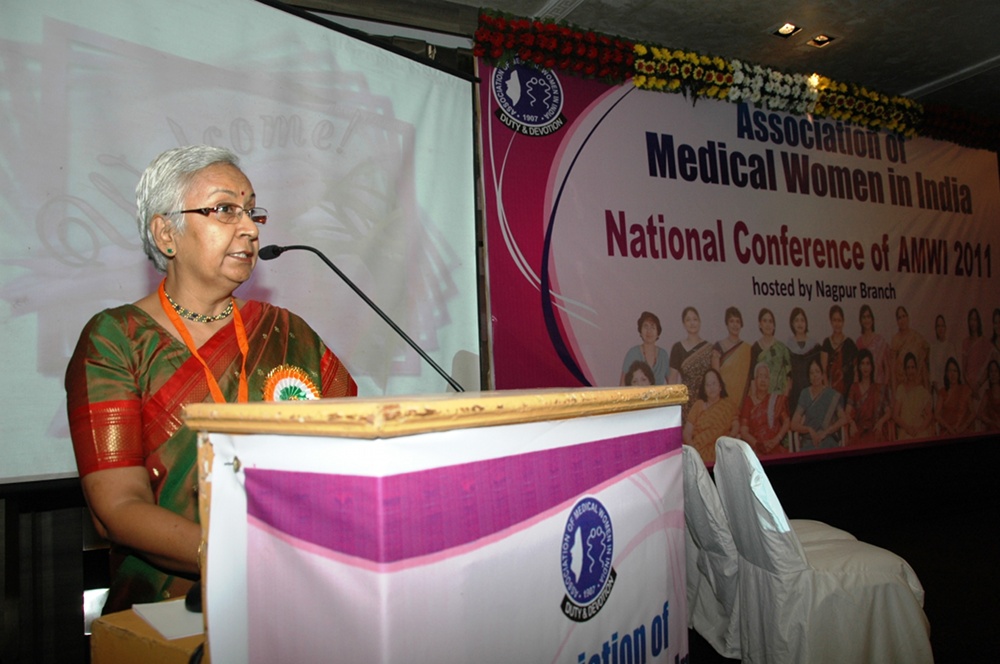
Dr. Nalini Kurvey addresses Indian conference on violence against women
My wife Nalini and I agree, which is why we have been working for more than 15 years on preventing armed violence in India, especially toward women and children, and why we helped to organize the session entitled “Tackling growing violence against women—issues & strategies: Aiming for Prevention” at the AWMI conference. We addressed more than 375 Indian women medical doctors on the health effects of small arms and light weapons. Read more…
Remembering Reykjavic
An American and a Russian president almost made good on a serious proposal to abolish nuclear weapons 25 years ago this month. The leaders were Ronald Reagan and Mikhail Gorbachev (who was actually the president of the now-defunct Soviet Union) and the occasion was the 1986 Reykjavic Summit.
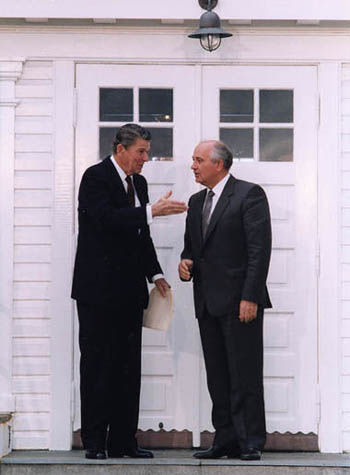 The story of how Reagan and Gorbachev sat across from each other in Hofdi House, talking themselves into the elimination of all their ballistic missiles in one grand bargain, with US Secretary of State George Shultz cheering them on, was told in heartbreaking detail by Richard Rhodes in his 2008 book Arsenals of Folly. The heartbreak, of course, was the collapse of the proposal over Reagan’s stubborn adherence to the wholly imaginary Strategic Defense Initiative and Gorbachev’s unwillingness to ignore SDI as scientific and technological nonsense. They got a lot of support in these positions from obstructionist advisers who saw the actual elimination of nuclear weapons as not in, shall we say, their best interests. Read more…
Is Mitt Romney ready for the world?
If current polls are correct, Mitt Romney seems likely to become the 2012 Republican presidential candidate and the next president of the United States. Therefore, we should carefully examine his first major foreign and military policy address—delivered on October 7 at the Citadel, in Charleston, South Carolina—and ponder the question: Is Mitt Romney ready for the world? Read more…
Hiroshima doctors leave for North Korea to examine A-bomb victims
The following news item appeared on October 11, 2011 in the Mainichi Daily News.
A team of six doctors from the Hiroshima Prefectural Medical Association departed for North Korea on Monday to conduct medical checkups for North Koreans who were in Hiroshima at the time of 1945 atomic attack on the city and exposed to radiation.
The team, led by Shizuteru Usui, the 74-year-old president of the association, is scheduled to arrive in Pyongyang on Tuesday via Beijing for a five-day stay in North Korea.
The six surgeons and internists and two aides are to visit Pyongyang and Sariwon where they will interview and diagnose the victims with the aid of local doctors, while exchanging views with North Korean groups of atomic-bomb victims.
The Japanese doctors also plan to invite members of the North Korean branch of International Physicians for the Prevention of Nuclear War to take part in an IPPNW world conference slated for next August in Hiroshima.
The prefectural association interviewed such victims in 2008 during a team visit to North Korea. But at that time, doctors could not examine the victims as they were not allowed by local authorities to practice medicine.
Burundi bar attack: more evidence of small arms proliferation
by Théophile Bigirimana
IPPNW National Student Representative, Burundi
On Sunday, September 18, at about 20:00, at least 36 people were killed after unidentified gunmen opened fire at a crowded bar near the Burundi capital, Bujumbura.
“I heard someone some distance away shout: ‘Kill them all,’ and they opened fire,” one survivor said.
There are some reports that the attackers crossed into Gatumba from just across the border in Democratic Republic of Congo.
Some 300,000 people are said to have been killed in Burundi’s 12-year civil war between the minority Tutsi-dominated army and ethnic Hutu rebels. The conflict officially ended in 2005 with a peace deal between the Burundi Government and the last rebel movement at that time but until now some unidentified groups of armed people are still killing people in some areas of Burundi.
Each one of us should take a short time to think about what the proliferation of small arms causes within our populations. The Great Lakes Region of Africa has been an area of armed conflicts since 1990 and from that moment until now, millions of people have died in Burundi, Rwanda, and the Democratic Republic of Congo.
The armed groups operating in these countries continue to kill people and do violence to women including sexual abuse.
We would appreciate if you join us to SAY NO to violence by bringing messages to all political leaders to take effective decisions to abolish the small armed conflicts in our region in general and in Burundi in particular.
11 September and 11 March – what’s the connection?
by Tilman Ruff
 An interesting twist that 11 September 2011 is both the 10th anniversary of the extraordinary multiple terrorist attacks in the US that spawned a worldwide “war on terror,” and also six months since the devastating combination of earthquake, tsunami and ongoing nuclear disaster in Japan. These apparently disparate events do share some important implications.
Where was the fourth airliner on 11 September 2001 headed? It crashed in a Pennsylvania field as passengers and crew fought the hijackers, but what was its target? The White House or Capitol Hill are generally thought the most likely targets, though some scholars have concluded that when it crashed, flight UA93 was heading for the Three Mile Island nuclear power plant. Read more…
Caring for A-Bomb survivors living in North America
by Jiro Yanagida
Many immigrants from Hiroshima Prefecture have long lived in the US, mainly on the West Coast and in Hawaii. During World War II, many of their children, who were born in the US, visited their parents’ home towns to learn Japanese culture. These children were affected by the A-bomb, which was dropped on their country of origin by their country of birth. Some 1,000 survivors of Hiroshima and Nagasaki either returned to the US after the war or relocated with American-born spouses or other family members.
The American Society of A-Bomb Survivors (ASA) was established to assist those who suffered from social discrimination and who had health concerns. As their requests for aid were rejected by both the US and the Japanese governments, the ASA asked physicians in Hiroshima to conduct periodic medical exams for the survivors living in North America. The Hiroshima Prefectural Medical Association (HPMA) acted on this request. By establishing sister relationships with local medical associations in the US, the HPMA enabled physicians from Hiroshima to examine patients within the US, even without a US medical license. The first medical examination of A-bomb survivors living in North America took place in 1977 in California, and was followed by biennial medical exams in four cities (Los Angeles, San Francisco, Seattle, and Honolulu). Several A-bomb survivors living in Canada have received medical exams in Seattle. Read more…

 Bimal Khadka
 Bjorn Hilt
 Charles K. Johnson
 Gunnar Westberg
 IPPNW
IPPNW John Loretz
 Lawrence Wittner
 Maria Valenti
 mollymcgint
 Sue Wareham
 Tilman Ruff
 Tim Wright
 Xanthe Hall


 IPPNW peace and health blog