Are the nuclear weapon states rattled?

Just a few of the ICAN campaigners who have been advocating for a global treaty banning nuclear weapons at the NPT PrepCom in Vienna. (L to R: Arielle Denis, Arife Köse, Akira Kawasaki, Tim Wright, Sharon Dolev, Alex Reidon, John Loretz, Ghassan Shahrour, Nasser Burdestani)
Something is happening at the NPT PrepCom, and the nuclear-weapon states do know what it is.
The idea that nuclear weapons represent a humanitarian catastrophe—language that was actually part of the outcome document of the 2010 NPT Review—has been taken up as a thematic focal point of this PrepCom, not only by NGOs but also by a growing and energized group of states.
From what we can tell, the nuclear-weapon states have been taken by surprise by this development and are not very happy about it. Read more…
The first Preparatory Committee session (PrepCom) for the 2105 Review of the Non-Proliferation Treaty is midway through its first week in Vienna. IPPNW and the International Campaign to Abolish Nuclear Weapons (ICAN) are among 60 NGOs participating in the PrepCom, with the goal of focusing Member State attention on the catastrophic humanitarian consequences of nuclear war and the urgency of a global treaty to ban nuclear weapons.
This afternoon, NGOs presented a series of papers to the PrepCom during a formal plenary session. IPPNW Regional Vice President and the Chair of the ICAN core group, Dr. Tilman Ruff, delivered the following paper on the risks and consequences of nuclear weapons, which was prepared by IPPNW in collaboration with the Lawyers Committee on Nuclear Policy and People for Nuclear Disarmament. This and the other NGO papers are available online at Reaching Critical Will.
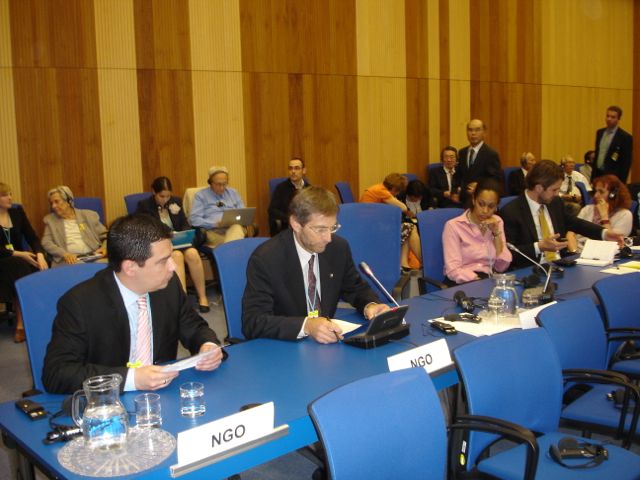
Dr. Tilman Ruff of IPPNW and ICAN addresses the 2012 NPT PrepCom. “If one bomb can destroy a city, the consequences of a war involving many nuclear explosions are on a scale larger than anything we have experienced previously in human history.”
Mr. Chairman, Distinguished Delegates:
We are here in Vienna, a city steeped in history and culture and surrounded by natural beauty, sheltered for the moment from the conflicts that are killing and maiming thousands of people around the world. We are here, in a comfortable city largely removed from such violence, out of a sense of obligation to prevent present and future conflicts from escalating into something far more catastrophic. Read more…
100 nuclear explosions—a billion people starve to death
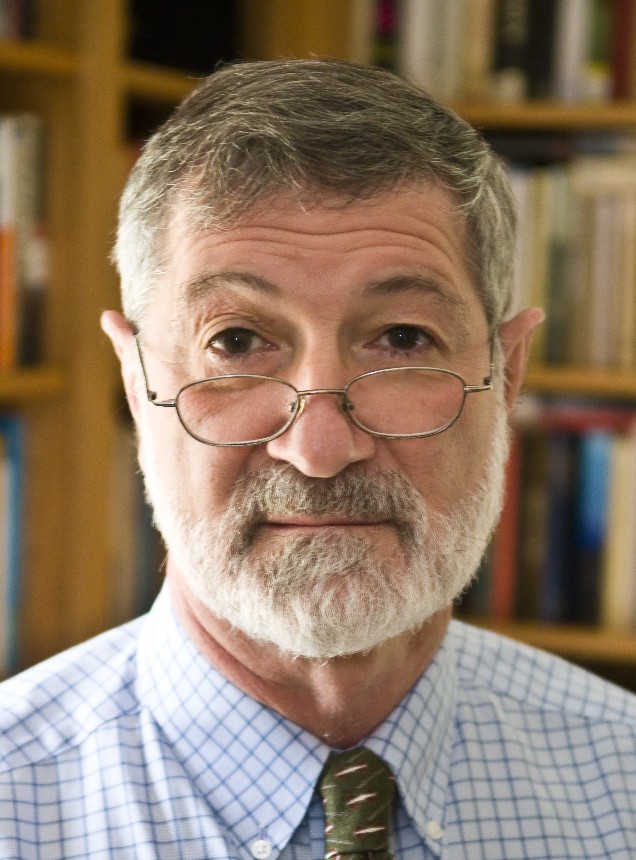
Ira Helfand: "The danger identified in this report requires a fundamental change in our thinking about nuclear weapons. We must now recognize that it is not just the arsenals of the nuclear super powers that threaten all humanity."
A new IPPNW/PSR study released today at the annual Nobel Peace Laureates Summit in Chicago offers compelling scientific evidence that most of the nuclear arsenals in the world —whether large or small—threaten everyone on Earth. The consequences for global agriculture of a nuclear war between India and Pakistan, for example, would be so severe and long lasting that we must now fundamentally change our thinking about nuclear weapons and redouble our efforts to eliminate them, according to the study’s author, Ira Helfand.
Dr. Helfand has been working in close consultation with climate scientists Alan Robock, O. B. Toon, and others since 2007, when their research into the global climate effects of a nuclear war using only 100 Hiroshima-sized weapons was featured at an IPPNW conference held in London with the Royal Society of Medicine.
Robock, Toon, and their colleagues—many of whom had worked together with Carl Sagan on the “nuclear winter” studies produced during the Cold War—had come to the startling and largely unexpected conclusion that even a fraction of the nuclear weapons contained in the bloated US and Russian arsenals could disrupt the global climate so severely that the world’s major agricultural centers would sustain unprecedented damage for at least a decade.
Based on existing data about global food reserves, the nutritional status of impoverished populations, and historical evidence about the relationship between volcano-induced climate change and past famines, Dr. Helfand came to a tentative conclusion that a famine caused by the climate effects of a nuclear war on this scale could leave a billion people or more without sufficient food to survive. Read more…
On April 17, 2012, as millions of Americans were filing their income tax returns, the highly-respected Stockholm International Peace Research Institute (SIPRI) released its latest study of world military spending. In case Americans were wondering where most of their tax money — and the tax money of other nations — went in the previous year, the answer from SIPRI was clear: to war and preparations for war.
World military spending reached a record $1,738 billion in 2011 — an increase of $138 billion over the previous year. The United States accounted for 41 percent of that, or $711 billion.
Some news reports have emphasized that, from the standpoint of reducing reliance on armed might, this actually represents progress. After all, the increase in “real” global military spending — that is, expenditures after corrections for inflation and exchange rates — was only 0.3 percent. And this contrasts with substantially larger increases in the preceding thirteen years.
But why are military expenditures continuing to increase — indeed, why aren’t they substantially decreasing — given the governmental austerity measures of recent years? Read more…
In less than 100 days the nations of the world will convene at the United Nations in New York Cityfor final negotiations on the Arms Trade Treaty (ATT). The world will be watching to see if states can agree to a strong and humanitarian-based ATT that will help prevent injuries and deaths worldwide from armed violence. The Control Arms Coalition, of which IPPNW is an active member and serves on the Steering Board, is preparing to participate fully during the month of negotiations. IPPNW members from all corners of the globe will arrive at the UN to ensure that diplomats 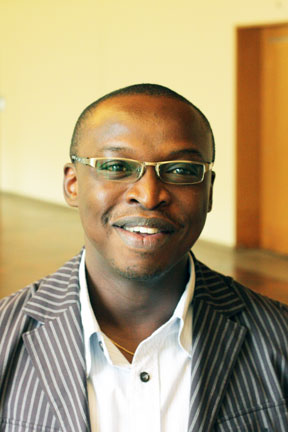 understand the devastating human and health consequences of armed violence. Control Arms has launched a Speakout Campaign to show the diverse voices that support a “bulletproof” ATT. Personal stories are being featured each day on the web site. IPPNW-Nigeria’s Dr. Daniel Bassey ‘s personal story is featured now, and other IPPNW voices will be featured in the weeks to come.
In July IPPNW will also be presenting to diplomats signatures from our Medical Alert for a Strong ATT, along with petitions from parliamentarians and an interfaith coalition. If you have not yet done so, please sign the petition , and circulate it to colleagues at your university, hospital, medical school or other networks. We need your voice to convince the negotiators that the health professionals of your country want action now!
Assuring destruction forever: Important new report on nuclear modernization programs from Reaching Critical Will
Assuring destruction forever: nuclear weapon modernization around the world
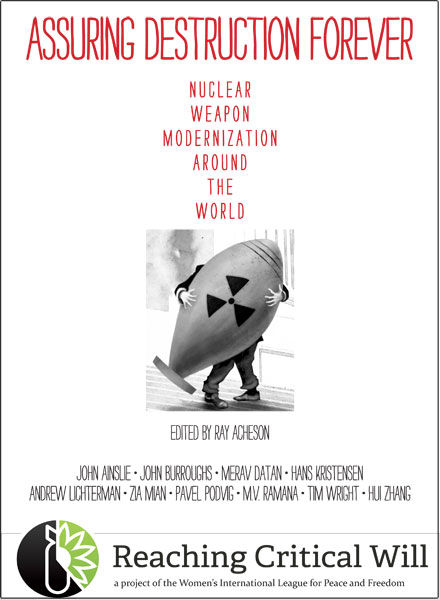 soft cover • 152 pages • March 2012
PDF available online for free
Hard copies available for $8 + s/h
As of March 2012, the nuclear weapon possessors—China, Democratic People’s Republic of Korea, France, India, Israel, Pakistan, Russia, the United Kingdom, and the United States—are estimated to possess approximately 19,500 nuclear weapons. All of them have plans to modernize—upgrade and/or extend the lives of—their nuclear weapons.
Reaching Critical Will has coordinated and edited a new study on the modernization plans and programs of eight of the nuclear-armed states (all except the DPRK, due to lack of publicly available information on its program).
In Assuring destruction forever (which echoes the phrase “mutually assured destruction” from the decades of the Cold War), non-governmental researchers and analysts provide information on each country’s modernization prospects. They also analyze the costs of nuclear weapons in the context of the economic crisis, austerity measures, and rising challenges in meeting human and environmental needs. There are eight country chapters followed by three “thematic” chapters that address issues of international law, divestment, and political will. The country chapters are chock full of detailed information about nuclear weapon programs and policies while the thematic chapters analyze these policies in a broader context.
Nobel Peace Laureates to convene this month in Chicago
IPPNW will join more than 20 other Nobel Peace Prize recipients in Chicago on April 23 for this year’s World Summit of Nobel Peace Laureates. This will be the largest gathering of Peace Laureates in the history of these summits, which have taken place annually since 1999 under the auspices of the Gorbachev Foundation and the City of Rome to promote peace and global security.
Former US President Bill Clinton will deliver keynote remarks at the Chicago Summit, and will be joined on the program by former Russian President Mikhail Gorbachev, former US President Jimmy Carter, and Peace Laureates including Oscar Arias, Lech Walesa, Mairead Corrigan Maguire, Jody Williams, and Muhammad Yunus.
Aung San Suu Kyi, the Burmese human rights activist and Peace Laureate who has recently won election to Burma’s parliament, will present video remarks during the Summit. Kerry Kennedy, President of the RFK Center for Justice and Human Rights, will speak during an opening ceremony entitled “Speak Up, Speak Out for Freedom and Rights.”
IPPNW will participate in a panel to explore practical paths to a world without nuclear weapons on the final day of the three-day Summit. Ira Helfand will discuss the latest research on the climate effects of nuclear war; the impact on global agricultural production, food availability, and nutrition; and the urgency of working for a nuclear weapons convention. Co-president Vappu Taipale will also represent the federation in Chicago.
This year’s Nobel Laureates Summit is being organized by the Chicago Community Trust, the John D. and Catherine T. MacArthur Foundation, Mayor Rahm Emmanuel’s Office of Protocol and International Relations, and the Robert F. Kennedy Center for Justice and Human Rights. World-renowned photographer Annie Leibovitz will be at the Summit on assignment from Vanity Fair magazine. Michaela Mycroft, the winner of the International Children’s Peace Prize in 2011, will be awarded the Medal for Activism. Actor, film director, and activist Sean Penn will receive this year’s Peace Summit Award from President Gorbachev and Mairead Corrigan Maguire.
Public health approaches to the UNPoA
Maria Valenti and Cathey Falvo
IPPNW and the IANSA Public Health Network
In 1981, the World Health Assembly adopted resolution 34.38 that stated, “The role of physicians and other health workers in the preservation and promotion of peace is the most significant factor for attainment of health for all.” Fifteen years later, the 49th World Health Assembly (The World Health Organization’s [WHO] governing body) declared violence as a leading worldwide public health problem. Subsequently, the WHO developed the landmark document Small Arms and Global Health prepared for the first UN Conference on Illicit Trade in Small Arms and Light Weapons (SALW) in 2001. The WHO states that “Violence is an important health problem – and one that is largely preventable. Public health approaches have much to contribute to solving it.”
International Physicians for the Prevention of Nuclear War (IPPNW) responded to the call for health professionals to address violence by convening the major conference “Aiming for Prevention: International Medical Conference on Small Arms, Gun Violence, and Injury” in Helsinki, Finland 28-30 September 2001. This meeting was held shortly after the initial PoA meeting in New York and brought together for the first time hundreds of medical professionals, scientists, and public health experts to address the humanitarian dimensions of small arms violence. Read more…
Later this year, the countries of the world will convene at the United Nations in New York City to assess what progress has been made since 2001 when the UN Programme of Action to Prevent, Combat and Eradicate the Illicit Trade in Small Arms and Light Weapons in All Its Aspects (UN PoA) took effect. They will also be discussing the next ten years, and opportunities for advancing our global common cause – to prevent needless injuries and deaths from firearm violence, which still injures hundreds of thousands each year, and maims and traumatizes millions more.
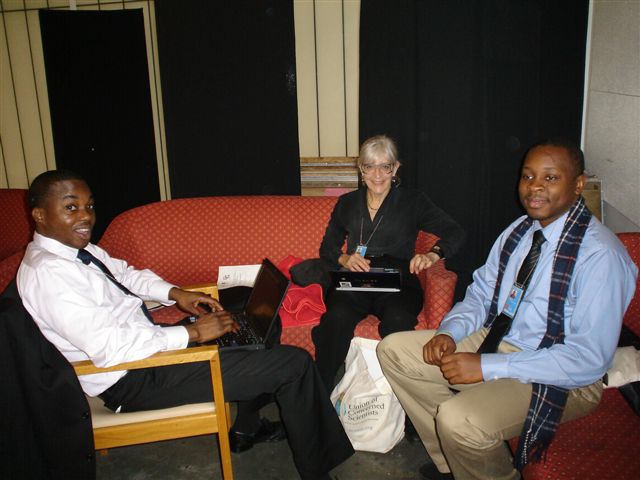
Hakeem Ayinde, Cathey Falvo, and Emeka Okolo (left to right) confer during the UNPOA PrepCom in New York.
Today in New York, myself and doctors Cathey Falvo from the US, and Dr. Hakeem Ayinde from Nigeria, joined NGOs from around the world to participate in the first day of the PrepCom which will set the stage for the Review Conference in August. We have been afforded an interesting perspective on the proceedings as another IPPNW-Nigeria colleague, Dr. Emeka Okolo, is serving on the Nigerian delegation – and the Chair of the conference is Ambassador U. Joy Ogwu from Nigeria. Read more…
Try a little nuclear sanity
On February 8, 2012, Congressman Edward Markey (D-MA) took to the floor of the U.S. House of Representatives to introduce the Smarter Approach to Nuclear Expenditures Act (H.R. 3974). This SANE Act would cut $100 billion from the U.S. nuclear weapons budget over the next ten years by reducing the current fleet of U.S. nuclear submarines, delaying the purchase of new nuclear submarines, reducing the number of ICBMs, delaying a new bomber program, and ending the nuclear mission of air bombers.
“America’s nuclear weapons budget is locked in a Cold War time machine,” noted Markey, the senior member of the House Energy and Commerce Committee. “It doesn’t reflect our twenty-first-century security needs. It makes no sense. It’s insane.” He went on to explain: “It’s insane to spend $10 billion building new plants to make uranium and plutonium for new nuclear bombs when we’re cutting our nuclear arsenal and the plants we have now work just fine.” Furthermore: “It’s insane that we’re going to spend $84 billion for up to fourteen new nuclear submarines when just one sub, with 96 nuclear bombs on board, can blow up every major city in Iran, China and North Korea.” Finally, “it is insane to spend hundreds of billions on new nuclear bombs and delivery systems . . . while . . . seeking to cut Medicare, Medicaid and social programs that millions of Americans depend on.”
Since its introduction, the SANE Act has picked up significant support. Read more…

 Bimal Khadka
 Bjorn Hilt
 Charles K. Johnson
 Gunnar Westberg
 IPPNW
IPPNW John Loretz
 Lawrence Wittner
 Maria Valenti
 mollymcgint
 Sue Wareham
 Tilman Ruff
 Tim Wright
 Xanthe Hall


 IPPNW peace and health blog