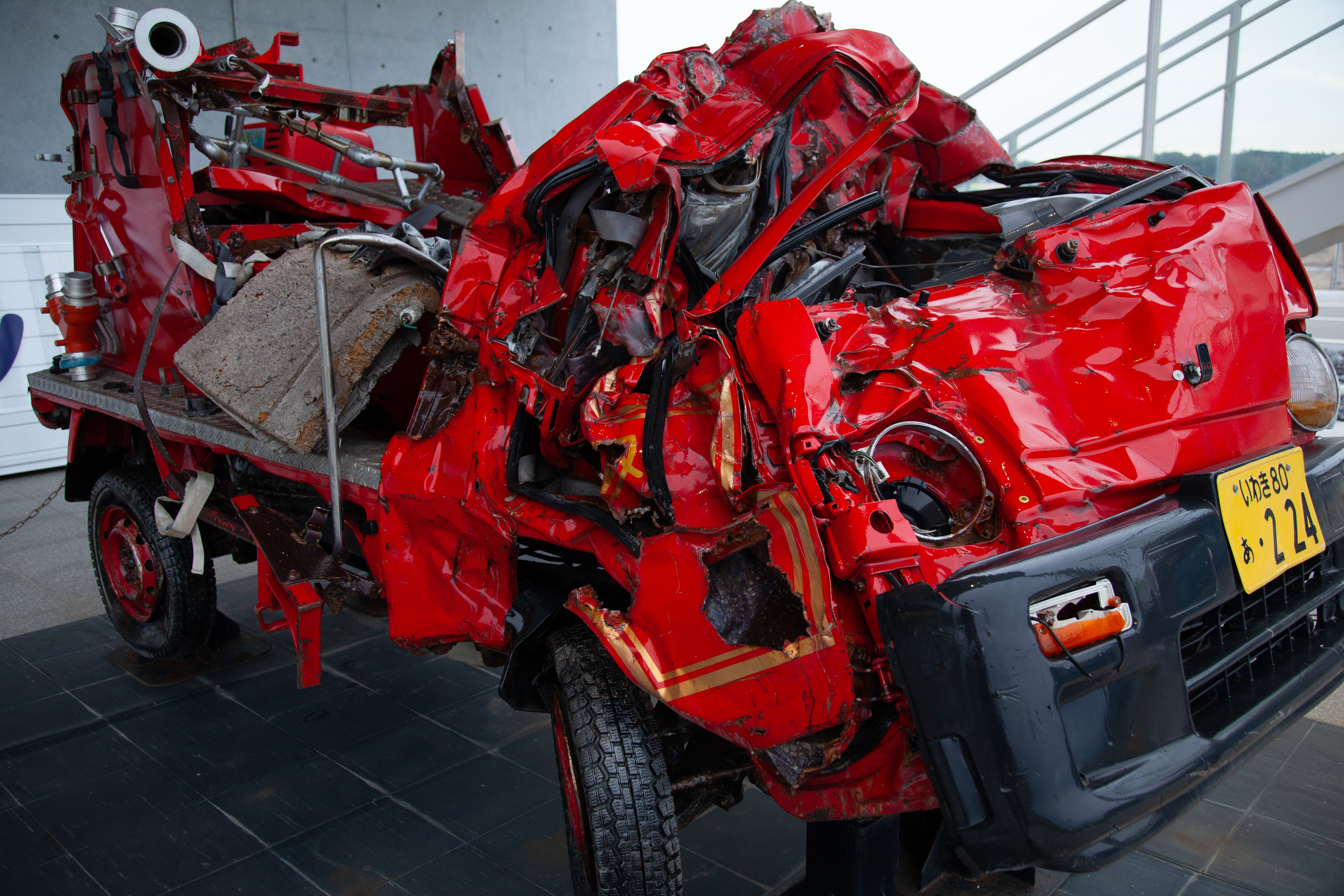
It is now 15 years since the Great East Japan Earthquake on 11 March 2011—and the tsunami it generated—wrought havoc on the Fukushima Daiichi Nuclear Power Plant (FDNPP). A predictably dangerous plant design, a corrupt and negligent operator, and Japan’s incestuous and corrupted ‘nuclear village’ involving collusion and revolving doors between government, regulator and operators, combined in a lethal mix.
Read more…Why Peace Belongs in Medical Education: Reflections from the 75th IFMSA General Assembly

by Anna Khouri, IPPNW International Student Representative, Germany
Last week, I had the privilege of representing International Physicians for the Prevention of Nuclear War (IPPNW) at the 75th General Assembly of the International Federation of Medical Students’ Associations in Copenhagen. Bringing together nearly 900 medical students from more than 120 countries, the gathering was a powerful reminder that the future of medicine is profoundly global and deeply interconnected with the political and social conditions that shape health.
For one week, Copenhagen became a meeting place for students who are not only learning how to diagnose and treat disease, but who are also asking larger questions: What responsibilities do physicians have beyond the clinic? And how can medical professionals contribute to a more peaceful world?
Read more…International law needs international enforcement
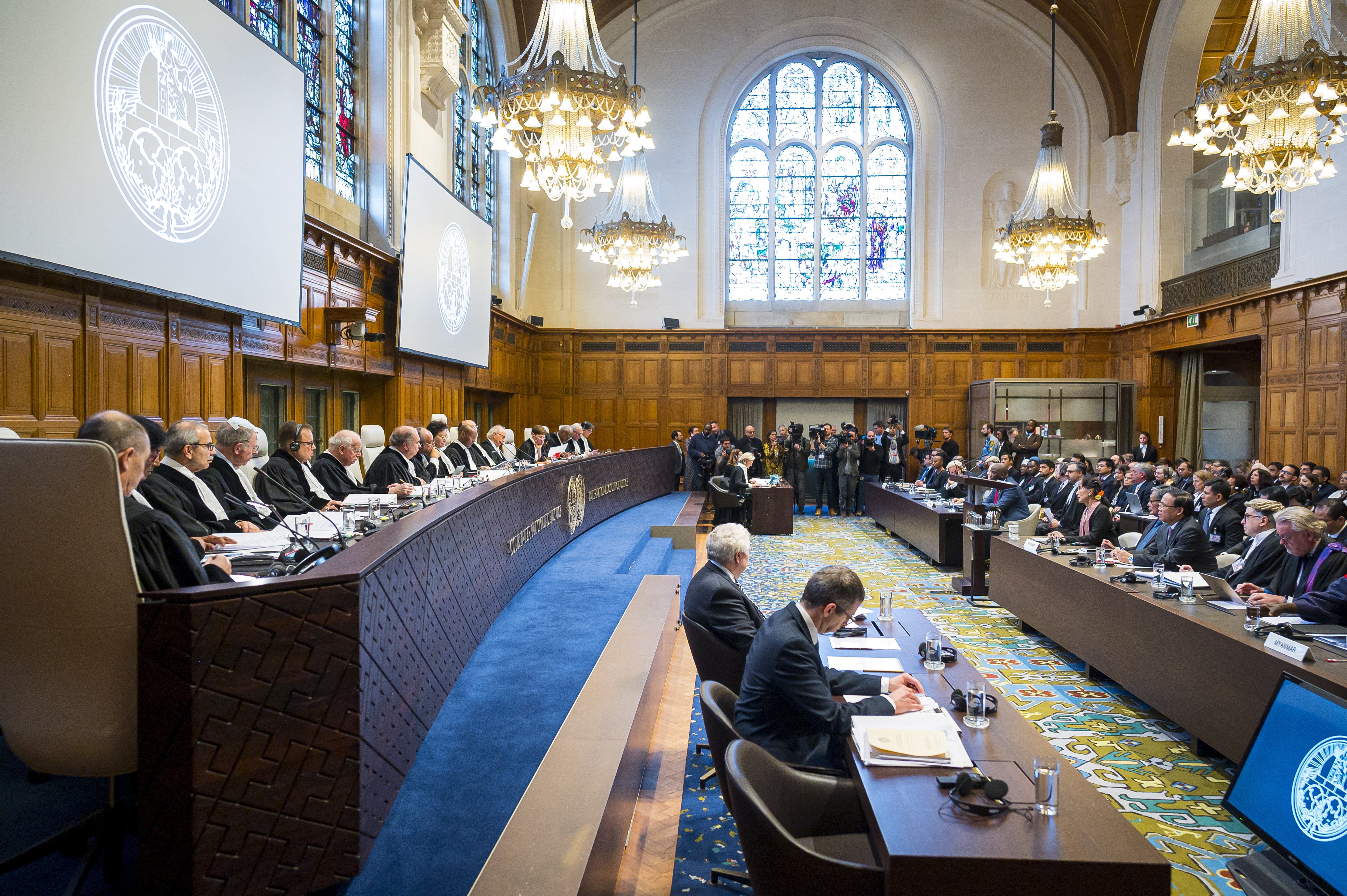
Donald Trump’s war of choice in the Middle East is but the latest indication that the system of international law―which provides guidelines for the behavior of nations in world affairs―is crumbling.
Read more…War on Iran: nuclear consequences
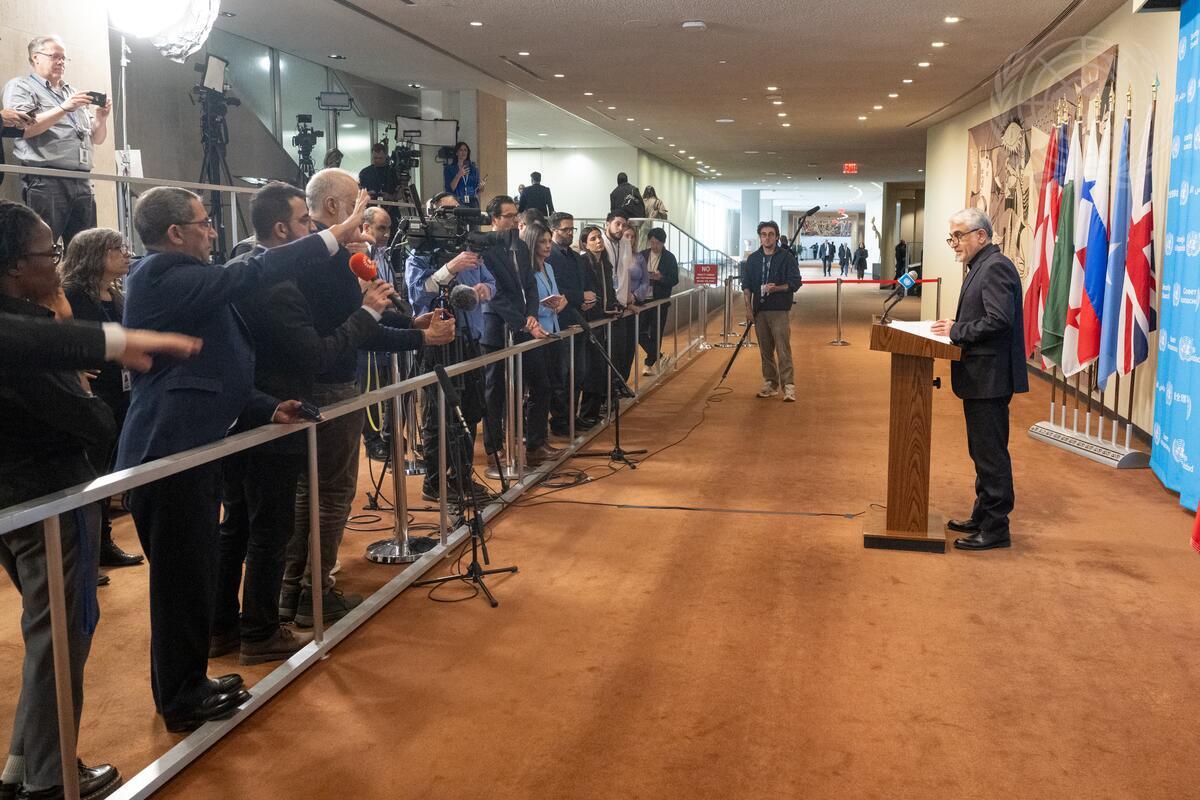
President Donald Trump declared in his State of the Union address that he would see to it that Iran would never get a nuclear weapon. He had previously claimed that the strikes in 2025 had “obliterated” Iran’s nuclear programme, although there is evidence that the destruction might not have been as absolute as he claimed. Iran’s decision to again take part in negotiations on its nuclear programme with the Trump administration, despite the attacks in 2025, perhaps showed a desire to get back on an even keel internationally and end the crippling sanctions on the country.
Read more…IPPNW Condemns Strikes Against Iran, Calls for Return to Negotiations
Read full statement here and below. 28 February, 2026.
International Physicians for the Prevention of Nuclear War (IPPNW) unequivocally condemns the attack on Iran by the United States and Israel and calls on them to cease immediately all further use of force and to return to the negotiating table.
The unprovoked strikes, ostensibly to stop Iran from acquiring nuclear weapons and the ballistic missiles capable of delivering a nuclear warhead, are incredibly dangerous and counterproductive. The conflict threatens the lives of large numbers of civilians in Iran and Israel. Attacking Iranian facilities could cause widespread devastation and significant releases of radioactivity. And the situation could escalate into a regional war and ultimately lead to the use of nuclear weapons — the very thing the world most needs to prevent.
Read more…No to uranium mining in Greenland
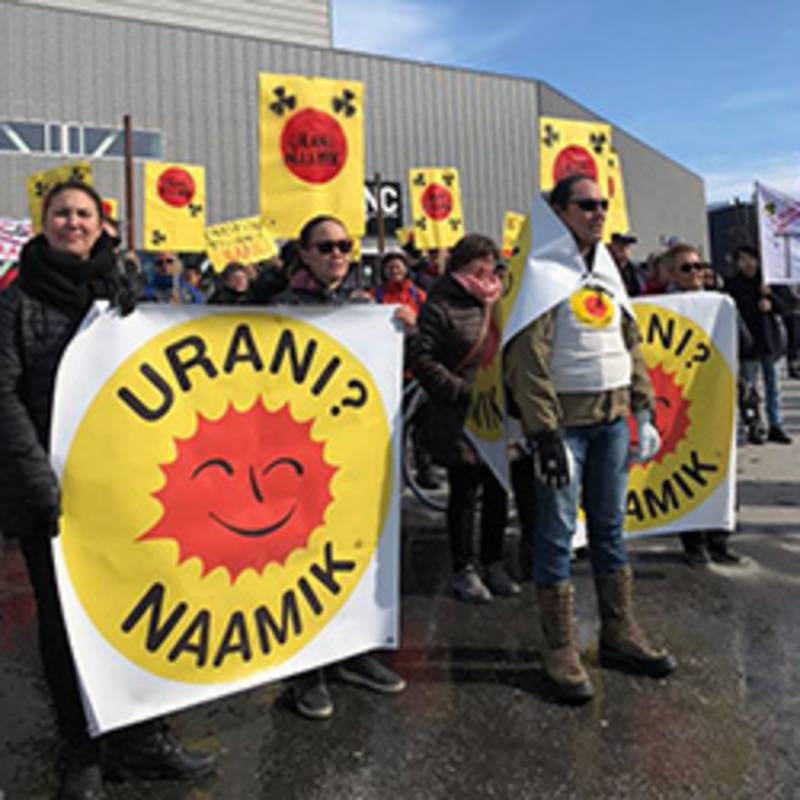
[Ed. note: Niels Henrik Hooge works with NOAH, the Danish branch of Friends of the Earth. He is also closely associated with Greenland’s No to Uranium Association (URANI? NAAMIK) in Nuuk. Patrick Schukalla, IPPNW Germany’s policy advisor on energy and climate, spoke with Hooge in February about the role of Greenland’s uranium resources and other subsurface wealth, and the potential threats to the territory during this period of geopolitical tension.]
PS: Although Greenland is currently on everyone’s mind, little is being learned about the island itself, its people or the Arctic ecology. Instead, the focus is on the geopolitical desires of others, both imagined and real. You have been working against large-scale mining in Greenland for a long time and have achieved significant political successes in this area. Could you tell us about that?
NHH: I think what strikes one the most as an observer are the many paradoxes and challenges one finds in Greenland. The country constitutes the largest island in the world, of which more than eighty percent is covered with ice. However, the population is only less than sixty thousand. Due to the climate and geography, there are no railroads or roads to connect the inhabited areas. Passengers and goods are transported by sea or air. In addition, Greenland has a very interesting culture rooted in Inuit tradition, which, unfortunately, largely remains unknown to the rest of the world. Denmark, which for centuries was in full control of Greenland, has made no attempts to integrate Inuit culture into the rest of Kingdom. Another striking fact is that private ownership of land does not exist and land cannot be bought or sold. You can own buildings, but not the ground. The paradox here is that you now have some of the biggest and greediest industrialists in the world trying to control property that so far has been collectively owned. This is really a clash of opposite cultures.
PS: The last time we spoke was in 2021, ahead of the COP26 Climate Summit in Glasgow. We discussed uranium mining and the false claims made by the industry and some governments under the slogan ‘Nuclear for Climate’. IPPNW is PS: committed to a world without nuclear threats. This includes calling for an end to uranium mining. What role does uranium play in Greenland and in your campaigns today?
NHH: Since 2021, when the Inuit Ataqigiit party came into power, there has been a ban on uranium mining. Inuit Ataqatigiit is mainly an ecological party and I guess to some extent you could compare it to the German Greens, because it is also a mainstream party. Until 2013, the ban had existed for a quarter of a century, but it was lifted on the request of the Australian mining company, Energy Transition Minerals (ETM, formerly known as Greenland Minerals Ltd., GML), which threatened to abandon the big Kvanefjeld uranium and rare earths mining project, if ETM could not exploit the uranium deposit. Under GML’s ownership, the controversial project has been at the forefront of the public eye for more than a decade, and the mining project and uranium mining in general have been a major factor in the formation of at least five government coalitions since 2013. When the uranium ban was lifted, Greenlandic and Danish NGOs, including NOAH, started to cooperate to have it reinstated. Particularly, I want to emphasize our collaboration with URANI? NAAMIK, Greenland’s anti-uranium network, which played a crucial role in mobilising the public against uranium mining. Although this type of mining now is banned, the anti-uranium campaign cannot stop completely. Mining companies are lobbying the Trump administration and its associates in the private sector to intervene and changes in Greenland’s political community could fundamentally affect the status of uranium mining.
PS: Now that Greenland is in the spotlight due to Trump’s renewed interest, there has been much speculation about the country’s subsurface wealth and its potential role. Do you see a connection here, and if so, what is it?
NHH: Greenland possesses vast mineral and oil and gas resources. Greenland is rich in critical minerals, not least in rare earth elements. The country is estimated to hold almost forty million tons of rare earth oxides, while total reserves for the rest of the world stand at hundred and twenty million tons. However, nothing prevents international mining companies, including American companies, from investing in mineral exploitation. The reason that it has not happened much until now is the bad business case for almost all the projects. Because of the hard climate and the lack of infrastructure, mining is far more difficult and expensive than almost everywhere else in the world. This also applies to oil and gas extraction. When the Greenlandic government banned oil and gas exploration in 2021, it kicked in an open door, because there were almost no active licenses. Thus, the consensus in Greenland and Denmark is that Trump’s attempt to annex Greenland is part of a vanity project, whose only goal is to expand U.S. territory. The argument about access to critical minerals is just a way to explain this ambition in a format that makes economic sense. In reality, it has very little to do with economic rationality.
PS: If European governments are now trying to satisfy the US without Greenland being annexed, are you worried that regulations will be weakened and the protection of the Arctic environment will be compromised?
NHH: Yes, unfortunately this is a real risk and it could start a race to the bottom. On one hand, EU’s Arctic Environment and Sustainability Strategy implies that oil, coal and gas should no longer be extracted in Arctic areas. On the other hand, EU has adopted a policy under the European Critical Raw Materials Act of fast-tracking mining projects even if they do not have support from the local population and show signs of flawed permitting or inadequate environmental impact assessments. In Greenland, the EU has already identified two strategic raw materials projects: GreenRoc Strategic Materials’ graphite project in Southern Greenland and Greenland Resources’ molybdenum project in East Greenland. The latter is mentioned as an example of a project that could receive direct start-up support from the EU Commission.
PS: What are your next steps, and what would you like your friends and partners in other European countries and beyond to do?
NHH: Currently, URANI? NAAMIK and NOAH are campaigning to have mining companies which have played a role in getting the Trump administration to try to annex Greenland screened and if necessary, banned for security reasons. Furthermore, there is now a majority in the Greenlandic population to rejoin the EU as a member state, and obviously it would make sense, if EU institutions and the European NGO community started to prepare for this eventuality. In NOAH’s opinion, it would imply a conception of a European Arctic policy that includes an offer to support the Greenlandic government in protecting and preserving Greenland’s natural resources. This could become a lighthouse project for Greenland, the Danish Kingdom and the EU, putting environmental protection on the global agenda. If mineral extraction is completely or partially abolished, the Greenlanders should of course be compensated financially. The European Parliament has supported the idea of an Arctic nature protection area in the past, using the Antarctic Treaty as a model. The idea is backed by 141 environmental organizations, including some of the largest in Europe and the world.
Arms over norms: military budgets given priority at security conference
by Inga Blum
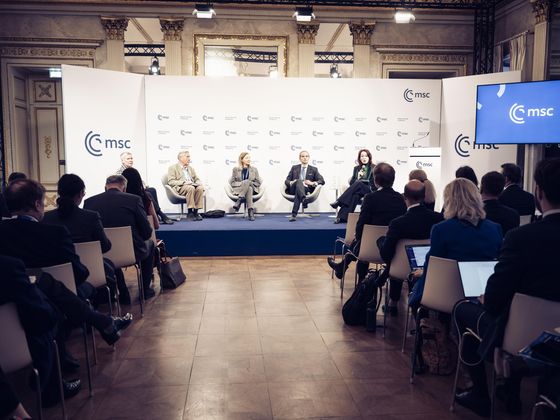
[Dr. Blum represented IPPNW at the Munich Security Conference, held from 12-15 February. The first part of her report from those meetings was posted yesterday. Part two follows.]
Overall, despite the palpable genuine concerns about the loss of values and rules, the conference was strongly characterized by competitiveness, superficiality, and a lack of perspective. Not only the applause for the US Secretary of State, but also the assumption expressed by many Western representatives after Wang Yi’s speech that China’s push to strengthen the United Nations was merely an attempt to expand its own sphere of influence, pointed to a strong need for leadership and the restoration of familiar patterns of order.
As a physician accustomed to scientific analysis and classification based on relevance to public health, I was astonished that even in the confidential side events, discussions rarely went beyond the narrative of “The US has abandoned us – we cannot trust Russia – so let’s arm ourselves.” I had hoped to gain a better understanding of why a Russian war of aggression is feared, even though both the balance of power in favor of NATO and many experts argue against it. After all, the narrative of impending war is the justification for the massive increase in defense spending, which will be at the expense of the real security interests of the population, such as health, education, etc.
At events involving German ministries on the necessary restructuring of the German transport and health systems for a war in Europe in which Germany would be the logistical hub, I was at least able to ask questions. For example, I asked whether the planned increase in defense spending to 50% of total German tax revenue should not be discussed more publicly so that there is no imbalance in favor of the economic interests of the arms industry, which is strongly represented at the MSC.
Many of the often confidential background discussions at the MSC, where solutions to supposed military capability gaps are presented, are financed directly by the arms industry or industry-affiliated think tanks. In medicine, such financial conflicts of interest would be unthinkable in the context of science-based and patient-centered treatment.
Even though the answers to my questions were often evasive or only came after the end of an event in bilateral discussions, I was pleasantly surprised by the opportunity to participate. The MSC motto “Peace through Dialogue” was displayed on all chairs, and the rules of discussion were strictly observed: After I was harshly interrupted by a moderator from the Ministry of Defense when I said that the German healthcare system would not be able to cope with a war in Europe, MSC staff approached me and said that this incident would be reported to the conference management. (The event ended with a joking suggestion that participants should refresh their first aid training).
At the closing event in the large hall, I even had the opportunity to ask a question about the necessary steps to take in view of the growing threat of nuclear war. The closing panel consisted exclusively of young female parliamentarians, almost all of whom agreed emphatically with me. Overall, I found the representation of women among the speakers and participants to be remarkably high, despite the traditionally male-dominated field of security policy.
I was very disappointed by the German politicians and representatives of German foundations and think tanks who were present. Many of them strongly advocated for rearmament and showed little willingness to engage in dialogue. In the run-up to the conference, I had contacted most of them via the website’s internal communication system and asked for bilateral talks on the sidelines of the event. For this purpose, the MSC provides private rooms and reserved tables in public lounge areas.
Almost all German politicians declined; only one SPD member of parliament signaled a willingness to talk, but had to leave at short notice, so it did not happen. However, several discussions took place with representatives of the German Armed Forces and NATO, who seemed genuinely interested in a critical perspective—for example, on the question of the resilience of the health care system in the event of war. My encounters with representatives of Chinese, South American, and US non-governmental organizations, as well as with political representatives of non-aligned states, were also insightful. They were both astonished and concerned about the extent of war preparations in Germany and the new bloc confrontation.
The exchange with representatives from other parts of the world was reassuring, especially in contrast to Germany’s narrow focus on military armament – there is another perspective. Some events also looked beyond the horizon. However, the program section on “human security” often seemed to me to be more of a fig leaf intended to conceal the activities of the military-industrial complex. For example, there was an event on development cooperation with the participation of the German Minister for Economic Cooperation and Development, Reem Alabali Radovan. It was mentioned that every dollar that goes into development pays off many times over because stable societies have fewer conflicts, and the drastic cuts in development cooperation were regretted.
However, there was no fundamental criticism of the redistribution in favor of the rapidly growing defense budget, which is already ten times the size of the development budget.
The panel on climate change was truly outstanding and illuminating in many respects. Ralph Regenvanu, Minister for Climate Change and Disaster Management of the Pacific nation of Vanuatu, made it clear that many of the countries represented at the conference bear direct responsibility for the fact that his homeland is threatened with destruction unless there is a rapid change in energy policy. Gavin Newsom, Governor of California, and Andrew Forrest, Australian entrepreneur, made it clear that the switch to renewable energies is not only morally imperative, but also economically sensible. According to its own figures, Forrest’s company Fortescue saves around one billion US dollars annually by switching to renewable energies. Conservative MEP Lidia Pereira argued that Europe’s energy transition is inevitable if the strategic independence from Russia or the US, which was repeatedly invoked at the conference, is to be taken seriously. However, obstacles include not only the lobbying power of large oil and gas companies – including Shell, Equinor, and Uniper, which are also partners or sponsors of the conference – but also the considerable influence of the defense industry, which continues to rely on fossil fuels for tanks and fighter jets.
And so the circle was complete: the following day, ways to end the war in Ukraine were discussed on the same stage. While representatives of the EU and NATO advocated further armament, the US representative proposed finally imposing effective sanctions on Russian oil exports.
Moving away from fossil fuels is not only vital for the survival of some of the world’s smallest countries; it could also reduce geopolitical dependencies, defuse conflicts, and thus contribute to genuine security.
But what did that mean for a conference that is largely supported by players from the arms and energy sectors?
If the MSC’s motto of “Peace through dialogue” is meant seriously, it would have to set out in search of new partners and genuine dialogue with the world.
[Inga Blum is IPPNW co-president.]
Arms over norms: giving priority to profits and deals
by Inga Blum
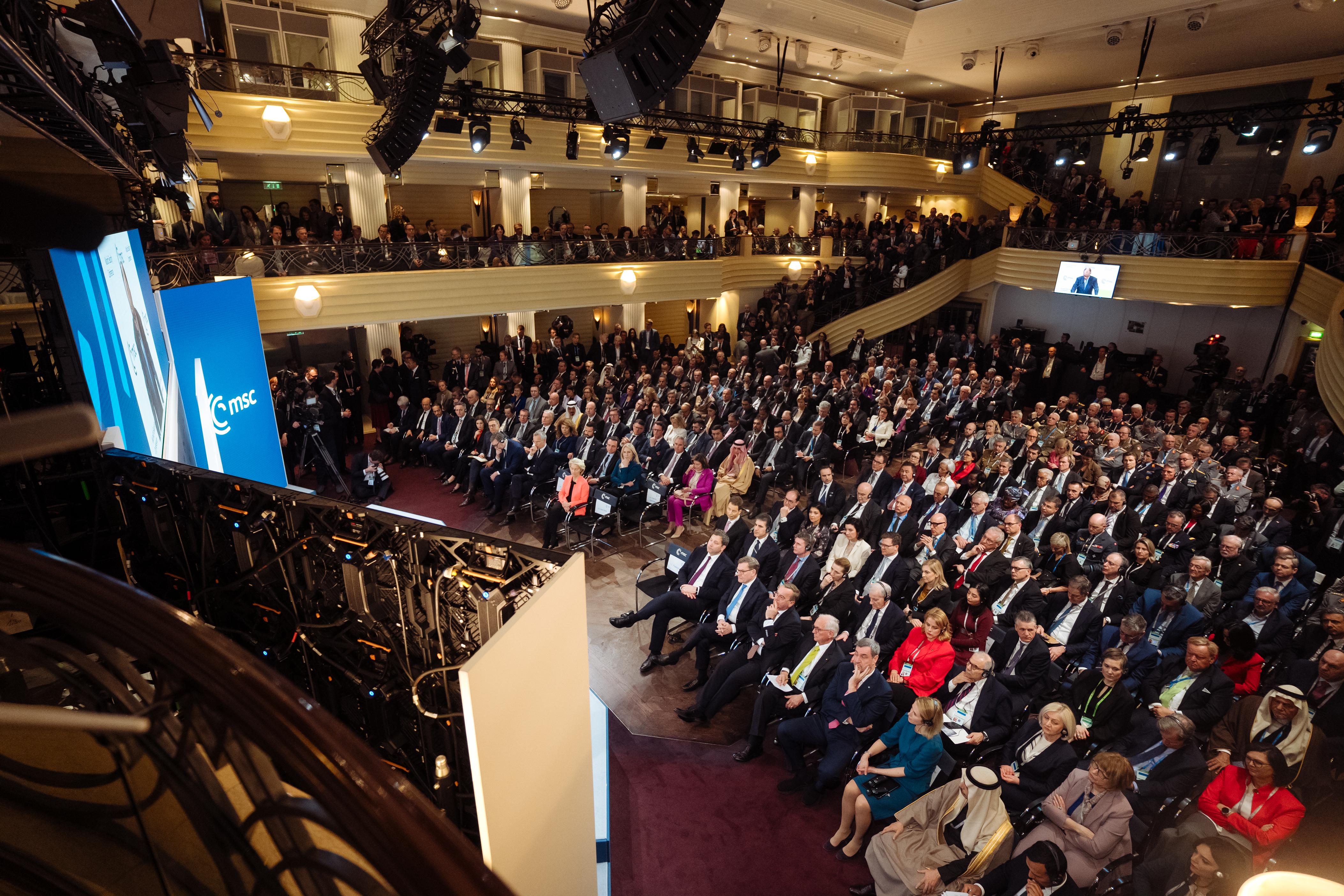
[Dr. Blum represented IPPNW at the Munich Security Conference, held from 12-15 February. Her observations from those meetings will be posted in two installments. Part one follows.]
For three days, politicians gathered at the Bayerischer Hof in Munich to discuss key issues of global security. This year, I was invited to attend as a representative of civil society through the project group “Münchner Sicherheitskonferenz verändern” (Changing the Munich Security Conference).
I was curious to hear what answers political leaders would give to the profound upheaval in the international order: to the cruel wars of our time, to US President Donald Trump’s open disregard for international law, to global inequality, hunger, and the escalating climate crisis.
As co-president of International Physicians for the Prevention of Nuclear War (IPPNW), I also wanted to address the growing threat of nuclear war.
At the end of January, scientists set the symbolic “Doomsday Clock” to 85 seconds before midnight—a dramatic sign that the risk of nuclear catastrophe is higher than ever before. Shortly thereafter, New START, the last treaty between Russia and the US to limit strategic nuclear weapons, expired. There are fears that this will trigger a further arms race.
However, the Munich Security Report 2026, published a few days before the conference began, only touches on the subject of nuclear weapons in passing. The focus is on US foreign policy under President Trump, which is described as a wrecking ball for international rules and multilateral cooperation. The report accurately analyzes the growing influence of profit-oriented companies and the logic of bilateral “deals” instead of binding international law. It also mentions the financial and credibility crisis of the United Nations as a result of increasing nationalism, geopolitical rivalries, and rising military spending.
However, it is disappointing—though not surprising—that the proposed solutions focus almost exclusively on higher military spending. It is not only American foreign policy that follows economic interests: arms manufacturers such as Hensoldt, Heckler & Koch, Lockheed Martin, and Rheinmetall are among the official sponsors of the conference, alongside several federal ministries.
The narrative of the “end of the old world order” also dominated the main stages. In his opening speech, German Chancellor Friedrich Merz effectively declared the rules-based order a failure. He said that strengthening the military capabilities of Germany and Europe was now the top priority. The Bundeswehr should become the strongest conventional army in Europe as quickly as possible – competition policy is security policy. He even wanted to discuss the possibility of joint European nuclear weapons.
He justified this by pointing out that Europe’s gross domestic product is ten times that of Russia, but that there is no corresponding military superiority. He did not mention that Germany is already the fourth largest military power in the world (surpassed only by the US, Russia, and China). Even without the US, the NATO countries have a clear advantage over Russia – not only in terms of military spending (420 vs. 300 billion US dollars), but especially in large-scale combat systems (e.g., 6,297 vs. 2,000 battle tanks, 2,073 vs. 1,026 combat aircraft). NATO countries also dominate the global arms market with over 70% of total sales (Russia 3.5%).
At least Merz emphasized that Germany must never go it alone again—a lesson learned from history. And he warned that a world in which power alone counts is a dark place. What concrete steps he would take as German chancellor to strengthen the rule of law as a counterweight to power remained unclear. He did not mention the United Nations, which was founded in response to World War II.
He criticized his “American friends” for the MAGA movement’s culture war, which violates human dignity, and for turning away from free trade, climate agreements, and the World Health Organization in favor of protectionism and nationalism.
US Secretary of State Marco Rubio reiterated this line the following day, saying that American interests had been subordinated to the “climate cult” and the global welfare state for too long. Mass migration, he said, was a threat to Western societies.
This speech received a standing ovation from German Foreign Minister Johann Wadephul, Defense Minister Boris Pistorius, and Bavarian Prime Minister Markus Söder—an image that was widely criticized both at home and abroad.
The contrast in content to the speech by Chinese Foreign Minister Wang Yi could hardly have been greater: he called for the strengthening of the United Nations, for multilateral cooperation, and for an international order based on dialogue rather than confrontation.
[Inga Blum is IPPNW co-president.]
Statement of Concern for Narges Mohammadi
Issued by IPPNW’s Executive Committee. 17 February 2026.
IPPNW expresses its deep concern for the health and treatment of Narges Mohammadi, our fellow Nobel Peace Laureate, while in detention amid reports of her mistreatment and recent transfer to Zanjan prison.
We join the Norwegian Nobel Committee in its recent call for Ms. Mohammadi’s immediate and unconditional release and to “guarantee her access to independent, professional medical care.” In addition to the treatment she requires for the reportedly severe injuries she sustained during her arrest and interrogation, Ms. Mohammadi’s history of myocardial infarctions and other serious health conditions require continual monitoring and treatment.
We further support the Committee’s call to “release all political prisoners and prisoners of conscience who are detained for exercising their legitimate rights, and to ensure that their basic human dignity and safety are protected.”
The only remaining US-Russia nuclear treaty has expired. Could a new arms race soon accelerate?

[The following article was originally published on 1 February by The Conversation, an independent, nonprofit news organization. It is republished here with permission under a Creative Commons license.]
The New START treaty, the last remaining agreement constraining Russian and US nuclear weapons, lapsed on February 4.
There are no negotiations to extend the terms of the treaty, either. As US President Donald Trump said dismissively in a recent interview, “if it expires, it expires”.
The importance of the New START treaty is hard to overstate. As other nuclear treaties have been abrogated in recent years, this was the only deal left with notification, inspection, verification and treaty compliance mechanisms between Russia and the US. Between them, they possess 87% of the world’s nuclear weapons.
Read more…
 Bimal Khadka
 Bjorn Hilt
 Charles K. Johnson
 Dr. Ghassan Shahrour
 Gunnar Westberg
 IPPNW
IPPNW John Loretz
 Lawrence Wittner
 Maria Valenti
 mollymcgint
 Sue Wareham
 Tilman Ruff
 Tim Wright
 Xanthe Hall