“Human beings have to stop keeping nuclear arms”
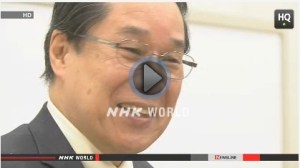
NHK-TV in Japan aired a profile of Dr. Masao Tomonaga, IPPNW’s Regional Vice President for North Asia and Director of the Japanese Red Cross Hospital in Nagasaki. Dr. Tomonaga will join the Japanese delegation to the Second International Conference on the Humanitarian Impact of Nuclear Weapons in Nayarit, Mexico on February 13 and 14. He will speak about the long term health effects of nuclear weapons during a session that will also include Co-President Ira Helfand, who will present the findings from IPPNW’s updated Nuclear Famine report.
“Now that the inhumane nature of nuclear weapons has been clarified,” Dr. Tomonaga says during the profile, “we should move ahead and abolish them.”
The P5 are on the run…but toward or away from Nayarit?
Thanks to our friend John Burroughs at the Lawyers Committee on Nuclear Policy for tipping us off to the latest piece of evidence that the humanitarian framework for nuclear disarmament is causing indigestion and sleepless nights for the P5, its allies, and its think tanks.
A new “consensus statement” from the conservative Center for Strategic and International Studies (CSIS) warns the nuclear-armed states that this new focus on humanitarian impact—in other words, what nuclear weapons actually do when used, regardless of who uses them—is “encouraging opposition to…nuclear deterrence.”
The CSIS is right about that. Read more…
All civilized states to Mexico in February
In March 2013, representatives from 128 countries met in Oslo, Norway for the first intergovernmental conference on the Humanitarian Impact of Nuclear Weapons. It was, however remarkable that all the nuclear-weapon states were absent and gave incredibly bad excuses for not attending. They were sorely missed. The conference was a huge success and made it absolutely clear—what has always been the message of IPPNW—that no state, under any circumstance, will ever be able to protect and help its own citizens in case of an attack with nuclear weapons. Read more…
IPPNW and PSR mourn an exceptional leader
Dr. Jeff Patterson, a former International Councilor of IPPNW and former president of Physicians for Social Responsibility, IPPNW’s US affiliate, died unexpectedly of a massive heart attack on January 24 in New York City as he embarked on an international trip. IPPNW members from around the world have been expressing their shock, sadness, and grief at the loss of a good friend and tireless peace worker and humanitarian. The following remembrance was published yesterday by PSR.

Dr. Jeff Patterson
Jeff Patterson, DO, was an indefatigable champion who served Physicians for Social Responsibility (PSR) and will be sorely missed by all who knew and worked with him. Jeff exuded compassion. He cared for human life and committed himself to the relief of suffering; it motivated all his work. Jeff was a gentle soul with a powerful spirit and always provided a calming influence in difficult times. Read more…
IPPNW joins the UN Special Rapporteur on the Right to Health, the World Medical Association, Physicians for Human Rights, and other major medical associations in calling for revocation of a provision of a new Turkish law that would compromise access to emergency medical care in Turkey and make it a crime for independent medical practitioners to provide emergency care in certain situations. Article 46 of the health law drafted by the Turkish Grand National Assembly and signed by Abdullah Gül, president of the Turkish Republic, appears to be targeted at political protesters, imposing fines and up to three years of imprisonment on private practitioners who offer emergency care after the arrival of a state ambulance.
As Special Rapporteur Anand Grover pointed out in a report to the UN General Assembly on the right to health in conflict situations, physicians and other medical practitioners have a right and a duty to provide care to those in need under the International Code of Medical Ethics.
According to Otmar Kloiber, Secretary General of the WMA, “in times of urgency, from earthquakes to floods to protests and demonstrations, the international standards for emergency medical care are based on the medical need of the wounded and sick rather than the presence of official medical transport.”
IPPNW calls upon the Turkish Parliament to remove Article 46 from the health law, to guarantee the right of the Turkish people to emergency care, to respect medical ethics, and to ensure that all medical practitioners are free to provide emergency care on the basis of need without fear of prosecution, fines, jail time, or other reprisals.
The endless arms race
It’s heartening to see that an agreement has been reached to ensure that Iran honors its commitment, made when it signed the 1970 nuclear Non-Proliferation Treaty (NPT), to forgo developing nuclear weapons.
But what about the other key part of the NPT, Article VI, which commits nuclear-armed nations to “cessation of the nuclear arms race at an early date and to nuclear disarmament,” as well as to “a treaty on general and complete disarmament”? Here we find that, 44 years after the NPT went into force, the United States and other nuclear powers continue to pursue their nuclear weapons buildups, with no end in sight. Read more…
When it comes to war, the American public is remarkably fickle.
The responses of Americans to the Iraq and Afghanistan wars provide telling examples. In 2003, according to opinion polls, 72 percent of Americans thought going to war in Iraq was the right decision. By early 2013, support for that decision had declined to 41 percent. Similarly, in October 2001, when U.S. military action began in Afghanistan, it was backed by 90 percent of the American public. By December 2013, public approval of the Afghanistan war had dropped to only 17 percent. Read more…
New report from IPPNW: two billion at risk from nuclear famine
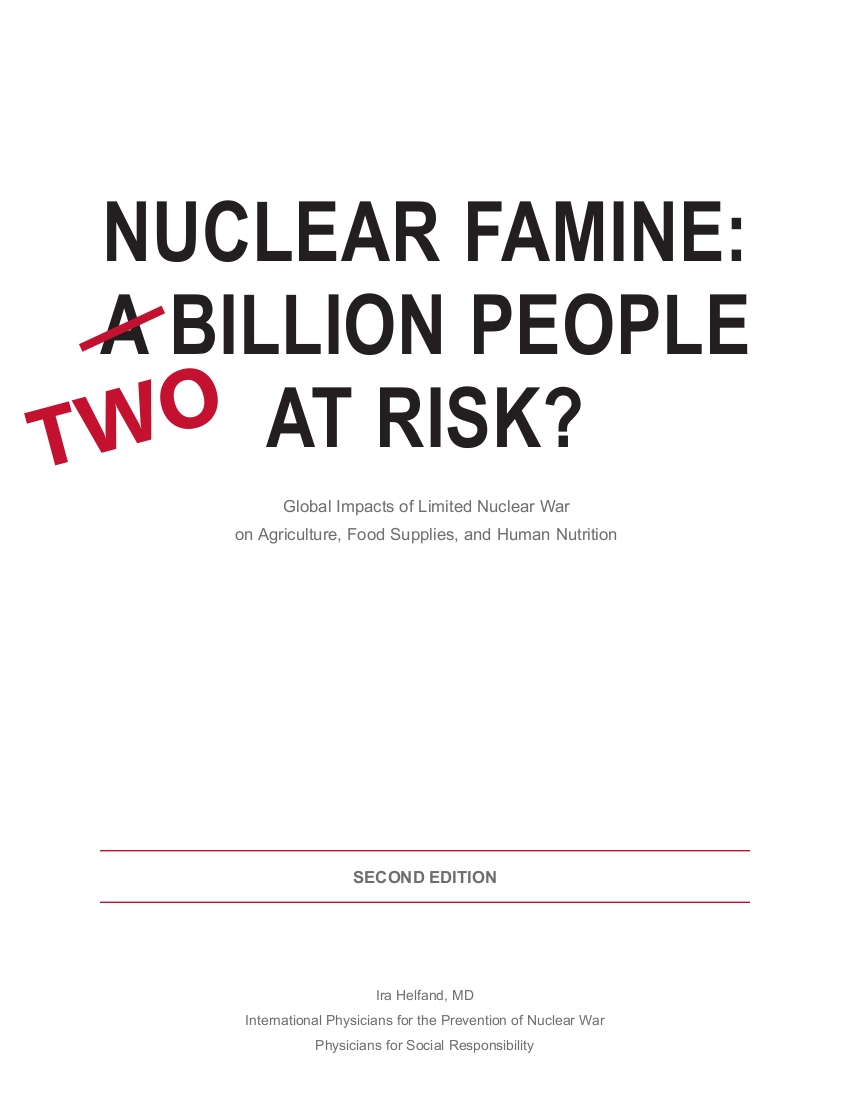 International Physicians for the Prevention of Nuclear War (IPPNW) and its US affiliate Physicians for Social Responsibility (PSR) today released a new report concluding that more than two billion people—a quarter of the world’s population—would be at risk of starvation in the event of a limited nuclear exchange, such as one that could occur between India and Pakistan, or by the use of even a small number of the nuclear weapons held by the US and Russia.
“A nuclear war using only a fraction of existing arsenals would produce massive casualties on a global scale—far more than we had previously believed,” said the report’s author, IPPNW co-president Ira Helfand.
Nuclear Famine: Two Billion People at Risk? updates a study originally written by Dr. Helfand in 2012. Like the previous edition, the report released today is based upon research published by climate scientists who have assessed the impact of nuclear explosions on the Earth’s atmosphere and other ecosystems.
The report comes as momentum builds internationally to reframe disarmament efforts around a renewed understanding of the humanitarian impact of nuclear weapons. In October, 125 nations issued a joint statement at the UN calling for the abolition of nuclear weapons as a humanitarian imperative. Next February, more than 100 nations will convene in Mexico to discuss the humanitarian consequences posed by nuclear war and the need to act on that knowledge.
“Countries around the world—those who are nuclear-armed and those who are not—must work together to eliminate the threat and consequences of nuclear war,” Dr. Helfand said. “In order to eliminate this threat, we must eliminate nuclear weapons.”
Former President of the Soviet Union Mikhail Gorbachev said in 2012 that the climate impacts of the use of nuclear weapons underscore that, “we must discard Cold War-style plans for the possible use of these weapons and move rapidly to eliminating them from the world’s arsenals.”
ICAN—the International Campaign to Abolish Nuclear Weapons—was launched by IPPNW in 2007 and now comprises more than 300 partner organizations in 80 countries campaigning for a treaty to ban nuclear weapons and to mandate their elimination. The report published today lends added weight to ICAN’s call to convene negotiations on such a treaty without further delay.
How to guarantee a nuclear-weapon-free Iran
A lot (or nothing) can happen in six months. As the P5+1 and Iran try to work out the terms of a permanent agreement that would alleviate global anxiety about an Iranian nuclear weapon while providing the Iranian people with some relief from crippling economic sanctions, the interim deal signed on Sunday is important for reasons that go beyond its specific terms. Read more…
A Red Cross and Red Crescent call to action on nuclear weapons
 The Council of Delegates of the International Red Cross and Red Crescent Movement renewed its call for the elimination of nuclear weapons at the IFRC’s General Assembly this month in Sydney, Australia.
The resolution, “Working towards the elimination of nuclear weapons,” was adopted unanimously and reiterated the Movement’s concern, expressed two years ago in a similarly worded resolution, about “the catastrophic humanitarian consequences of any use of nuclear weapons, including the unspeakable human suffering that their use would cause and the threat that such weapons pose to food production, the environment and future generations.” Read more…

 Bimal Khadka
 Bjorn Hilt
 Charles K. Johnson
 Gunnar Westberg
 IPPNW
IPPNW John Loretz
 Lawrence Wittner
 Maria Valenti
 mollymcgint
 Sue Wareham
 Tilman Ruff
 Tim Wright
 Xanthe Hall


 IPPNW peace and health blog