Explosive weapons and the future of peace: why civilian harm anywhere threatens stability everywhere
When the International Network on Explosive Weapons (INEW) released its 2025 global report in May 2026, it delivered a message the world can no longer ignore: explosive weapons in populated areas are reshaping the nature of conflict worldwide. From Latin America to Eastern Europe, from the Sahel to South Asia, and across the Arab region, urban bombardment has become a defining feature of modern warfare, with consequences that extend far beyond national borders.
Read more…The following remarks were delivered by Dr. Angelika Claussen at the SB64 side event, Peace and Climate Justice: Emissions, Finance and Equity, in Bonn, Germany on June 8, 2026.
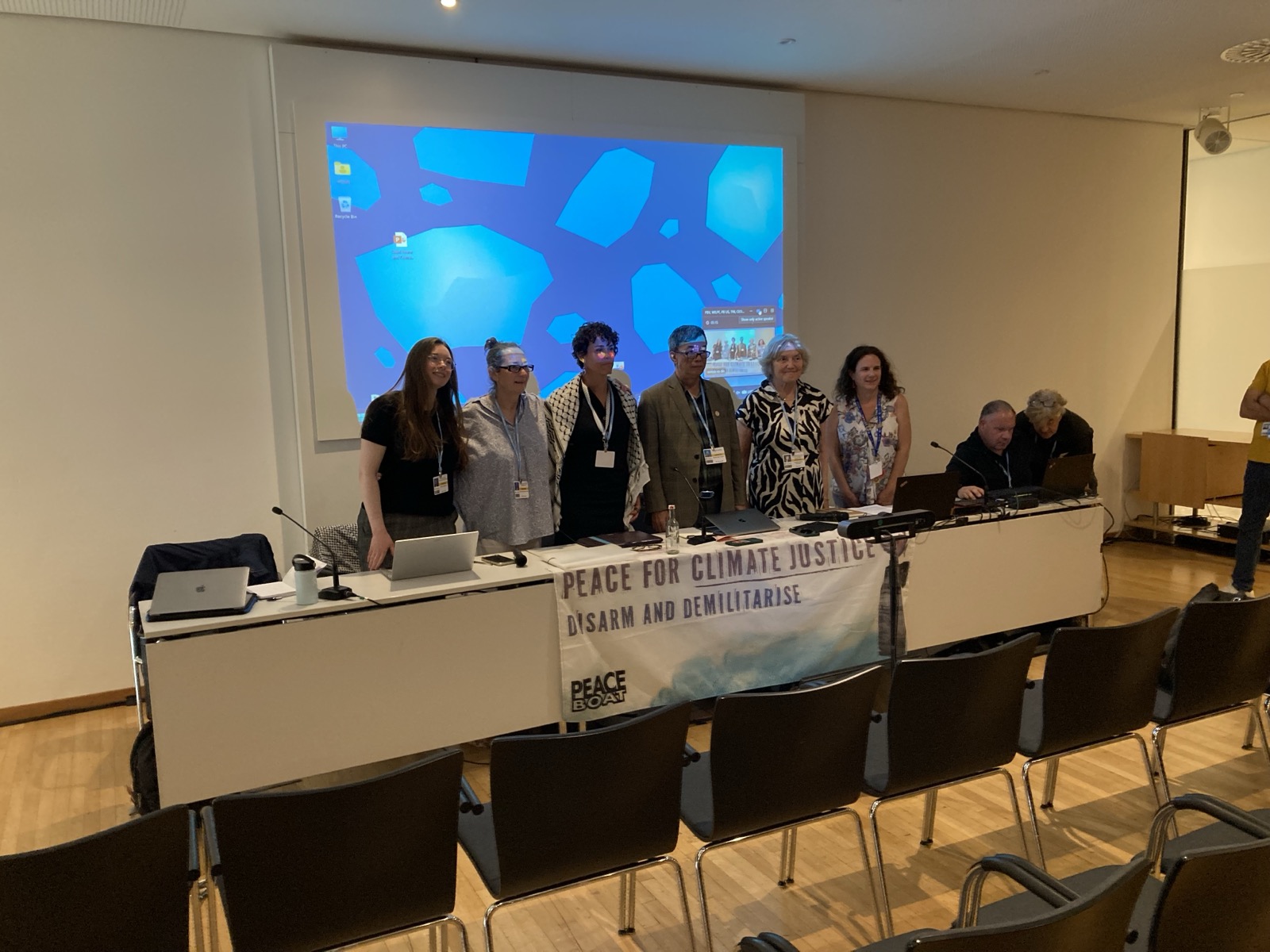
Hello, my name is Angelika Claussen, I am a physician by training and the vice-president of the German section of the international Physicians for the Prevention of Nuclear War. A big thank you to Karen, for putting this important panel together, to my esteemed fellow panellists and to you in the audience for joining us here today.
In this panel, I would like to speak from the perspective of a health professional about the deep interconnections between the climate crisis, nuclear weapons, militarisation, and public health.
As health professionals, our responsibility is not only to treat illness, but to prevent the conditions that cause mass suffering. Today, humanity faces two paramount human-made existential threats: climate change and nuclear weapons. These threats are often discussed separately, but they are deeply interconnected and must be addressed together.
Read more…The 2025 ICAN report on nuclear weapons spending, released on 9 June 2026, presents a stark picture of global priorities. In 2025, nine nuclear armed states spent 119 billion dollars on their nuclear arsenals, a nineteen percent increase from the previous year, equal to 3,768 dollars every second (ICAN 2026, Executive Summary). These expenditures are not temporary. Many nuclear systems are planned to remain in service until the late twenty first century, and some even into the twenty second century. The report documents systems expected to operate until 2085, 2090, and in some cases 2120 (ICAN 2026, Long Term Projections). These figures reflect deliberate, long term investment in weapons designed to destroy cities.
Read more…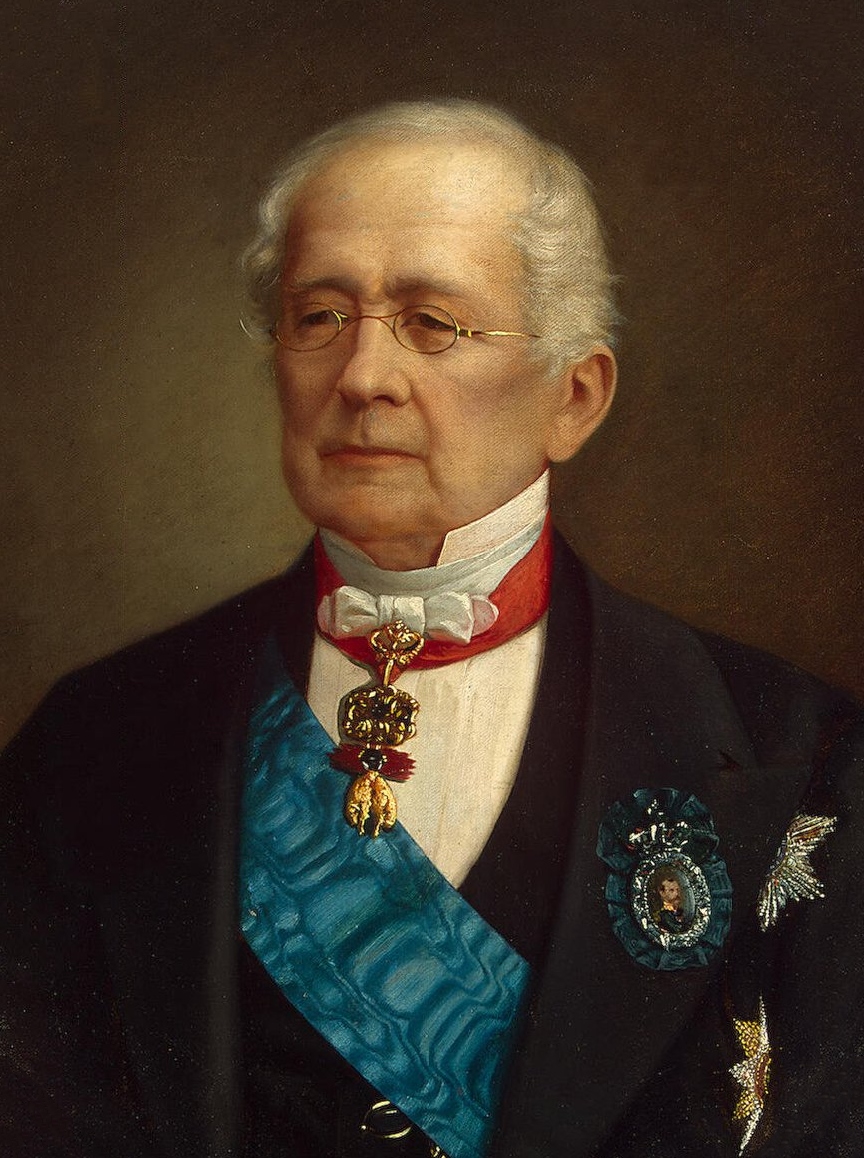
In 1868, long before satellites or nuclear weapons, the world confronted a deceptively simple question: Should every weapon that can be built also be used?
The question arose after the Russian Empire developed an exploding rifle bullet that inflicted devastating injuries far beyond any military necessity. Russian military physicians warned that the wounds were so catastrophic that they served no legitimate strategic purpose. In a rare moment of moral clarity, Russia renounced the weapon it had invented and invited other powers to negotiate what became the St. Petersburg Declaration — the first international agreement to prohibit a weapon because of its inhumane effects.
Read more…One of the curious ironies of our time is that, although many politicians spout heated nationalist rhetoric, rail against foreign nations, and belittle international cooperation, this approach to international affairs is not at all what most people want.
The climate of aggressive nationalism is clear enough. In nations around the globe, demagogues (usually of a rightwing variety) whip up xenophobia, preach superpatriotism, demand vast military buildups, and―if holding public office―often launch invasions of other nations under the banner of restoring an allegedly glorious national past.
But what is often overlooked is that, across the planet, most people favor a very different way of engaging with the world.
Read more…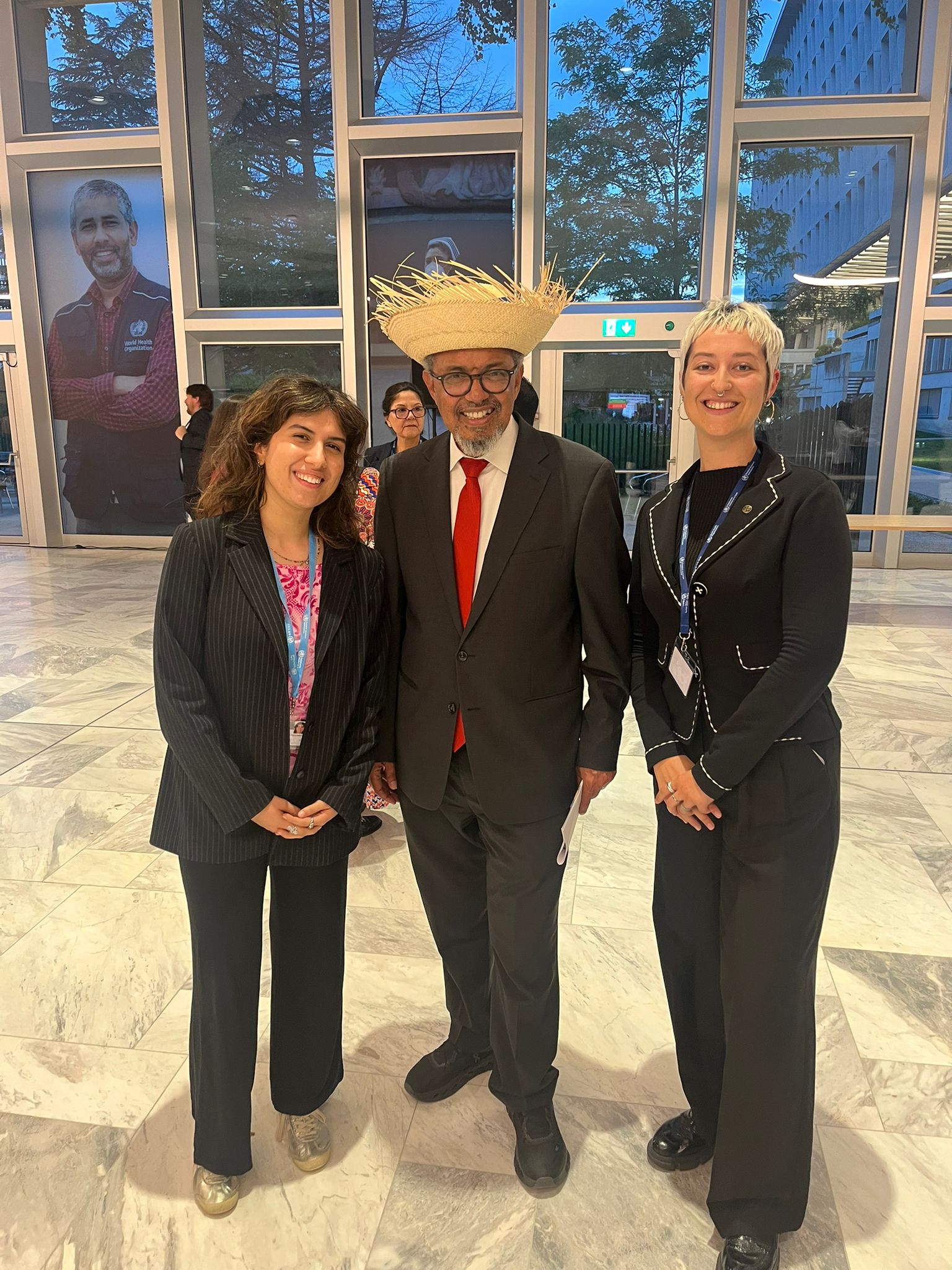
by Anna Khouri, IPPNW International Student Representative
This was the guiding mandate for the International Physicians for the Prevention of Nuclear War (IPPNW) delegation at the 79th World Health Assembly (WHA). At its core, the WHA is a massive, high-energy engine of global diplomacy, where the scale of international health policy becomes tangible. While official delegates from 194 member states fill the halls of the Palais des Nations to debate resolutions, an entire parallel universe of over 200 side events unfolds across Geneva. For a civil society organization like IPPNW, this is where the real work happens. It provides a vital arena to challenge the traditional boundaries of healthcare and advocate for peace itself as an important social determinant of health.
As one of the International Student Representatives, I had the honor of representing youth voices and the student movement within our delegation. Because the assembly is so vast, no single person can witness the entirety of the WHA. This report reflects our delegation’s collective impact and my own personal journey through the week focused on elevating medical peace work, addressing intersecting crises, and building strategic alliances with global health peers.
Read more…Nuclear powers are expanding their arsenals instead of disarming; Australia doesn’t have to be complicit in this
[Ed. note: The following article was originally published by The Conversation, a nonprofit, independent news organization based in Australia, and is reprinted with permission under a Creative Commons license. While part of the focus is on Australia’s role in nuclear weapons policy, all 34 nuclear-complicit states—the 29 non-nuclear-armed members of NATO, Japan, South Korea, Australia and Belarus—contribute to nuclear dangers. They could and should be acting decisively for disarmament and non-proliferation, becoming part of the solution rather than the problem.]
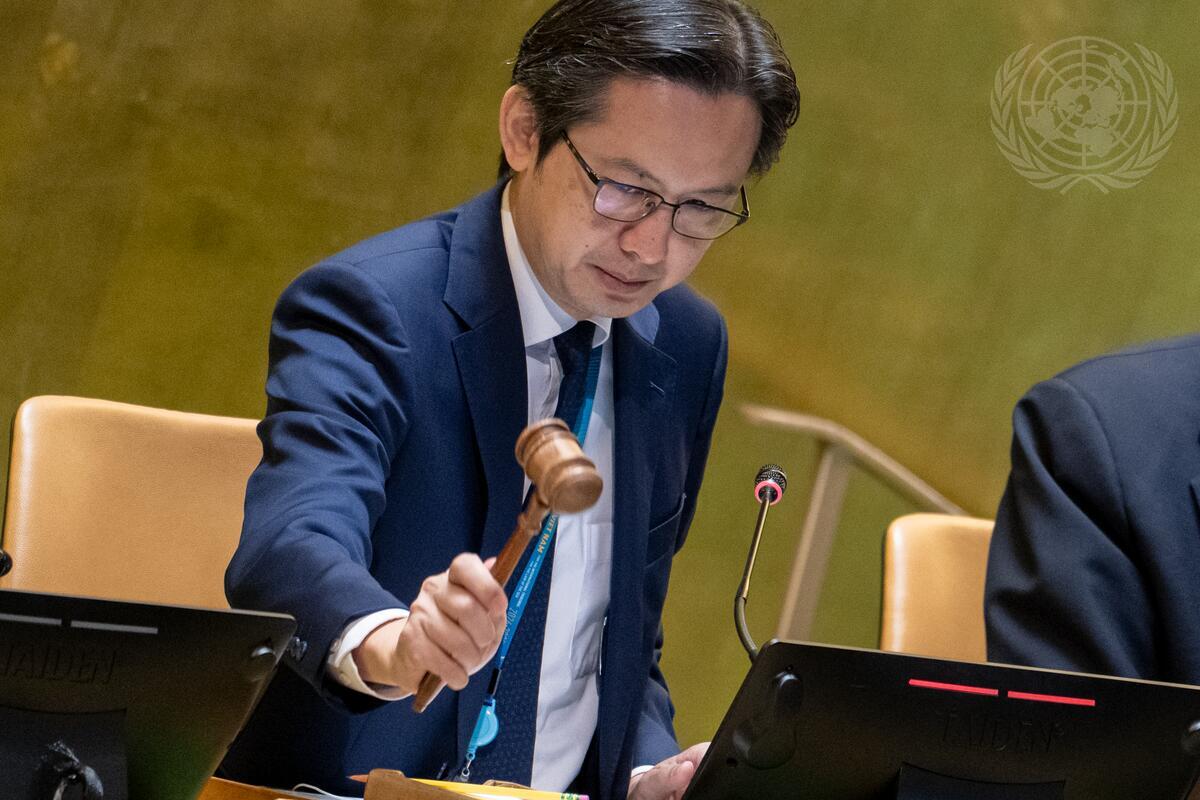
Hundreds of diplomats from almost every country just met for four weeks at United Nations headquarters in New York to review the most comprehensive nuclear non-proliferation treaty in the world. And they agreed to absolutely nothing.
Read more…Report release: Golden Dome or Golden Scam?
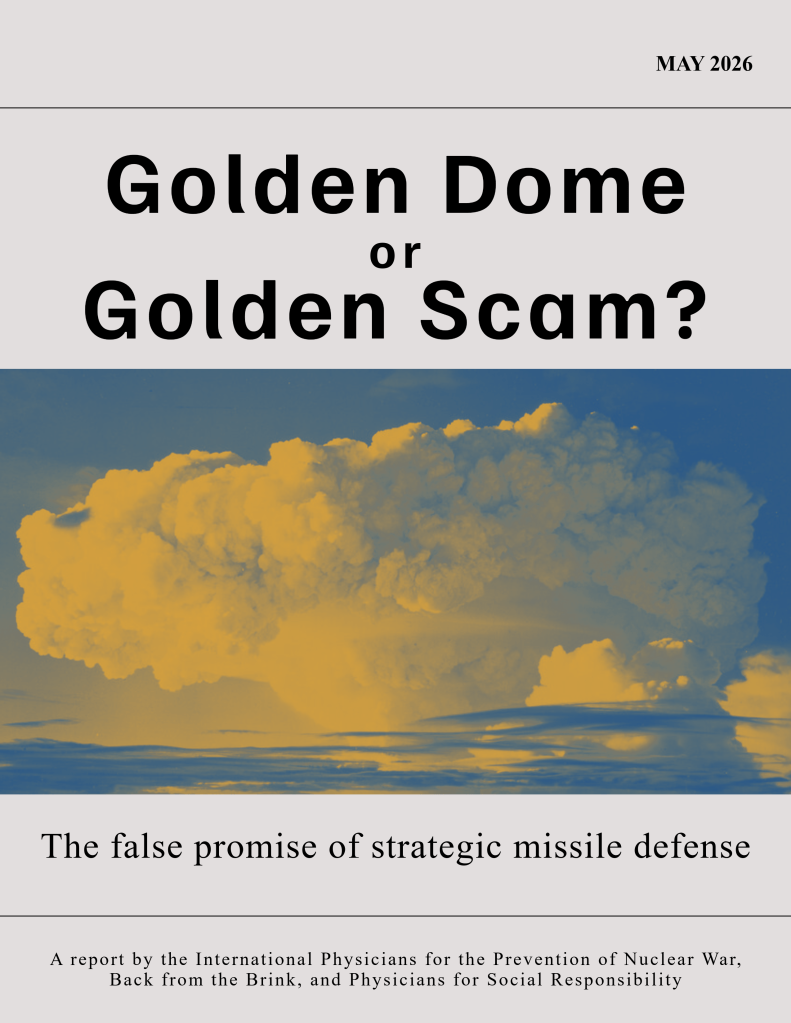
Physicians for Social Responsibility, International Physicians for the Prevention of Nuclear War, and Back from the Brink released a scientific report today that finds a proposed U.S. missile defense system—dubbed the “Golden Dome”—would leave tens of millions of Americans vulnerable to nuclear attack while costing trillions of dollars and accelerating the global arms race.
The report notes that a comprehensive system capable of addressing modern threats could cost as much as $3.6 trillion—and yet would never be 100% effective, leaving hundreds of millions of Americans in target zones.
“Trump’s Golden Dome is a gold-plated boondoggle that will be much more effective at wasting taxpayer dollars than countering missile attacks,” said US Senator Ed Markey (D-MA). “This trillion-dollar mistake will bury arms control, balloon the deficit, and boost the bottom lines of billionaires. We must not be fooled by Trump’s fool’s gold.”
The report is being launched at a live press conference at the Capitol House Triangle featuring US Senator Ed Markey (D-MA); US Representative Jim McGovern (D-MA); Dr. Ira Helfand, Report author and past president of the International Physicians for the Prevention of Nuclear War; and Dr. Laura Grego, Senior Research Director of the Global Security Program at the Union of Concerned Scientists.
Read more…The man who seeks to rule the world

Although Donald Trump has never been modest about his abilities or reluctant to exercise personal power, during his second term in office he has shown clear signs of megalomania.
One sign, of course, is his blatant demand for the territory of other nations. Since January 2025 alone, he has suggested annexing or seizing control of Greenland, Canada, Mexico, the Panama Canal, Gaza, Venezuela, and Cuba. In addition, he has proclaimed the “Donroe Doctrine,” declaring that “American dominance in the Western Hemisphere will never be questioned again.”
Read more…Sweden’s Slippery Slope
The following remarks were delivered by Josefin Lind, Director of IPPNW Sweden, at Tectonic Geopolitical Changes, a pre-NPT Review Conference civil society meeting, on April 26, 2026.

I will focus my remarks on a profound shift in Swedish security policy: how Sweden, long known for its neutrality and advocacy for disarmament, began to embrace the logic of nuclear deterrence following its accession to NATO, and how that position has evolved up to today.
Perhaps not everyone knows that Sweden had plans to build our own nuclear weapons in the 50’s, and reached quite far in this regard. Our nuclear weapons programme was advanced, and would have succeeded if not the public opinion and the social democratic women’s party in the end succeeded in persuading the Social Democratic Party to say no to Swedish nuclear weapons and join the Non-nuclear Proliferation Treaty that just opened up for signatures. It was an intense debate in Sweden whether to develop nuclear weapons, but in the meantime there was a more or less secret research going on in realizing those plans already. In the end, the public opinion and social democratic women’s party won and Sweden could thereafter with big technical knowledge and experience be a constructive and respected non-nuclear weapon state in international fora.
Read more…
 Bimal Khadka
 Bjorn Hilt
 Charles K. Johnson
 Dr. Ghassan Shahrour
 Gunnar Westberg
 IPPNW
IPPNW John Loretz
 Lawrence Wittner
 Maria Valenti
 mollymcgint
 Sue Wareham
 Tilman Ruff
 Tim Wright
 Xanthe Hall