by Alice Slater
On July 7, 2017, at a UN Conference mandated by the UN General Assembly to negotiate a treaty to prohibit nuclear weapons, the only weapons of mass destruction yet to be banned, 122 nations completed the job after three weeks, accompanied by a celebratory outburst of cheers, tears, and applause among hundreds of activists, government delegates, and experts, as well as survivors of the lethal nuclear bombing of Hiroshima and witnesses to the devastating, toxic nuclear-test explosions in the Pacific. Read more…
We just banned nuclear weapons!
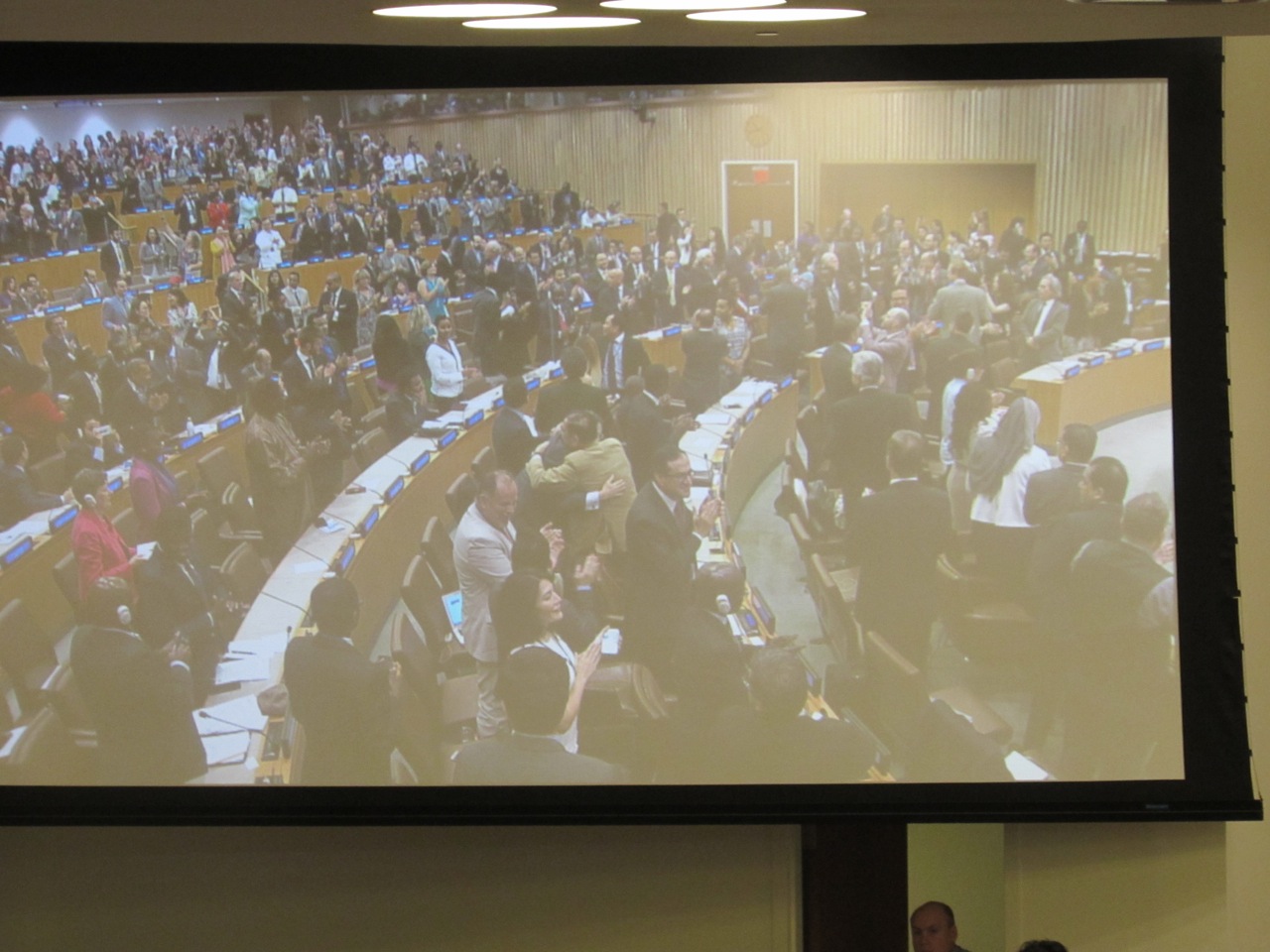
Banning nuclear weapons on the big screen. Now that’s reality TV!
Nuclear weapons have been banned.
Stigmatized and prohibited. That means we’re two-thirds of the way to fulfilling the Humanitarian Pledge, which feels like it was launched only yesterday.
It took three international conferences, two open-ended working groups, medical and scientific evidence accumulated over some 50 or more years, decades of selfless appeals by the Hibakusha and by the victims of nuclear testing, a core group of states with the courage to take effective leadership, a decisive UN resolution, four weeks of honest, good faith negotiating by people who really and truly want to rid the world of nuclear weapons, and seven years of intensive campaigning by ICAN…
…and nuclear weapons have been banned. Read more…

Conference room 1 erupts in applause as ban treaty vote is announced
History was made at the United Nations today when the Treaty on the Prohibition of Nuclear Weapons was adopted by an overwhelming 122-1 vote by UN Member States determined to provide a legal basis for the elimination of the world’s worst weapons of mass destruction. Read more…
Guest editorial
by Alice Slater
Those of us laboring in the wasteland of nuclear arms control and countless thwarted attempts to abolish nuclear weapons have been witnessing one of the most striking shifts in the global paradigm of how the world thinks about nuclear weapons which has brought us to this present glorious moment. The world is now poised on the eve of actually completing negotiations for a treaty to ban the bomb! The shift, which has proceeded so rapidly, relative to other efforts to curb nuclear weapons, can largely be attributed to the transformation of the public conversation about nuclear weapons, from the same old, same old talk, about national “security” and its reliance on “nuclear deterrence”, to the widely promoted and publicized well-founded scientific evidence of the catastrophic humanitarian consequences which would result from the use of these lethal instruments of death and destruction. Read more…
by Roland Oldham, Moruroa e Tatou, Tahiti
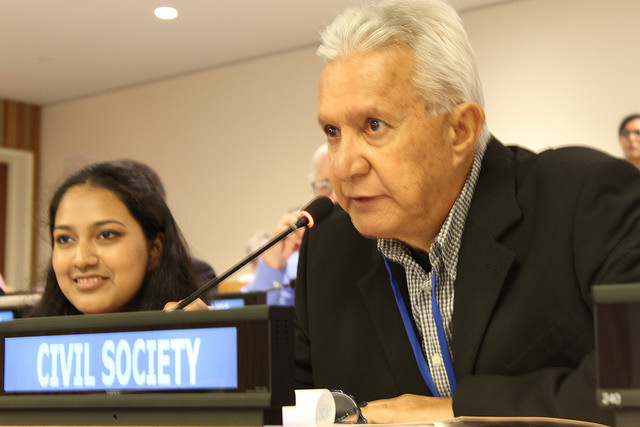 The nuclear bomb is a weapon of crime and mass destruction.
We should all be well aware of the examples of Hiroshima and Nagasaki, where the consequences still today have effects across generations. Read more…
by Tilman Ruff
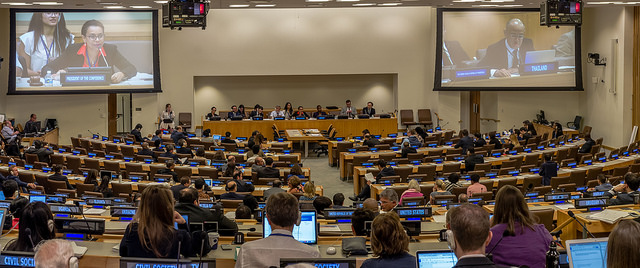 On Wednesday 26 June, the UN conference to negotiate a treaty banning nuclear weapons undertook the first read-through of a revised draft treaty text prepared by the conference president, Costa Rican ambassador Elayne Whyte. Now two weeks into this final round, many in the room expressed some frustration at this further exchange of positions and views. With the clock ticking towards the conference end and target date for adoption of an agreed treaty text on 7 July, many delegates expressed their desire to get stuck into negotiating treaty text, paragraph by paragraph, line by line.
Between Wednesday 28 and Friday 30 June, the negotiating work of the conference proceeded in earnest, with 3 and occasionally 4 separate working groups considering different treaty elements. Though these sessions were closed to civil society, the sense of urgency and commitment was palpable, with delegates meeting late into the night. Read more…
The bomb and us
by Anne Sandstrom
 As I write this, a nuclear ban treaty is within reach. And yet, the optimism I should be feeling is tempered by the knowledge of the people, lands, waters, cultural traditions, and innocence that have been lost to the scourge of nuclear weapons.
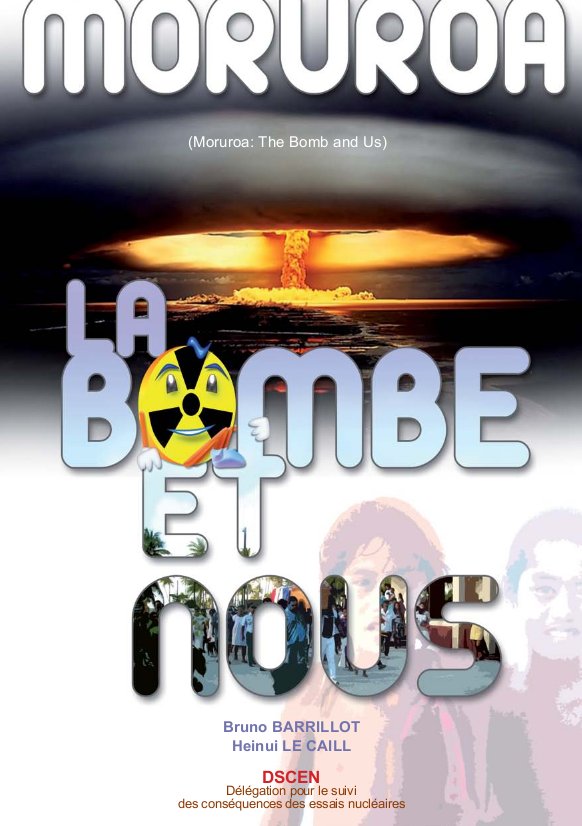
On Sunday afternoon, June 18, during an ICAN strategy and planning meeting, many voiced opinions on various aspects of the ban treaty. There was much discussion about the victims of nuclear testing, with Roland Oldham (President of Moruroa e Tatou) offering the perspective of the inhabitants of French Polynesia. At the conclusion of the meeting, Roland offered the booklet “Moruroa La Bombe et Nous” to anyone interested. He seemed apologetic as he admitted that it was available only in French. Read more…
 ICAN has released the following statement on the resumption of negotiations at the United Nations on a Convention on the Prohibition of Nuclear Weapons.
As the second negotiation session on the Convention to Prohibit Nuclear Weapons (CPNW) begins, there is broad consensus for a comprehensive and verifiable ban on nuclear weapons, strong support from international civil society organizations, and clear opportunities to strengthen the draft treaty before it is adopted. Read more…
National illusions and global realities
For as long as they have existed, nations have clung to the illusion that their military strength guarantees their security.
The problem with this kind of thinking is that the military power that one nation considers vital to its security fosters other nations’ sense of insecurity. In this climate of suspicion, an arms race ensues, often culminating in military conflict. Also, sometimes the very military strength that a nation intended for protection ends up emboldening it to engage in reckless, aggressive behavior, leading to war.
We have a ban treaty draft
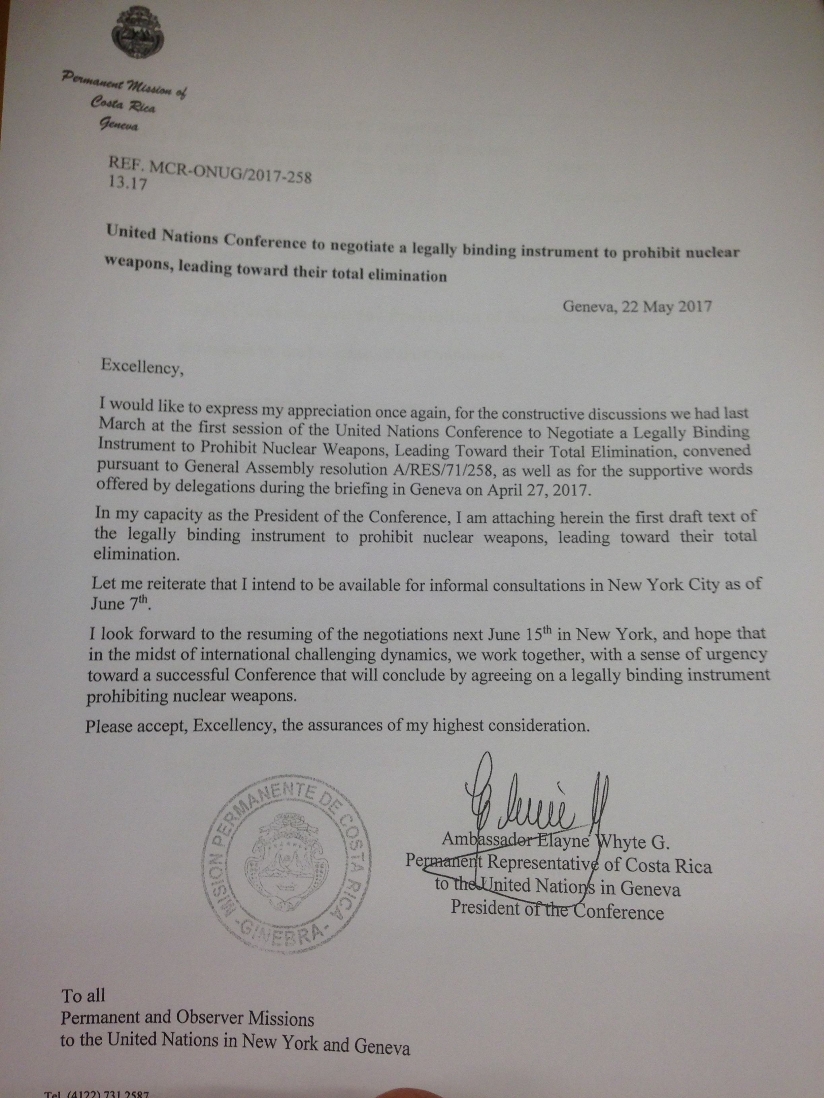
Cover letter from ban treaty conference president Elayne Whyte, who released the draft text today.
The Draft Convention on the Prohibition of Nuclear Weapons was released today in Geneva by the president of the negotiating conference, Elayne Whyte Gomez of Costa Rica. The draft is based upon proposals made and discussed by participating states and civil society during the first negotiating session in March, and will be the starting point when negotiations resume in June.
In a cover letter accompanying the draft, Ambassador Whyte urged the negotiators to “work together, with a sense of urgency toward a successful Conference that will conclude by agreeing on a legally binding instrument prohibiting nuclear weapons.” Read more…

 Bimal Khadka
 Bjorn Hilt
 Charles K. Johnson
 Dr. Ghassan Shahrour
 Gunnar Westberg
 IPPNW
IPPNW John Loretz
 Lawrence Wittner
 Maria Valenti
 mollymcgint
 Sue Wareham
 Tilman Ruff
 Tim Wright
 Xanthe Hall