International Physicians for the Prevention of Nuclear War (IPPNW) is calling on the Indian government to restore immediately all communications and freedom of movement in Kashmir and Jammu, and urging all states in the disputed border regions to initiate new diplomatic talks aimed at reducing tensions and negotiating a peaceful settlement to the long-standing conflict. Read more…
Dear moderators of the US Presidential debates: How about raising the issue of how to avert nuclear war?
 You mass media folks lead busy lives, I’m sure. But you must have heard something about nuclear weapons―those supremely destructive devices that, along with climate change, threaten the continued existence of the human race.
 Yes, thanks to popular protest and carefully-crafted arms control and disarmament agreements, there has been some progress in limiting the number of these weapons and averting a nuclear holocaust. Even so, that progress has been rapidly unraveling in recent months, leading to a new nuclear arms race and revived talk of nuclear war.
Do I exaggerate? Consider the following. Read more…
Nuclear weapons must be rejected
 As the Australian government appears at risk of involving us in yet another US war of aggression, a leading strategic thinker has dropped a bombshell. Professor Hugh White, emeritus professor of strategic studies at Australian National University, has suggested that Australia might need to consider acquiring nuclear weapons. He writes in his new book “How to Defend Australia” that, because US influence in our region is waning and Chinese influence is rising, “there are circumstances in which the development of nuclear forces could be justified.”
Professor White claims that in the future we might not be able to rely on US “extended nuclear deterrence” to protect us from adversaries. However his comments carry the potential to severely damage the ever-fragile progress that has been made towards nuclear non-proliferation and disarmament, for several reasons. Read more…
A race against time

Tilman Ruff’s life mission is to help rid the world of nuclear weapons
By Robert Fedele
In 2007, Associate Professor Tilman Ruff and a small group of antinuclear activists founded the International Campaign to Abolish Nuclear Weapons (ICAN) in Melbourne. In 2017, the global nongovernmental organisation captured the first Nobel Peace Prize born in Australia after years drawing attention to the catastrophic humanitarian consequences of nuclear weapons and driving a historic UN prohibition treaty. In June 2019, Ruff, and fellow ICAN co-founder, Dimity Hawkins, were awarded Order of Australia Honours for their advocacy on nuclear disarmament.
Tilman Ruff’s life’s mission to help end nuclear weapons traces back to growing up in Melbourne in the 1980s living with the genuine fear that nuclear war could strike at any moment.
His family background passed on a profound awareness of the impacts of war.
“My family were German Christians living in communities in…
View original post 1,847 more words
Executed for being an anti-nuclear activist
By Maria Arvaniti Sotiropoulou and Panos Trigazis

A surviving portrait of Nikos Nikiforidis (Photo: WikiCommons)
Under present conditions, it seems inconceivable that a 22-year-old fighter for the anti-nuclear movement was arrested, sentenced to death by court martial and executed in Thessaloniki, on a charge of collecting signatures under the Stockholm Appeal for the abolition and prohibition of all nuclear weapons. But Nikos Nikiforidis was the first person (and perhaps also the only one) in the world to suffer such a fate. Read more…
Thinking in terms of the lifetime of humanity
 A new article in an American Heart Association journal draws a compelling analogy between preventing sudden cardiac death and preventing nuclear war. That the three authors are long-time members of IPPNW should come as no surprise. In “Cardiac Events and Nuclear War: Prevention by Cardiovascular Specialists,” in the June 4 issue of Circulation, James Muller, John Pastore, and Amir Lerman relate the risks of heart attack to the risks of nuclear catastrophe. Read more…
How about a peace race instead of an arms race?
In late April, the highly respected Stockholm International Peace Research Institute reported that, in 2018, world military expenditures rose to a record $1.82 trillion. The biggest military spender by far was the United States, which increased its military budget by nearly 5 percent to $649 billion (36 percent of the global total). But most other nations also joined the race for bigger and better ways to destroy one another through war. Read more…
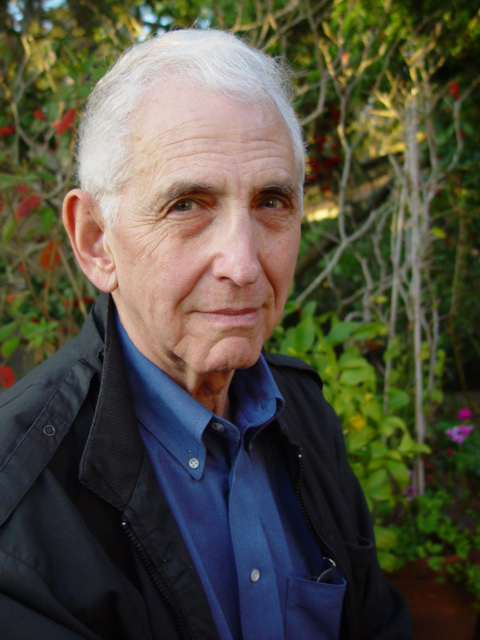 [Interview with Daniel Ellsberg, originally published by the Great Transition Initiative; republished with permission.]
The growth of the military-industrial complex poses an existential threat to humanity. Daniel Ellsberg, peace activist and Vietnam War whistleblower discusses with Tellus Senior Fellow Allen White the continuing existential threat posed by the military-industrial complex—and what needs to be done about it. Read more…
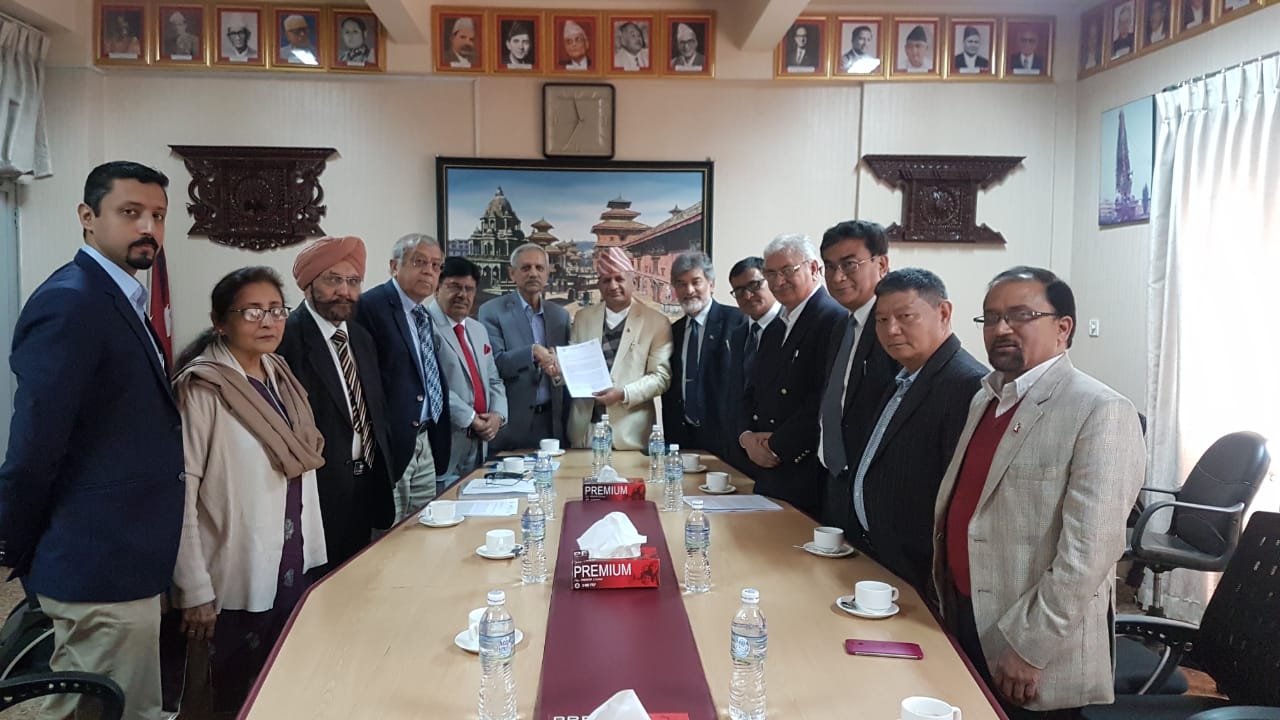
Doctors from IPPNW’s South Asian affiliates met with government leaders in Kathmandu on March 31. From left, Akmal Sultan, Talat Sultan, Surinder Singh Soodan, Tipu Sultan, Kamrul Hasan Khan, Arun Mitra, Foreign Minister Pradeep Gyawali, Sharad Onta, Bansidhar Mishra, Satyajit Kumar Singh, Mahesh Maskey, Ganesh Gurung, Arun Dixit.
IPPNW’s South Asia affiliates have urged government officials in Kathmandu, Nepal, to take additional steps towards nuclear disarmament, reduction of small arms, and resolution of issues through dialogue. The IPPNW delegation met on March 31 with Foreign Minister Shri Pradeep Gyawali, Speaker of Parliament Shri Krishna Bahadur Mahara, and Advisor to the Prime Minister Shri Rajan Bhattarai. Read more…
The Fukushima nuclear disaster: 8 years on

The ongoing nuclear reactor disaster at Fukushima began on March 11, 2011
Eight years after the world’s most complex nuclear disaster, the damaged Fukushima Daiichi nuclear power plants and spent fuel ponds are still leaking and dangerous, vast amounts of contaminated water continue to accumulate, 8000 odd clean-up workers labour daily and will need to for many decades, the needs of people exposed to radioactivity are still neglected, no one is in prison for a disaster fundamentally caused by the negligence of the operator and the government, and most of the lessons of Fukushima have yet to heeded. Read more…

 Bimal Khadka
 Bjorn Hilt
 Charles K. Johnson
 Gunnar Westberg
 IPPNW
IPPNW John Loretz
 Lawrence Wittner
 Maria Valenti
 mollymcgint
 Sue Wareham
 Tilman Ruff
 Tim Wright
 Xanthe Hall


 IPPNW peace and health blog