Reflections from the “Nuclear Risks and Emerging Research” Session at Nuclear Ban Meeting
By Ruhi Kanwar, an MD candidate at Harvard Medical School, Class of 2026. She received her BS from Stanford University in 2021.
The Third Meeting of States Parties (3MSP) to the Treaty on the Prohibition of Nuclear Weapons (TPNW) was recently held at the United Nations Headquarters in New York City from March 3rd to March 7th 2025. The session featured exhibitions and various side events from participants and experts around the world ranging from topics of nuclear justice to gender and nuclear weapons. IPPNW medical students from Germany, Japan, the United States, and Zambia participated in this event.
Read more…by Kati Juva and Arja Alho
According to the most recent Federation of American Scientists Nuclear Year Book, the United States has approximately 1,700 deployed nuclear warheads—400 land-based strategic intercontinental nuclear missiles, 300 on 66 bombers based in the US, and 970 missiles on 14 submarines. Another 100 US aircraft-launched nuclear weapons are deployed in five NATO countries in Europe.
Britain’s strategic nuclear weapons, of which there are some 220, are all on board submarines. France, which has a nuclear arsenal of just under 300 warheads, has non-strategic warheads launched from bombers in addition to submarine-launched ballistic missiles. Both countries are planning to increase the number of nuclear weapons and modernize their launch platforms.
Read more…Global chaos or global community?
Although the nations of the world have pledged to respect a system of international law and global responsibility, the recent behavior of several countries provides a sharp challenge to this arrangement.
Read more…“I will not be discouraged”
By Lars Pohlmeier, IPPNW Germany Chairperson and IPPNW Delegate to the 3rd Meeting of States Parties to the TPNW
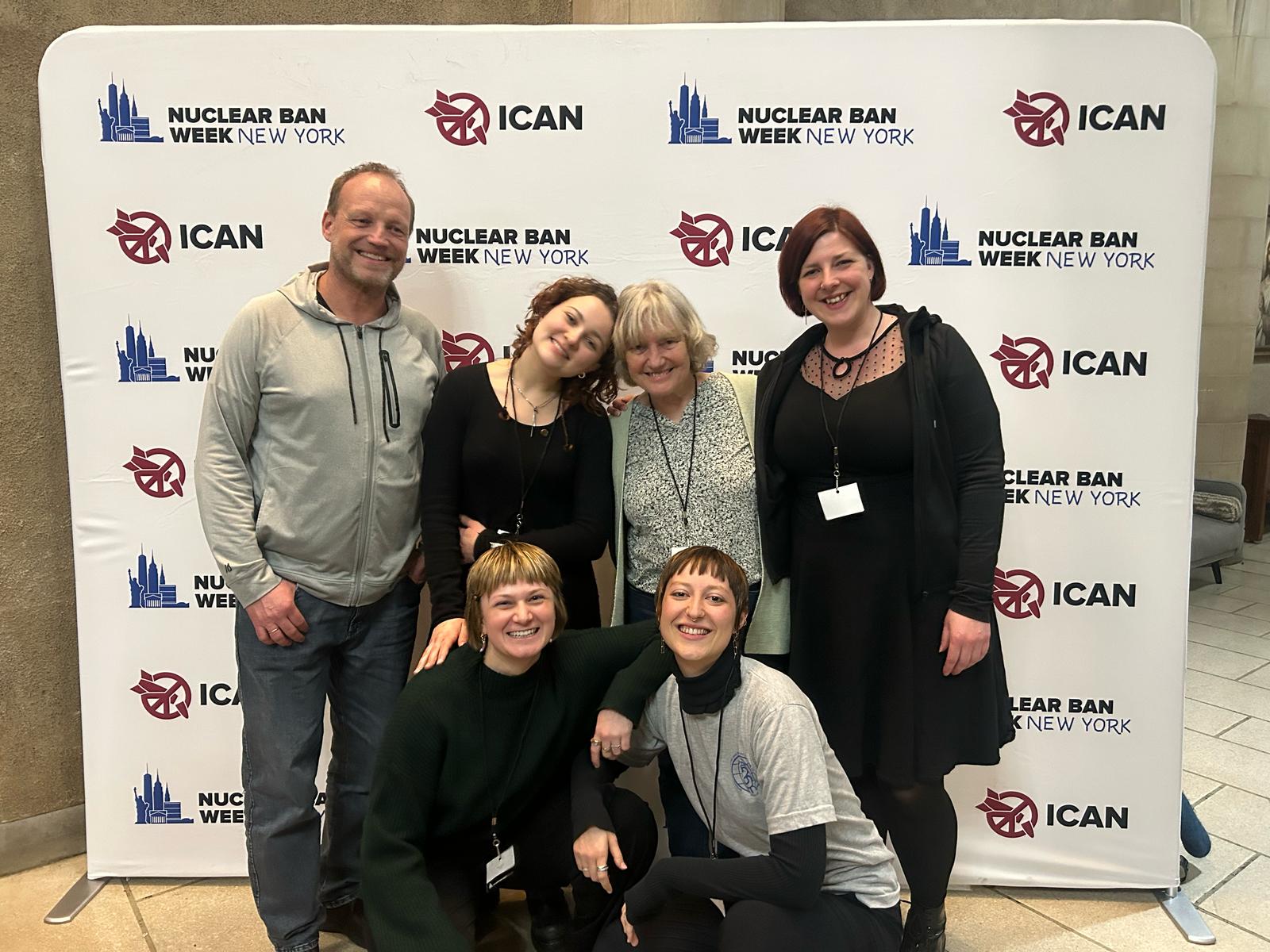
Now it is time for my personal impressions. I attended my first UN conference in 2000, as a participant in the NPT delegation. It was the first Review Conference after the unlimited extension of the Nuclear Non-Proliferation Treaty. Large demonstrations were organized—about 40,000 people marched through Manhattan. I was wearing my yellow IPPNW sports jersey with “Abolish Nuclear Weapons” written on it. That’s why I can always be easily identified in the photos.
Read more…The following statement was delivered by Julianne Hauschulz of IPPNW Germany and Jean-Marie Collin of ICAN France, on behalf of ICAN Europe Partners, to the third Meeting of States Parties to the Treaty on the Prohibition of Nuclear Weapons (TPNW). United Nations Headquarters, NYC | 7 March 2025.
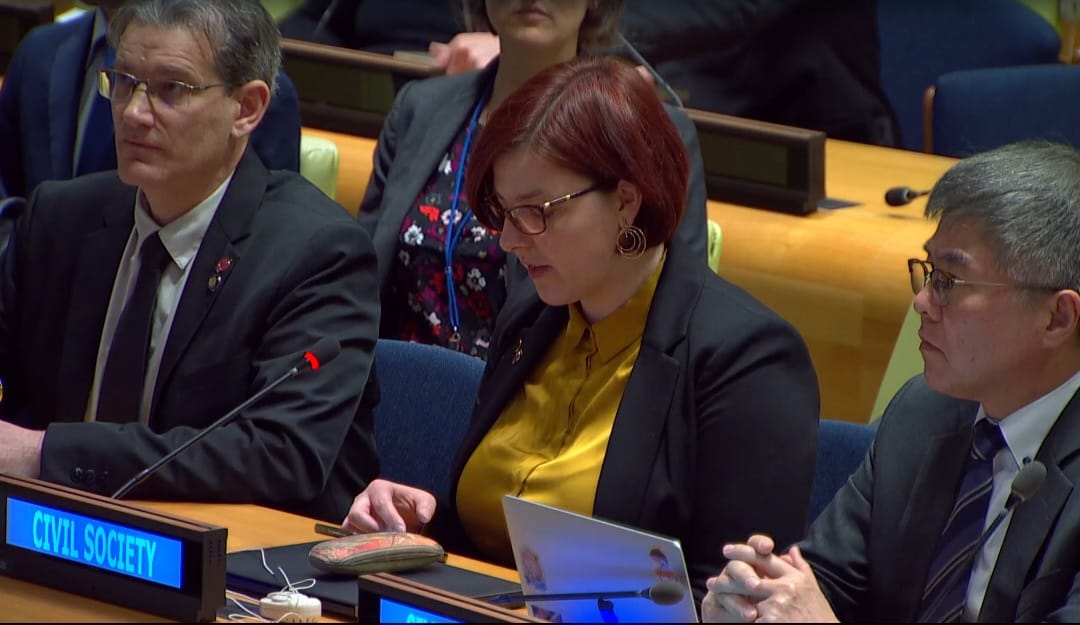
Our organisations, European partners organizations of the International Campaign to Abolish Nuclear Weapons (ICAN), are alarmed by the dangerous and proliferating rhetoric from some of our heads of states and governments in favour of a Franco-British nuclear umbrella. This dynamic undermines decades of European commitments to nuclear disarmament, non-proliferation and international law, exposing a deep hypocrisy. On one day, these states claim to uphold the international security architecture, namely the Nuclear Non-Proliferation Treaty (NPT); on the next, they openly debate nuclear armament. Their efforts to condemn others’ nuclear threats ring more hollow by the day. Needless to say, if the projects go ahead, they will decrease security for Europeans and, in fact, for all states.
Read more…Our prescription for survival
The following statement was delivered by Walusungu Mtonga and Stella Ziegler, IPPNW’s International Student Representatives, to the General Debate of the third Meeting of States Parties to the Treaty on the Prohibition of Nuclear Weapons (TPNW). United Nations Headquarters, NYC | 5 March 2025.

Distinguished delegates, esteemed colleagues, and honored guests,
We stand before you today as Board Members of the International Physicians for the Prevention of Nuclear War (IPPNW), a global network of health professionals united in the mission to prevent nuclear war and safeguard human and planetary health. We are medical students and members of the generation that is rising up to reject the deadly inheritance of nuclear weapons.
Read more…Two different American approaches to the world
The recent whirlwind of Trump administration foreign policy measures―many reversing those of the Biden administration―illustrates the fact that Americans have sharply different opinions about their relationship to other nations.
Read more…We helped people grasp what a nuclear war would really be like
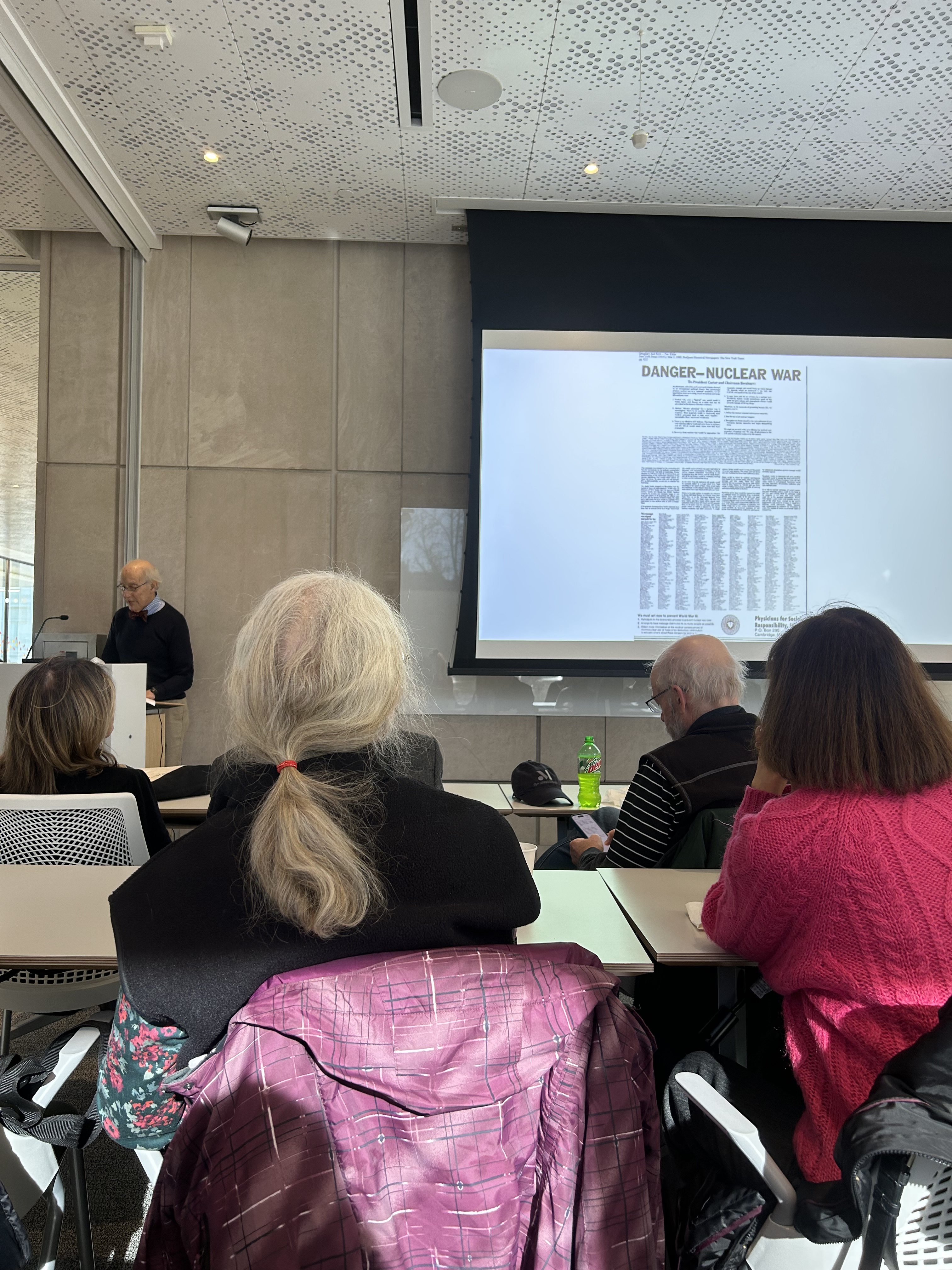
[On January 28, Dr. Eric Chivian, one of IPPNW’s founders in the 1960s, spoke at Harvard University’s Countway Library at an event entitled “Prescriptions for Peace: Physician Activism in the Nuclear Age, 1961-1985.” The event accompanied the launch of the Center for the History of Medicine’s “Prescriptions for Peace” exhibition on physician anti-nuclear activism, 1961-1985. The audience also heard from Harvard Medical School student Katie Blanton, MSc, whose undergraduate thesis, “The doomsday doctors: medical activism in the nuclear age, 1960–2000,” won Harvard’s Thomas Temple Hoopes Prize for outstanding scholarly research and excellence in the art of teaching.]
In the early 1960s, when Physicians for Social Responsibility was born, there was already a strong anti-nuclear movement in the US, organized by such groups as SANE Nuclear Policy, the Campaign for Nuclear Disarmament, and many others. Leading scientists like Linus Pauling and many of those who helped make the first nuclear weapons–Leo Szilard, Bernie Feld, Phil Morrison, Vicky Weisskopf, and many others were also deeply involved. I was very lucky to have known Bernie, Phil, and Vicky well.
These efforts were successful in many ways, but what physicians in PSR and IPPNW were able to do that these efforts were not able to accomplish, was that we helped people grasp what a nuclear war would really be like, so that they knew that these weapons were so catastrophically destructive that they could never be used in wartime, that it was a dangerous illusion to believe that civil defense was possible, that there could be any effective medical response whatsoever for the survivors, and that humanity could ever recover from a nuclear war.
Read more…The Treaty on the Prohibition of Nuclear Weapons provides a way to avert nuclear catastrophe

Will the world ever be free of the menace of nuclear annihilation?
There was a promising start along these lines during the late twentieth century, when―pressed by a popular upsurge against nuclear weapons―the nations of the world adopted a succession of nuclear arms control and disarmament agreements. Starting with the Partial Test Ban Treaty of 1963, these agreements helped curb the nuclear arms race and prevent nuclear war.
Read more…IPPNW action at COP29 for disarmament, climate justice and health

For the 29th UN climate conference (COP29) in Baku, Azerbaijan, IPPNW and its UK affiliate, Medact, sent official delegations to highlight human and environmental health. The IPPNW team emphasized that the climate crisis, militarisation, and nuclear weapons pose a severe threat to global health, stressed that the climate crisis exacerbates conflict and inequality, and called for addressing fossil-fuel dependence and militarisation through peace action, press conference and advocacy at COP29.
Read more…
 Bimal Khadka
 Bjorn Hilt
 Charles K. Johnson
 Gunnar Westberg
 IPPNW
IPPNW John Loretz
 Lawrence Wittner
 Maria Valenti
 mollymcgint
 Sue Wareham
 Tilman Ruff
 Tim Wright
 Xanthe Hall


 IPPNW peace and health blog