NATO and Russia—a tragedy unfolding
In 1984 a group from IPPNW Sweden met with the Norwegian general Tönne Huitfeldt, at that time Chief of the Military Staff of NATO. He was a man with great confidence in himself and in the military system.
“General Huitfeldt,” we asked, “when you work with your war scenarios in the NATO Headquarters, with the destruction of the world through a nuclear war looming as a possible outcome, are you not scared?” “Oh no, never,” he responded. “The Russians are as rational as we are. They will never let it go too far. I am never scared.”
Well, we were. And are. Read more…
Why ban nuclear weapons? Ask the French president
President François Hollande of France has explained to the world why nuclear weapons must be banned and eliminated. Not intentionally, of course. Not because he made the fallacious argument that nuclear weapons make France more secure in a dangerous world (although he did); not because he lumped every conceivable and inconceivable threat to France into a confusing hash and came up with nuclear weapons as the final answer to every one (although he did that, too); and not because he shamelessly contradicted himself on the fundamental point that France is a champion of nuclear disarmament but finds its own “nuclear deterrent” indispensible (all the nuclear-armed States suffer from that particular mental health problem, as Sue Wareham has diagnosed it elsewhere on this blog).
In fact, his speech on February 19 to the French military and political elite at Istres Air Force Base was more frightening than that. Read more…
 By Dr. Michael Schober, Dr. Robert Mtonga and Maria Valenti
How can we foster more South-North projects on violence prevention that don’t cost a fortune? Can a grassroots project with a lot of volunteer enthusiasm but a low budget succeed in helping victims of violence?
Medical expertise coupled with commitment and creative thinking have always been hallmarks of our members’ work, and we are pleased to report that a recent IPPNW project that capitalizes on those traits will be published in the peer-reviewed Injury Prevention, a BMJ publication. You can read the abstract here. Read more…
A visit to Brussels: NATO, Russia, and the EU
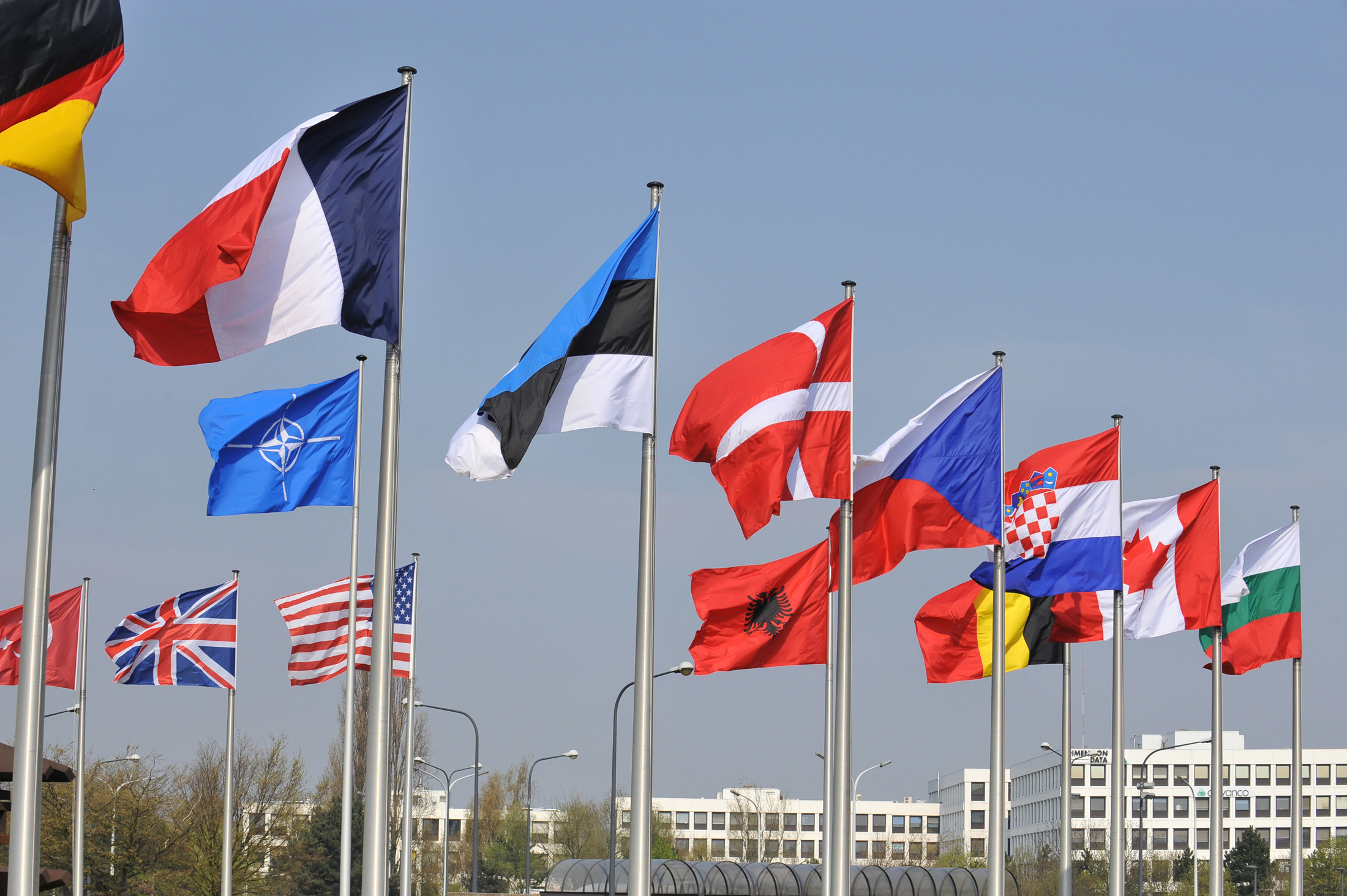 For many years, I’ve joined other IPPNW members on regular visits to NATO Headquarters in Brussels. This tradition continued a week or so ago when some of us returned to Brussels to meet not only with NATO staff, but also with diplomats at the Russian mission and with staff at the EU Commission group responsible for proliferation and disarmament.
At all three meetings we presented IPPNW’s findings on nuclear famine and the climate disaster that would follow a limited, regional nuclear war, whether in Europe or elsewhere in the world. We had the impression that this research was not very well known either at NATO or at the Russian mission. Read more…
P5 steps up…or was that down…or sideways…
 The P5 gathered in London this month to reaffirm that they need to be seen reaffirming from time to time their affirmation that a world without nuclear weapons is a topic of discussion to which they take an affirmative approach.
Meeting on February 4 and 5, the US, Russia, the UK, France, and China “reaffirmed that a step-by-step approach to nuclear disarmament that promotes international stability, peace and undiminished and increased security for all remains the only realistic and practical route to achieving a world without nuclear weapons.” Read more…
How to get out of the Nuclear Swamp
This week I read an email exchange that made me think. Actually, it worried me deeply. In one of the messages an old friend described the Nuclear Weapons Convention – an idea many of us fought for since the early nineties – as a “fairy tale” and a “distraction”.
The authors of these mails are not government representatives from nuclear weapon states or their allies, although you might be forgiven for thinking so. Both those descriptions have been used by states that want to brush aside the idea of a convention summarily, as if only for the very stupid or naïve. No, these were colleagues. Read more…
A quarter century after the end of the Cold War and decades after the signing of landmark nuclear arms control and disarmament agreements, are the US and Russian governments once more engaged in a potentially disastrous nuclear arms race with one another? It certainly looks like it.
With approximately 15,000 nuclear weapons between them, the United States and Russia already possess about 93 percent of the world’s nuclear arsenal, thus making them the world’s nuclear hegemons. But, apparently, like great powers throughout history, they do not consider their vast military might sufficient, especially in the context of their growing international rivalry. Read more…
Thomas B. Graboys — a life that balanced skill with compassion
by John Pastore
 Dr. Thomas Graboys succumbed on January 5th after a long struggle with Lewy body disease, an unrelenting and progressive neurologic illness.
Tom had been a stalwart leader in the Lown Cardiovascular Group, named for Bernard Lown, a founding co-president of the International Physicians for the Prevention of Nuclear War, recipient of the Nobel Prize for Peace in 1985. Especially in the years leading up to the Nobel, Tom was active in IPPNW and in our US affiliate, Physicians for Social Responsibility. Read more…
 People of all faiths and races have a reason to rejoice today as a new treaty that will regulate the $85 billion global trade in arms and ammunition enters into force this Christmas eve. After more than a decade of campaigning by thousands worldwide, the Arms Trade Treaty (ATT) will become international law at last. Read more…
Nobel Peace Laureates call for treaty banning nuclear weapons

IPPNW co-president Tilman Ruff (left) shares the stage with the Dalai Lama at the Nobel Peace Laureates Summit
The 14th World Summit of Nobel Peace Laureates was held in Rome this weekend. Co-presidents Ira Helfand and Tilman Ruff represented IPPNW. The Summit issued strong language condemning nuclear weapons and called for a treaty to ban them as part of a statement published at the conclusion of the meeting. Read more…

 Bimal Khadka
 Bjorn Hilt
 Charles K. Johnson
 Gunnar Westberg
 IPPNW
IPPNW John Loretz
 Lawrence Wittner
 Maria Valenti
 mollymcgint
 Sue Wareham
 Tilman Ruff
 Tim Wright
 Xanthe Hall


 IPPNW peace and health blog