The world needs Hibakusha testimonies again
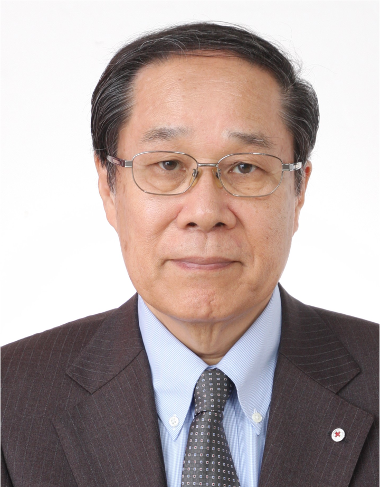
[Dr. Masao Tomonaga is the honorary director of the Japanese Red Cross Nagasaki Atomic Bomb Hospital and a survivor of the US atomic bombing of Nagasaki in 1945. As a physician, he has specialized in medical care for the Hibakusha, whose organization was awarded the 2024 Nobel Peace Prize. A founding member of IPPNW’s Nagasaki affiliate, he is on the organizing committee of the federation’s 24th World Congress, which will be held in his city in October. We interviewed Dr. Tomonaga about his experience at the Nobel ceremony and his expectations for the Congress.]
Read more…Delivered by Dr. Ira Helfand, IPPNW Board Member, at the Third Preparatory Committee for the 2026 Review Conference of the Parties to the Treaty on the Non-Proliferation of Nuclear Weapons (NPT) at the United Nations Headquarters in New York City, 30 April 2025.
Distinguished delegates, esteemed colleagues, and honored guests,

Thank you for the opportunity to speak with you today. I am not a diplomat. I am an Emergency Room doctor who has spent the last 50 years speaking with patients and their families. So let me talk to you now as I would to the family of a critically ill patient.
Because that is the situation we face. The world, for which we are collectively responsible, is in terrible danger. Nine countries, five of them parties to this Treaty, have chosen to build arsenals of nuclear weapons that effectively hold all of humanity, including their own citizens, hostage. They want these weapons because they make them strong and allow them to bully the rest of the world. They justify these weapons with the illusion that they offer security. That is a dangerous lie. These weapons are the greatest threat to our survival and pose an existential threat to civilization.
Read more…The limitations of military might
Although the statement that “power grows out of the barrel of a gun” was made by Chinese communist leader Mao Zedong, it’s an idea that, in one form or another, has motivated a great many people, from the members of teenage street gangs to the statesmen of major nations.
Read more…The Chernobyl nuclear disaster 39 years on
“Thorough studies conducted in the Soviet Union have proved completely nuclear power plants do not affect the health of the population.”
Lev Feoktistov, deputy director of the Kurchatov nuclear energy Institute 1985
“Nuclear power is the safest form of energy yet known to man.”
UK energy Minister Peter Walker, 16 March 1986 [1]
On 26 April 39 years ago, the worst nuclear accident so far exploded in Reactor 4 at the Chernobyl nuclear power plant. It was a Soviet-made RMBK, high-power channel reactor design that could produce plutonium for nuclear bombs as easily as it could produce electricity.
Read more…Meet. Talk. Eliminate nuclear weapons for good.
Three Nobel laureates, Nihon Hidankyo (Nobel Peace Prize 2024), ICAN (Nobel Peace Prize 2017), and International Physicians for the Prevention of Nuclear War (Nobel Peace Prize 1985) who were recognised for their work on promoting nuclear disarmament sent a joint letter to Presidents Trump and Putin on 28 April urging them to meet to advance nuclear disarmament. The letter can be found here and below.
Dear Presidents Donald J. Trump and Vladimir V. Putin,
We write to you as Nobel Peace Prize Laureates committed to the elimination of nuclear weapons. At this moment of extreme nuclear danger, we call on you to take urgent steps to de-escalate tensions and to engage in meaningful negotiations for nuclear disarmament.
The current climate surrounding nuclear weapons is the most volatile in decades. Alarmingly, we are witnessing a resurgence of dangerous ideas which had been relegated to Cold War history books: radical new calls for nuclear proliferation and the extension of nuclear deterrence practices. The expansion of nuclear weapons capabilities is not a route to safety — it only increases the risk these weapons will be used by accident or design. The only viable security strategy is one that moves the world away from the brink of nuclear catastrophe and prioritizes disarmament.
Read more…IPPNW European Regional Meeting Declaration, Geneva, April 2025
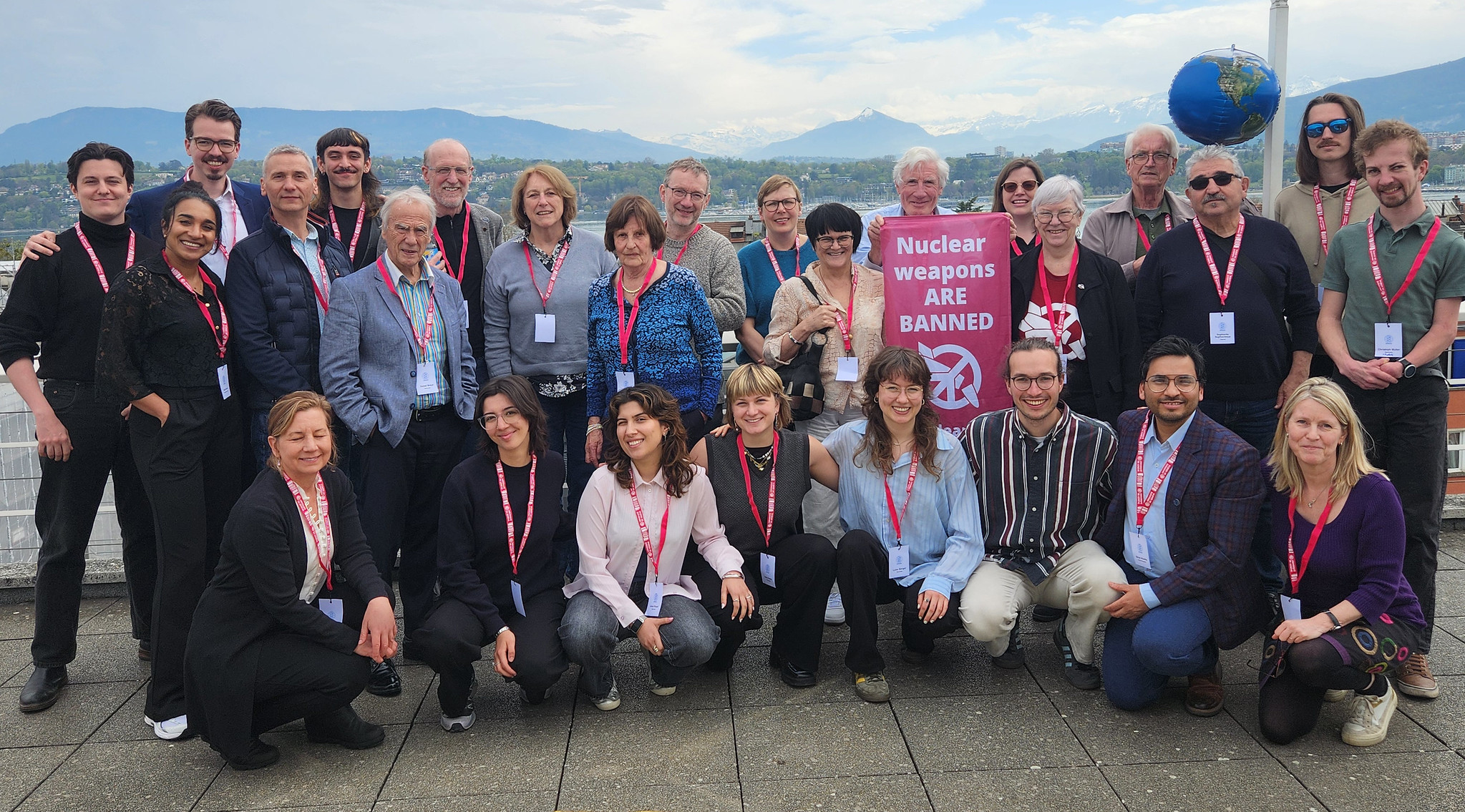
At this critical time in European and global history, the European affiliates of the International Physicians for the Prevention of Nuclear war (IPPNW) have come together in Geneva – city of diplomacy and birthplace of our federation 45 years ago – to reaffirm our shared mission: to protect life and health, prevent nuclear war and to work together for peace.
Founded by physicians from both the United States and the Soviet Union, IPPNW has always stood above political and ideological divisions. Today, as a global federation including affiliates in most Western states, in the Russia Federation, China, and many countries of the Global South, we are uniquely positioned to speak across divides.
Read more…Amid growing international chaos, it should come as no surprise that nuclear dangers are increasing.
The latest indication is a rising interest among U.S. allies in enhancing their nuclear weapons capability. For many decades, remarkably few of them had been willing to build nuclear weapons―a result of popular opposition to nuclear weapons and nuclear war, progress on nuclear arms control and disarmament, and a belief that they remained secure under the U.S. nuclear umbrella. But, as revealed by a recent article in London’s Financial Times, Donald Trump’s public scorn for NATO allies and embrace of Vladimir Putin have raised fears of U.S. unreliability, thereby tipping the balance toward developing an expanded nuclear weapons capability.
Read more…Reflections from the “Nuclear Risks and Emerging Research” Session at Nuclear Ban Meeting
By Ruhi Kanwar, an MD candidate at Harvard Medical School, Class of 2026. She received her BS from Stanford University in 2021.
The Third Meeting of States Parties (3MSP) to the Treaty on the Prohibition of Nuclear Weapons (TPNW) was recently held at the United Nations Headquarters in New York City from March 3rd to March 7th 2025. The session featured exhibitions and various side events from participants and experts around the world ranging from topics of nuclear justice to gender and nuclear weapons. IPPNW medical students from Germany, Japan, the United States, and Zambia participated in this event.
Read more…by Kati Juva and Arja Alho
According to the most recent Federation of American Scientists Nuclear Year Book, the United States has approximately 1,700 deployed nuclear warheads—400 land-based strategic intercontinental nuclear missiles, 300 on 66 bombers based in the US, and 970 missiles on 14 submarines. Another 100 US aircraft-launched nuclear weapons are deployed in five NATO countries in Europe.
Britain’s strategic nuclear weapons, of which there are some 220, are all on board submarines. France, which has a nuclear arsenal of just under 300 warheads, has non-strategic warheads launched from bombers in addition to submarine-launched ballistic missiles. Both countries are planning to increase the number of nuclear weapons and modernize their launch platforms.
Read more…Global chaos or global community?
Although the nations of the world have pledged to respect a system of international law and global responsibility, the recent behavior of several countries provides a sharp challenge to this arrangement.
Read more…
 Bimal Khadka
 Bjorn Hilt
 Charles K. Johnson
 Gunnar Westberg
 IPPNW
IPPNW John Loretz
 Lawrence Wittner
 Maria Valenti
 mollymcgint
 Sue Wareham
 Tilman Ruff
 Tim Wright
 Xanthe Hall


 IPPNW peace and health blog