Impact of war on civilian lives cannot be ignored

Australian troops in Iraq in 2005
The newly-declassified study, “The Australian army and the war in Iraq 2002 – 2010”, by Dr Albert Palazzo of the Directorate of Army Research and Analysis, and the recent report by Fairfax’s David Wroe of some of its major findings, have made a valuable contribution to debate (such as it is) about the disastrous decision by John Howard to take Australia into that war. One of the principal findings—that Howard’s motive, contrary to all the evolving pretexts that were on offer, was to strengthen our alliance with the US—comes as no surprise, given the paucity of other reasons for his decision that stacked up to scrutiny at the time. The report should reinforce the grave questions that exist about the nature of our alliance with the US, whether we have learnt anything, and the possibility of a current or future PM doing precisely the same thing given the opportunity. Read more…
The accession of Donald Trump to the US presidency brings us face-to-face with a question that many have tried to avoid since 1945: Should anyone have the right to plunge the world into a nuclear holocaust?
Trump, of course, is an unusually angry, vindictive, and mentally unstable American president. Therefore, given the fact that, acting totally on his own, he can launch a nuclear war, we have entered a very perilous time. Read more…
“Nuclear weapons are simply too dangerous to exist”
IPPNW Co-President Ira Helfand and PSR Board member Robert Dodge have two very important letters in today’s New York Times, calling for the prohibition and elimination of nuclear weapons, and questioning whether we can continue to avoid a catastrophic nuclear war during the Trump administration.
Dr. Helfand notes that the election of Donald Trump has “demolished a critical underpinning of nuclear deterrence policy: the requirement that the arsenals of the nuclear-armed states would be controlled by responsible leaders. It is time to acknowledge that these weapons are simply too dangerous to exist.”
Dr. Dodge challenges the “unexamined assumption” by the Times editorial board “that all presidents have had and should have the authority to launch a nuclear attack. It is unlikely that this president or any modern president has any idea what the consequences of a nuclear attack would be. None have been asked when they would unleash such an attack ending life as we know it.”
Helfand also called on the US to support ban treaty negotiations that begin next month at the United Nations.
[The following statement from 21 Nobel Peace Laureates was released at the conclusion of the 16th World Summit of Nobel Peace Laureates in Bogota, Colombia.]

Co-president Ira Helfand (top row, center) at the 16th World Summit of Nobel Peace Laureates, where 20 Laureates joined IPPNW in calling for a new treaty to prohibit nuclear weapons.
On March 27, negotiations will commence at the United Nations for a treaty to ban nuclear weapons. As Nobel Peace Laureates we applaud the UN General Assembly for convening this negotiating conference, fully support its goals, and urge all nations to work for the speedy conclusion of this treaty in 2017 and for its rapid entry into force and implementation. Read more…
IPPNW welcomes China’s call to ban and eliminate nuclear weapons; urges leadership at UN treaty negotiations

Chinese president Xi Jinping: “Nuclear weapons … should be completely prohibited.”
IPPNW welcomes the statement by Chinese President Xi Jinping that “nuclear weapons … should be completely prohibited and destroyed over time to make the world free of them.” President Xi’s remarks, made during a speech on January 18 at the United Nations in Geneva, were consistent with China’s long-standing official support for nuclear disarmament, and come as the UN is preparing to convene negotiations on a new treaty to prohibit nuclear weapons.
China gave a positive signal at the UN General Assembly last month, unlike its other P5 partners, when it abstained from, rather than voting against, a resolution authorizing negotiations for a treaty banning nuclear weapons. The resolution was carried by a majority of over three to one. China can now show real leadership by declaring its intention to participate in the negotiating conference for the ban treaty opening this March, with the goal of making the complete prohibition of nuclear weapons an unequivocal international norm. By doing so, China would not only take an important practical step toward the elimination of nuclear weapons, it would also send a strong signal to the other eight nuclear-armed states that their objections to the negotiations and their criticisms of the treaty itself are misplaced, and that their massive reinvestments in nuclear warheads, delivery systems, and infrastructure are dangerous and contradictory to the goal of a world without nuclear weapons. The obligation to achieve that goal is spelled out in Article VI of the 1970 Nuclear Nonproliferation Treaty, and the International Court of Justice has unanimously said that all States, whether or not they possess nuclear arms, have an obligation under international law to negotiate nuclear disarmament.
IPPNW urges China to act upon President Xi’s timely and important policy statement by sending a delegation to the opening session of the ban treaty negotiating conference in March, with clear instructions to participate in good faith and in cooperation with the non-nuclear-armed states leading this historic process.
A peace agenda for the new administration
 The looming advent of the Trump administration in Washington threatens to worsen an already deeply troubling international situation. Bitter wars are raging, tens of millions of refugees have taken flight, relations among the great powers are deteriorating, and a new nuclear arms race is underway. Resources that could be used to fight unemployment, poverty, and climate change are being lavished on the military might of nations around the world―$1.7 trillion in 2015 alone. The United States accounts for 36 percent of that global total.
Given this grim reality, let us consider an alternative agenda for the new administration―an agenda for peace. Read more…
Remembering Kenjiro Yokoro
by Michael Christ
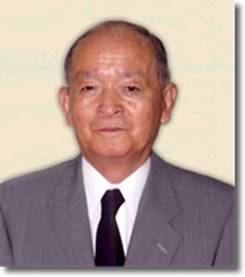 We have lost another pioneer of our movement.
Dr. Kenjiro Yokoro was a founding member of the Japanese Physicians for the Prevention of Nuclear War. In the summer of 1985, he agreed to serve as general secretary of JPPNW. Little did he know that a few short months later he’d be thrust onto the world stage when IPPNW won the Nobel Peace Prize. Read more…
Hundreds march for peace in Vienna, honor global peacemakers
by Dr. Michael Schober, IPPNW-Austria
Several hundred people from many faiths, cultures and nationalities march ed on 8 October in Vienna, Austria to honor the “Peace Heroes” of the past and present and to bring attention to the peace work of many people worldwide. Read more…
The United Nations votes to start negotiations to ban the bomb
[This article was originally published on November 1, 2016 in The Nation.]
by Alice Slater
In a historic vote on October 27 at the United Nations Committee for Disarmament, what has long seemed to be hopelessly clogged institutional machinery for abolishing nuclear weapons was upended when 123 nations voted to move forward with negotiations in 2017 to prohibit and ban nuclear weapons just as the world has already done for biological and chemical weapons. Read more…
Under Pressure
For once, the United States, France and the United Kingdom are in agreement with Russia: plans to negotiate a nuclear weapons ban need to be stopped. Before the vote last Thursday in the UN First Committee, they pulled out all the stops to pressurise other states to vote against or abstain on a draft resolution co-sponsored by 57 states for a conference to be convened in 2017 to negotiate a nuclear ban. In private conversations with delegates, the International Campaign for the Abolition of Nuclear weapons (ICAN) heard of several instances of applied and implied pressure on states, also receiving a leaked document from the US to NATO allies. Several states simply left the room rather than vote the “wrong” way. Read more…

 Bimal Khadka
 Bjorn Hilt
 Charles K. Johnson
 Gunnar Westberg
 IPPNW
IPPNW John Loretz
 Lawrence Wittner
 Maria Valenti
 mollymcgint
 Sue Wareham
 Tilman Ruff
 Tim Wright
 Xanthe Hall


 IPPNW peace and health blog