“Let us be guided by past harms to prevent future ones”
The following remarks were delivered by Molly McGinty, IPPNW Program Director, at the International Meeting on Victim Assistance and Environmental Remediation at the UN Headquarters on September 1, 2026.
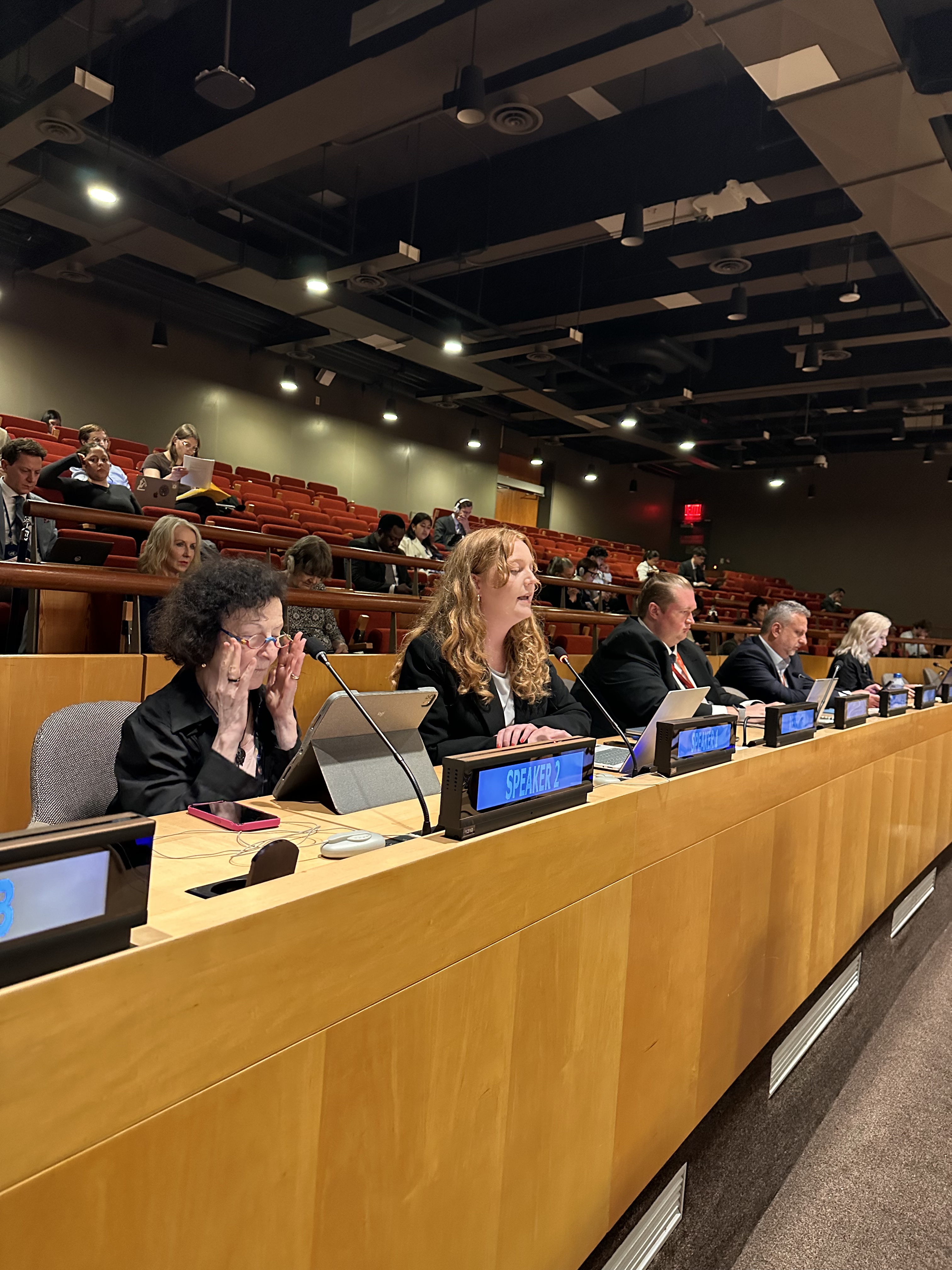
Distinguished Chair, delegates, and colleagues,
Since Trinity, the first nuclear detonation conducted 81 years ago in the desert of the Tularosa Basin of present-day New Mexico, nuclear weapons have had devastating and lasting impacts on human and planetary health. The entire nuclear weapons “life cycle” has imposed severe, long-term environmental costs and human suffering on innocent communities – spanning everything from the mining and milling of uranium and the storage of warheads to the constant threat of their use and their testing in the atmosphere, underwater, and underground.
In the name of national security, more than 2,000 nuclear weapons were detonated near people’s homes, hospitals, schools, places of worship, water supplies, fisheries, and farmland, without the consent of downwind communities.
Read more…20 years old: The Semey Treaty
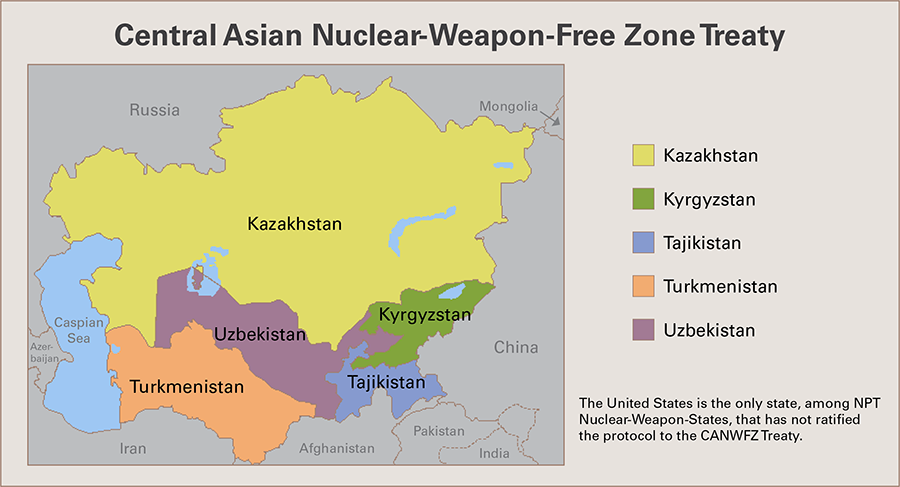
The Treaty on a Nuclear Weapon Free Zone in Central Asia (CANWFZ) is twenty years old on 8 September 2026. Despite being lauded by Kazachstan as: “ensuring security not only in Central Asia, but also beyond its borders”, the treaty’s protocol has still not been ratified by the United States. What does this treaty entail and why is it important?
Read more…What makes this culture of humanitarian disarmament distinctive
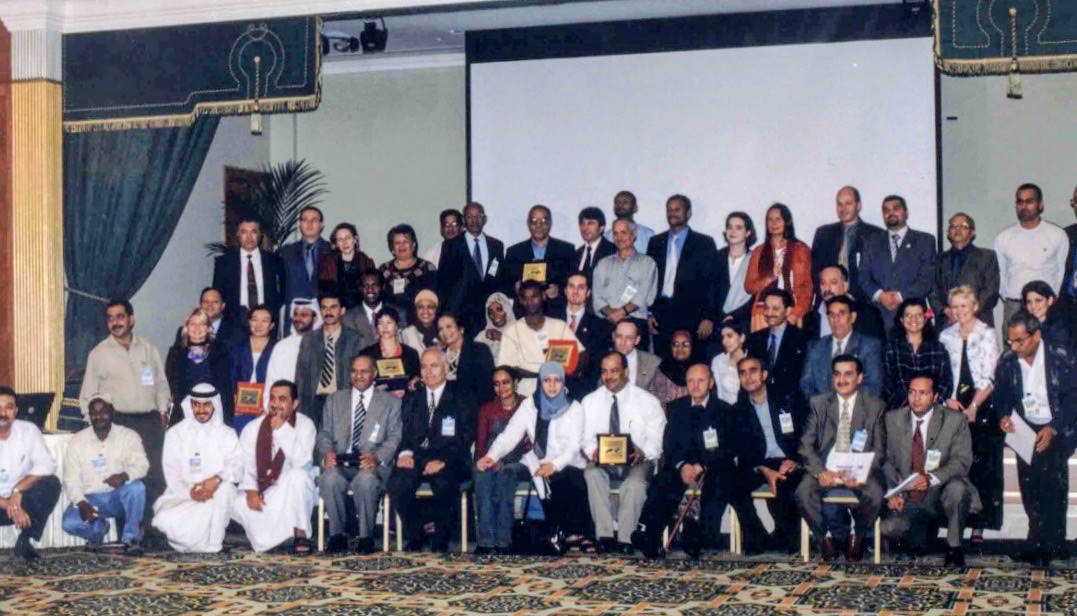
In my previous article, I introduced the idea of a culture of humanitarian disarmament. This article examines what makes that culture distinctive and why it matters for campaigners and public professionals.
Humanitarian disarmament is often described through treaties, legal obligations, technical measures, and operational activities. Yet these mechanisms depend on something deeper. A prohibition becomes durable when people understand why it exists, remember the harm it addresses, teach its values, and expect others to respect it.
Read more…The nuclear order can still be rebuilt
[The following letter to the editor, by IPPNW co-founder Dr. James Muller and Dr. Henry Abraham, was published in The Washington Post on 19 August.]
It was with a glimmer of hope that we read that the world is sleepwalking into a new nuclear arms race in the Aug. 17 editorial “The old global nuclear order is dead. What comes next?” The wake-up call is welcome, but the editorial advocated only limited attempts to confront the increasing danger. Incremental arms-control measures, while useful, are not an adequate response to the escalating nuclear threat.
Another danger not mentioned in the editorial is the use of artificial intelligence in nuclear weapons systems, which increases the risk of miscalculation. Ironically, Americans’ safety depends on the quality of the AI systems used in the nuclear weapons systems of North Korea and other adversaries.
As the editorial noted, in the 1980s President Ronald Reagan and Soviet leader Mikhail Gorbachev came tantalizingly close to agreeing to eliminate all nuclear weapons. Their attempt was made possible by organized public opinion in favor of the abolition of all nuclear weapons. A mass movement is needed again. One hundred nations — a majority of the world’s countries — have now signed or joined the Treaty on the Prohibition of Nuclear Weapons, which is the only long-term solution to the nuclear dilemma.
In a world in which nuclear weapons were outlawed, the United States, with its excellent conventional forces and protection offered by two oceans, would have little to fear. The first step toward safety, as advocated by the editorial, is for the public to awaken from its slumber and find its voice.
Taking Forward Multilateral Nuclear Disarmament Negotiations
What was the United Nations “Open-Ended Working Group”?

The United Nations first established an Open-Ended Working Group (OEWG) entitled “Taking forward multilateral nuclear disarmament negotiations” in 2012. This UN subsidiary body was characterised by its open and interactive format, making space for deeper participation by members states, experts and civil society organisations.
Read more…Ten years on: History in the making
Landmark report recommends to the UN to negotiate a nuclearban

On 19 August 2016 a UN Open-Ended Working Group (OEWG) fell into disarray, as one country insisted on taking a vote. The translators had gone home and the delegates had to move into a smaller room as the larger one was no longer available. The clock had been stopped, to allow the OEWG to reach a conclusion. I myself had cancelled my flight to stay to the end. This is what happened.
Read more…How society can build the culture of humanitarian disarmament

Humanitarian disarmament is often described through treaties, legal obligations, technical measures, and field operations. Yet through decades of volunteer‑driven campaigning, I learned that behind every treaty, every campaign, and every clearance activity lies something deeper: a culture.
A culture of humanitarian disarmament exists when humanitarian values become shared narratives, collective memory, social expectations, and community practices that reject weapons that cause unacceptable harm and affirm the protection of human life and human security.
Read more…Thirty years on: The Canberra Commission
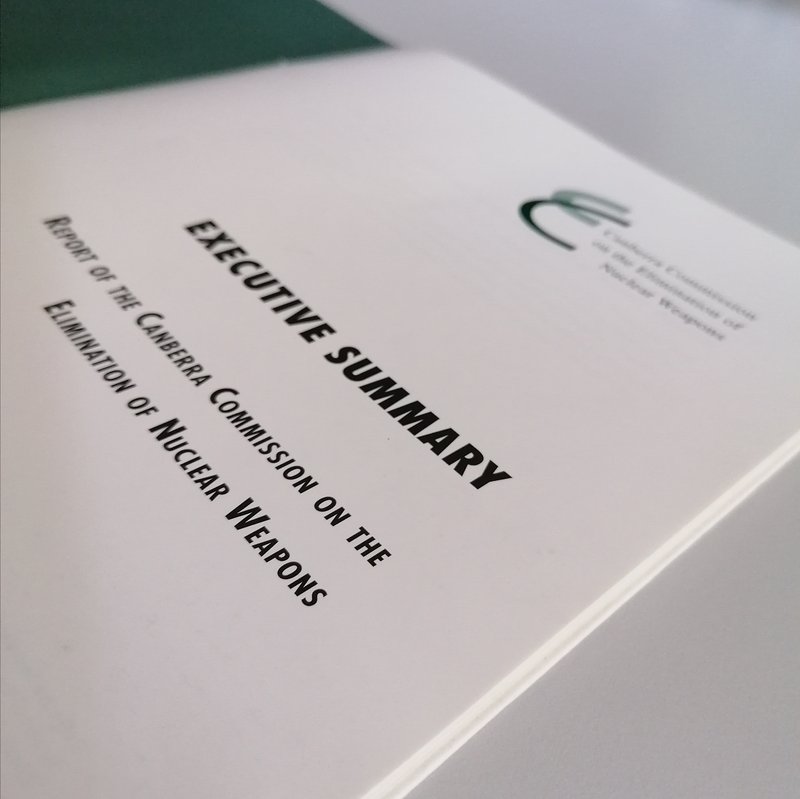
In its report, presented on August 14, 1996, the Canberra Commission on the Elimination of Nuclear Weapons examined nuclear deterrence. It also proposed a series of concrete steps to immediately begin the process of nuclear disarmament. The report received significant international attention. Thirty years after its publication, opinions on its conclusions remain divided. None of the recommendations have been implemented.
Read more…When physicians diagnose war: Rudolf Virchow and the public health logic of humanitarian disarmament

Rudolf Virchow’s story first drew my attention through an unexpected detail: as a young man preparing for the clergy, he was told that his voice was not strong enough for preaching. The redirection seemed small, almost incidental, yet it changed the course of his life. I found myself returning to that moment, the quiet disappointment, the reconsideration, and the humility of accepting a limitation, and reviewing his profile and achievements with greater care.
The voice that could not carry in a pulpit would later speak with unusual clarity about the forces that shape human suffering. In that transformation lies a human story: a physician whose authority came not from volume, but from evidence, moral seriousness, and the courage to confront the social conditions that produce illness.
Read more…The following remarks were delivered by Dr. Dirk Hoogenkamp at the Hiroshima Monument in Groningen, Netherlands on August 6, 2026.
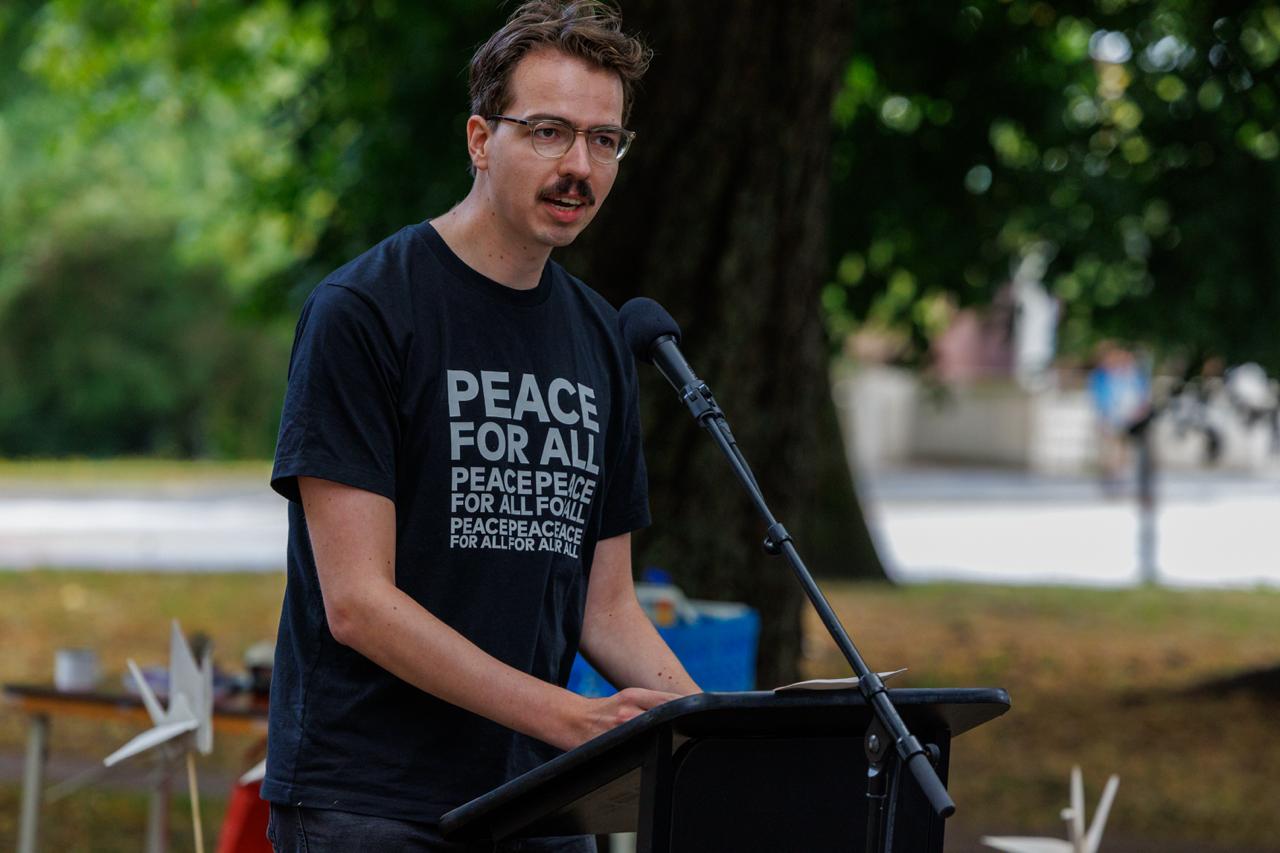
I am Dirk Hoogenkamp, a physician and a board member of the NVMP-Doctors for Peace, the Dutch affiliate of IPPNW. And today I would like to talk to you about a small tree on my balcony.
That might sound strange, but there is a reason for it. It is currently still a very small seedling, too fragile to take with me today, but it is a special tree. It is a Ginkgo biloba, a giant that can live for centuries. I picked up the tree’s seed from the sidewalk when I was in Hiroshima last September. I was standing just 1,130 meters from the hypocenter, the place where the atomic bomb was detonated at 8:15, today 81 years ago. The tree burned to the ground, the temple behind it collapsed, and the priest and his family perished. The temple would not be rebuilt for fifty years. But after a few years, the scorched tree suddenly grew green leaves again.
Read more…
 Bimal Khadka
 Bjorn Hilt
 Charles K. Johnson
 Dr. Ghassan Shahrour
 Gunnar Westberg
 IPPNW
IPPNW John Loretz
 Lawrence Wittner
 Maria Valenti
 mollymcgint
 Sue Wareham
 Tilman Ruff
 Tim Wright
 Xanthe Hall