Blueprint for nuclear disarmament: the first meeting of the nuclear weapons ban treaty
by Bimal Khadka
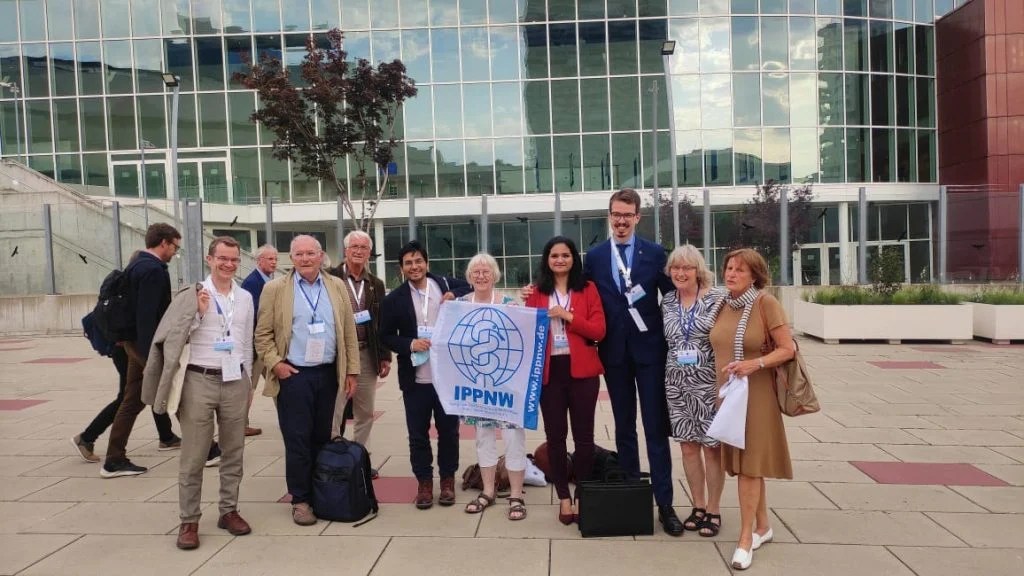
For almost three years, fighting COVID in an emergency department has left me with regular feelings of burnout. That’s why it was such a pleasure for me to join and witness history at a week of anti-nuclear events surrounding the first ever meeting of state parties to the Treaty on the Prohibition of Nuclear Weapons (TPNW), from 18 to 23 June, representing International Physicians for the Prevention of the Nuclear War (IPPNW). I was so generously hosted by Jana Reichhold, Austrian IPPNW medical student in Vienna, and we had such fun despite a hectic schedule of workshops, meetings, seminars, and a bike tour. My first time attending a United Nations conference was unforgettable, and I promise it will not be the last.
Read more…For many years, substantial military operations have been conducted by mercenaries, ranging from professional soldiers hired to fight wars for European potentates in the 14thcentury to the combat forces of Blackwater, a private company employed by the US government to undertake violent activities in the “War on Terror” of the early 21st century.
Today, the Wagner Group, a shadowy Russian company engaged in the thriving mercenary business, is perhaps the leading private enterprise partner in global military ventures. Employing as many as 10,000 military personnel, it is headquartered in the Russian town of Molkino, right beside a military base run by the GRU, Russia’s military intelligence agency. It relies heavily on the Russian government’s approval and military infrastructure for its far-flung operations.
Read more…Youth Statement to the First Meeting of States Parties to the Treaty on the Prohibition of Nuclear Weapons
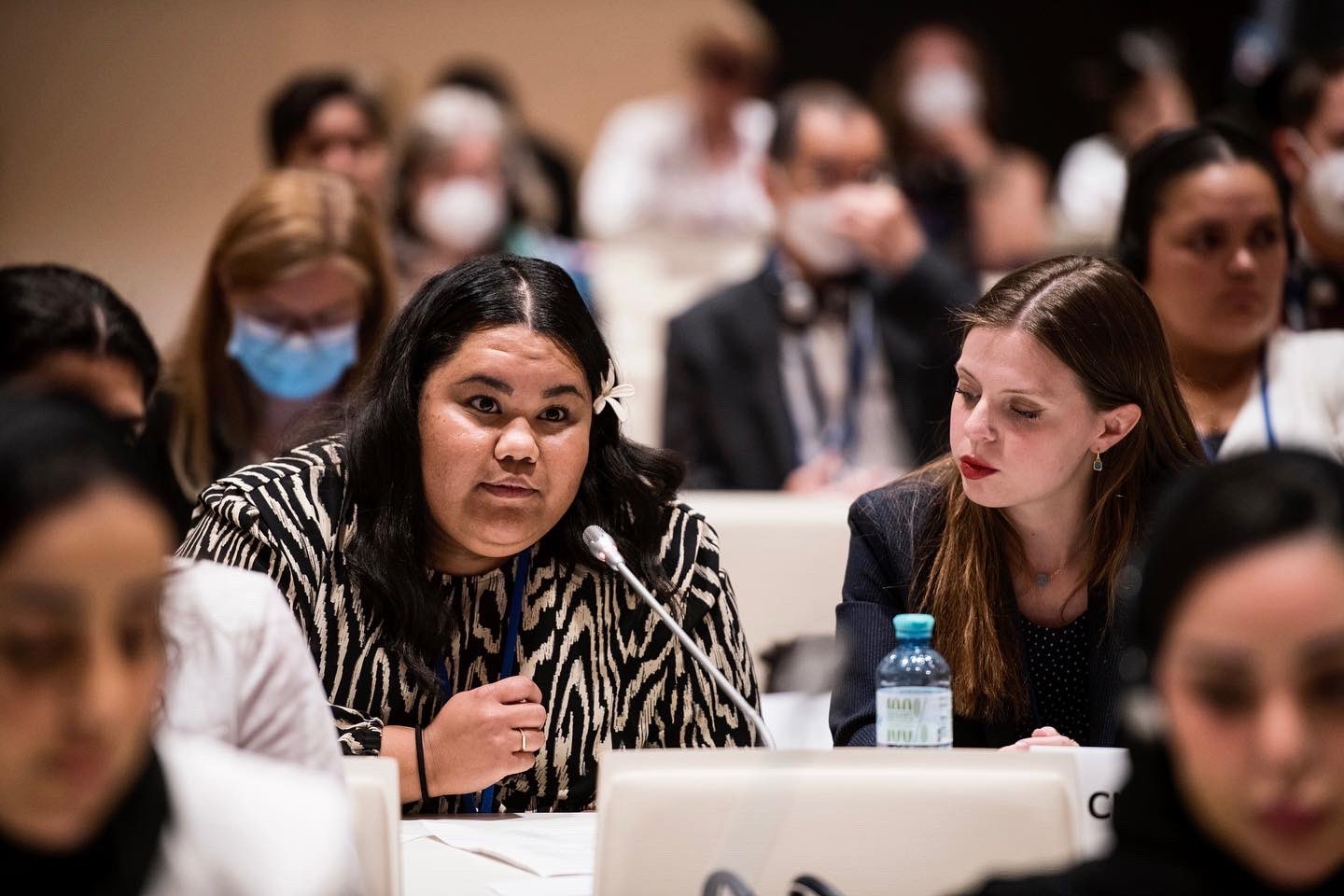
Delivered by Alice Filiberto (Middle East Treaty Organisation) and Marcina Langrine (Reverse the Trend), June 22, 2022, Vienna
President and Esteemed Delegates of the States Parties to the Treaty on the Prohibition of Nuclear Weapons (TPNW),
As we stand before you today, we recognise that we are in a room full of friends and changemakers from every corner of the world united towards the goal of a world without nuclear weapons. The diversity of backgrounds from which we all have gathered to work towards a collective goal is inspiring, reassuring, and hopeful. The global community is taking strides to ensure that a greater diversity of communities are represented in conversations and efforts towards establishing a world free of nuclear weapons.
Read more…Evidence is the foundation of the TPNW
IPPNW statement to the First Meeting of States Parties on the importance of establishing a scientific advisory panel
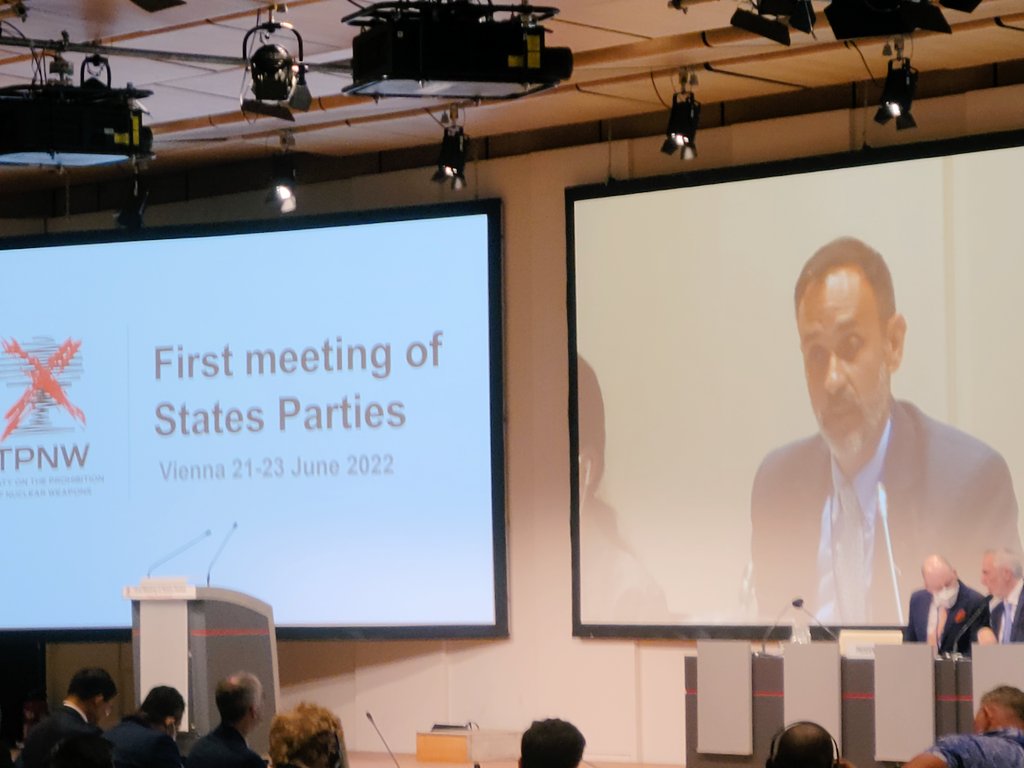
Delivered by Co-President Carlos Umaña, June 23, 2022, Vienna
Mr. President, distinguished delegates, fellow civil society representatives,
My name is Carlos Umaña and I am co-President of the International Physicians for the Prevention of Nuclear War and member of ICAN, the International Campaign to Abolish Nuclear Weapons. Thank you for the opportunity to speak in support of a proposed Scientific Advisory Panel.
Read more…Gun Violence: A Public Health Crisis
The 8th Biennial Meeting of States of the UN Programme of Action (UN PoA) on Small Arms and Light Weapons convened today at the UN headquarters in New York City. This 2001 international agreement’s overarching goal was to reduce human suffering. Over two decades later, the goal has not been realized. Health effects of the horrific gun violence that continues worldwide ranges from death to physical injury to mental and emotional consequences that can last a lifetime.
Read more…Russia’s justifications for invasion are not persuasive
The Russian government’s justifications for its war in Ukraine―the largest, most destructive military operation in Europe since World War II―are not persuasive.
Although Russian President Vladimir Putin’s primary argument in defense of the Russian invasion has been the threat of Ukraine joining NATO, that action, had it occurred, would have been perfectly legitimate under international law. The UN Charter, which is an instrument of international law, does not ban membership in military alliances. And, in fact, a great many such alliances are in existence. Russia currently heads up the Collective Security Treaty Organization, a military alliance comprised of six nations in Eastern Europe and Central Asia.
Read more…by Kati Juva, PSR-Finland

Finland for decades has regarded itself as part of Western society, with shared values such as human rights and democracy. Step by step we have come loose from the sphere of interest of Russia and the former Soviet Union, first by ending our Agreement of Friendship, Co-operation and Mutual Assistance in 1991, when the Soviet Union came to its end, then by joining the European Union and many other European organizations starting in 1995.
Read more…Imperial nostalgia and its perils
Although great empires rank among the most powerful engines of world history, they are also among the most dangerous, especially as they brood over their decline.
Read more…
Joint International Health Statement for the 1st Meeting of States Parties of the Treaty on the Prohibition of Nuclear Weapons
Representing physicians, nurses, public health professionals, and medical students worldwide, we speak with a united voice on the urgent need to eliminate nuclear weapons as a matter of global health and survival. Updated evidence on the catastrophic consequences of any use of nuclear weapons, the acute and growing danger of their use, and the impossibility of any effective humanitarian and health response following nuclear explosions on populations, should underpin the work of the upcoming 1st Meeting of States Parties (1MSP) of the Treaty on the Prohibition of Nuclear Weapons (TPNW).
Read more…Although the rulers of the world’s major military and economic powers have repeatedly claimed that they are making their nations great again, their policies have not resulted in widespread happiness among their citizens.
That conclusion emerges from the recent World Happiness Report-2022, published by the UN Sustainable Development Solutions Network. Based on Gallup World Polls conducted from 2019 through 2021, this extensive study provides a revealing look at how roughly 150,000 respondents in 146 countries rated their own happiness. The study’s findings underscore the limited levels of happiness in the world’s major military-economic powers.
Read more…


 IPPNW peace and health blog