[On 13 April, IPPNW co-president Ira Helfand was awarded the prestigious “Gandhi, King, Ikeda Community Builders’ Prize” from Morehouse College. The award was given “to recognize and pay tribute to [his] passionate and nonviolent struggle to prevent humanity from falling victim to the horrors of nuclear disaster.” Dr. Helfand gave the following address at the award ceremony in in Atlanta, Georgia.]
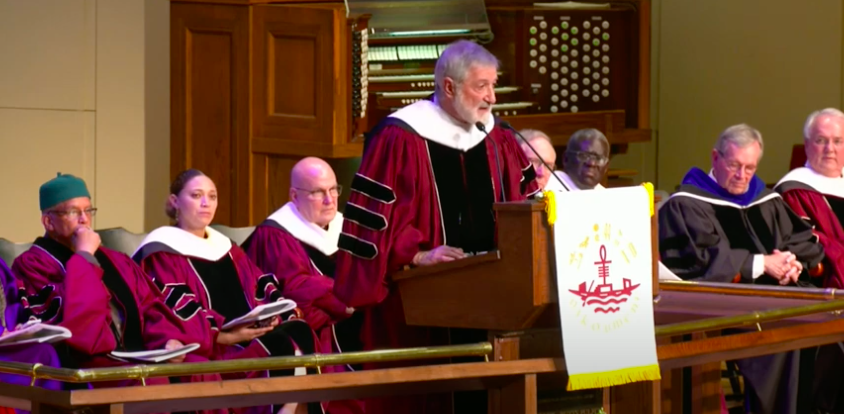
President Thomas, Dean Carter, thank you for the great honor you have bestowed on me today with this Award.
You know, in past years Morehouse has presented this Award to icons of the Civil Rights Movement, to statesmen and world leaders. So this year’s choice is a bit of an anomaly, a bit of an outlier. I am none of these things. I’m just a medical doctor who has spent most of the last 45 years working in the ER of a community hospital and in a small urgent care who tried to raise my voice, as a doctor, about the greatest threat to human health and survival in the world today.
Read more…From nationalist isolation to global citizenship
For many years, a portion of the world public has sought to wall itself off from people abroad by hiding behind national borders.
In the United States, this tendency became an important element in American politics. During the 1920s and 1930s, the Republican Party embraced isolationism and spurned the new League of Nations. Indeed, for a time, President Warren G. Harding’s State Department refused to even acknowledge correspondence from the League. Republican leaders also played a key role in the America First Committee, founded in 1940 to oppose US aid to Britain in its lonely resistance to the fascist military onslaught. Admittedly, after the Japanese attack on Pearl Harbor in December 1941, the GOP shifted course, backing US participation in World War II and the development of the United Nations. In the postwar years, however, this internationalist approach gradually dissipated, especially as the Republican Party lurched rightward. Increasingly, the GOP portrayed international treaties and foreigners as threats to “the American way of life.”
Read more…Why do we still have nuclear weapons?

The danger of nuclear war is growing. With the aid of the UN Treaty on the Prohibition of Nuclear Weapons, a chorus of voices delegitimising nuclear weapons may be helping.
Two months ago, the Bulletin of the Atomic Scientists moved the hands of the Doomsday Clock forward, largely due to Russia’s invasion of Ukraine and the increased risk of nuclear escalation, which by accident, intention, or miscalculation could spin out of anyone’s control. The Clock now stands at 90 seconds to midnight—the closest to global catastrophe it has ever been. Knocking at Doomsday’s door is an alarming place to be, no less than 38 years after Ronald Reagan and Mikhail Gorbachev, at their Geneva summit in 1985, agreed that “A nuclear war cannot be won and must never be fought.”
Read more…Uranium mining harms people and the environment
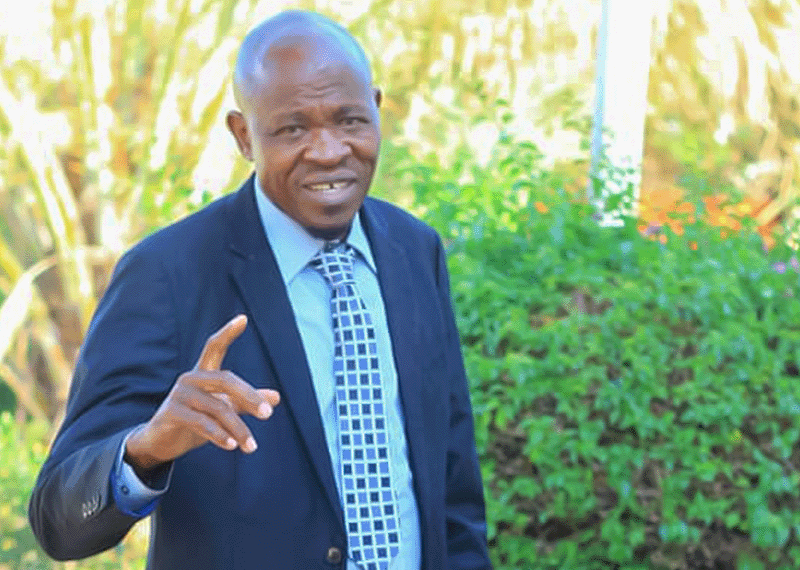
[Anthony Bonifasi Lyamunda received the Nuclear Free Future Award in the resistance category. He lives in Dodoma, the Capital City of Tanzania and he is the founder of the NGO CESOPE. His organization has long supported the people of Bahi, an administrative district very close to Tanzania´s capital Dodoma and the place where he grew up. Bahi is among the places in Tanzania that have known uranium deposits. Patrick Schukalla, an advisor with IPPNW-Germany on energy issues and climate, spoke with the environmental justice activist who will participate at the IPPNW World Congress in Mombasa, Kenya in April.]
You won the NFF Award in the resistance category, congratulations!
I would like to thank the Nuclear Free Future Foundation for considering me and my organization for this award. I see it not only as recognition of my personal work but of the work of many Tanzanian and African activists who struggle against uranium mining on our continent and beyond. Such recognition of our struggle will motivate the communities we are working with to continue to defend the environment against uranium mining and consequently stopping the proliferation of nuclear power in the world, and enable the goal of a nuclear-free future.
Read more…Ocean discharge is the worst plan for Fukushima waste water

As soon as within a month or two, Japan could begin dumping into the Pacific Ocean 1.3 million tons of treated but still radioactively contaminated wastewater from the stricken Fukushima Daichi nuclear plant. Construction of the kilometer long undersea discharge tunnel and a complex of pipes feeding it commenced last August.
This cheap and dirty approach of “out of sight out of mind” and “dilution is the solution to pollution” belongs in a past century. It ignores the significant transboundary, transgenerational and human rights issues involved in this planned radioactive dumping, projected to continue over the next 40 years.
Read more…India could be more influential than it has chosen to be
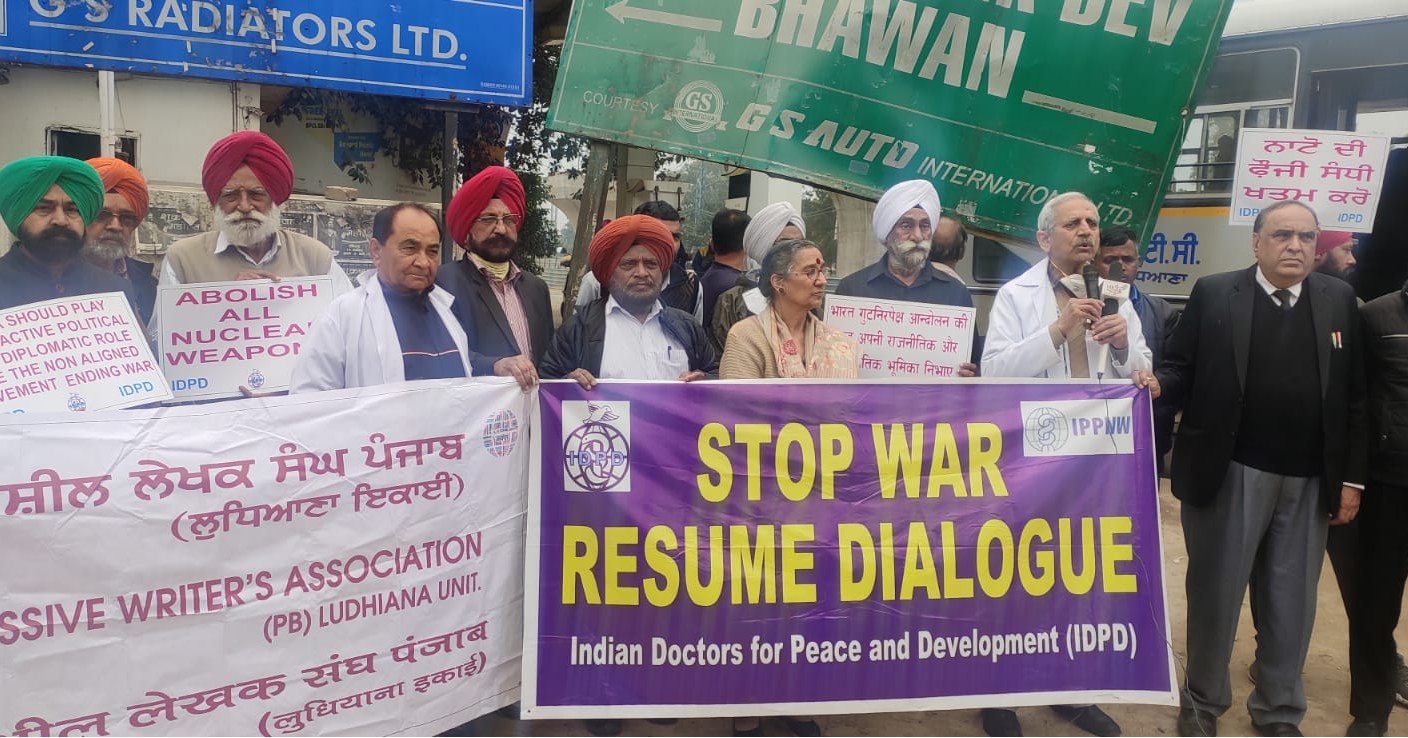
[IPPNW co-president Tilman Ruff sent the following message to Indian Physicians for Peace and Development (IDPD), which will hold its national conference in New Delhi from 11-13 March.]
IDPD is a vital organisation in India, in South Asia, in IPPNW, in the world. In nuclear-armed India, within a few months to become the world’s most populous nation, with rich multicultural and multireligious diversity and wisdom, the tradition of Gandhi, and strong and active civil society movements, you in IDPD serve as a vital evidence-based voice of reason and conscience of the healing professions in one of the world’s most hazardous nuclear flashpoints.
Read more…Whose red lines?

In the conflict-ridden realm of international relations, certain terms are particularly useful, and one of them is “Red Lines.” Derived from the concept of a “line in the sand,” first employed in antiquity, the term “Red Lines” appears to have emerged in the 1970s to denote what one nation regards as unacceptable from other nations. In short, it is an implicit threat.
Read more…
One year on since the beginning of the war in Ukraine, we call once again for peace.
The danger of a nuclear war is escalating every day this war continues. Any and all nuclear threats, explicit or implicit, should cease immediately. The use of nuclear weapons would be a crime against humanity and could easily lead to full-scale nuclear war.
We once again call on all nuclear-armed states to declare that nuclear weapons will not be used. It is paramount that we step back from the brink of nuclear war, where even an accident or use of tactical nuclear weapons would be a disaster of enormous proportions and could spark an even greater nuclear conflagration. As a second step, we call on nuclear-armed states to de-alert their nuclear forces to prevent the risk of a launch due to a false alarm and allow more time for communication between adversaries.
Read more…The Ukraine war and international law
The Ukraine War has provided a challenging time for the nations of the world and, particularly, for international law.
Since antiquity, far-sighted thinkers have worked on developing rules of behavior among nations in connection with war, diplomacy, economic relations, human rights, international crime, global communications, and the environment. Defined as international law, this “law of nations” is based on treaties or, in some cases, international custom. Some of the best-known of these international legal norms are outlined in the United Nations Charter, the Universal Declaration of Human Rights, and the Geneva Conventions.
Read more…90 seconds to midnight: what the Doomsday Clock means in 2023
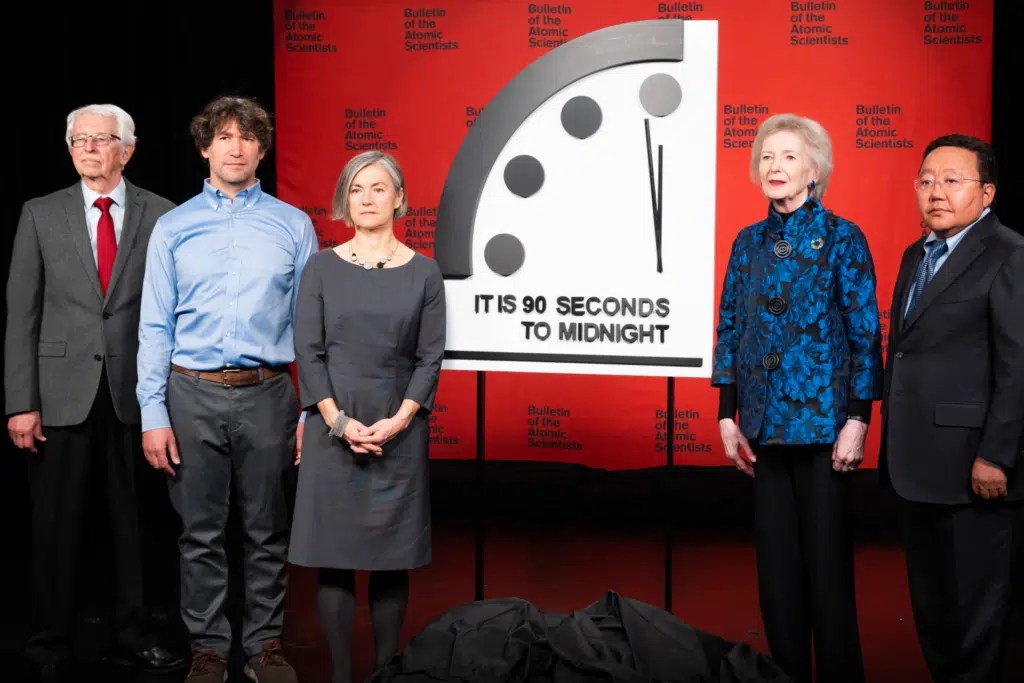
We are now at the most dangerous moment in history. We face multiple existential crises that are not under control, but growing more acute, while failures of leadership become more damning.
We have no time to lose.
This week, in Washington DC, the international scientific and policy experts of the Science and Security Board of the Bulletin of the Atomic Scientists announced that they were moving the hands of the iconic Doomsday Clock forward from 100 to 90 seconds to midnight, the closest to global catastrophe it has ever been
Read more…
 Bimal Khadka
 Bjorn Hilt
 Charles K. Johnson
 Gunnar Westberg
 IPPNW
IPPNW John Loretz
 Lawrence Wittner
 Maria Valenti
 mollymcgint
 Sue Wareham
 Tilman Ruff
 Tim Wright
 Xanthe Hall


 IPPNW peace and health blog