We need to re-motivate and reconnect people
An interview with student reps Stella Ziegler and Walusungu Mtonga

[Stella Ziegler of Germany and Walusungu Mtonga of Zambia were elected as IPPNW’s new International Student Representatives (ISRs) at the 23rd World Congress in Mombasa, Kenya. Stella is a medical student at the faculty of Charité Berlin, and is active with the IPPNW-Germany student chapter. Walusungu is in his final year of clinical clerkship at the University of Zambia, pursuing a Bachelor’s degree in Medicine and General Surgery. He is the son of former IPPNW co-president, the late Robert Mtonga.]
Read more…A conversation with filmmaker Robert Frye

[Robert E. Frye is an Emmy Award-winning producer and director of news and documentaries. His most recent film, “In Search of Resolution,” is the third in a series on the continuing challenge of dealing with nuclear weapons. It was preceded by “In My Lifetime” in 2013 and “The Nuclear Requiem” in 2016. Earlier in his career, Mr. Frye produced broadcasts at ABC News, the Canadian Broadcasting Corporation, and Public Television in the United States. He was executive producer of ABC World News. Tonight with Peter Jennings, executive producer of Good Morning America, and the creator of World News This Morning. He founded his own independent production company in 1988.
Following are edited excerpts from a conversation that can be seen in its entirety on IPPNW’s YouTube channel.]
This is your third film about the dangers posed by nuclear weapons. What compelled you to take up this issue more than a decade ago, and what keeps you at it?
Well, I think what keeps me at it is this story isn’t over. It continues and is much more complex in many ways today, in part because of the war in Ukraine. I think it’s a challenge for all of us to understand the dangers that nuclear weapons themselves create and to change the dynamic, both in terms of their use and also in terms of the attitudes of people around the world.
Read more…by Olga Mironova
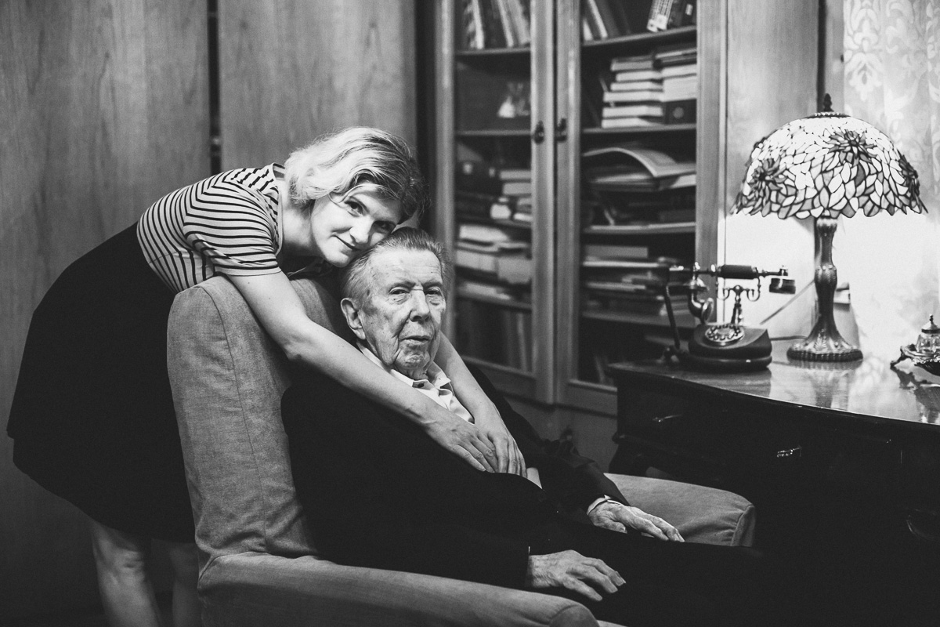
June 10 is the date of birth of one of the founders of IPPNW, Dr. Eugene Chazov. He was always the example of kindness, courage, professionalism and wisdom. Dr. Chazov was equally open and friendly to his colleagues, patients and important politicians, showing that there are no borders, when you are struggling for peace and health worldwide.
So, his family got together in the morning of June 10. But I was already meeting my friend and colleague from Boston, the US, Joe Hodgkin, board member of GBSPR. Just after arriving from the airport, we met each other and headed to the dinner with my Baku colleagues to honor my grandfather’s memory and legacy.
The US and Russian students from IPPNW have monthly calls together to maintain the sense of unity and get to know each other better. The Russian students sometimes feel shy, while talking to foreigners in English, but these online meetings help a lot. And matter a lot. The US students and young doctors learn something new about medical system, advocacy work and traditions in Russia. The most magical thing during the Baku visit was to see Joe Hodgkin and me on the same screen, as we haven’t seen each other in person since Dr. Hodgkin’s first visit to Russia back in 2021.
Hope that this post is going to be the opening of the new category of posts written by IPPNW co-presidents each month and giving some updates from all around the world.
#ippnwcopresidents
#copresidentstalking
#ippnwaroundtheworld
#ippnwupdates
#IPPNWmonthly
Remembering Dr. Chazov in Baku
by Joe Hodgkin
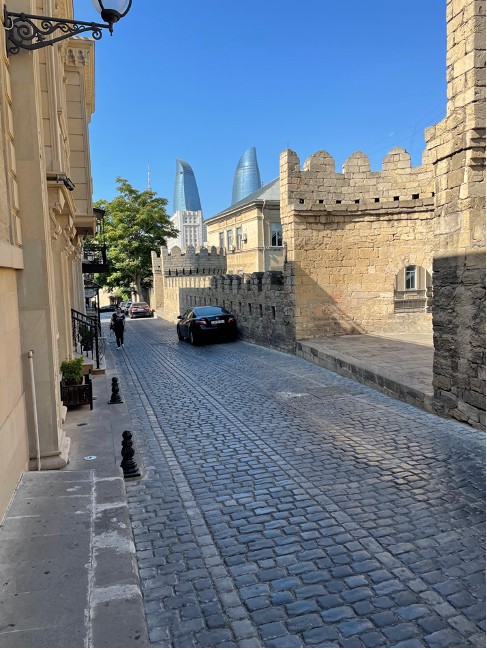
Irregularly shaped towers of glass and steel rise in the distance behind the crenellated yellow stone walls of the medieval old city. These are the Flame Towers, the futuristic landmark and symbol of Baku, Azerbaijan. Their design alludes to the country’s history as a place where ancient Zoroastrians would come to worship the flames that erupted from the landscape – now known to be due to ignition of oil and natural gas deposits. I traveled to Azerbaijan earlier this month, where I met with my friend and colleague, Olga Mironova, cardiologist and co-president of IPPNW, and we remembered the legacy of her grandfather, Yevgeniy Chazov.
Read more…[Editor’s note: More than 100 medical journals, including the Lancet, the British Medical Journal, the New England Journal of Medicine, and JAMA have issued a joint call for urgent steps to decrease the growing danger of nuclear war and to move rapidly to the elimination of nuclear weapons. At a time of expanded fighting in Ukraine and increased tensions in Korea, leaders of the global health community underscore that any use of nuclear weapons would be catastrophic for humanity.
The unprecedented call to action comes in the form of an editorial co-authored by the editors of 11 of the leading medical and health journals, the World Association of Medical Editors, and leaders of the International Physicians for the Prevention of Nuclear War (IPPNW). The editorial is being released this week in conjunction with the start of the UN Nuclear Non-Proliferation Treaty (NPT) Preparatory Committee Meeting and the 78th anniversary of the bombing of Hiroshima.]
Reducing the risks of nuclear war—the role of health professionals
In January, 2023, the Science and Security Board of the Bulletin of the Atomic Scientists moved the hands of the Doomsday Clock forward to 90 s before midnight, reflecting the growing risk of nuclear war.1 In August, 2022, the UN Secretary-General António Guterres warned that the world is now in “a time of nuclear danger not seen since the height of the Cold War.2 The danger has been underlined by growing tensions between many nuclear armed states.1,3 As editors of health and medical journals worldwide, we call on health professionals to alert the public and our leaders to this major danger to public health and the essential life support systems of the planet—and urge action to prevent it.
Read more…[The following presentation to the NPT Working Group was delivered by European regional Vice President Dr. Angelika Claussen on behalf of IPPNW on 25 July in Vienna.]
Changes in structure and procedure may improve NPT outcomes, but a clear focus on the goals and purposes of the Treaty is essential for progress
Thank you for the opportunity to speak to you during this Working Group session in preparation for the NPT PrepCom next week. My name is Dr. Angelika Claussen and I am the Vice-President for Europe of International Physicians for the Prevention of Nuclear War (IPPNW). I am speaking on behalf of our IPPNW federation, representing thousands of medical professionals and 55 national affiliates worldwide.
The focus of this week’s work is on structural and procedural changes that might improve outcomes in future NPT Preparatory Committee meetings and Review Conferences. There are excellent suggestions put forth by our colleagues at WILPF and within your own discussions.
Read more…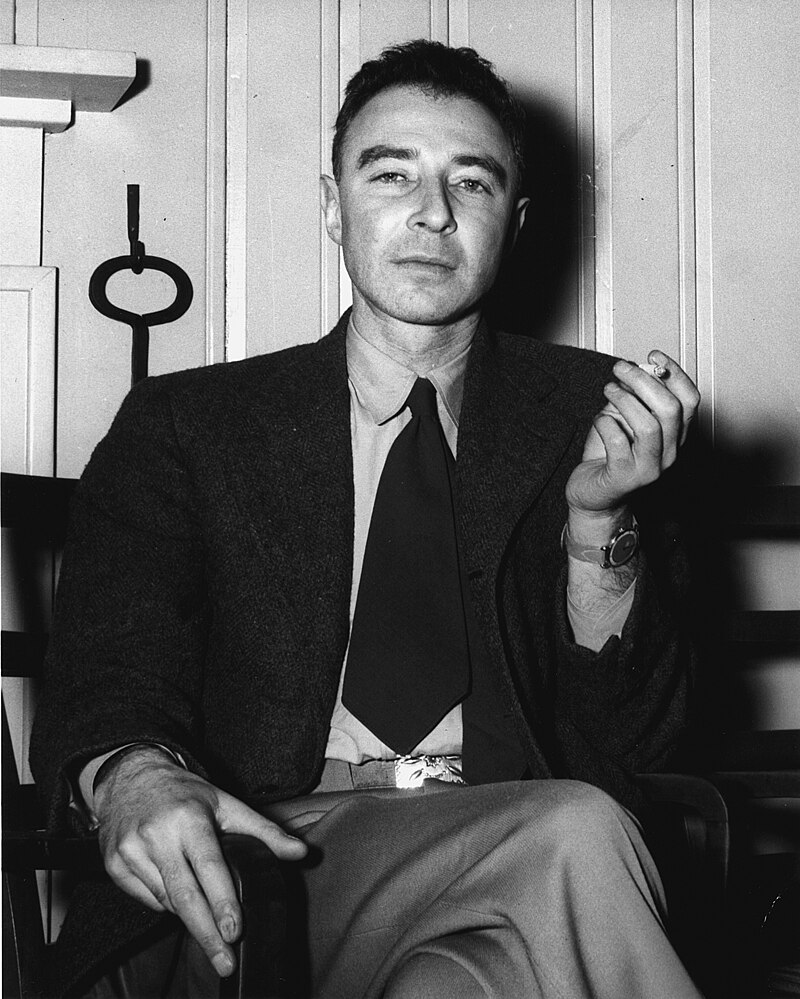
The Oppenheimer film is a significant artistic work, and by all accounts—including of Kai Bird, the surviving author of the detailed biographical book on which it is based—impressively historically accurate.
Like the whole nuclear age, explosively begun through the events depicted in the film and in which we are still vulnerably immersed up to our necks, the acute existential danger posed by the fruits of the Manhattan Project are daunting and can be overwhelming.
But without squarely facing the problem we have no chance of fixing it.
Read more…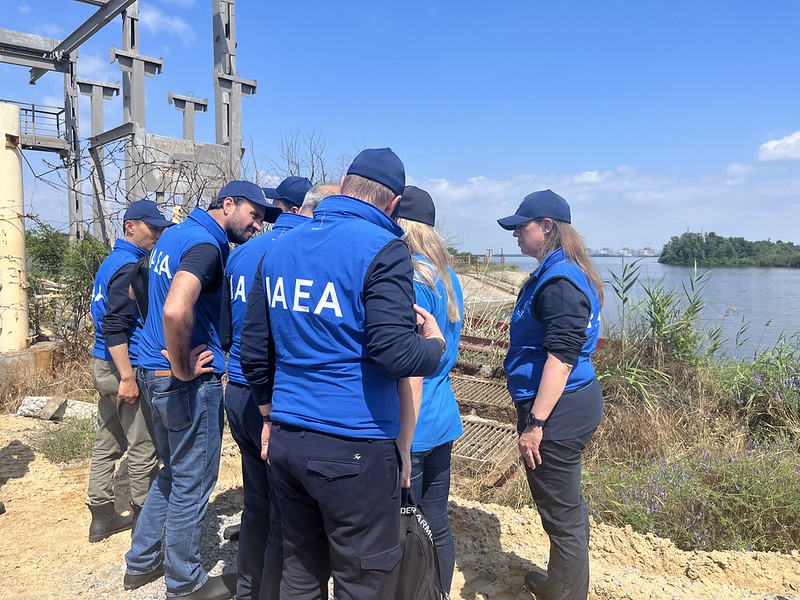
After the explosion at the Kakhovka Dam in Ukraine last month, many Ukrainians feared the Zaporizhzhia nuclear power plant could be next. These concerns have been heightened in recent weeks as both Ukraine and Russia have accused each other of planning an attack of the plant, which has been under Russian control since March 2022.
The International Atomic Energy Agency (IAEA) has not found any evidence of explosives in recent inspections, but also said it had yet to be granted access to all parts of the huge plant.
So, how serious are the risks of an attack at the power plant? And how disastrous would this be for Ukraine and the wider world?
Read more…J. Robert Oppenheimer’s tragedy―and ours
The July 21, 2023 theatrical release of the film Oppenheimer, focused on the life of a prominent American nuclear physicist, should help to remind us of how badly the development of modern weapons has played out for individuals and for all of humanity.
Based on the Pulitzer Prize-winning biography, American Prometheus, written by Kai Bird and the late Martin Sherwin, the film tells the story of the rise and fall of young J. Robert Oppenheimer, recruited by the US government during World War II to direct the construction and testing of the world’s first atomic bomb at Los Alamos, New Mexico. His success in these ventures was followed shortly thereafter by President Truman’s ordering the use of nuclear weapons to destroy Hiroshima and Nagasaki.
Read more…A life-changing emotional experience
by Walusungu Mtonga, InternatIonal Medical Student Representative
The Hiroshima ICAN Academy on Nuclear Weapons and Global Security is a program which aims to nurture global leaders who can make concrete contributions towards a more peaceful and secure world.
In 2022, 29 participants from 20 different countries took part in the academy which comprised a series of online learning and webinar sessions and a Hiroshima in-person session. I was privileged to have attended both.
Read more…
 Bimal Khadka
 Bjorn Hilt
 Charles K. Johnson
 Gunnar Westberg
 IPPNW
IPPNW John Loretz
 Lawrence Wittner
 Maria Valenti
 mollymcgint
 Sue Wareham
 Tilman Ruff
 Tim Wright
 Xanthe Hall


 IPPNW peace and health blog