The first days in New York City: Part 1
Written and translated by Stella Ziegler, IPPNW International Student Representative
This article was originally published on IPPNW Germany‘s blog in German following the ICAN Campaigners Meeting on 26 November. This is part-one of a three-part blog series by IPPNW Germany members.
The Second Meeting of States Parties (2MSP) has begun!
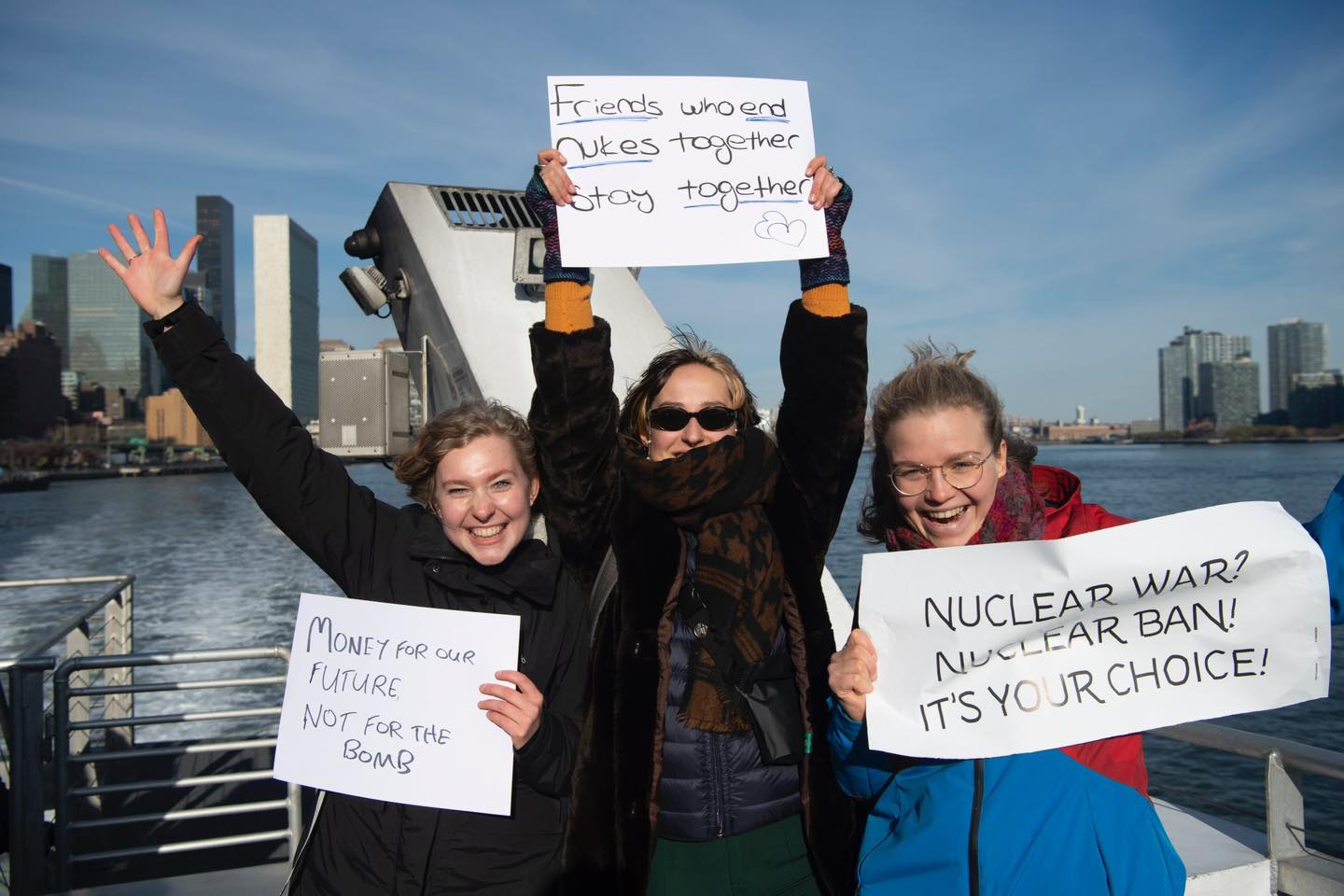
What does this mean and what is happening? In our first blog post, we want to give an overview of what is happening at the MSP, what the Treaty on the Prohibition of Nuclear Weapons (TPNW) is, and what IPPNW’s role will be there. In addition, there have already been a few actions worldwide to draw international attention to the conference.
Read more…What happened to Sweden’s leadership on climate and nuclear disarmament?
Newsweek has published an excellent opinion piece by Dr. Vendela Englund Burnett, chair of Swedish Physicians Against Nuclear Weapons, and Sverker Sörlin, professor of environmental history at the KTH Royal Institute of Technology in Stockholm. The authors criticize the current, right-wing Swedish government for “giving up Sweden’s long-standing leadership on decarbonization and disarmament and backtracking on our previous commitments….Sweden’s procrastination and backsliding on two of the biggest threats of our time are both morally offensive and depressingly ineffective.” Read the entire article here.
Replacing a disastrous war with a just peace in Ukraine

Although the unfolding humanitarian catastrophe in Gaza has captured the world’s horrified attention, the war in Ukraine has had even more terrible consequences. Grinding on for nearly two years, Russia’s massive military invasion of that country has taken hundreds of thousands of lives, created millions of refugees, wrecked Ukraine’s civilian infrastructure and economy, and consumed enormous financial resources from nations around the world.
And yet, despite the Ukraine War’s vast human and economic costs, there is no sign that it is abating. Russia and Ukraine are now bogged down in very bloody military stalemate, with about a fifth of Ukraine’s land occupied and annexed by Russia.
Read more…by Arun Mitra
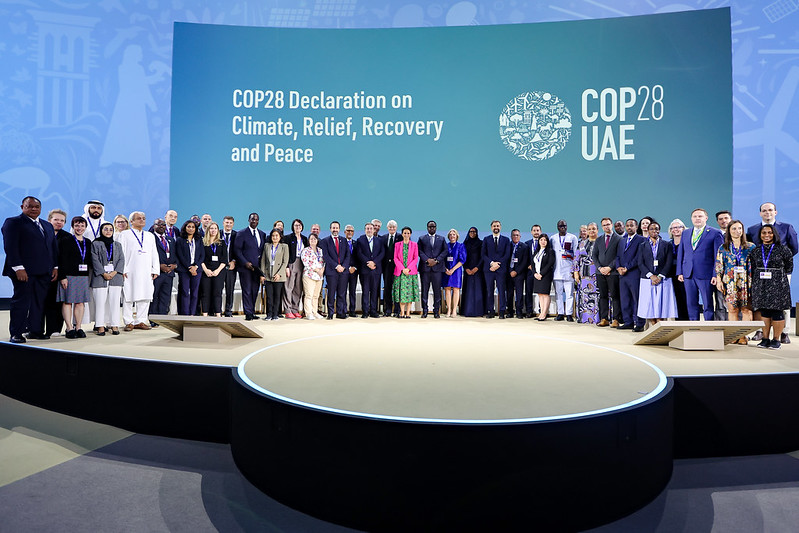
More than 80,000 participants from around the globe gathered in Dubai to deliberate on the strategies to mitigate the climate crisis which, if not checked, would be catastrophic. The event is happening at a time when just at a distance of 2,600 kilometers an appalling humanitarian crisis is unfolding as a result of bombing on the innocent civilians by the Israel in Gaza. This has killed over 16,000 Palestinians of which 70% are women and children and it has caused total destruction of the infrastructure making the people homeless.
Any military activity adds to the climate crisis. It is by now well known that the military activity is estimated to contribute 5.5% of global greenhouse gas emissions. In the recent years we have witnessed substantial increase in the military spending worldwide. Presently it is higher than ever. In 2022 world military expenditure rose to $2,240 billion out of which $82.9 billion were spent on nuclear weapons alone.
Read more…From this Meeting must emerge a clarion call to action that the world cannot ignore
IPPNW Statement to the second Meeting of States Parties to the Treaty on the Prohibition of Nuclear Weapons (TPNW)

Delivered by Dr. Sally Ndung’u, IPPNW Board Member, 29 November, 2023, United Nations Headquarters NYC
Dear President, Esteemed Delegates, and Colleagues,
My name is Dr. Sally Ndung’u, a medical doctor and public health specialist from Kenya. Thank you for this opportunity to speak on behalf of the International Physicians for the Prevention of Nuclear War. As a health professional myself, I have a moral and professional obligation to call for a safer, healthier future without nuclear weapons.
Read more…IPPNW calls for immediate humanitarian ceasefire in Israel-Palestine war

Our goal is the health, peace and security of all people, whether they live amid the terror and destruction of war in Ukraine, Syria, Sudan, Yemen, Myanmar, the Democratic Republic of Congo, Nagorno-Karabakh or anywhere else. We know it is civilians, especially women and children, who suffer most in war. Our profession has its roots deep in our ethical obligation to provide care to all on the basis of their shared humanity and their need.
We express our deep anguish at the ongoing violence which has so far resulted in the reported deaths of over 1,200 Israelis, and over 11,000 Palestinians in Gaza, almost 70% of them women and children, 40% of them children less than 15 years. In Gaza a child dies every 10 minutes.
Read more…by Dr. Arun Mitra

The atomic bombing of Hiroshima and Nagasaki 78 years ago changed the concept of the impact of wars. The hope that the level of devastation would make the world think seriously about taking steps to give up the arms race and focus on human welfare did not materialise. The arms race continues unabated. From one nuclear weapons state in 1945, the number has increased to nine. Nearly 13,000 nuclear weapons present on earth are enough to extinguish humankind. This has raised serious concern among medical professionals resolving to preserve life and promote health, who are now coming together for the complete abolition of nuclear weapons.
Read more…The story of “A First Time”
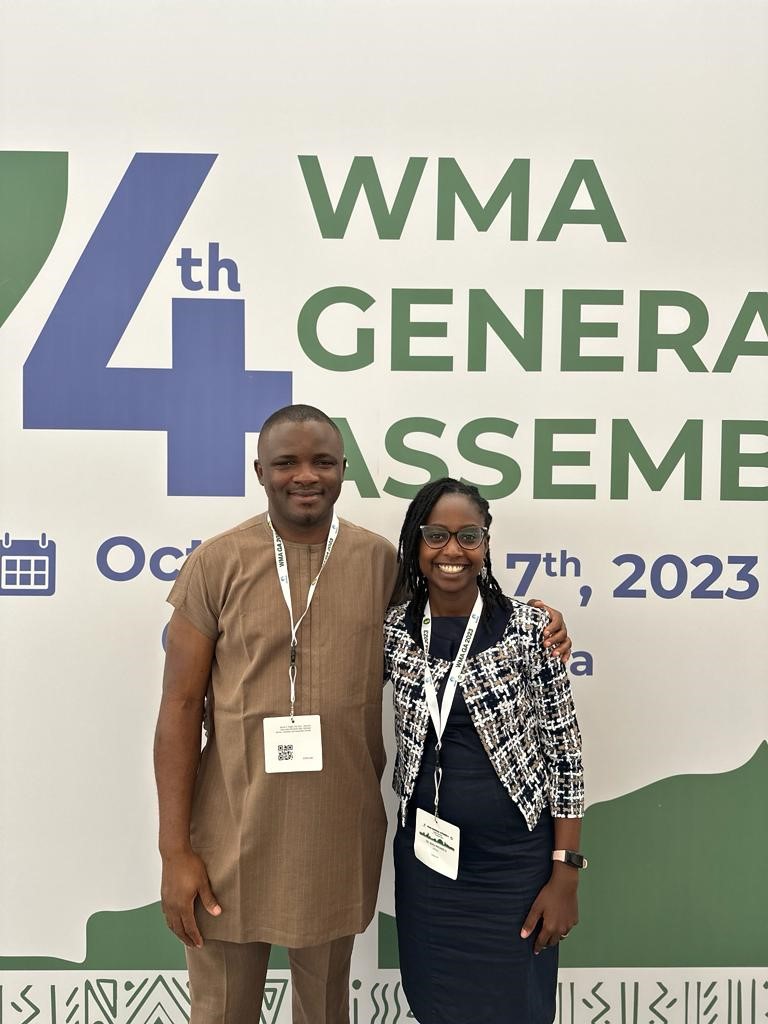
Drs. David Onazi and Sally Ndung’u at the World Medical Association General Assembly 2023
By Dr. David Onazi, IPPNW Co-President
The FIRST TIME I became one of the co-presidents of IPPNW in April 2023 my passion was reborn to play a vital role in our cause for a nuclear free planet. It then became apparent that being African presented me with the opportunity to go to Kigali, Rwanda to attend the World Medical Association (WMA) General Assembly in October 2023, which also was the FIRST TIME Rwanda played host to the WMA and my FIRST TIME going to Rwanda.
Read more…Our goal must be peace, health, and the security of all people
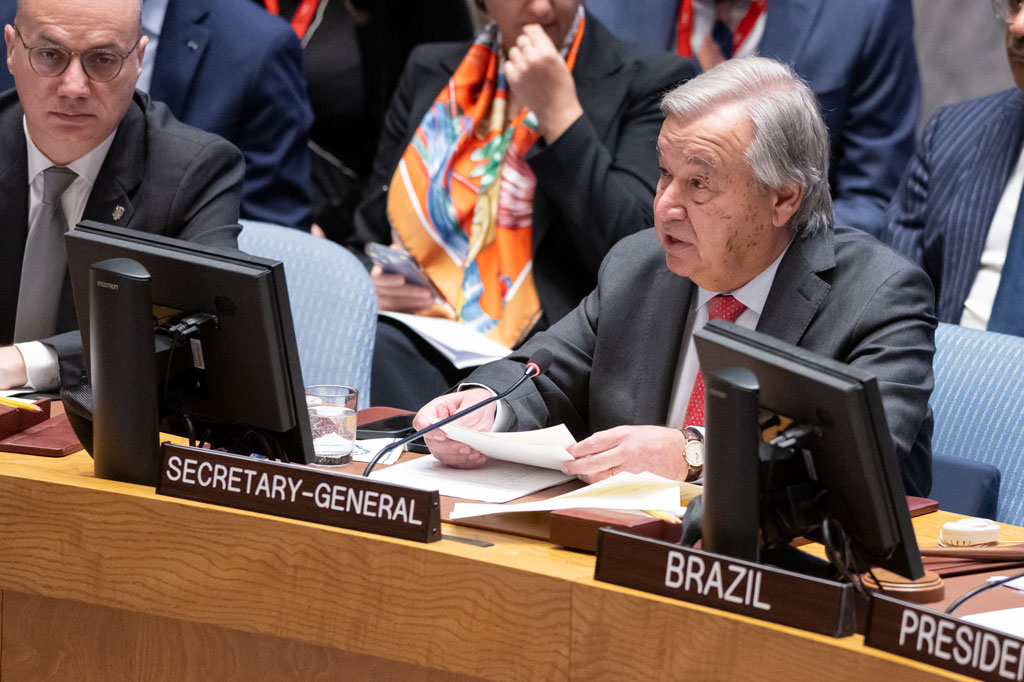
[The following letter to UN Secretary-General António Guterres was sent by IPPNW’s co-presidents in response to his speech on 13 October, in which he said “[T]he grievances of the Palestinian people cannot justify the appalling attacks by Hamas. And those appalling attacks cannot justify the collective punishment of the Palestinian people.”]
October 28, 2023
Dear Mr Secretary-General Guterres,
We are writing to you as co-presidents of our Nobel Peace Laureate organization to express our heartfelt
support for your excellent speech on 13 October in the UN Security Council. It was balanced, and while stating the context, you also clearly rejected that context as justification for the “appalling attacks” of October 7th by Hamas on Israeli citizens. You said that those attacks, however, do not justify a collective punishment of the Palestinian people.
Most importantly, we wish to show solidarity with any and all people, like yourself, who stand with citizens who are suffering the terrible consequences of war, however it came about. As physicians, it is our duty, first and foremost, to do no harm. International humanitarian law, which came about through the work of a medical organisation – the Red Cross – extends this principle to all conduct in war. Citizens must not be harmed. Our work as health professionals to help citizens who are in harm’s way must not be made impossible by the threat of bombs falling on our workplace, lack of fuel to run our electricity for our equipment or to pump water to keep our patients alive. As you well know, while bombs are levelling Gaza, including health care centres, schools and UN shelters, people are dying from the effects of an inhuman blockade which will kill those who are not first hit by bombs.
We cannot sit by and watch this slaughter, even though we strongly support the call for hostages to come home. Blockading and levelling Gaza is not the way to get the hostages back, nor will it prevent such attacks in the future. On the contrary, it could nurture terrorism elsewhere, so that Israel is never safe and will never live in peace. Our goal must be peace, health, and security of all people .
We therefore applaud the resolution in the UN General Assembly for a humanitarian truce in Gaza that was passed yesterday evening.
Thank you for your brave words and thank you to the United Nations and its organisations for all you are doing. We stand by your side.
Yours,
Dr. Carlos Umana, Dr. Kati Juva, Assoc. Prof. Olga Miranova, and David Onazi
Co-Presidents.
International Physicians for the Prevention of Nuclear War (IPPNW)
Time to abandon international anarchy?
In December 1934, Arthur Henderson, a leader of the British Labour Party, declared in his speech accepting the Nobel Peace Prize that the immense human suffering caused by World War I “led to the very clear realization that international anarchy must be abandoned if civilization was to survive.”
Unfortunately, that realization did not go very far or very deep. Although, since that time, international law has been refined, nations remain far from adhering to its provisions or accepting its enforcement by the United Nations.
Read more…
 Bimal Khadka
 Bjorn Hilt
 Charles K. Johnson
 Gunnar Westberg
 IPPNW
IPPNW John Loretz
 Lawrence Wittner
 Maria Valenti
 mollymcgint
 Sue Wareham
 Tilman Ruff
 Tim Wright
 Xanthe Hall


 IPPNW peace and health blog