Was Trump’s nuclear threat serious?
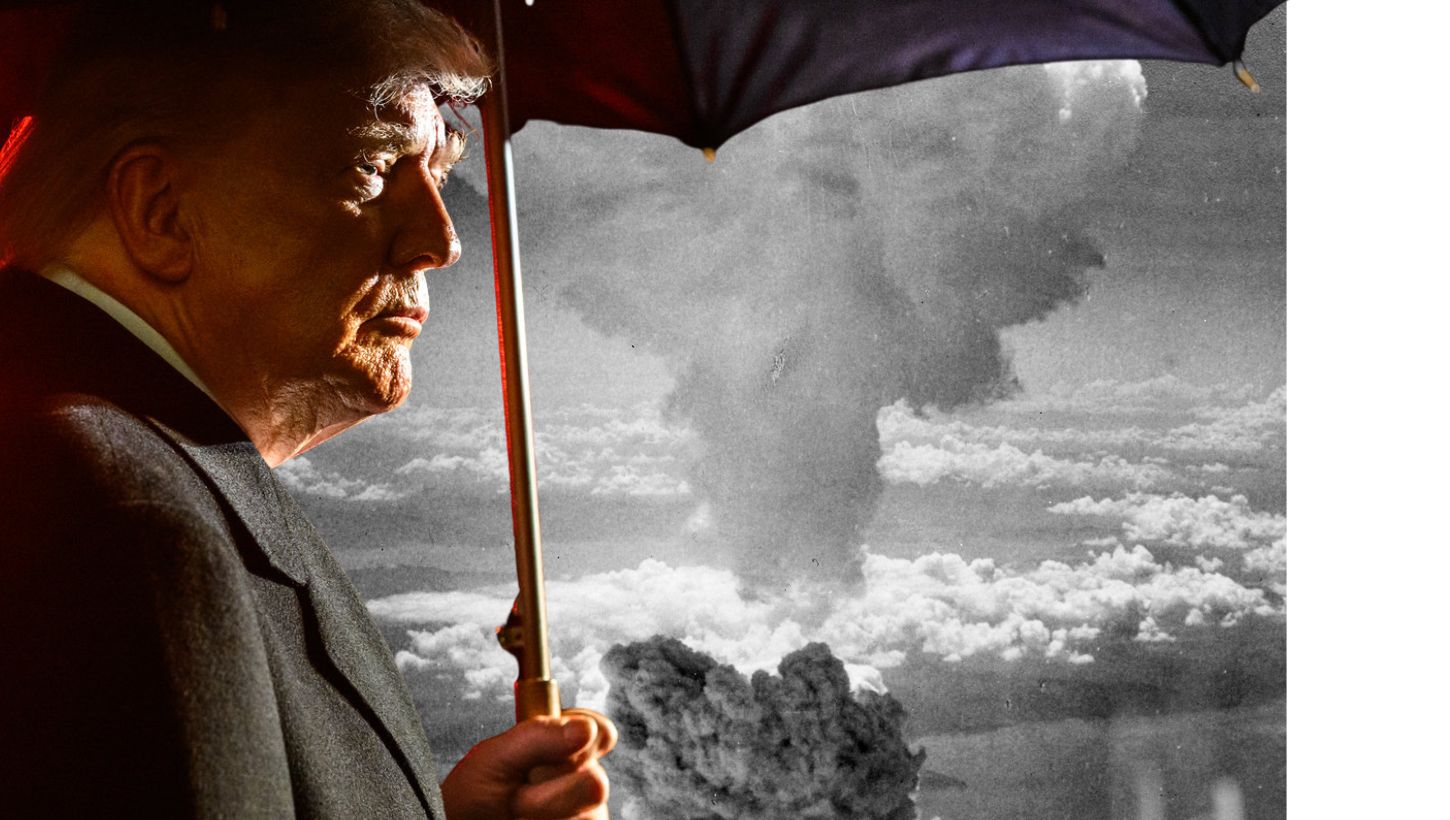
On 7 April, US President Donald Trump issued an ultimatum to Iran: either make a deal with him to end the war by 8 pm US Eastern Time (2400 GMT), or “a whole civilisation will die tonight, never to be brought back again”. Trump’s rhetoric has frequently been overstated, but was this a serious threat to use nuclear weapons? Some believe it was a negotiating tactic, others condemn it as a veiled nuclear threat. The White House social media response was to deny it. On the other hand, the Press Secretary, Karoline Leavitt, was none too sure, responding to the question of whether this was, indeed, a nuclear threat, saying:
“Only the President knows where things stand and what he will do.”
Nuclear deterrence relies on ambiguity to function. It is not usual for a leader to explicitly threaten to use nuclear weapons. In the past, phrases such as “all options are on the table”, “use all the means at our disposal”, or “fire and fury like never seen before” are examples of signalling to an adversary that a nuclear strike was possible. Donald Trump has used similar rhetoric with North Korea previously, while Russia’s leaders have often simply reminded their adversaries that they remain in possession of nuclear weapons.
However, in the case of the USA and Iran, Trump has used a phrase suggesting the possible use of nuclear weapons against a non-nuclear weapon state as a negotiating position. J. D. Vance added fuel to the fire by saying the US had “tools in our tool kit we have so far decided not to use”. These threats are not being issued to prevent an adversary from using nuclear weapons against the USA. Whatever the debated timeline on when or if Iran has enough material to build a nuclear bomb, as yet the fact remains clear: Iran has not as yet weaponised its fissile material and remains a member of the Non-Proliferation Treaty (NPT). In the latest list of negotiating demands that was given to the media, and refuted by Karoline Leavitt as being a different set of demands as those the US received, Iran stated once again, categorically, that they will not build nuclear weapons. Even the US-American intelligence services agreed even before last year’s military attacks on Iran’s nuclear infrastructure that Iran is not yet in possession of a nuclear weapon, nor does it have the capacity to build one in the near future.
Luckily, the necessity to test the seriousness of the threat to wipe out a country “in one night” has been postponed by the intervention of Pakistan and others. A two week “ceasefire” of sorts has been agreed. Yet the parties disagree on the terms of the ceasefire before they even get down to negotiating an end to the war itself. All the same Trump has left the threat on the table, saying that if Iran does not agree to his terms, then “the shootin’ starts”, in his Wild West manner of speaking. The latest rhetoric, however, is less absolute than civilisation-destroying. Perhaps the condemnation of both the UN General Secretary and the Pope made him realise a lack of approval for threats to use of nuclear weapons and feared his ratings would slip even further? It is hard to know. Even he said himself “who knows?” and “I don’t want it to happen, but it probably will” somehow suggesting that not he, but someone else, would somehow be to blame if he had to issue the order to launch a nuclear strike.
It is possible that Trump is deliberately taking a leaf out of Nixon’s playbook, later described as the “Madman Theory”. The idea behind this was to bolster credibility in nuclear use, and therefore make the threat more likely to deter, by appearing irrational or volatile. The adversary would more likely pull back, believing the leader to be unpredictable. Since nuclear deterrence as a concept rests on the assumption that all actors are rational, this gives the “madman” an advantage, as he will not be deterred from use.
In the case of the Iranian regime, it may not have demonstrated “madman” irrationality as such, but a high level of resilience to any kind of pressure. Its domestic abuse of human rights and regional support for armed rebel groups also show a lack of interest in adhering to international rules and regulations. Trump’s threat might be interpreted as an expression of frustration that, although the US and Israel are ostensibly winning militarily, the Iranian government has not shifted its position at all and remains resolute in repeating its demands. As a regime, they are fighting for their very existence and may well take the same road as the Israeli policy – the Samson Option – in other words, to take the whole temple down with themselves. However, in Iran’s case, they will not be the one using the nuclear weapon. Those wishing for an end to the regime may get their wish granted, at the risk of the whole of Iran becoming victim to a (possibly nuclear) conflagration, given that they are fighting not one, but two, nuclear weapon states.
Posturing and rhetoric are not the only measure of threat credibility. Moving tactical nuclear weapons into range, publicly parading missiles and testing them are all ways that nuclear weapon states can signal the plausibility that, if needed, they would use nuclear weapons. The UK require an incoming Prime Minister to write letters to the patrolling nuclear submarines, as though testing their willingness to give the order to launch a nuclear strike. The question has often arisen during leadership campaigns as to whether the conviction to start a nuclear war is present or not. Although this question always needs to be answered positively in order to be seen as a serious candidate, the opposite question never arises: whether the leader would try to avoid a nuclear conflagration at all costs?
The US does not need to demonstrably show off its nuclear arsenal. It has a global strike capacity through its intercontinental strategic nuclear ballistic missiles. The Israelis have tactical nuclear weapons. Any nuclear threat rhetoric coming from Donald Trump is backed up by these realities.
The use of nuclear weapons was regarded until only very recently as taboo. The Nobel peace prize laureate, the International Campaign to Abolish Nuclear weapons (ICAN) warned that increased use of nuclear threat rhetoric would lead to “normalising” the idea of use and erode this taboo. They called for condemnation of any and all such threats, as did the member states belonging to the Treaty on the Prohibition on Nuclear Weapons (TPNW) at its first Meeting of States Parties in Vienna in 2022. Because they did not name specific countries, NATO countries expressed their anger that Russia was not condemned explicitly. Now the shoe is on the other foot and it is a NATO ally threatening annihilation of a non-nuclear sovereign country. Yet, other than domestic opposition, the allies are strangely silent, although NATO member Spain has joined other European countries in disallowing the US to fly military planes in its airspace to attack Iran. Italy has also denied the US the right to use a key base in Sicily, and France also has stopped US planes bringing military supplies to Israel from landing. All of these, however, were reactions to the war per se and not to the threat of nuclear escalation. As of today, there are no publicly recorded condemnations by NATO allies of Trump’s 7 April threat.
Sources:
Al Jazeera: US denies nuclear plan as deadline on threat to Iran ‘civilisation’ looms, 07.04.2 026 https://www.aljazeera.com/news/2026/4/7/us-denies-nuclear-plan-as-deadline-on-threat-to-iran-civilisation-looms
Gritten D: Trump condemned over threat that Iran’s ‘civilisation will die’, BBC, 08.04.2026 https://www.bbc.com/news/articles/cwyk7xgkzvzo
ICAN: Why condemn threats to use nuclear weapons? ICAN Briefing Paper, Oct 2022 https://www.icanw.org/why_condemn_threats_to_use_nuclear_weapons
Meyjes T: List of Countries Denying US-Israeli Military Access, Newsweek, 30.03.2026 https://www.newsweek.com/list-countries-denying-us-israeli-military-access-11762423
Office of the Director of National Intelligence, Annual Threat Assessment of the U.S. Intelligence Community, p. 26, March 2025 https://www.dni.gov/files/ODNI/documents/assessments/ATA-2025-Unclassified-Report.pdf
Stevenson J: The Madness Behind Trump’s ‘Madman’ Strategy, New York Times, 26.10.2017 https://www.nytimes.com/2017/10/26/opinion/the-madness-behind-trumps-madman-strategy.html




 IPPNW peace and health blog