We need to end nuclear weapons, before they end us
by Chris Zielinski, Andy Haines, and Tilman Ruff
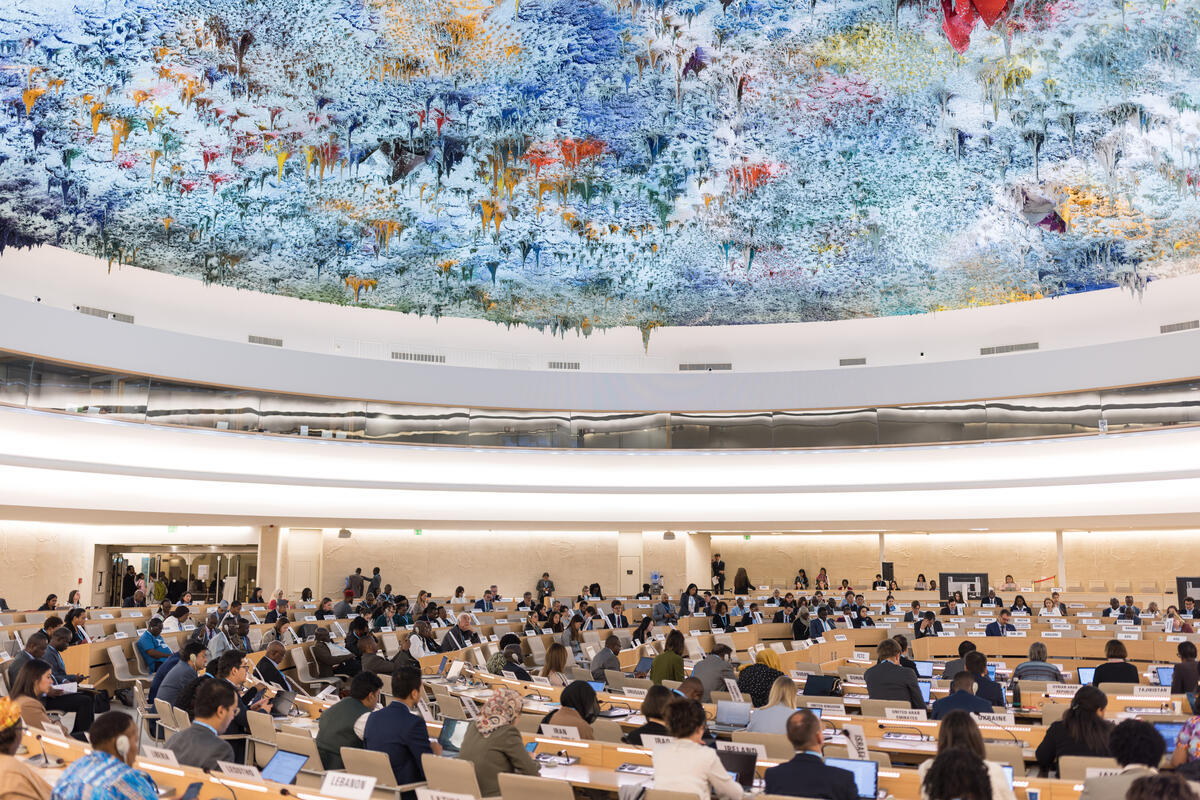
At the World Health Assembly in Geneva, 86 countries recently voted in favour of the World Health Organization (WHO) re-engaging with nuclear weapons as a health issue.
The vote, on 26 May, followed more than a year of advocacy. An initial proposal tabled by international Physicians for the Prevention of Nuclear War (IPPNW) was followed by energetic action by IPPNW and a number of key countries, including Pacific Island nations and Kazakhstan.
This work was supported by an editorial published in medical journals around the world, with the official backing of the World Association of Medical Editors (WAME).
The editorial warned that a worldwide nuclear arms race is underway: “Nine states jeopardise all humanity and the biosphere by claiming an exclusive right to wield the most destructive and inhumane weapons ever created,” it stated.
“The world desperately needs the leaders of these states to freeze their arsenals, end the modernisation and development of new, more dangerous nuclear weapons, and ensure that new technology such as artificial intelligence can never trigger the launch of nuclear weapons.”
With the vote for “Pillar 3, 18.1 Effects of Nuclear War on Public Health”, WHO regained its mandate to re-engage with nuclear weapons and health, and committed to preparing new reports on the subject.
WHO had lost this mandate in 2020 in a routine conclusion of its term. Reports on nuclear weapons and health had been published in 1983, 1987 and 1993, but nothing since then.
Now, with this new mandate, WHO resolves to update the reports, cooperate with relevant parties and other United Nations bodies and international organizations, and report to the World Health Assembly in 2029 on progress in the implementation of this resolution.
How the campaign unfolded
From the tabling of the initial IPPNW proposal in July 2024, work accelerated in the Geneva office of IPPNW, managed by Chuck Johnson, who hails from Portland, Oregon, USA, with a long history of work in United States organisations and coalitions for nuclear disarmament and nuclear-free energy.
He is IPPNW’s policy director, and established and manages IPPNW’s Geneva Liaison Office. He leads the federation’s collaboration there with ICAN, missions, diplomats and health organisations, including WHO, World Medical Association, International Council of Nurses and World Federation of Public Health Associations.
Aided and abetted by a fluctuating team of volunteer students, and the input of IPPNW supporters worldwide, the Geneva team lobbied hard with country representatives and senior WHO staff.
Before the WHA, Chuck Johnson represented IPPNW at a meeting with WHO Director-General Dr Tedros Ghebreyesus, in which the DG was briefed about the proposal.
Then work began in earnest to develop the resolution. Led by Pacific Island nations and Kazakhstan – in particular by Samoan diplomat Marissa Toomata, Marshall Islands representative Augustine Sokimi, and Helen Weldu of Vanuatu, representing the three chief sponsor nations – a resolution was drafted and submitted in November.
The initial target was to have a viable draft supported by a number of co-sponsoring countries presented to the WHO Executive Board in January 2025.
This was achieved with portions of the text still not “green-lighted”, but with enough momentum to have it approved for inclusion in the agenda of the World Health Assembly in May 2025.
Meanwhile, an editorial in support of the resolution was drafted by Tilman Ruff, with assistance from Andy Haines and Chris Zielinski. This was circulated to a number of Editors-in-Chief of leading medical journals who had collaborated in a previous multi-journal editorial on nuclear risk in 2023, and who agreed to share the authorship responsibilities for the new editorial.
The editorial was also formally supported by the WAME Board.
Together with leading figures from IPPNW, and the Nobel Prize-winner Professor Peter Doherty, there were 23 named authors of the editorial, which was sent out under the title, ‘Ending nuclear weapons, before they end us’ to medical journals around the world.
Given the short time-frame – the editorial was distributed in March, aimed at the World Health Assembly, which was taking place in May – expectations were that there would be a relatively small uptake. In the end,135 journals published the editorial, which was a highly satisfactory result.
Our heartfelt thanks go out to all journal editors and administrators for this, and for providing Open Access and granting us waivers on Article Processing Charges.
At the World Health Assembly
Ably led by the Marshall Islands, Samoa and Vanuatu, and the other co-sponsors, by the time the draft resolution was discussed at the World Health Assembly, the text had been fully “green-lighted”, and had attracted 34 co-sponsoring countries.
This gave the resolution a powerful initial push. Professor Sir Andy Haines delivered the IPPNW statement at the Health Assembly and the debate started.
The principal objections can be summarised in the statement of the UK delegate who, in his post-vote explanatory remarks, expressed his Government’s concern that the proposed report and work would “duplicate that of other international bodies when a constrained WHO budget is driving an urgently needed prioritisation exercise”.
In fact, the UN General Assembly had agreed in late 2024, by a strong majority of 144 to 3, to establish an independent scientific panel to carry out a new study on the effects of nuclear war. The resolution called upon the United Nations system and relevant agencies, including WHO, to support and contribute to this work.
Rather than duplicate effort, proponents of the WHO resolution agreed that close collaboration with the UN’s work would be required. They noted that WHO had a constitutional responsibility and unique authority to provide the international community with this research, as the UN’s specialised agency on health.
As to the financial requirements for such a study, while this was an important question, the funding required is quite modest in the context of WHO’s overall budget.
According to WHO’s estimate, the amount needed in additional funding over four years was $330,000. This would have a negligible impact on WHO’s operational effectiveness, even if no external funding is provided.
By the conclusion of voting, 86 countries had voted in favour, 14 were against, and there were 28 abstentions. This shows a strong global body of support, but it also illustrates the divisions.
The 14 nay-sayers were the Czech Republic, DPR Korea, Estonia, France, Germany, Hungary, Latvia, Lithuania, Monaco, North Macedonia, Poland, the Russian Federation, Slovakia, and the United Kingdom. Of the 14 no votes, 11 were from NATO countries – though not one of them spoke before the vote, leaving that to Russia and the DPRK.
Of the 28 abstentions, 19 were NATO countries (with NATO-candidates Georgia and the Republic of Moldova making it 21 out of 28), leaving only four nuclear weapons states (China, India, Israel, and Pakistan), plus Serbia, Belarus and Morocco to round out the rest.
Interestingly, Ukraine voted yes, as did US allies Australia, Japan, and South Korea.
Challenges ahead
Even without detonation, nuclear weapons pose significant health risks at all phases of their preparation, testing, storage and other operations. Nuclear war would of course be a catastrophe for human health.
WHO now has the global mandate to lead the review of this issue and ensure that Member States are fully informed of the existential consequences of nuclear weapons.
The lists of countries above suggest a need for particular efforts to convince the governments of these countries to drop their support for nuclear weaponry.
We urge the Australian Government to assist and support WHO’s program of work to implement the resolution, most particularly to contribute to the modest funds needed so that WHO’s budget crisis, aggravated by the US leaving WHO, doesn’t delay or weaken this important work.
Some conclusions and lessons can be drawn from this experience. The nation-state politics in the World Health Assembly can be as intense as anywhere, and need dedication, skill and partnerships to be navigated successfully.
Collaborations between civil society, including health professionals, organisations and committed, like-minded states can be synergistic and effective.
Even the smallest states can make big contributions to global health and international organisations. It all comes down to capable, dedicated people working together.
The concept of deterrence, taken to its logical extremes, implies that every country should acquire nuclear weapons, and this clearly would not make the world a safer place. The risks of intentional or accidental nuclear war increase with the production of every bomb.
As our editorial said, we need to end nuclear weapons, before they end us.
Dr Zielinski is a Visiting Fellow and Lecturer in the Centre for Global Health, University of Winchester, UK, where he leads the Partnerships in Health Information program. He is President of the World Association of Medical Editors (WAME), and a Senior Adviser to International Physicians for the Prevention of Nuclear War. Professor Haines is Professor of Environmental Change and Public Health at the London School of Hygiene and Tropical Medicine and a former Dean/Director of the School. He is a global leader in climate change and health. Dr. Ruff is a member of IPPNW’s board of directors, a former IPPNW co-president, and founding chair of the International Campaign to Abolish Nuclear Weapons (ICAN).
This article was originally published by Croakey Health Media, a not-for-profit public interest journalism organization.

 Bimal Khadka
 Bjorn Hilt
 Charles K. Johnson
 Gunnar Westberg
 IPPNW
IPPNW John Loretz
 Lawrence Wittner
 Maria Valenti
 mollymcgint
 Sue Wareham
 Tilman Ruff
 Tim Wright
 Xanthe Hall


 IPPNW peace and health blog
Hi, thank you for this compelling and urgently relevant article. I appreciated the clear framing that nuclear weapons pose a catastrophic public health threat—with even a limited exchange risking global famine, climate collapse, and societal breakdown.
Your argument makes a powerful case that the only responsible path forward is abolition, backed by robust disarmament frameworks and health-based advocacy. It’s a much-needed reminder that nuclear weapons not only threaten lives but undermine civilization itself.
Thank you for your important work.