The world needs Hibakusha testimonies again
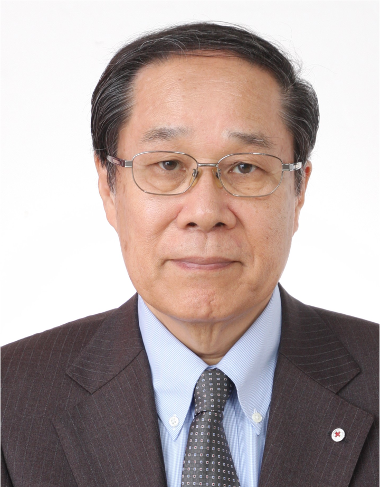
[Dr. Masao Tomonaga is the honorary director of the Japanese Red Cross Nagasaki Atomic Bomb Hospital and a survivor of the US atomic bombing of Nagasaki in 1945. As a physician, he has specialized in medical care for the Hibakusha, whose organization was awarded the 2024 Nobel Peace Prize. A founding member of IPPNW’s Nagasaki affiliate, he is on the organizing committee of the federation’s 24th World Congress, which will be held in his city in October. We interviewed Dr. Tomonaga about his experience at the Nobel ceremony and his expectations for the Congress.]
As a survivor of the US atomic bombing of Nagasaki, the awarding of the 2024 Nobel Peace Prize to Nihon Hidankyo must have meant a lot to you. Can you say something about why it’s so important to recognize the Hibakusha in this moment, and how your voices can drive the campaign for the abolition of nuclear weapons as we approach the 80thanniversary?
The number of living Hibakusha is now very small—less than 100,000 in total—and their mean age is over 85. Although elderly, some of them still show considerable activity in the movement for the elimination of the nuclear weapons. The nine nuclear-armed states, however, maintain more than 12,000 nuclear weapons, and some of them are increasing their arsenals in this decade. We have not seen this kind of proliferation since the end of the Cold War in 1991.
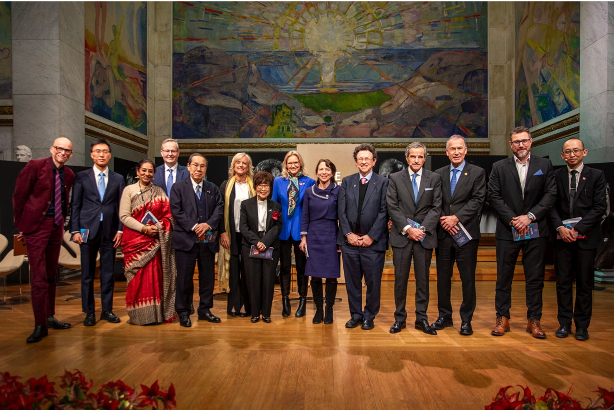
On December 10 of last year, the Nobel Peace Prize Committee awarded the 2024 Prize to Nihon Hidankyo—the Japanese Confederation of A- and H-Bomb Sufferers Organization. The Committee Chair, Jørgen Watne Frydnes, noted that the Hibakusha had firmly established the nuclear taboo by their tough and long-standing antinuclear movement since 1956, through their atomic bomb testimonies all over the world. During the Cold War period, the nuclear taboo became the international norm, but it seems fragile in these years since the Russian invasion of Ukraine and the threat to use nuclear weapons in that conflict. The world—especially the young generation—needs the hibakusha’s testimony again, to re-establish the path to a nuclear-free world. Mr. Terumi Tanaka, a 92-year-old survivor of Nagasaki who represented Hidankyo and all Hibakusha in Oslo, promised with a strong voice to restart once again the education of the world’s youth.
You were at the Nobel ceremony in December. What was your role there?
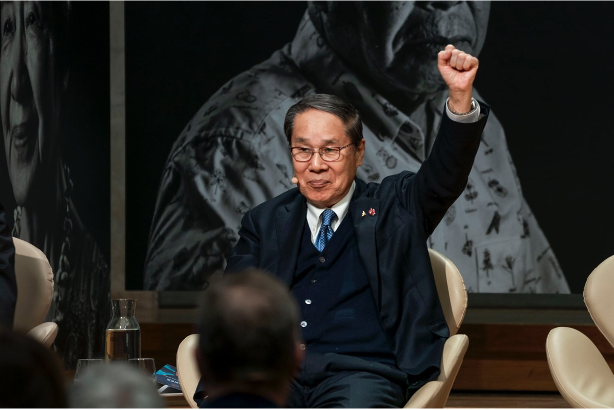
The Committee invited me to attend the ceremony and to talk about how we can overcome the present severe decline in security caused by nuclear weapons. I mainly focused on my 60 years of medical care and research on the health effects of atomic bomb radiation. I summarized that many types of solid cancers and “myelodysplastic syndromes (MDS)” a form of leukemia prevalent in the elderly, are showing plateau curves 80 years after one moment of radiation exposure in 1945. Our Nagasaki University’s Atomic Bomb Institute on the Health Effects did a long-term follow-up study on Hibakusha’s body cells—especially organ stem cells—and discovered that they have been injured at the DNA level, causing many chromosome and gene abnormalities in precancerous cells or preleukemia cells that are insidiously surviving over an entire lifetime, resulting in a sporadic onset of malignant disease in some Hibakushas. Thus, the effects of radiation exposure on body cells are, in fact, lifelong. Unfortunately, we medical scientists still don’t have an effective treatment for eradicating such precancerous cells. I myself developed a prostate cancer six years ago at age 76. Applying a newly invented carbon heavy beam-radiation therapy on my prostate successfully eliminated cancer cells and I have gotten clinically a complete remission.
Studies of the second generation of Hibakushas are still being undertaken based on recently developed sophisticated technology of whole genome analysis to reveal gene abnormality-transmission from Hibakusha parents with high exposure dose to their children after 80 years. It will take a few years to complete more than 500 such pairs, called Trio.
The lifelong effect of atomic bomb radiation has led to a global consensus about the inhumane nature of nuclear weapons. They should be eliminated promptly and never be reproduced and used in war, whether deliberately or by mistake. The international Treaty on the Prohibition of Nuclear Weapons (TPNW), which is based on this understanding, was therefore the greatest achievement in this decade.
You are in your 80s now, yet you never seem to slow down. In fact, you’re helping to organize IPPNW’s 24th World Congress in Nagasaki this October. What would make this Congress a success, in your mind, given the current distressful state the world is in?
This year, from October 2-4, 2025, the Japanese affiliates of IPPNW will host the 24th World Congress in Nagasaki. On the first day in a plenary session we will invite four Nobel Peace Prize winners, IPPNW (1985), Pugwash (1995), ICAN (2017) and Hidankyo (2024) to conduct a joint forum to discuss measures for the future realization of a nuclear-free-world. In another plenary session on the first day, I will give a summary lecture on the 80 years of medical and social investigation to estimate the depth of the antihumanitarian impact of the two atomic bombings on Japanese cities in 1945.
We will also be looking at previous and on-going research studies on genetic transmission to the second generation of Hibakushas, as well as more than ten years of follow-up studies on atmospheric and environmental contamination by the radioactive materials released by the Fukushima Dai-Ichi Nuclear Power Station in 2011.
As someone who saw the dawn of the nuclear age and has dedicated his life to working for the elimination of nuclear weapons, what is your message to young people who are now taking up the campaign and hope to finally rid the world of this existential threat?
Two years ago, in November 2023, a group of 10 Nagasaki Hibakushas, including me, toured the United States to give our testimonies. I offered a summary of my 75 years of research into the health effects on human beings. We met more than a thousand US citizens, mostly university and college students. We had good conversations in which we found that US students consider nuclear weapons are, in fact, antihumanitarian and must be eradicated in the future. But they confessed that they cannot find good measures to propose abandoning nuclear weapons to the world’s most powerful nuclear-armed state, the US.
Hiroshima and Nagasaki citizens witnessed the dawn of the nuclear age and have survived more than 80 years to tell our stories and insist that this must never happen again. We feel pessimistic about the prospects for nuclear elimination. The probability of global human extinction by a nuclear war seems gradually coming near. Soon, we Hibakusha will say goodbye, but the young generation may well see the third use of atomic bombs in war or by accident. Their responsibility to change their governments’ nuclear policies and strategies will become a reality very soon.
At the Nobel Peace Forum, we emphasized that dialogue and mutual understanding are indispensable. That means the young generation should work together across boundaries, in nuclear-armed and non-nuclear states alike. They have the right and the responsibility to join in solidarity for nuclear-free world.
Comments are closed.

 Bimal Khadka
 Bjorn Hilt
 Charles K. Johnson
 Gunnar Westberg
 IPPNW
IPPNW John Loretz
 Lawrence Wittner
 Maria Valenti
 mollymcgint
 Sue Wareham
 Tilman Ruff
 Tim Wright
 Xanthe Hall


 IPPNW peace and health blog
Would you like a copy? (see attached)
Raymond G. Wilson, Ph.D. Emeritus Associate Professor of Physics Illinois Wesleyan University Bloomington, IL 61702-2900