“I will not be discouraged”
By Lars Pohlmeier, IPPNW Germany Chairperson and IPPNW Delegate to the 3rd Meeting of States Parties to the TPNW
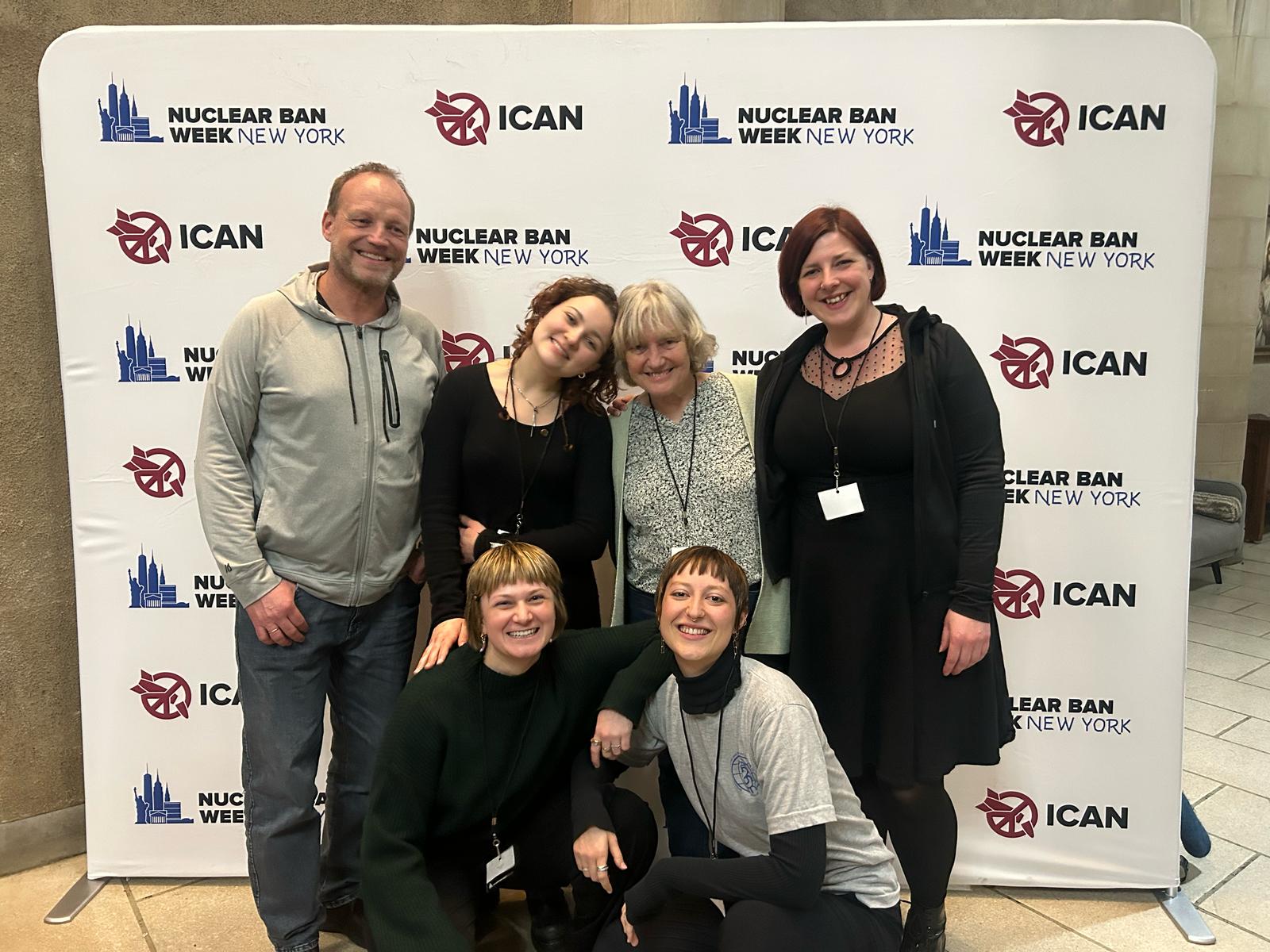
Now it is time for my personal impressions. I attended my first UN conference in 2000, as a participant in the NPT delegation. It was the first Review Conference after the unlimited extension of the Nuclear Non-Proliferation Treaty. Large demonstrations were organized—about 40,000 people marched through Manhattan. I was wearing my yellow IPPNW sports jersey with “Abolish Nuclear Weapons” written on it. That’s why I can always be easily identified in the photos.
When I come to the United Nations today, I feel the same way I did in 2000. The UN is our political home.
Although marginalized, hopelessly underfunded, often bureaucratic, and perhaps in some parts not effective enough—the United Nations is the best we have. It is much more than an organization of governments. It is a place where those striving for good, despite all their differences, can come together. A place where visions are developed, and an incredible energy can emerge to make this world more just and peaceful.
I can only wish for everyone to have this experience themselves.
“Peace is underfunded”—this is written in large letters on the wall inside the UN headquarters. The chairs in the UN General Assembly are in a pitiful state, basically ready for the trash. Half of the headphones on the visitor’s platform don’t work. This symbolizes a UN under immense political pressure.
But I will not be discouraged. My enthusiasm for the idea that a better world is possible through the United Nations—especially in difficult times like these—remains unbroken. In fact, it has grown again this week.
The diversity of political activities and activists fighting together for a world of peace, freedom, and without nuclear weapons is overwhelming.
We cannot afford political naivety. But what is happening here is not naive. Many among us have great expertise. I think, for example, of the studies presented on gender-specific differences in the effects of radiation. So many things could be mentioned. I also think of the heroic work of a number of dedicated diplomats, especially the diplomatic corps of our neighboring country, Austria. It really shouldn’t be so difficult for the Federal Republic of Germany to follow the outstanding foreign policy example of Austria in disarmament.
The week began with the NGO event at the historic Riverside Church in Harlem, the Baptist church where Martin Luther King once gave historic speeches. A moment in history that I personally associate with Riverside Church is the speech by then UN Secretary-General Ban Ki-moon. A day before the start of the 2010 NPT conference, he spoke there to the NGO community. He said: “The abolition of nuclear weapons is my most important personal political concern.” Hearing that moved me deeply and strengthened my belief that we in IPPNW are doing the right thing by working—many of us on a voluntary basis—for this cause.
Not only is the IPPNW delegation here particularly large, but it also consists of a remarkable number of medical students, many from Germany. This is simply fantastic. Seeing the commitment, enthusiasm, and expertise of young people here gives hope. Besides IPPNW, which has made student support a core concern for decades, ICAN also deserves great credit for once again bringing together people from all generations.
I often recall a moving experience at the German UN mission in 2005 during a roundtable discussion with high school students we had brought from Germany to New York City. The conversation took place with the then German ambassador, Friedrich Gröning, and other representatives. One high school student stood up and said: “I refuse to uphold your nuclear legacy.”
The German diplomat was so moved that he started to cry. Stammering through his tears, he said: “The issue of nuclear weapons… it’s not that easy,” and then had to hand over the floor to his deputy because he could no longer continue speaking.
Yes, unfortunately, that’s how it is. But without us, as a competent civil society, success is impossible.
Best regards from New York City,
Comments are closed.

 Bimal Khadka
 Bjorn Hilt
 Charles K. Johnson
 Gunnar Westberg
 IPPNW
IPPNW John Loretz
 Lawrence Wittner
 Maria Valenti
 mollymcgint
 Sue Wareham
 Tilman Ruff
 Tim Wright
 Xanthe Hall


 IPPNW peace and health blog
What this book is about. (see attached)
(âmoralââ concerned with the principles of right and wrong behavior and the goodness or badness of human character.)
Do you think you would be part of the 7.2 billion? I invite you to join me in this exploration of realities for peace in this world.*
Raymond G. Wilson, Ph.D. Emeritus Associate Professor of Physics Illinois Wesleyan University Bloomington, IL 61702-2900