A Push for Africa’s Leadership in the Universalization of the Nuclear Ban
by Dr. Kelvin Kibet, Deputy Chair and African Regional Vice President of IPPNW, Kenya
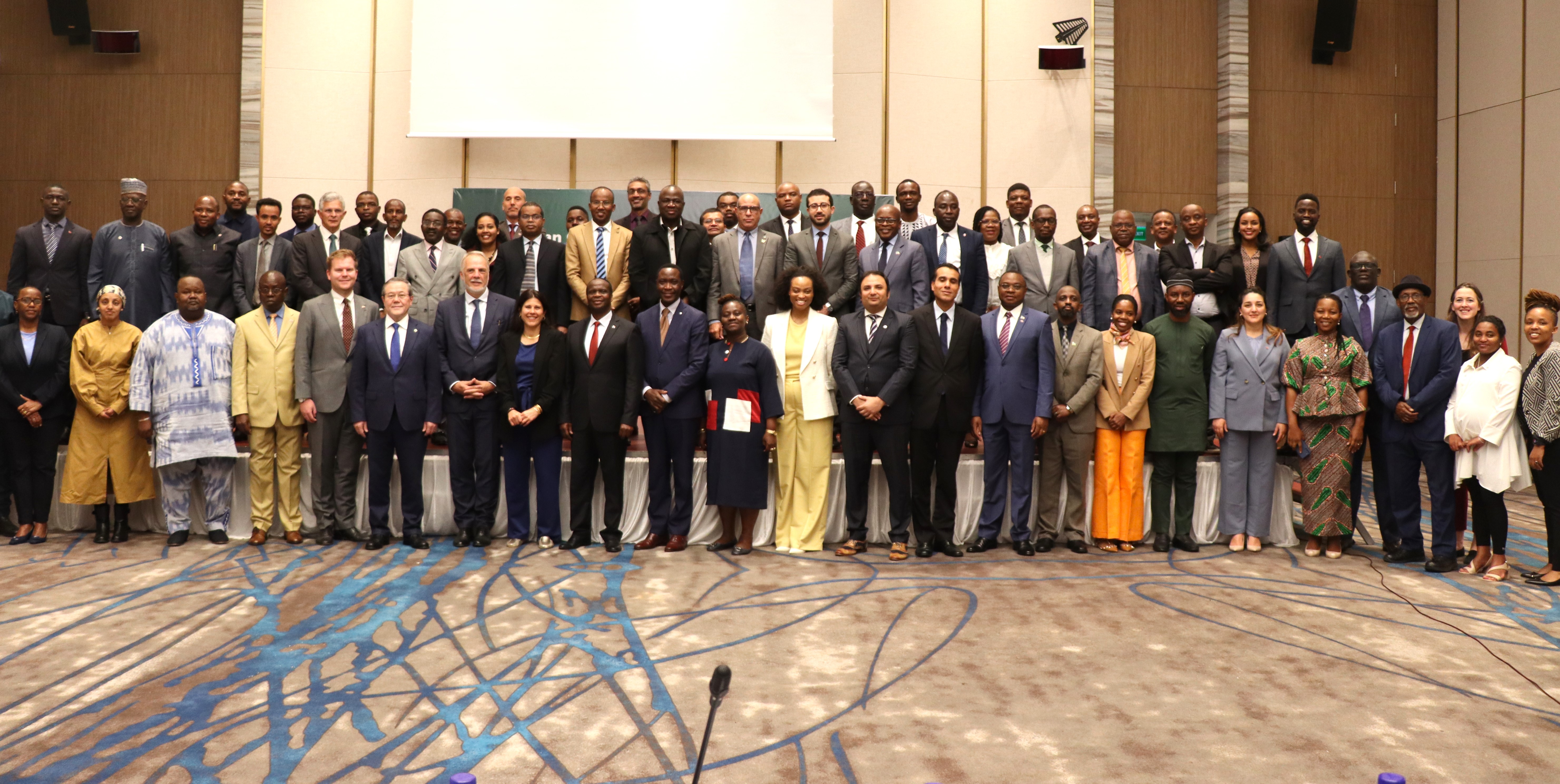
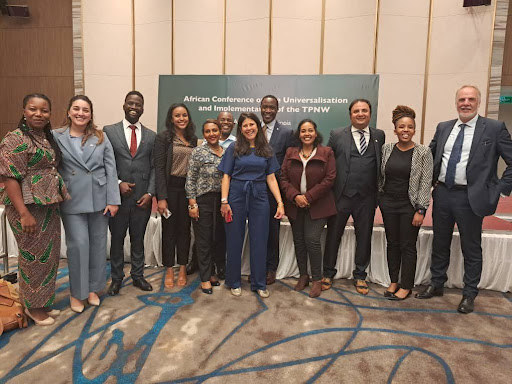
As the disarmament community braces for the 3rd Meeting of States Parties to the Treaty on the Prohibition of Nuclear Weapons (TPNW) in March 2025, and the global diplomatic community prepares for the 2024 United Nations General Assembly, the push for nuclear disarmament is gaining critical momentum. The recent conference on the universalization of the TPNW, organized by South Africa and Austria with support from the International Campaign to Abolish Nuclear Weapons (ICAN) and the International Committee of the Red Cross (ICRC), emphasized Africa’s pivotal role in championing a nuclear-weapon-free world. African nations have been strong advocates for disarmament, and now, more than ever, their leadership is needed to accelerate global progress toward abolishing nuclear weapons.
At the conference, African states reiterated their commitment to the TPNW, underscoring the existential threat posed by nuclear weapons to the continent. Many countries, including Zimbabwe, Zambia, and Burkina Faso, are actively in the process of ratifying the TPNW, with strong endorsements from their delegations. As Zimbabwe’s ambassador powerfully remarked, “All African challenges—poverty, food security—are exacerbated by the threat of nuclear war. In the event of nuclear conflict, Africa would suffer disproportionately, and even an antidote would reach us last.” These words capture the stark reality that Africa would be particularly vulnerable in the event of a nuclear war, a point that underscores the urgency for African nations to be at the forefront of disarmament efforts.
I had the opportunity to present crucial medical findings on the global and regional impacts of nuclear weapons. My presentation emphasized the severe humanitarian and medical consequences of a potential nuclear conflict, particularly highlighting the risk of nuclear famine in Africa, a region already vulnerable to food insecurity. Drawing from recent studies, I elaborated on how even a limited nuclear war could lead to catastrophic disruptions in food production due to climate changes caused by nuclear fallout, ultimately resulting in mass starvation. The session also provided an overview of the history of nuclear warfare, with a particular focus on the Hiroshima and Nagasaki bombings, to illustrate the scale of immediate and long-term devastation.
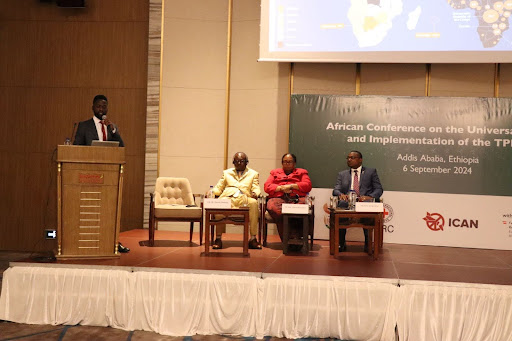
Through this platform, I urged African leaders and representatives to take action, encouraging more countries to join and ratify the TPNW as a means to move towards global nuclear disarmament, underlining the Treaty as a critical step toward ensuring the safety and security of future generations. The session was an integral part of ongoing efforts to raise awareness about the medical, environmental, and humanitarian imperatives for nuclear abolition.
Several countries have already taken decisive steps. Zambia, one of the earliest signatories of the TPNW, has developed national legislation aligned with the treaty and is encouraging its neighbors to join the movement. Zambia’s recent progress on the TPNW follows a successful TPNW Universalization workshop co-organized by IPPNW Zambia, the ICRC, ICAN, and the Council of Churches in Zambia (CCZ) held earlier this year in Lusaka. Kenya, a long-standing advocate for disarmament, has actively participated in international disarmament conferences and negotiations. Kenya’s ambassador reaffirmed the country’s commitment to ratifying the TPNW, emphasizing that the Treaty complements existing global disarmament frameworks like the Nuclear Non-Proliferation Treaty (NPT) and the Comprehensive Nuclear-Test-Ban Treaty (CTBT). The ambassador stressed that the TPNW strengthens these legal instruments and that Kenya’s consultations on signage are well underway. IPPNW Kenya and our partners will continue to call on the Kenyan government to ratify the TPNW at the earliest possible date.
Meanwhile, Burkina Faso expressed its concerns about the risk of nuclear materials falling into the wrong hands, particularly in regions affected by terrorism. As the country works toward ratification, its delegate emphasized the international community’s need to intensify diplomatic efforts to ensure that nuclear weapons are kept out of the hands of extremists. This concern resonates deeply with many African states, particularly those facing political and security challenges.
The Pelindaba Treaty, which established Africa as a nuclear-weapon-free zone, has been a key instrument in promoting disarmament across the continent. However, as noted by the African Union (AU) Legal Counsel during the conference, the gap between the number of ratifications for Pelindaba and the TPNW is significant: 44 African states have ratified the Pelindaba Treaty, but only 16 have ratified the TPNW. This discrepancy calls for a concerted push to ensure that more African nations commit to the TPNW. The AU Legal Counsel made a passionate plea for the universalization of both treaties, stating, “L’heure est grave et il faut agir” (The hour is grave, and we must act). His message underscores the need for renewed action to protect humanity from the catastrophic consequences of nuclear weapons.
The Republic of Congo emphasized the need for widespread public awareness and governmental engagement on the TPNW, noting, “The universalization of Pelindaba must pass through our continent, supported by efforts to raise awareness among governments and populations.” The delegate’s call for stronger outreach and education campaigns is a reminder that disarmament efforts require not just diplomatic action, but also public support to influence decision-makers. Meanwhile, Nigeria called for Africa to speak with a unified voice on nuclear disarmament and urged countries that have not yet signed the TPNW to do so without delay.
Africa’s deep historical connection to nuclear disarmament was also highlighted, particularly by Algeria, whose delegate spoke about the devastating legacy of French nuclear testing in the Sahara during the colonial period. Algeria, which played a crucial role in the adoption of the TPNW, continues to deal with the environmental and health impacts of those tests. The ambassador’s reference to France’s “nuclear testing crimes” was a stark reminder of the lasting damage that nuclear weapons cause—not only through their potential use, but through the decades of suffering left in their wake. Algeria’s experience serves as a powerful testament to why nuclear weapons must be abolished, and the country’s leadership on this issue is vital.
As we approach the upcoming 2024 UN General Assembly, African nations have a unique opportunity to elevate the TPNW on the global agenda. The reflections from the recent conference provide a clear path forward: African states must use their collective voice to advocate for the universalization of the TPNW, drawing on the leadership of countries like Zambia, Zimbabwe, and Burkina Faso, who are already making strides toward ratification. Africa’s commitment to peace and security must remain steadfast, and its role in global disarmament efforts cannot be understated.
Now is the time for African states to not only ratify the TPNW, but to champion it as a pathway to a safer, nuclear-free world. With the support of ICAN, the ICRC, IPPNW and the broader international community, Africa can continue to lead the way in ensuring that the horrors of nuclear weapons are never unleashed on our planet.

 Bimal Khadka
 Bjorn Hilt
 Charles K. Johnson
 Gunnar Westberg
 IPPNW
IPPNW John Loretz
 Lawrence Wittner
 Maria Valenti
 mollymcgint
 Sue Wareham
 Tilman Ruff
 Tim Wright
 Xanthe Hall


 IPPNW peace and health blog
Comments are closed.