WHO and “The Effect of Nuclear War on Health and Health Services”
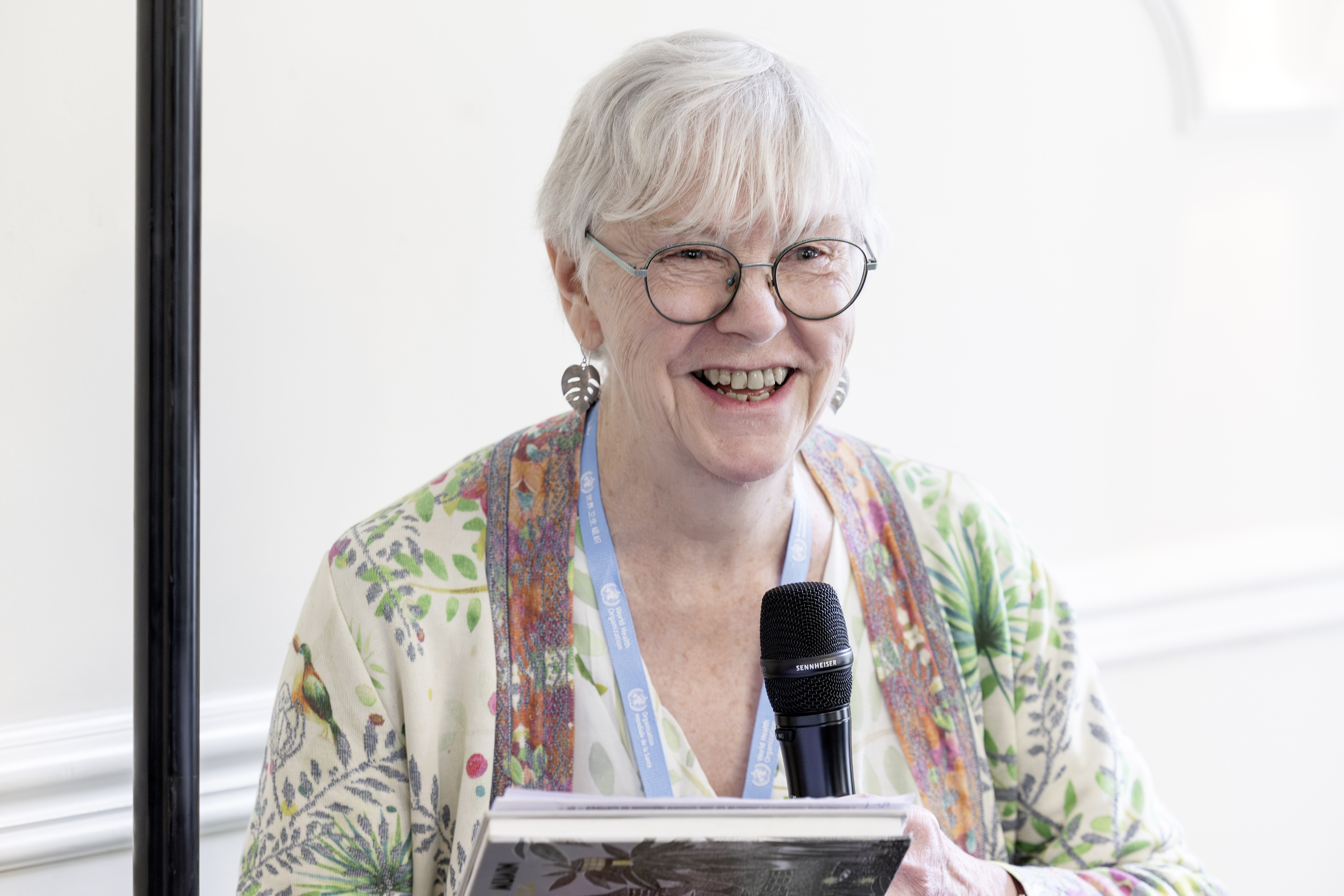
by Kati Juva
IPPNW was founded more than 40 years ago, and the main objective was to tell people—decision makers, physicians, students and the public about the devastating consequences of nuclear weapons and nuclear war. At the height of the Cold War, the threat of a nuclear war was palpable and even young children had fears of the end of the world. Meanwhile, in many parts of the world, bomb shelters were built that were said to protect from atomic bombs, and children were taught to “duck and cover” under the school desks were they to see an explosion flash.
In this atmosphere, IPPNW began to educate people about what would really happen if a nuclear war were to break out. We knew much about the immediate consequences of heat, blast and radiation from the experiences in Hiroshima and Nagasaki. Also, the concept of nuclear winter was explained to the public in the 1980s. I remember it was talked about at the IPPNW conference in Helsinki in 1984 and PSR Finland published a book on nuclear winter in 1984 (in Finnish).
At that time, IPPNW had close contacts with people in the World Health Organization. WHO published its first report on “The Effects of Nuclear War on Health and Health Services” in 1983, and a more concise one in 1987. This report summarised well the catastrophic consequences of the use of nuclear weapons, and the conclusion was crystal clear: health professionals and health care systems are not able to help the victims. Prevention is the only option.
When IPPNW, the International Association of Lawyers Against Nuclear (IALANA), and the International Peace Bureau (IPB) requested an advisory opinion from the International Court of Justice on the threat and use of nuclear weapons, this WHO report was a very important part of the evidence. In 1996 the Court gave their advisory opinion stating that “the use of nuclear weapons is hardly reconcilable with the regulation of the use of armed force.” The WHO report was also cited at the international conferences on the Humanitarian Impact of Nuclear Weapons held in Oslo (2013), Mexico (2014), and Austria (2014).
WHO had intended to issue follow-up reports, but after the Cold War ended and nuclear arsenals were reduced (but alas, not totally abolished), interest in the health consequences of nuclear war decreased. The mandate of WHO to follow and update the report was closed down in 2020.
Today the threat of a nuclear war is again greater than in decades. Most nuclear armed states are modernising and increasing their arsenals, global spending on nuclear weapons has risen to new records, and leaders in some countries have threatened to use nuclear weapons in current wars.
It looks like the knowledge of the catastrophic humanitarian consequences of nuclear war and the total lack of any reasonable medical response to a nuclear attack has been forgotten by current world leaders.
We in IPPNW have to strengthen our work to spread this knowledge. One important tool for this could be a new WHO report on the effects of nuclear war on health and health services. The previous report is more than 35 years old and thus woefully outdated. Our more recent knowledge about the climate consequences of nuclear war and the subsequent nuclear famine, even from a regional, so-called limited nuclear war needs to be part of a new study. There is also much new research of the long-term effects of radiation and the special vulnerability of women and children.
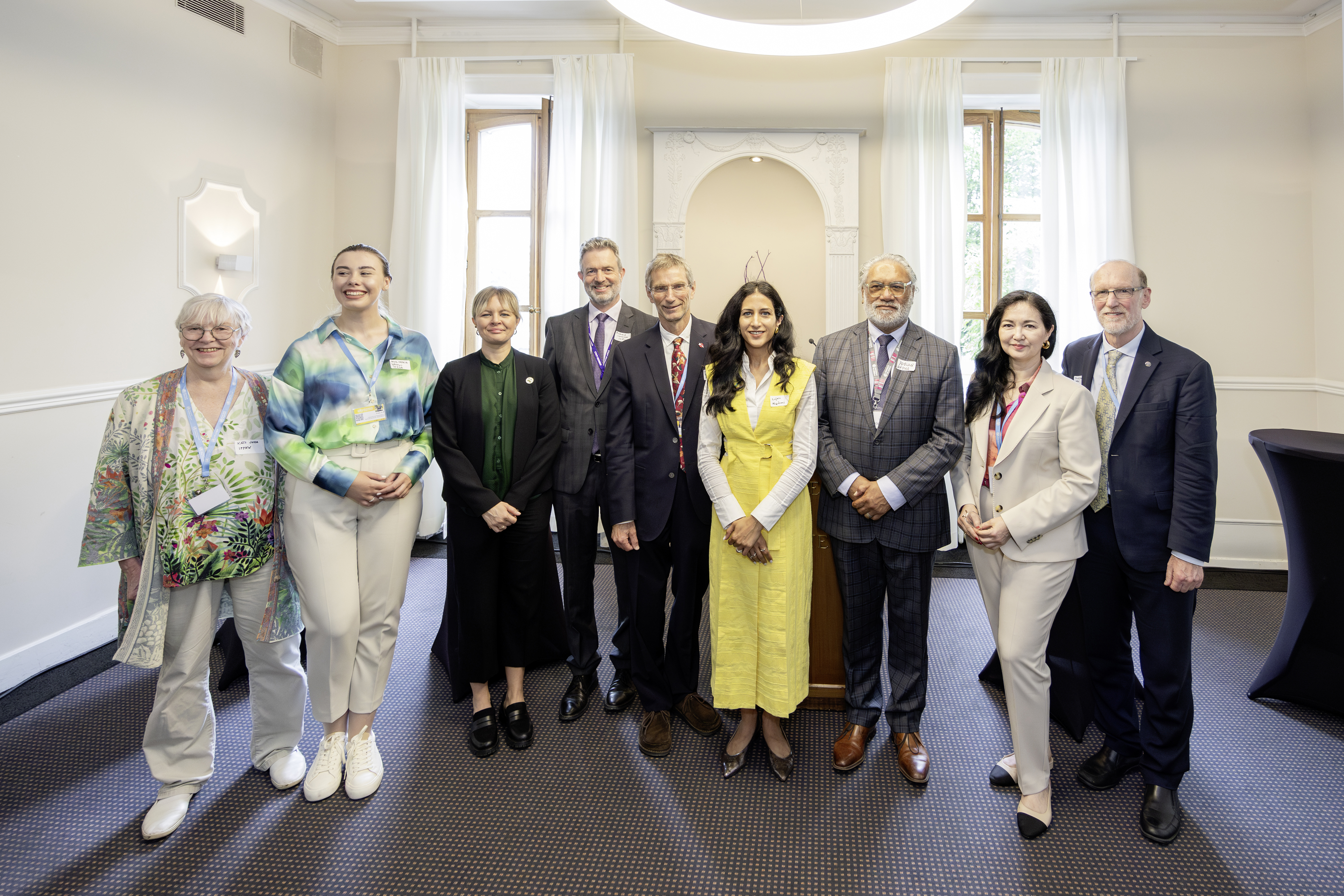
This April, our policy director, Chuck Johnson, from the IPPNW Geneva Liaison office met with WHO Director General Dr. Tedros Ghebreyesus, who showed a green light for this effort. In WHO’s World Medical Assembly (WHA) in Geneva this May, IPPNW had an effective delegation (Chuck, Tilman Ruff, Cynthia Hurst, and me) to further promote this initiative.
We had fruitful meetings with people from the WHO Peace and Health Initiative and with Professor Andy Haines, and we met delegates from several countries. Our side event on “The Effects of Nuclear War on Health and Health Services” was a success with more than 80 participants. Austria, Kazakhstan, and Mexico were co-sponsors and there were delegates from many countries including the US and Russia. We had speakers from the International Committee of the Red Cross, the World Medical Association, the International Federation of Medical Students Associations, the World Federation of Public Health Associations, and the International Council of Nurses. IPPNW’s Tilman Ruff gave an excellent speech, which can be read here. The discussion was lively.
This year, although WHO did not actually renew its mandate to compose a new report on the humanitarian consequences of nuclear war, we have made great progress developing strong allies within WHO and with key states parties to the WHA. We will work on this with the executive board of WHO and our co-workers at the ICRC and other health organisations during the year. We expect to achieve a positive decision and begin work on the new study after the WHA next year.
Dr. Juva is a specialist in neurology and University Lecturer at Helsinki University Central Hospital, Division of Psychiatry. She is Co-President of IPPNW.
Comments are closed.

 Bimal Khadka
 Bjorn Hilt
 Charles K. Johnson
 Gunnar Westberg
 IPPNW
IPPNW John Loretz
 Lawrence Wittner
 Maria Valenti
 mollymcgint
 Sue Wareham
 Tilman Ruff
 Tim Wright
 Xanthe Hall


 IPPNW peace and health blog
Excellent efforts here! Thank you.