Re-engaging WHO on nuclear weapons and health
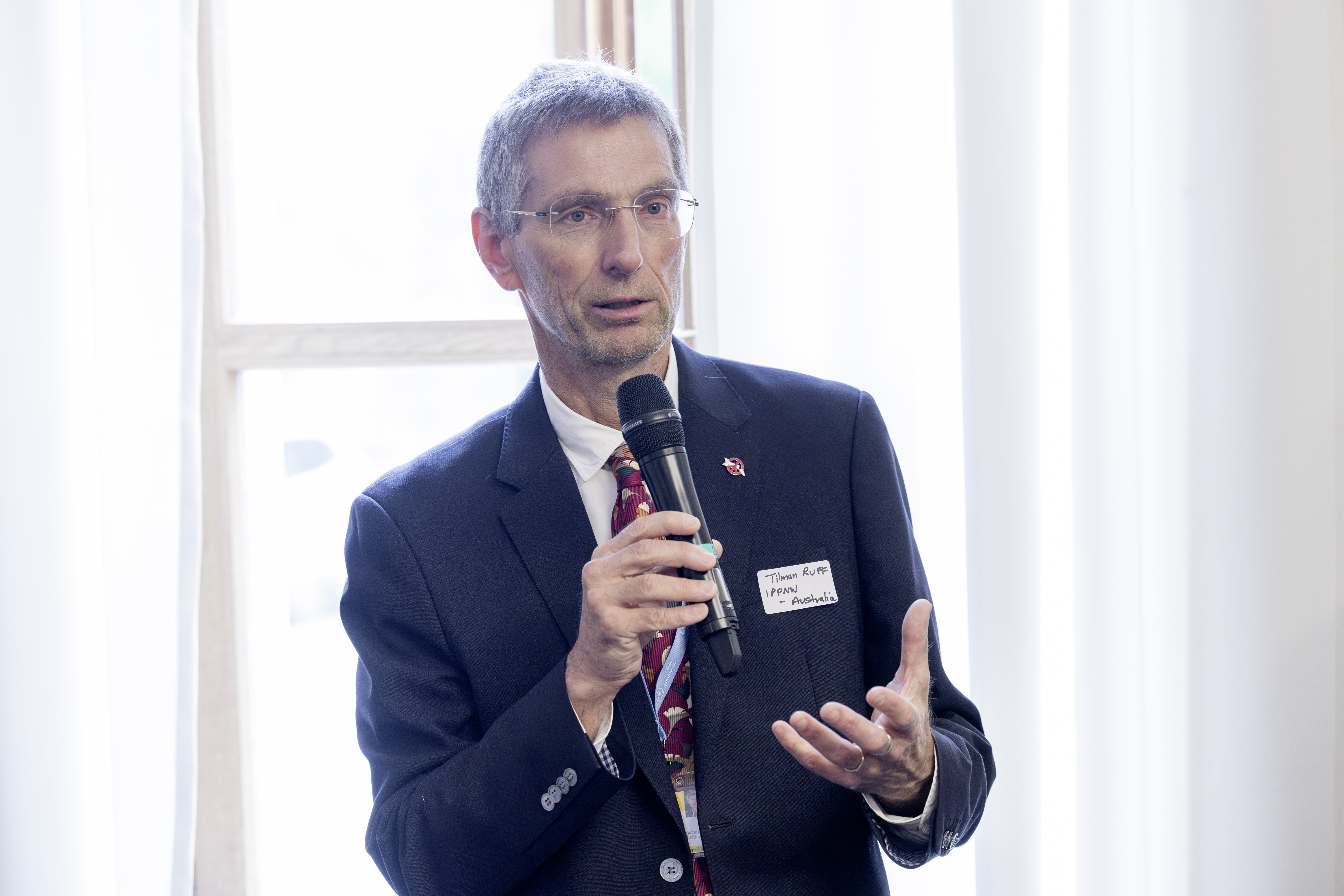
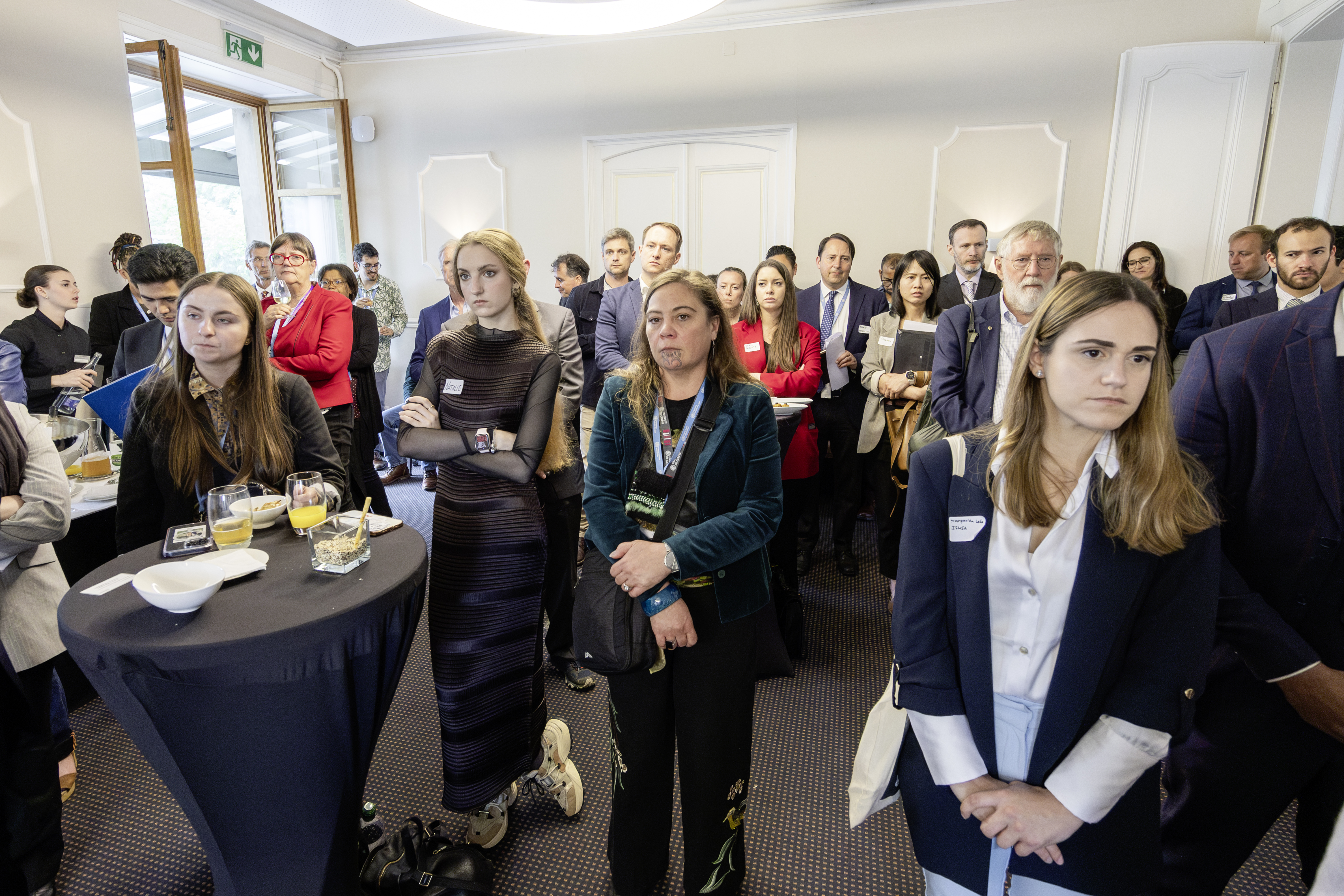
[The following is an edited version of a presentation made by IPPNW board member and former co-president Tilman Ruff at an IPPNW side event at the World Health Assembly in Geneva on 31 May. The event was co-sponsored by Austria, Kazakhstan, and Mexico.]
I’m honoured to say a few words on behalf of IPPNW to encourage and support renewed engagement by WHO in the issue of nuclear weapons and health, and specifically for an updated report on the effects of nuclear war on health and health services.
Indeed, as the world’s leading technical agency in health, WHO has a unique role in providing authoritative evidence on the most acute existential threat facing humankind, as a key part of the evidence base to underpin informed policies of member states.
The authoritative and detailed 1983 and 1987 WHO reports on the Effects of Nuclear War on Health and Health Services made a major contribution to international understanding of the potential impact of nuclear war on human health, the impossibility of any meaningful health and humanitarian response, and the imperative to prevent nuclear war. They have been widely referred to, and provided important evidence for the 1996 International Court of Justice Advisory Opinion on the Legality of Threat or Use of Nuclear Weapons and the international conferences on the humanitarian impact of nuclear weapons held in Norway, Mexico and Austria in 2013 and 2014.
The 1987 report is now nearly 40 years old and badly in need of updating. Many things have changed in the interim, including nuclear arsenals, deployments, policies and risks, and much research has been done on various aspects of nuclear weapons and health. These include research on the climatic, environmental, agricultural and nutritional effects of nuclear war that was not possible in 1987; assessments of the capacity of emergency responders to respond to nuclear detonations; and new research on the impacts of ionising radiation on health, particularly on vulnerable groups including children and women and girls.
The most important new science of recent decades about the consequences of nuclear war relates to its climatic impact. Too few people are aware of the acute risk to a stable and hospitable climate that nuclear weapons portend. Solid evidence indicates that even a few hundred nuclear weapons, less than 3% of the global total, used in a nuclear war in one global region, would produce a climate catastrophe. Millions of tons of sooty black smoke from burning cities would loft high into the stratosphere, blanketting the Earth for a decade. Within days, temperatures would plummet to ice age levels. Beneath the smoke, it would be cold, dark and dry. Agriculture would be decimated and over 2 billion people worldwide at risk of starving over just the first two years, outnumbering the direct deaths by a factor of 14 to 18.
This subject is particularly important now as we are in a period of growing tensions between nuclear-armed states and a heightened risk of use of nuclear weapons. Nuclear-armed states are in the midst of extensive modernisations, producing new, longer range, more accurate, stealthier and faster weapons. New nuclear arms races are underway, at gargantuan cost. Nuclear weapon stockpiles are increasing in six states, and militarily deployed nuclear weapons increasing for the first time since the end of the first Cold War.
The hard-won treaties that have constrained nuclear types and numbers have been abrogated, and nothing is being negotiated in their place. Only one remaining treaty set to expire in less than two years restrains the world’s two largest nuclear arsenals. New dangers of cyberwarfare, artificial intelligence and disinformation aggravate the existing risks of nuclear war by accident or design. The authoritative Doomsday Clock stands at 90 seconds to midnight, further forward than it has ever been since being established in 1947. Today, nuclear armed states are involved in two active wars.
The acute existential danger of nuclear war and the important role of health professionals in reducing it were underscored in an August 2023 editorial published in 153 medical journals worldwide “Reducing the Risk of Nuclear War: The Role of Health Professionals”.
The editorial concluded:
“The danger is great and growing. The nuclear armed states must eliminate their nuclear arsenals before they eliminate us. The health community played a decisive part during the Cold War and more recently in the development of the Treaty on the Prohibition of Nuclear Weapons. We must take up this challenge again as an urgent priority, working with renewed energy to reduce the risks of nuclear war and to eliminate nuclear weapons. “
WHO’s role
Let me say a few words about WHO’s previous activities addressing the threat to planetary health posed by nuclear weapons.
In 1981, the World Health Assembly adopted Resolution WHA 34.38, on “The role of physicians and other health workers in the preservation and promotion of peace as the most significant factor for the attainment of health for all”.
The report of the International Committee of Experts in Medical Sciences and Public Health established by then Director-General Dr Halfdan Mahler was considered by the WHA in 1983, and published as Effects of nuclear war on health and health services in 1984.
The report concluded that:
- “It is obvious that no health service in any area of the world would be capable of dealing adequately with the hundreds of thousands of people seriously injured by blast, heat or radiation from even a single 1-megaton bomb.
- … the only approach to the treatment of the health effects of nuclear explosions is primary prevention of such explosions, that is, the primary prevention of atomic war.”
In Resolution WHA 36.28 of 1983, the WHA:
“3. Endorses the Committee’s conclusion that it is impossible to prepare health services to deal in any systematic way with a catastrophe resulting from nuclear warfare, and that nuclear weapons constitute the greatest immediate threat to the health and welfare of mankind;”
As a result of continued profound concern about the dangers of nuclear weapons and new evidence of their impacts, a second edition of the report was published in 1987.
It concluded: “After a major nuclear war famine and diseases would be widespread and social, communication and economic systems around the world would be disrupted” and reiterated:
- “It is obvious that the health services in the world could not alleviate the situation in any significant way.
- Therefore the only approach to the treatment of health effects of nuclear warfare is primary prevention, that is, the prevention of nuclear war.”
These reports provided an important stimulus to progress in nuclear disarmament and for the end of the first Cold War.
WHA Request for follow-up by the Director-General
In the 1987 Resolution WHA40.24, the World Health Assembly decided that the investigation of other health aspects of the effects of nuclear war not reflected in the report should be continued, in collaboration with interested United Nations bodies and other international organisations; and requested the Director-General to report periodically to the Health Assembly on progress in this field.
WHO request for an Advisory Opinion from the International Court of Justice on use of nuclear weapons
In 1993, in recognition of the profound dangers which continued to be posed by the worst weapons of mass destruction – nuclear weapons, while other indiscriminate weapons – biological and chemical weapons – were the subject of conventions to outlaw them; and seeking to promote measures to eliminate the unique threat to global health and survival posed by nuclear weapons; the WHA responded to an initiative of IPPNW and took a further important step. It requested an Advisory Opinion from the International Court of Justice, the world’s highest legal authority, on the following question: In view of the health and environmental effects, would the use of nuclear weapons by a state in war or other armed conflict be a breach of its obligations under international law including under the WHO Constitution?
While the Court in the end judged that it could not give the advice requested by WHO, it did deliver its Advisory Opinion in 1996 on a broader question which had been posed by the UN General Assembly in 1994 and which subsumed the WHO request: Is the threat or use of nuclear weapons permitted in any circumstances under international law?
The WHO request laid the foundation for the broader UN General Assembly request, and the Court relied in its Advisory Opinion on evidence from WHO regarding the health and environmental effects of nuclear weapons.
The Court’s landmark Advisory Opinion issued on 8 July 1996 included: “ … that the threat or use of nuclear weapons would generally be contrary to the rules of international law applicable in armed conflict, and in particular the principles and rules of humanitarian law;”, and a unanimous ruling by the Judges that: “There exists an obligation to pursue in good faith and bring to a conclusion negotiations leading to nuclear disarmament in all its aspects under strict and effective international control.”
To our knowledge this is the last substantive action taken by WHO in relation to the health impacts of nuclear weapons.
Regrettably in 2020 the 1987 mandate for follow-up action by WHO was retired along with others not acted on for some time, essentially for house-keeping reasons.
It is indeed timely, one could say past time, for WHO to re-engage with “the greatest immediate threat to the health and welfare of [hu]mankind” posed by the worst weapons of mass destruction, and as first step update its 1987 report.
IPPNW would of course be pleased to assist WHO in the planning, production and follow-up of a third WHO report on the effects of nuclear war on health and health services.
We hope for your support in renewing WHO’s mandate regarding nuclear weapons and health at the World Health Assembly in 2025.
Trackbacks
Comments are closed.

 Bimal Khadka
 Bjorn Hilt
 Charles K. Johnson
 Gunnar Westberg
 IPPNW
IPPNW John Loretz
 Lawrence Wittner
 Maria Valenti
 mollymcgint
 Sue Wareham
 Tilman Ruff
 Tim Wright
 Xanthe Hall


 IPPNW peace and health blog
Dear Tilman, I so appreciate seeing this excellent presentation which is such a useful summary of the history of WHO’s prior critical role on nuclear weapons issues, and greatly clarifies for me what had been the mysterious nature of recent “sunsetting” by WHO re: ongoing involvement. Certainly provides critical content and arguments which will be useful for re-establishing appropriate connection of WHO and the international health community in pursuing nuclear abolition as a key component of global health. Thanks so much for this, Bob.