No nukes, no war, no warming!
by Drs. Angelika Claussen, Harrison Kuria Karime, Bimal Khadka, and Knut Mork Skagen
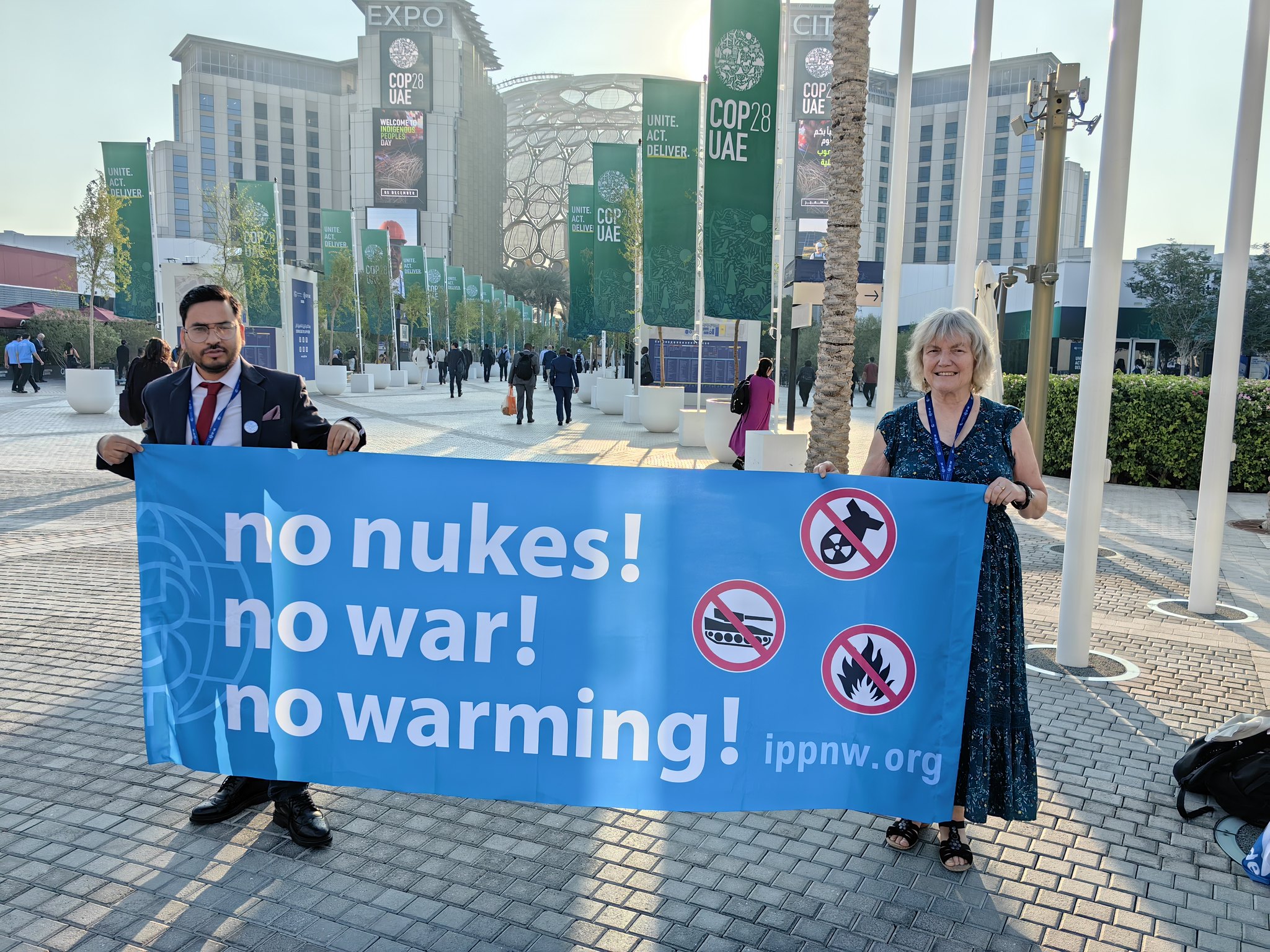
“What are you guys doing here?” As the first IPPNW delegation attending the UN climate summit (COP28), this was a question we heard often. For years, the security sector has described climate change as a “threat multiplier,” retooling the crisis into an argument for increased defence research and spending. The UN climate negotiations have, on the other hand, avoided mentioning the damage inflicted by military activity on people, ecosystems and the climate.
This is changing as evidence builds both on the climate impact of warfare and the barriers to decarbonizing the military. Trillions of dollars are pouring into military budgets while climate negotiations stall over financing for loss and damage, adaptation and mitigation. Reporting military emissions is still voluntary under the UNFCCC framework, even though militaries contribute an estimated 5,5% of global greenhouse gas emissions. As NATO Secretary General Jens Stoltenberg said at COP28 on December 1st, “we need to pursue peace to enable us to combat climate change. […] but if we have to choose between something that is green or combat effective we have to choose the combat effective.”
Meanwhile, the nuclear lobby attended COP28 in record numbers. Under headlines like “Atoms for Net-Zero,” nuclear power is heavily promoted as a carbon free alternative with little regard for health and proliferation risks. It is deeply ironic that a proposed climate solution can increase the risk of nuclear war when we know that even a “limited” nuclear war can lead to climate collapse and global famine..
What were we doing there? It wasn’t a hard question to answer.
Relief, recovery and peace
Week one of the COP featured, for the first time, a theme day and declaration on relief, recovery and peace. Under the Peace@COP28 umbrella, peacemakers worked collectively “to raise awareness and mainstream peace and conflict sensitivity into the COP conversation, and to do it in a way that busts silos and convenes a diverse group by discipline, geography, language, and more”.
Our delegates for week 1, Bimal and Angela, participated in several side events on climate change and military activity and joined the peace alliance formed around The Women’s International League for Peace and Freedom (WILPF). WILPF and its partners organised an action calling out military emissions as “the elephant in the room.” There was a call for peace, decolonisation, demilitarisation and an end to occupation for social and climate justice.
Outside of the official program, the war on Gaza became the touchstone of civil society demonstrations. The people’s plenary featured powerful statements from delegates whose homes and families – in Palestine, South Sudan, Somalia, and elsewhere – were afflicted by war.
The nuclear lobby
COP28 saw a flurry of nuclear energy activity. Over twenty countries – including nuclear weapon states USA, Great Britain and France – pledged to triple nuclear energy capacity by 2050. On the sidelines, host nation UAE signed a deal with Bill Gates’ company TerraPower LLC on advanced nuclear reactors. Language on accelerating nuclear energy even made its way into the final negotiation documents.
Nuclear energy is too slow and too expensive to be of real use in mitigating the climate crisis. The damages and risks are also consistently downplayed. As lead author of the World Nuclear Industry Status Report, Mike Schnyder, recently said in an interview with Bulletin of Atomic Scientists: “… once you start signing cooperation agreements, it opens the valves to the proliferation of nuclear knowledge. And that is a big problem, because this knowledge can always be used in two ways: One is military for nuclear explosives, and the other is civilian for nuclear electricity and medical applications. Opening these valves on the basis of hype or false promise is a disaster.”
The “health COP”
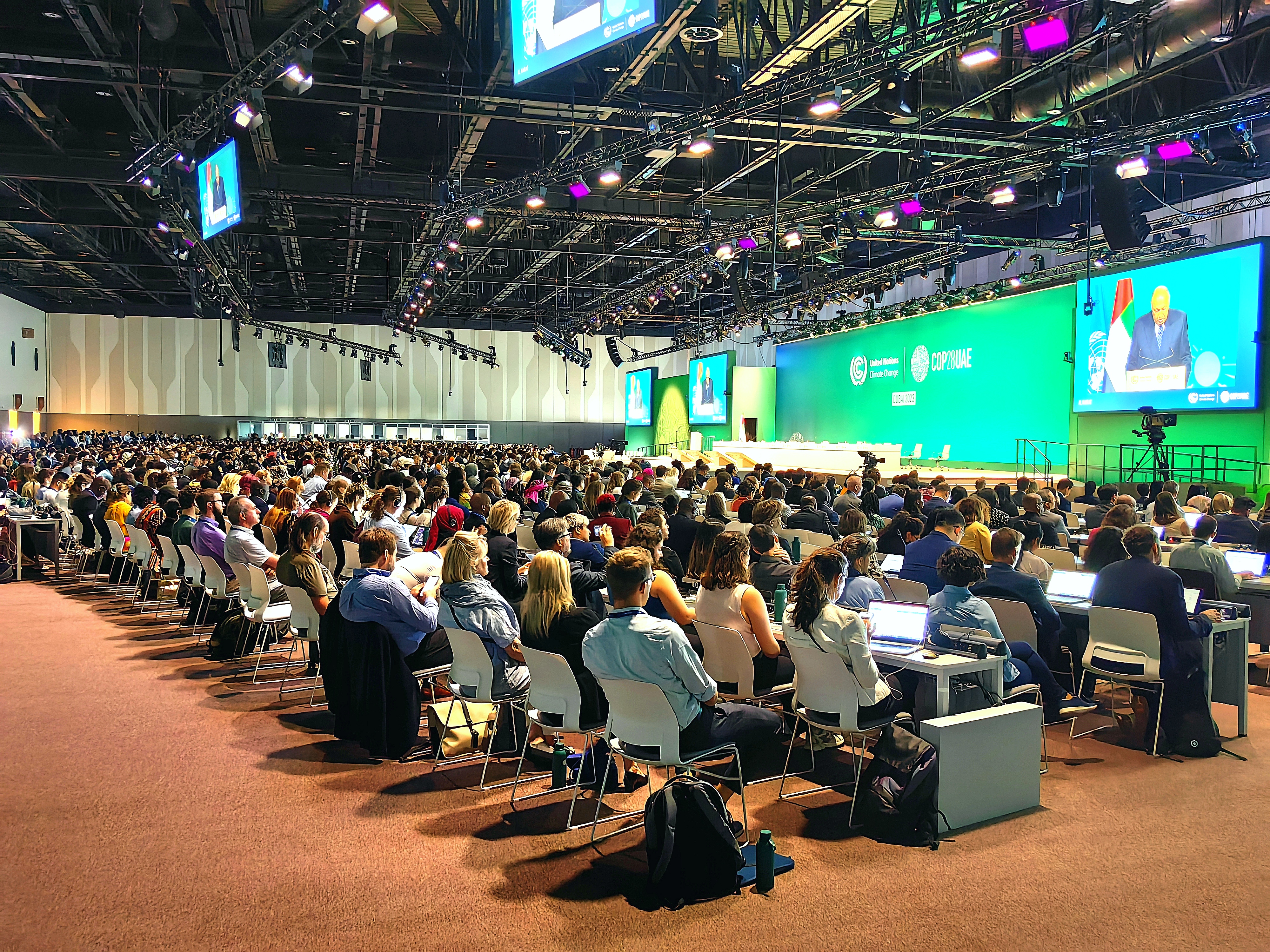
COP28 also premiered the first theme day for health. Global health organisations representing over 40 million healthcare workers demanded a full, rapid, just and equitable phase-out of fossil fuels. The World Health Organisation (WHO) hosted a pavilion with a packed program of panel discussions on the relationships between the climate crisis and health. Over 1900 health professionals attended the COP, including fifty health ministers, making the health sector a record-breaking 2.4% of conference delegates.
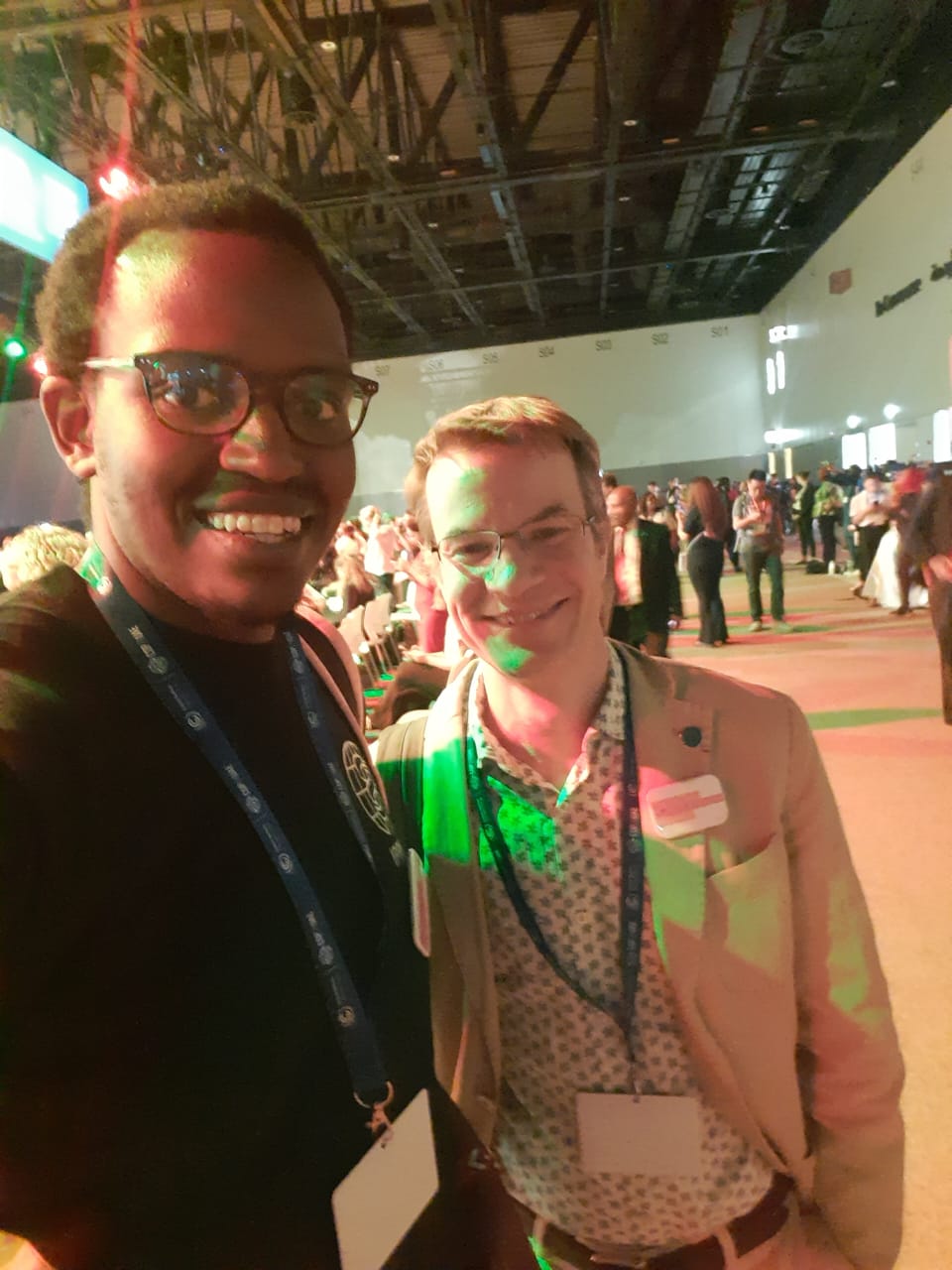
Our delegates for week 2, Kuria and Knut, joined the Global Climate and Health Alliance (GCHA) policy group to keep track of the negotiations and network with other health organisations. The group collaborated on promoting policy recommendations to negotiation teams with the aim of strengthening the position on health in the Global Stocktake (GST), Global goals for adaptation (GGA), and other negotiation tracks.
The GCHA process provided inspiration looking towards COP29. Closer collaboration between health and peace coalitions would strengthen the message of prevention as the only medicine against climate collapse, nuclear, and conventional war.
Looking ahead
COP28’s greatest success was the agreement on a loss and damage fund. The meeting also concluded with the first ever global stocktake and new global goals for adaptation. In one sense the texts were a landmark achievement. After 27 years of avoiding the words “fossil fuels”, COP28 finally acknowledged the need to move away from this primary driver of climate change.
Even so, faced with the scale of the climate crisis and the action required, the texts are grossly inadequate. A “transition away” from fossil fuels is not enough. The loopholes of risky and undeveloped abatement and carbon capture technologies have not been closed. Military emissions and spending continue to be the elephant – or perhaps one of many elephants – in the room.
As one of our week 2 delegates, Kuria, wrote after the conference: “The tapestry of the climate-peace nexus is intricately woven … climate change, nuclear weapons disarmament, and the protection of human rights are interconnected threads.” The COPs provide an opportunity to build a strong medical and public voice against the twin existential threats of nuclear war and the climate crisis. We must continue weaving the threads with collaborative action to raise public awareness on disarmament, climate justice and health.

 Bimal Khadka
 Bjorn Hilt
 Charles K. Johnson
 Gunnar Westberg
 IPPNW
IPPNW John Loretz
 Lawrence Wittner
 Maria Valenti
 mollymcgint
 Sue Wareham
 Tilman Ruff
 Tim Wright
 Xanthe Hall


 IPPNW peace and health blog
Comments are closed.