Remembering Dr. Chazov in Baku
by Joe Hodgkin
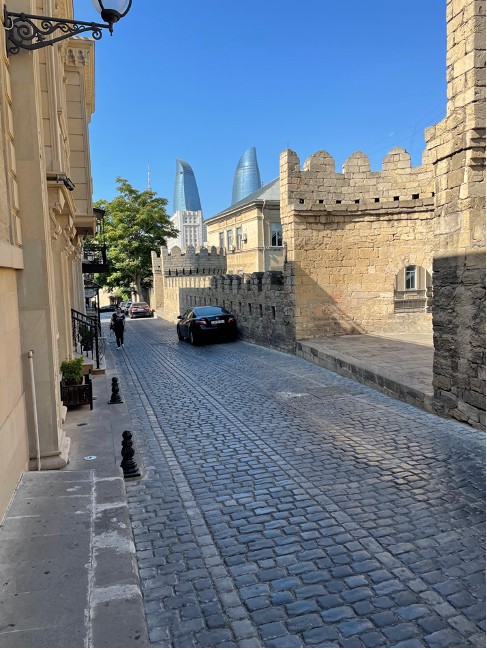
Irregularly shaped towers of glass and steel rise in the distance behind the crenellated yellow stone walls of the medieval old city. These are the Flame Towers, the futuristic landmark and symbol of Baku, Azerbaijan. Their design alludes to the country’s history as a place where ancient Zoroastrians would come to worship the flames that erupted from the landscape – now known to be due to ignition of oil and natural gas deposits. I traveled to Azerbaijan earlier this month, where I met with my friend and colleague, Olga Mironova, cardiologist and co-president of IPPNW, and we remembered the legacy of her grandfather, Yevgeniy Chazov.
June 10, 2023 would have been Dr. Chazov’s 94th birthday. He sadly passed away in November of 2021. Dr. Chazov was born in 1929 in Nizhny Novgorod, and graduated from the Kiev Medical Institute. He was a celebrated cardiologist, who did pioneering research on thrombolytic therapy for myocardial infarction, demonstrating in 1976 that an occluded coronary artery could be recanalized by intra-arterial streptokinase injection. He was widely recognized for his scientific and clinical accomplishments, rising all the way to the rank of Minister of Health of the USSR in 1987. In the 1980s, he also took personal care of several paramount leaders of the Soviet Union and other high-ranking officials. At an international conference in the early 1980s, he was approached by American cardiologists with a proposal to create a joint advocacy organization to speak out about the public health threats posed by the growing arms race. Despite significant personal risk, he agreed. He joined with Dr. Bernard Lown of Brigham and Women’s Hospital and Harvard Medical School, and other American and Soviet colleagues, to found International Physicians for the Prevention of Nuclear War (IPPNW). Despite political headwinds and media skepticism, IPPNW was a powerful force in changing public opinion and ultimately foreign policy, establishing a consensus that a nuclear war could never be won and must never be fought. The arms build-up of the early 1980s was reversed, and Reagan and Gorbachev came together to sign the Intermediate-Range Nuclear Forces Treaty (INF), starting an era of disarmament.
Unfortunately, I did not have a chance to meet Dr. Chazov before he passed away, but I have heard stories of his life and work from Olga and from Dr. Jim Muller, who as a Russian-speaking cardiologist played a key role in IPPNW in the 1980s. I have also admired the taxidermy animals that Dr. Chazov hunted, now mounted on the wall of the family dacha, in the background of Zoom calls. We are all fortunate for his work and legacy, and are compelled to carry his work forward.
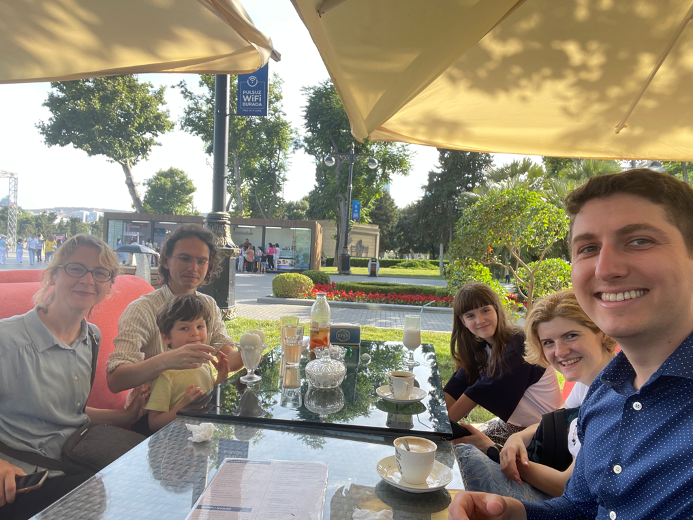
My opportunity to visit Azerbaijan arose because my sister-in-law, Mieka Erley, associate professor of Russian and Eurasian Studies at Colgate University, co-taught an undergraduate study abroad course on the history of oil and water in Central Asia, taking her students on a tour across Uzbekistan and Azerbaijan. I joined her, with my brother, and my four-year-old nephew, to explore an unfamiliar country and to help with childcare. When I told Olga, she cheerfully bought tickets to join the family trip. After all, Baku may be a long way from Boston, but it is a relatively short direct flight from Moscow.
Azerbaijan is located in the south Caucasus region. Millennia of interaction of different peoples have led to a rich, complex, and diverse cultural landscape. Indigenous peoples of the Caucasus lived on the edge of Persian kingdoms and empires throughout antiquity and the medieval period, and the city is still full of statues dedicated to Persian-language poets. Turkic migrations in the Middle Ages brought the Azerbaijani language to the region. In the 19th century, Azerbaijan became part of the Russian Empire, and later the Soviet Union. Since the fall of the USSR, the country has become wealthy from its oil and gas deposits but has also experienced catastrophic border wars and ethnic conflict with neighboring Armenia.
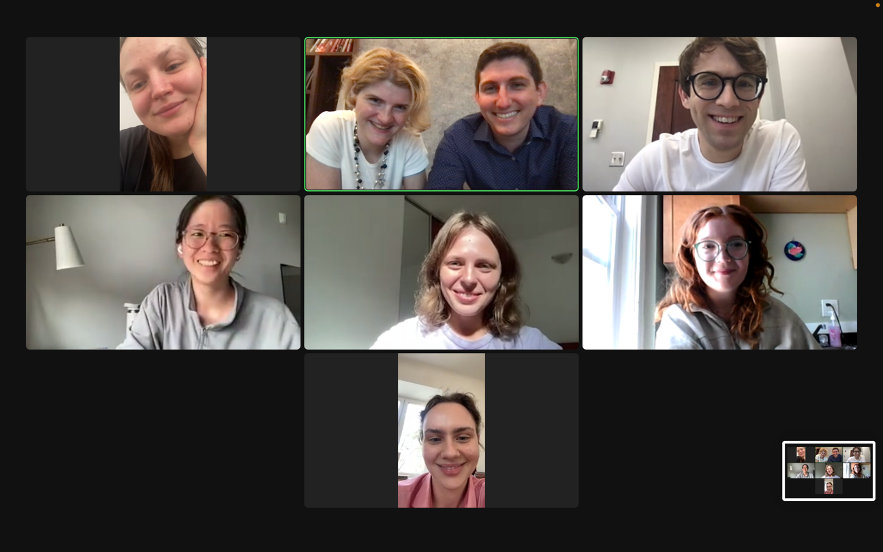
I was grateful for the opportunity to see the sights of Baku and the surrounding area, enjoy the delicious food, and meet with friends old and new. Olga and I had our monthly call with our students in the USA and Russia, this time appearing in the same Zoom panel. As Olga and I reflected on Dr. Chazov and others who led us in this work, and the difficult road ahead for nuclear disarmament, I am grateful that there are still places in the world where friends can come together across geopolitical divides.
Dr. Hodgkin is a member of the board of Greater Boston Physicians for Social Responsibility.
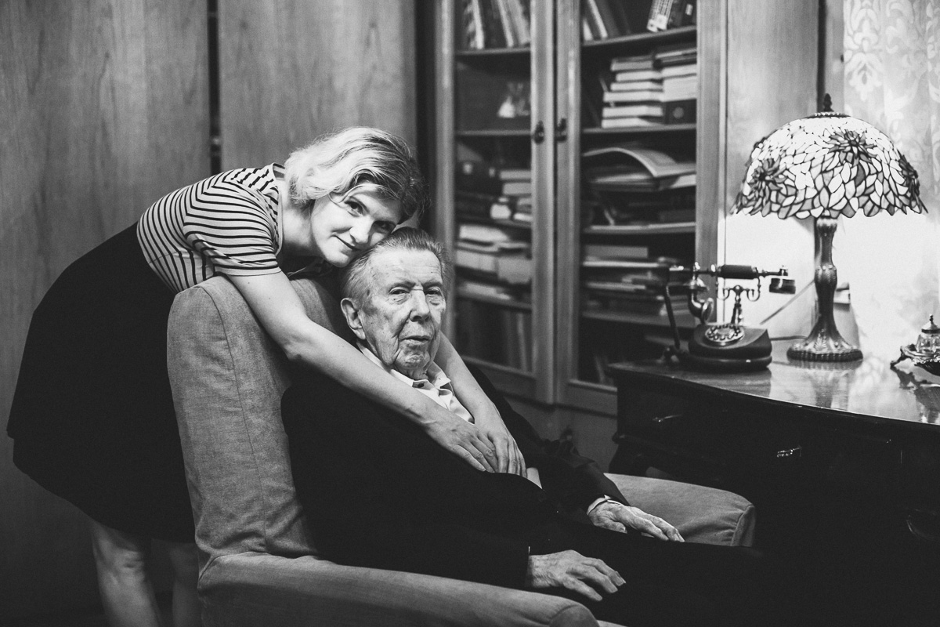
My grandfather, Eugene Chazov, has been always showing me the example of true friendship that could overcome any borders and obstacles. Dr. Lown was the friend that my grandfather could write and call not only because of their work in IPPNW but because of their close connection in medicine, research and shared values. The changes they brought to this world will be appreciated by many generations of doctors. And I’ve been always admiring the true feelings that are changing this world for the better.
The moments together with close people that are sharing values are the ones that stay with you for a lifetime.
The feeling of joy and gratitude for remembering Dr. Chazov and his legacy on June 10th and the opportunity to meet in Baku with my colleague from the US, Joe Hodgkin, and his family were hard to express. The visit to Azerbaijan, I would say, was especially important now, showing that no matter where you come from, there are no borders for dialog, for staying together and for continuing the work, started by Dr. Chazov and Dr. Lown back in 1980s.
—Olga Mironova
Dr. Mironova is IPPNW co-president.
Comments are closed.

 Bimal Khadka
 Bjorn Hilt
 Charles K. Johnson
 Gunnar Westberg
 IPPNW
IPPNW John Loretz
 Lawrence Wittner
 Maria Valenti
 mollymcgint
 Sue Wareham
 Tilman Ruff
 Tim Wright
 Xanthe Hall


 IPPNW peace and health blog
Thank you Dr Hodgkin and Dr Miranova for sharing these remembrances with us.
I was fortunate to have a meal in Edinburgh with Dr Muller and some of our Medact Scotland colleagues when he was in Scotland. I played a small role in “evaluating “ school exchange programs between UK and Soviet schools in the late 1980s. ( Later published in a book The Nuclear Mentality. ) I agree there are no borders for dialogue (though so difficult to arrange
at present) and needed now more than ever.
Michael Orgel, MD
Medact Scotland
(IPPNW affiliate)
Edinburgh